

Moondive Center
Google 5/5 (391 reviews)
Spain · Mediterranean
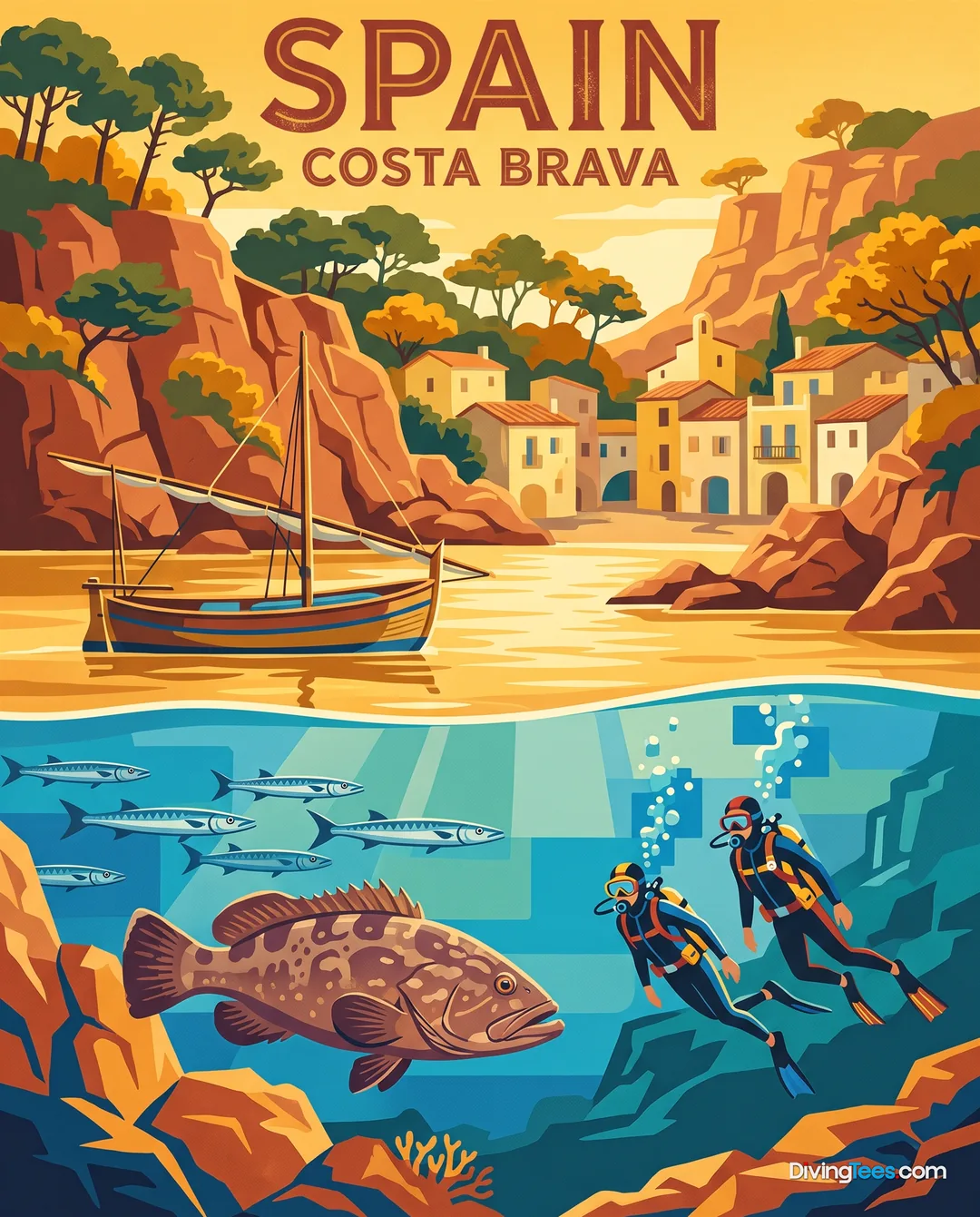
Rocky drop-offs around Isla Grosa and Farallón lead from boat dives to the clear, 20-metre freshwater cavern of Cueva del Agua.
For subtitles in English: start the video firstthen click the gearat the top right of the video, select “Subtitles/CC”, then “Auto-translate” and choose “English”.
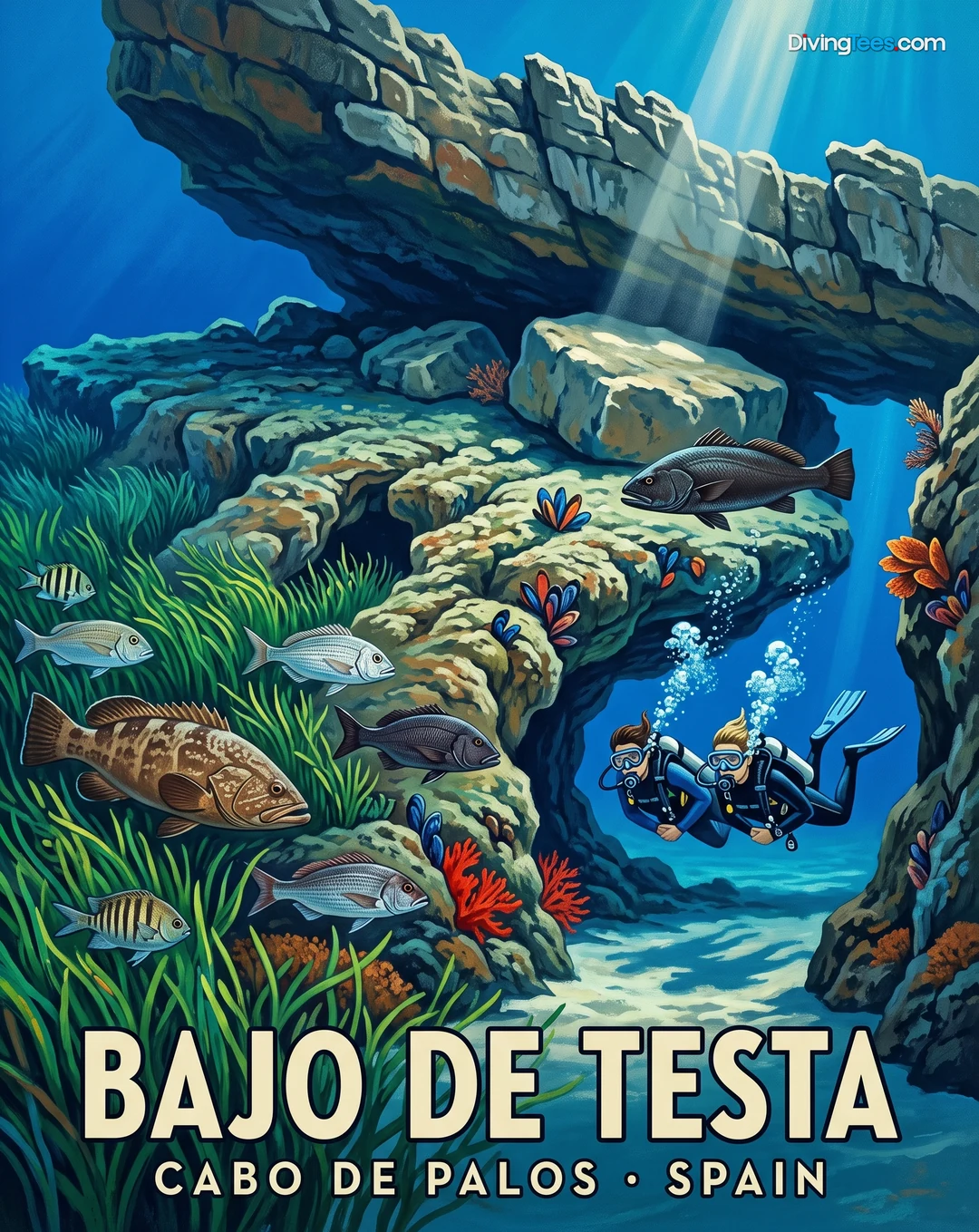
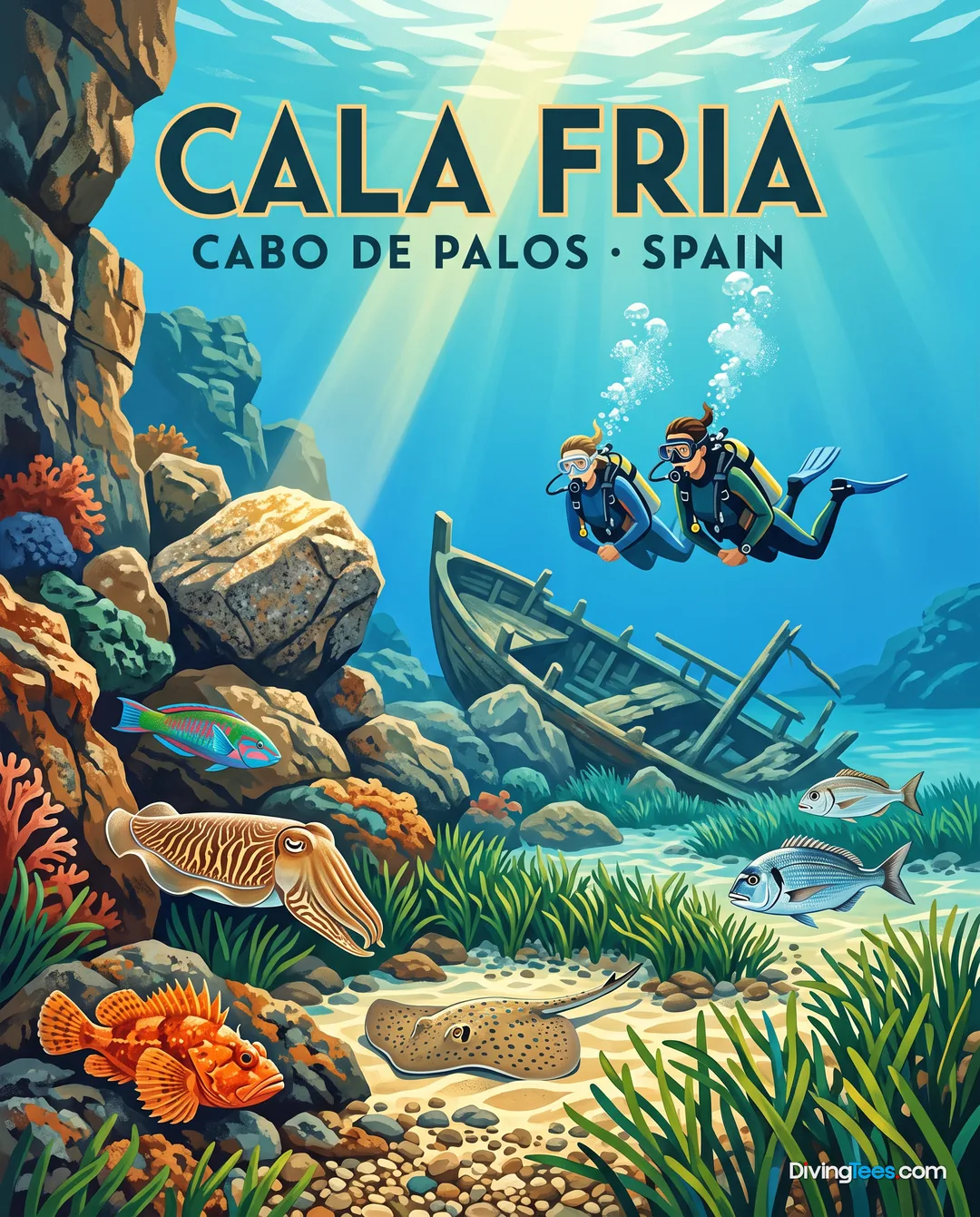
Cueva del Agua brings an unusual freshwater cave into the Cabo de Palos picture, with clear water and a maximum explored depth of 20 metres. The destination itself is chiefly a port-based launch point for boat dives over rocky walls, reliefs and protected sectors around Isla Grosa and Farallón. It suits divers who prefer organised day trips to a conventional shore-diving base, while a non-diving companion can spend time around the village waterfront and beach.
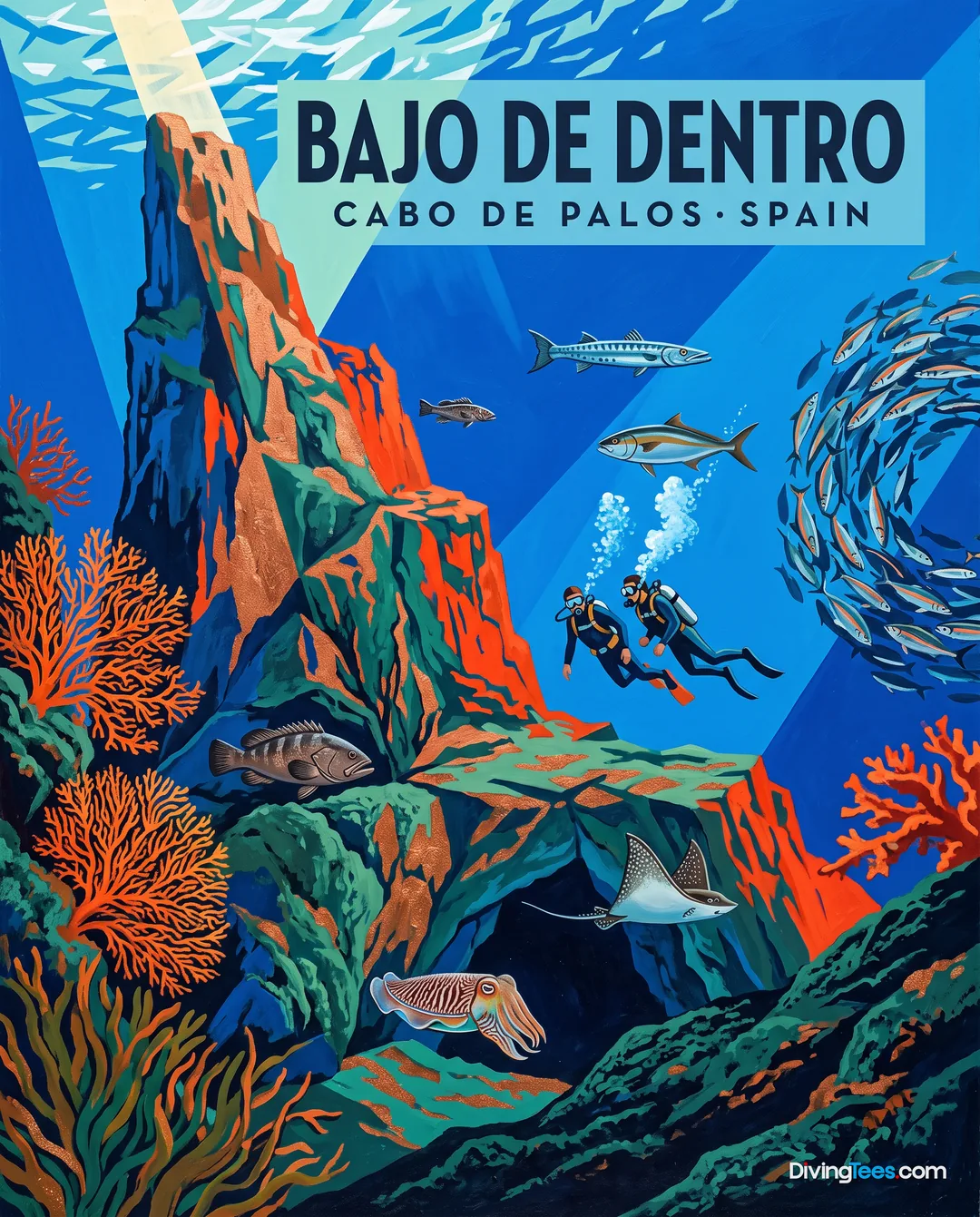
Most diving is from a boat, with the port providing access to rocky reliefs and drop-offs in neighbouring protected waters. Currents are variable, so the briefing matters even when the surface looks benign. Visibility can be affected by swell, local turbidity and boat traffic; conditions are not something to assume from the calendar alone. Cueva del Agua is a separate proposition: a freshwater cave with consistently clear water and exploration reaching 20 metres. Full Cave certification is required for access to the complete cave system, while cavern-qualified divers are limited to the initial cavern zone unless directly supervised during training. For the open-water programme, all levels can find a route into the area, although Advanced training becomes useful for deeper or repetitive boat dives. Nitrox also has a practical role on a full day of scheduled immersions.
Around Isla Grosa and Farallón, the attraction is the combination of rocky protected habitats and mobile wildlife, seen within a managed marine setting rather than around unrestricted moorings. The conservation rules specifically aim to reduce pressure on these habitats and animals: feeding wild species and using attracting substances are prohibited. Cueva del Agua offers a different underwater encounter, centred on freshwater cave space, clear water and the physical transition into the cavern rather than a named marine-animal spectacle. The most structured period for experiencing the protected sectors is from September to November, when access and navigation arrangements shape the outings. There is no reason to build the trip around a guaranteed seasonal animal sighting; the dependable thread is the terrain and the protection around it.
May to September generally brings the calmest sea, while June to August has the lowest rainfall. The destination dossier nevertheless places September, October and November among the most suitable months overall, because the protected areas operate with seasonal access and navigation windows that help organise local boat diving. Autumn therefore offers a useful balance between workable sea conditions and a clearly structured programme around Isla Grosa and Farallón. Divers should check both the marine forecast and the reserve timetable: a calm day does not automatically mean every protected site can be approached.
The open-water diving suits all levels, provided divers are comfortable with boat procedures and variable current. Advanced certification is useful for deeper profiles and repeated outings, while Nitrox can make sense on consecutive boat-diving days. BSAC, PADI and SSI divers should bring the qualification details relevant to the planned profiles. Cueva del Agua is different: Full Cave certification is mandatory for the complete system, and cavern-qualified divers remain in the initial cavern section unless under direct instructor supervision.
From London Heathrow, London Gatwick or Manchester, the practical plan is to reach a suitable major airport in south-eastern Spain and continue by road to the Cabo de Palos coast. No ferry crossing is required to reach the destination itself; the boat journey begins once the diver is at the port. Because the most convenient arrival airport and onward connection are not fixed by the destination information, the road transfer should be checked before booking flights. Once in Cabo de Palos, staying in the village or near the port keeps the daily logistics simple: dive centres and embarkation points can generally be reached on foot, with a short taxi ride where needed. The important connection is therefore airport-to-road-to-port, not an additional sea transfer.
Plan the trip around the protected-area access windows as well as the weather. Around Isla Grosa and Farallón, authorised mooring buoys limit the number of boats, so departure times and the day’s allocation matter more than they do at a casual shore-diving base. Do not assume that a calm morning permits free navigation or an improvised approach: speed limits, approach rules and anchoring constraints are part of the dive plan. Night navigation inside the protected area is prohibited, so a night-dive expectation does not fit this programme. Keep the group away from buoy areas unless the boat is operating within the authorised system, and never use bait or attracting substances. Staying close to the port reduces unnecessary taxi movements between dives. On repetitive days, Nitrox is worth considering, but only as part of the planned profiles rather than as a substitute for the reserve’s operating rules.
Allow three to five days for a sensible land-based stay. Cabo de Palos works best as a port-centred routine of scheduled day boats, with enough flexibility for a protected sector or sea condition to alter the plan. Accommodation in or near the village keeps the walk to the centre and embarkation manageable. A non-diving companion can use the waterfront and beach, although the rhythm of the destination remains firmly built around diving.
Hello, I'm Marina, DivingDeal.com's AI assistant. I guide you through destinations, areas and countries.
Thinking about the whole trip and the flights? Talk it over with Edith →
Marina is an AI. Some links are affiliate links: DivingDeal may earn a commission, at no extra cost to you. Bookings are made with the partner.
May to September generally brings the calmest sea, while June to August has the lowest rainfall. September to November can suit divers seeking structured access and navigation arrangements around Isla Grosa and Farallón. Check the marine forecast and protected-area timetable, since calm weather does not guarantee access to every site.
Open-water diving around Cabo de Palos suits all levels if you are comfortable with boat procedures and variable currents. Advanced training is useful for deeper profiles and repeated boat dives, while Nitrox can help on consecutive outings. Cueva del Agua requires Full Cave certification for the complete system; cavern-qualified divers are limited to its initial zone unless directly supervised.
Boat dives from Cabo de Palos reach rocky walls, reliefs and drop-offs around protected Isla Grosa and Farallón, where mobile wildlife lives in managed marine habitats. Cueva del Agua offers a different experience: clear freshwater cave space and a physical transition into the cavern, rather than a planned marine-animal spectacle.
Plan around protected-area access windows, weather and authorised boat allocations rather than treating Cabo de Palos as a casual shore-diving base. Reaching the coast involves an airport-to-road-to-port connection, with no ferry needed. Staying in or near the village keeps dive centres and embarkation points manageable on foot, with a short taxi ride where necessary.