
Mundo Submarino
Google 4.5/5 (60 reviews)
Spain · Mediterranean
Rocky outcrops, sandy ground, mixed relief, wrecks and shoals of fish meet boat divers leaving Laredo harbour for the eastern Cantabrian coast.
For subtitles in English: start the video firstthen click the gearat the top right of the video, select “Subtitles/CC”, then “Auto-translate” and choose “English”.
From Laredo’s harbour, boats head towards rocky, sandy and mixed seabeds along the eastern Cantabrian coast. This is a shore-based diving holiday rather than a liveaboard destination, with wrecks and more technical sites alongside simpler coastal outings. The arrangement suits divers who want different kinds of underwater terrain without changing base, and it also works for non-divers, thanks to Laredo’s beaches, waterfront and excursions towards Santoña and its marshes.
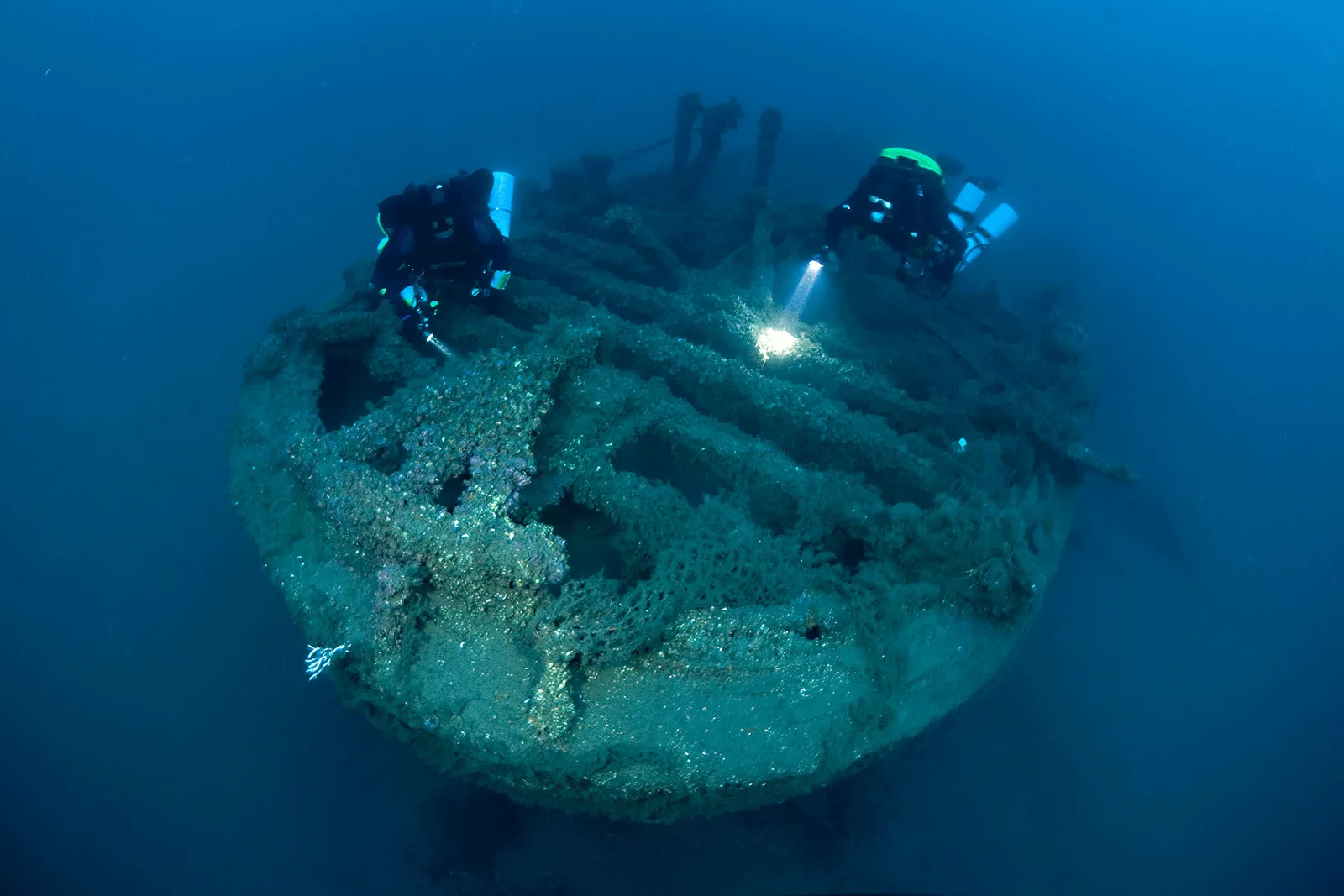
Laredo’s diving is built around boat trips from the harbour to nearby points along the coast. Underwater, expect rock, sand and mixed relief rather than a single uniform reef, with wrecks adding a different shape and character to the programme. Some outings are straightforward, while others are described as more technical, so the planned site matters more than the destination label. Currents are variable and visibility can change, which is part of the Atlantic equation here. Ask whether the day involves a boat dive, a wreck, rocky ground or a technical site before you commit. A simple coastal site or a launch from the ramp can make a sensible first immersion, while experienced divers can ask about the more demanding options.
The local wildlife includes octopus, groupers, sea bream and bass, with shoals of fish adding movement around the rocky ground and mixed seabed. These are the encounters to look for while working along the rock and sand, rather than expecting a tropical catalogue of brightly coloured reef species. Summer and autumn usually bring better visibility, so those seasons can make it easier to scan the terrain and pick out animals in cracks, on the bottom or around wreck structure. The sightings are still governed by the day’s visibility and sea conditions, not by a guaranteed wildlife calendar. Keep the pace measured and look closely at the edges where rock gives way to sand.
Summer and autumn are the most sensible periods for Laredo because visibility is generally more favourable then. It remains changeable, however, so a clear day on paper does not guarantee a clear view underwater. The Atlantic conditions can also determine which point is practical, which is why a local day-by-day choice of site matters. There is no established period that has to be ruled out altogether, but a flexible itinerary is more useful than booking around a promise of constant visibility. If the sea prevents a worthwhile dive, Santoña, the marshes and the coastal front provide a practical alternative rather than a wasted day.
Laredo can suit beginners and qualified divers, but those groups should not automatically be placed on the same outing. Introductory dives are available under supervision, while guided boat trips are intended for certified divers. PADI, SSI and BSAC qualifications should be matched to the site and the conditions, particularly where wrecks or technical descriptions are involved. Divers used to Atlantic conditions will be more comfortable with variable visibility and current than someone expecting consistently easy, sheltered water. Confirm the planned profile and experience requirement before boarding.
From London Heathrow, Gatwick or Manchester, plan the journey around reaching Laredo itself, with the harbour as the practical end point for the diving. Allow time for the onward leg and avoid building a tight same-day schedule around the boat departure. Once in town, accommodation may be close enough to reach the diving base on foot, or may require a short local journey. The important local arrangement is that boats leave from Laredo harbour, avoiding a routine transfer to another launch site. Keep the first diving day flexible while the journey and any local connection settle into place.
Before booking, ask exactly what the proposed outing involves: boat or shore access, wreck or rock, straightforward profile or technical site. “Wreck” is not a difficulty rating, and the same applies to the word “technical”. For a first dive, request a simple coastal site or a launch from the ramp, then judge the conditions before committing to something more demanding. Ask how the site choice will respond to visibility and the state of the sea, since conditions are not uniform along the eastern coast. Do not build the holiday around guaranteed visibility. Choose a harbour departure where possible, rather than adding an unnecessary land transfer. If the sea cancels the underwater plan, keep Santoña, the marshes or the coastal excursions available. A visit to Faro del Caballo or a walk along Laredo’s front can fill the day without pretending it was a dive.
Laredo works best as a land-based stay, with diving organised around boat departures from the harbour. Depending on where you stay, the base may be walkable or only a short local journey away. Non-divers have beaches, the waterfront, coastal activities and boat excursions towards Santoña and the marshes. Snorkelling is another option in accessible rocky sectors, including around Regatón beach. The result is a destination where a mixed group can spend time together without forcing every day around diving.
Hello, I'm Marina, DivingDeal.com's AI assistant. I guide you through destinations, areas and countries.
Thinking about the whole trip and the flights? Talk it over with Edith →
Marina is an AI. Some links are affiliate links: DivingDeal may earn a commission, at no extra cost to you. Bookings are made with the partner.
Summer and autumn generally bring better visibility to Laredo, although underwater conditions remain changeable. Atlantic conditions can affect which coastal point is practical, so keep your itinerary flexible rather than expecting constant clarity. If the sea prevents a worthwhile dive, you can visit Santoña, its marshes, or the coastal front instead.
Laredo can suit beginners and qualified divers, but they may need different outings. Introductory dives are available under supervision, while guided boat trips are intended for certified divers. Match your qualification and experience to the planned site and conditions, especially when wrecks or technical descriptions are involved. Confirm the profile before boarding.
Diving from Laredo can take you across rocky, sandy and mixed seabeds, with wrecks adding different underwater shapes. Look for octopus, groupers, sea bream, bass and shoals of fish around rocky ground, mixed relief, cracks, sand edges and wreck structure. Visibility and sea conditions influence what you encounter.
Plan Laredo as a land-based diving holiday organised around boat departures from the harbour. Allow time to reach town and avoid a tight same-day schedule around the boat. Accommodation may be walkable from the base or require a short local journey. Keep Santoña, the marshes, beaches and coastal excursions available for non-divers or weather changes.