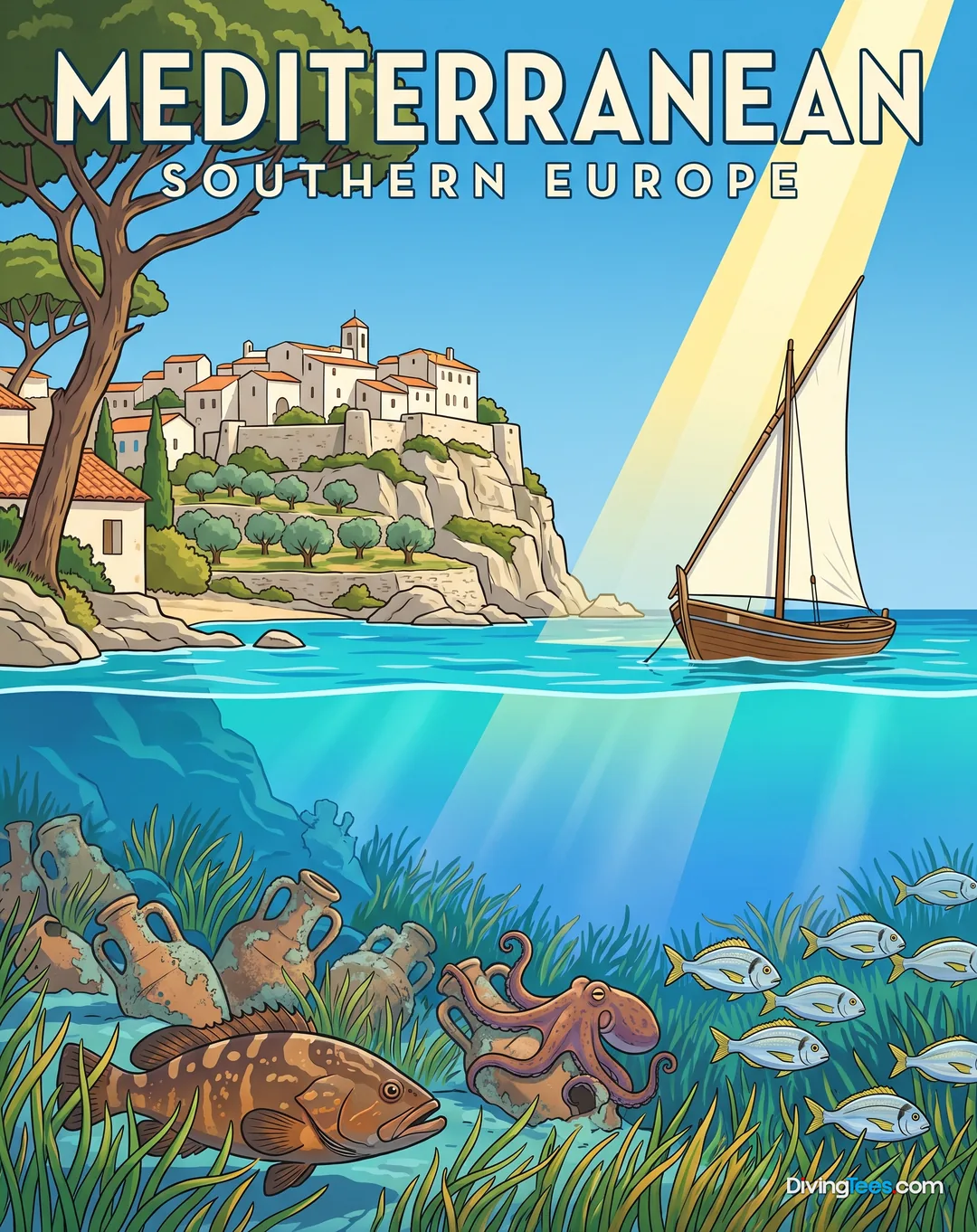
Mediterranean
Spain: Mediterranean coasts, islands and changing seasons
Spain links the Costa Tropical, Cabo de Palos and Mallorca with Mediterranean diving, Roman shorelines, late dinners and regional dishes that change from coast to coast.
What makes this country unique
- Cabo de Palos and Vera, opposite seasonal choices
- Almuñécar and La Herradura on the Costa Tropical
- April to September around Mallorca and Palamós
- Sea bream, dentex, moray eel and ocean sunfish
- Conger eel, nudibranchs, bogue and salema
- Gazpacho, pescaito frito and sardines in espeto
- Granada and the Alhambra beyond Almuñécar
For subtitles in English: start the video firstthen click the gearat the top right of the video, select “Subtitles/CC”, then “Auto-translate” and choose “English”.
This country for a diver
Spain is a Mediterranean diving country shaped by separate coasts, an island and markedly different operating seasons. Its sites favour rock, relief and cavities rather than tropical coral, with boat diving particularly prominent around Cabo de Palos, L'Estartit and Mallorca. Currents can be variable at several mainland bases, while Mallorca and Palamós are described as lighter. The appeal is the ability to pair familiar European logistics with very different regional identities, from Marina del Este to the fishing coast of Palamós. All levels are catered for, but this is not a liveaboard destination.
How the country divides
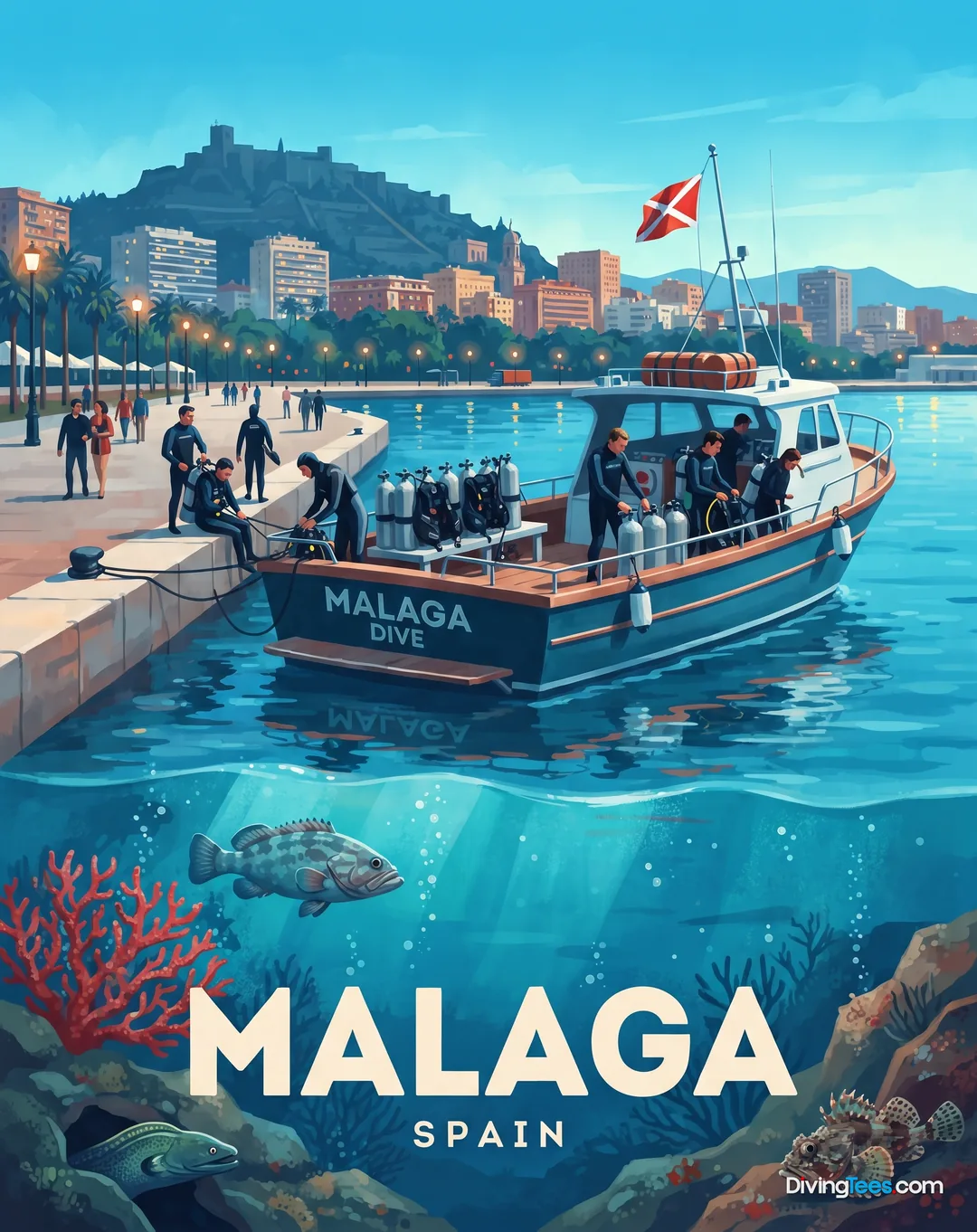
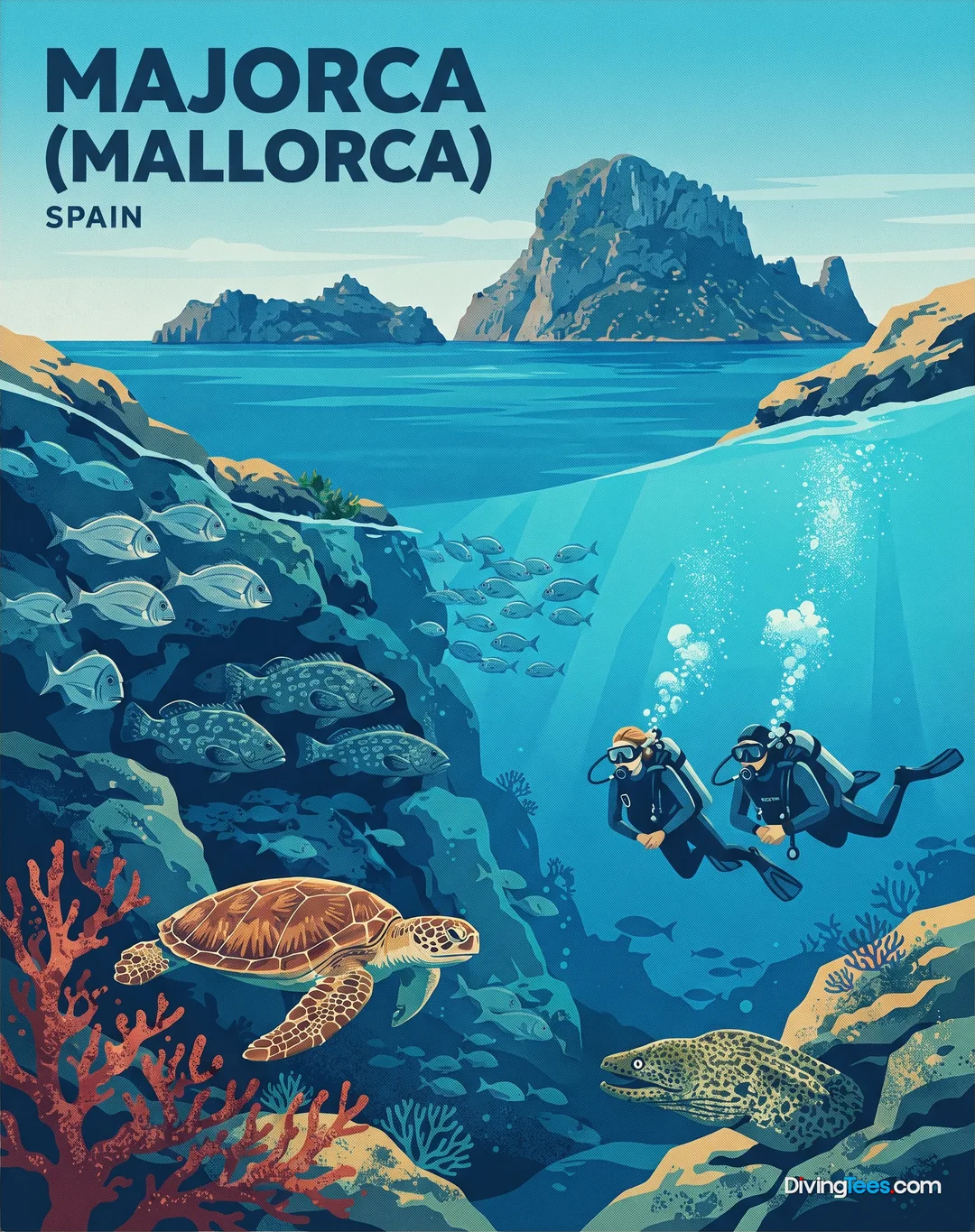
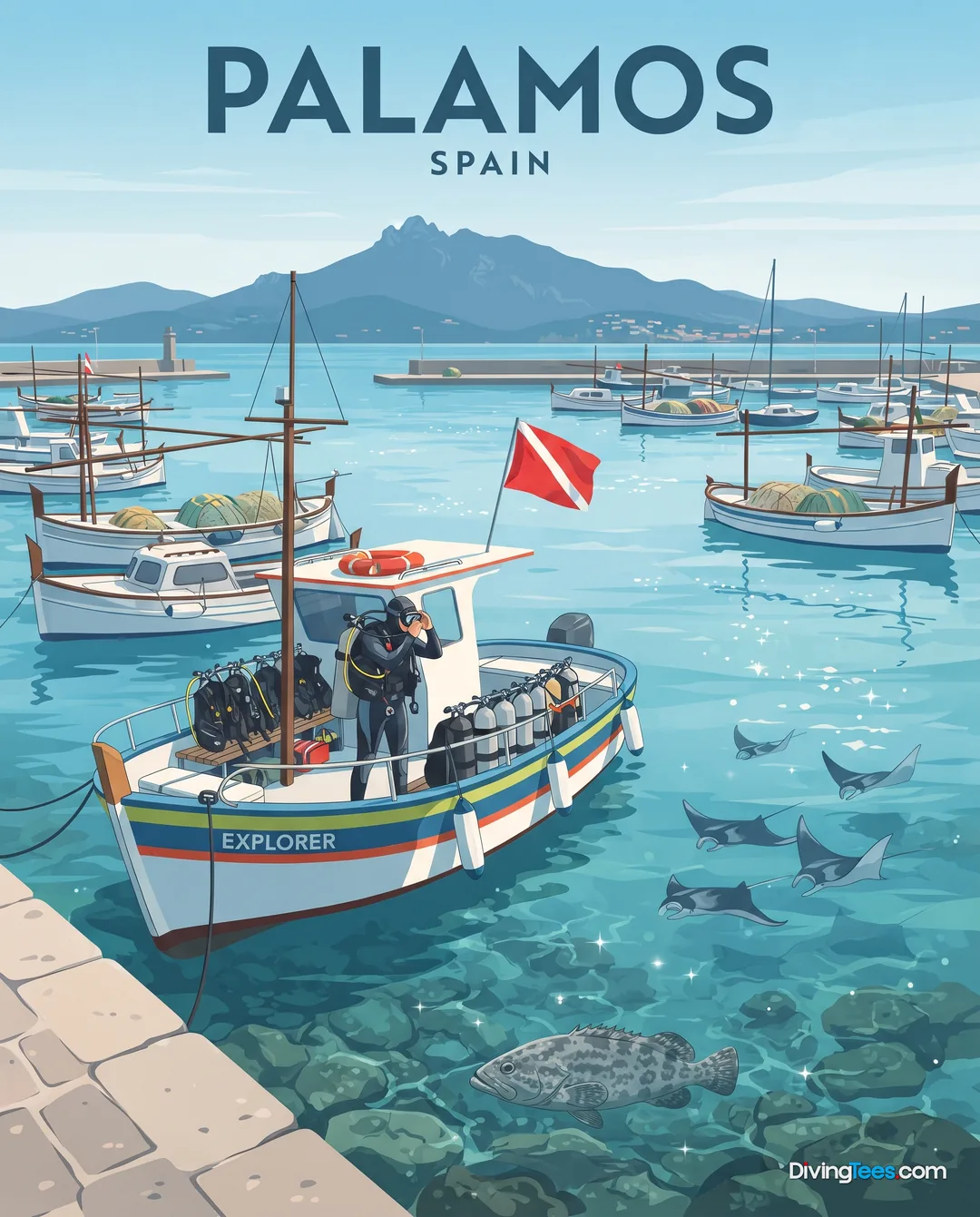
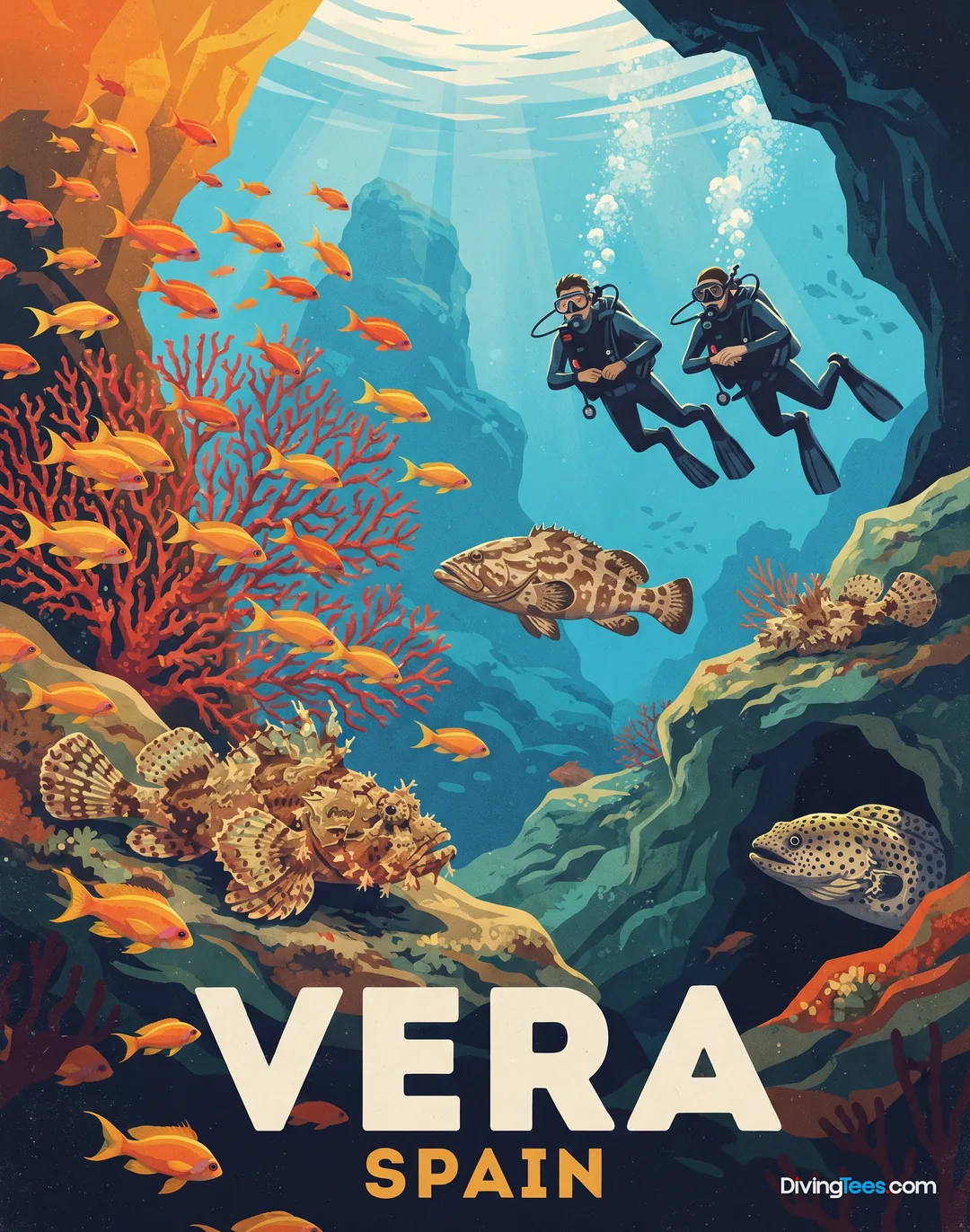
The south-east pairing of Cabo de Palos and Vera is the clearest seasonal contrast: Cabo de Palos runs from May to September, while Vera takes over from October to December. Sites such as Bajo De Testa belong to Cabo de Palos, while La Catedral belongs to Vera, so these are separate choices rather than interchangeable bases. The Costa Tropical grouping brings Almuñécar, La Herradura and Malaga together from May to December. Almuñécar and La Herradura are only three kilometres apart, making them the practical choice for a settled coastal stay; El Berenguel is an Almuñécar anchor, not a reason to treat the neighbouring areas as one site. Further north, Palamós and L'Estartit form a Costa Brava pairing, with Palamós open from April to September. Mallorca stands alone as an island option, with Cala Murta representing its separate geography and April-to-September window.
Diving destinations
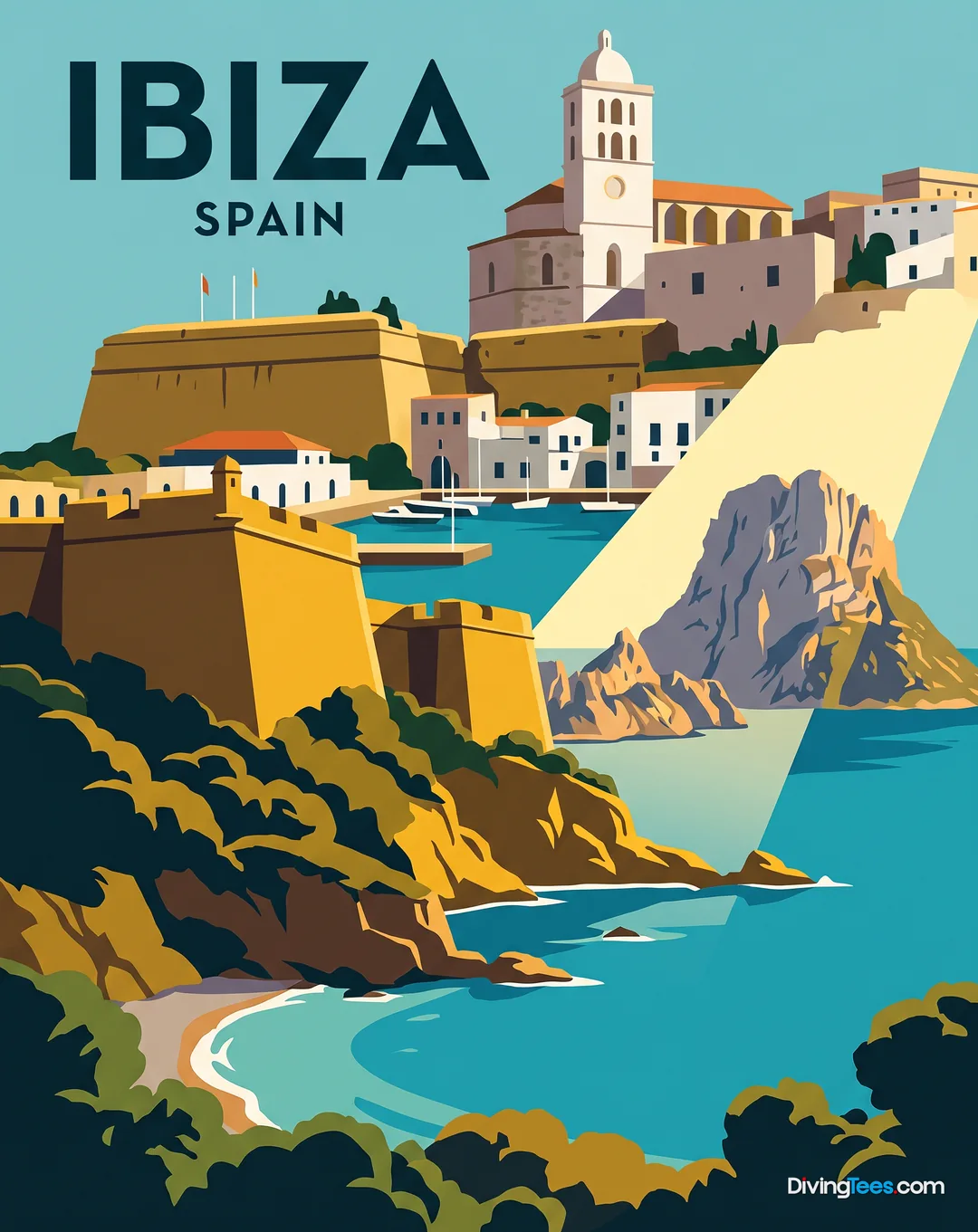
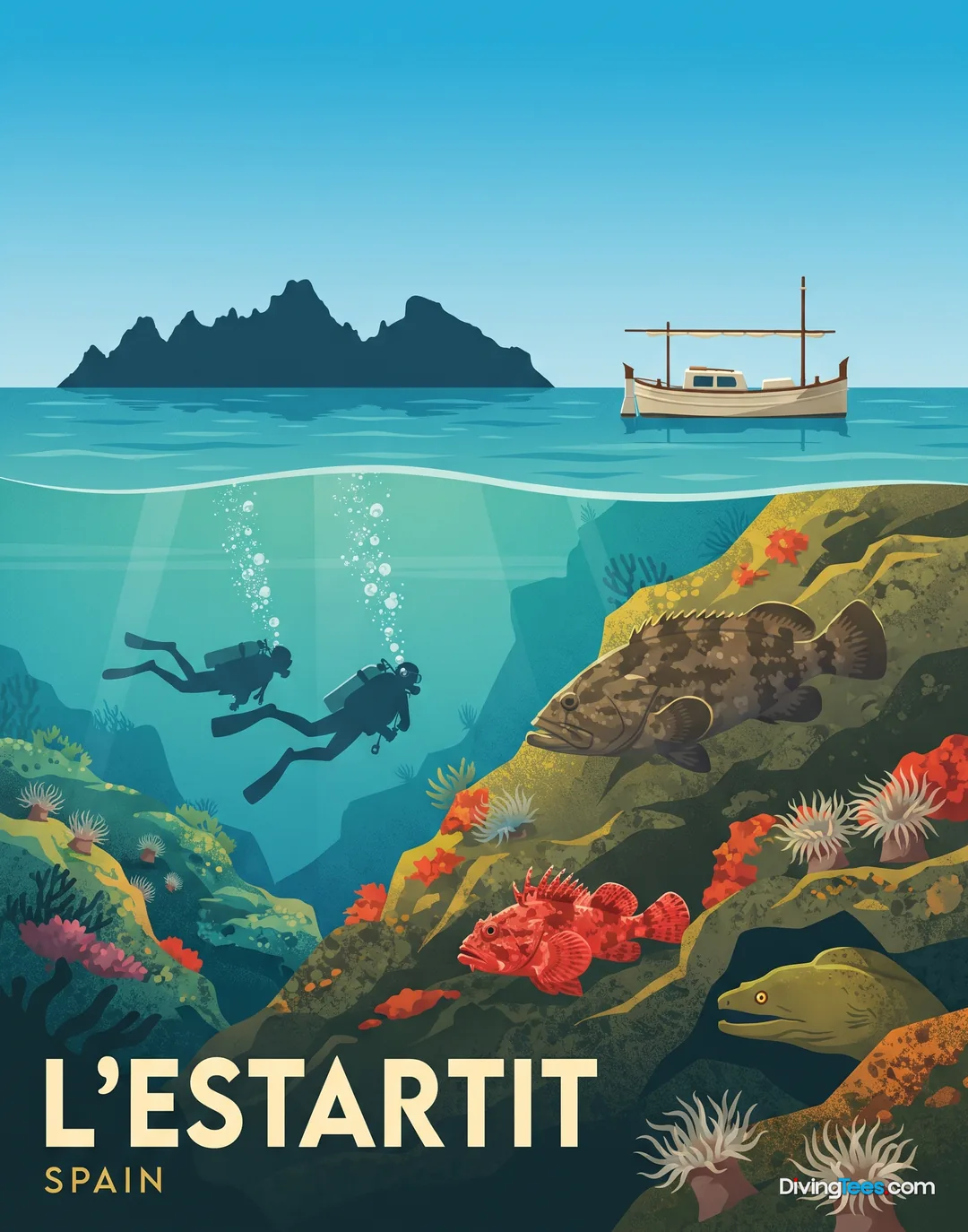
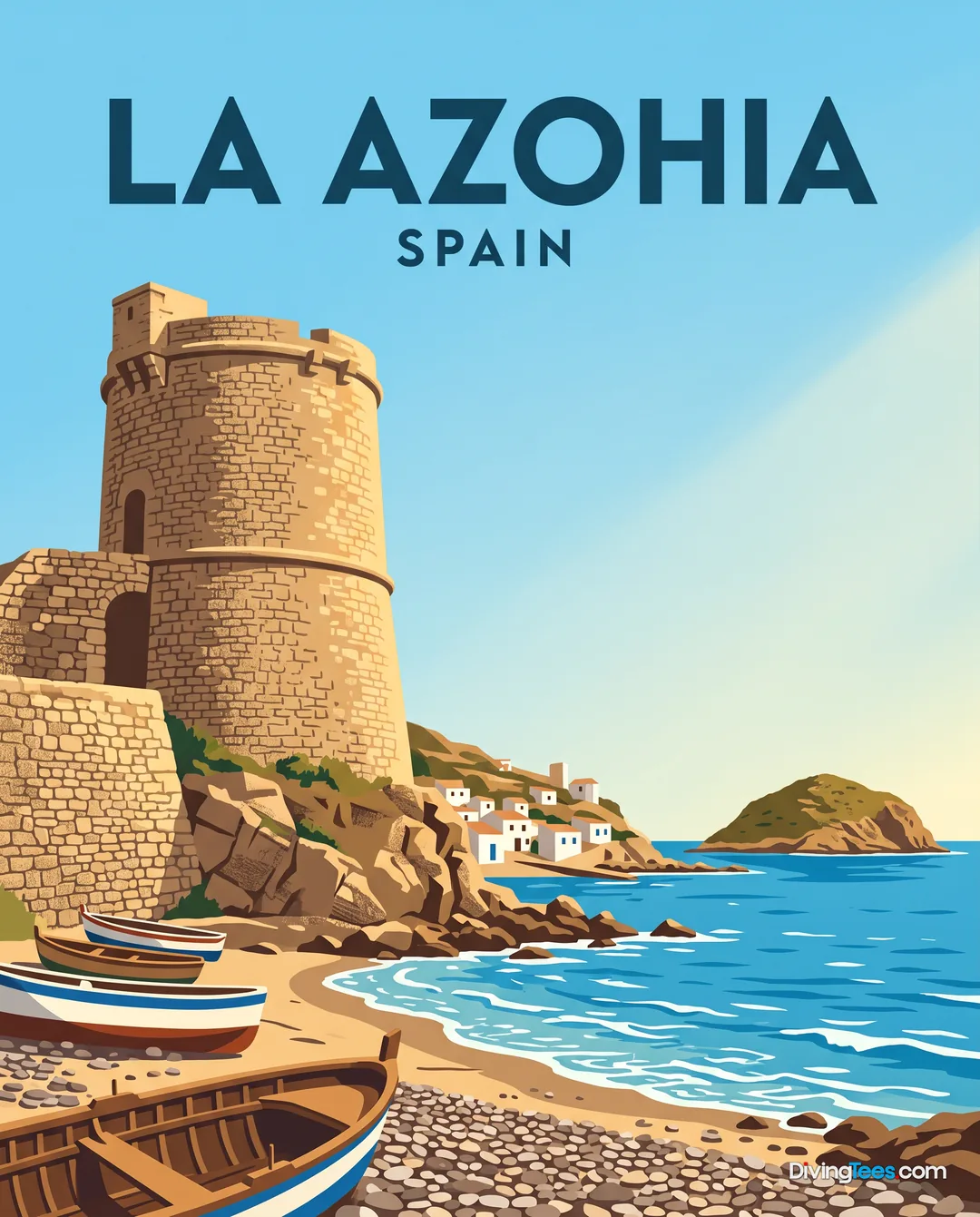
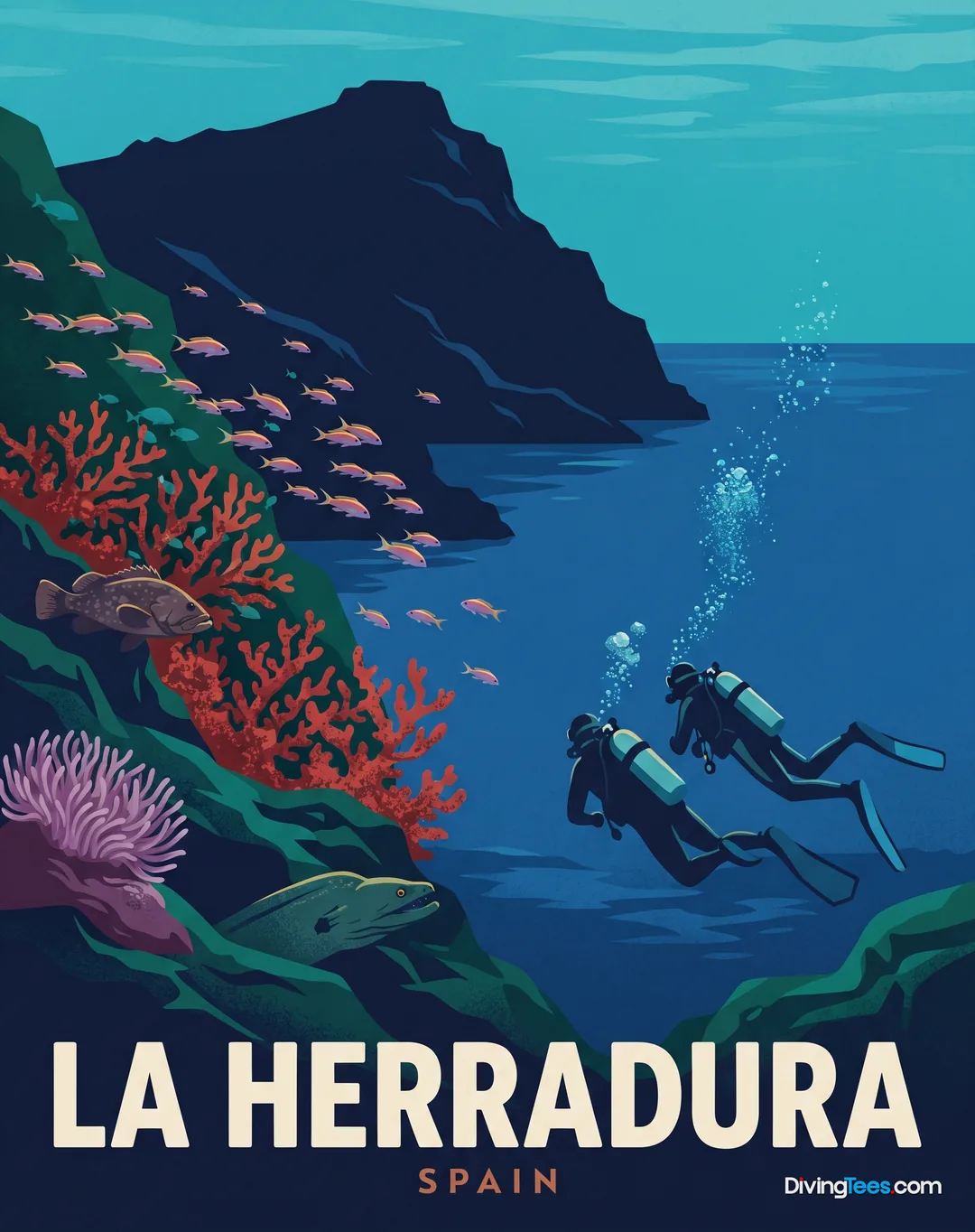
Dive centres


Hotels
When to go, and where by month
January, February and March offer no listed seasonal window for these diving areas. April opens the year around Mallorca and Palamós. From May through September, the choice broadens across the Costa Tropical, Cabo de Palos, Mallorca and Palamós, making this the period with the widest spread of mainland and island options. In October, November and December, Almuñécar, La Herradura and Malaga remain open while Vera becomes the south-eastern alternative. The reason to read the calendar by coast rather than by country is that these operating windows do not move together: Cabo de Palos closes as Vera opens, with no shared months, and Vera also has no overlap with Mallorca or Palamós. The Costa Tropical is consequently the useful shoulder-season anchor, while spring and summer favour the north-eastern coast and the Balearic island. L'Estartit belongs to the Costa Brava grouping, but its seasonal line should be checked separately when planning around it.
Marine life, coast by coast
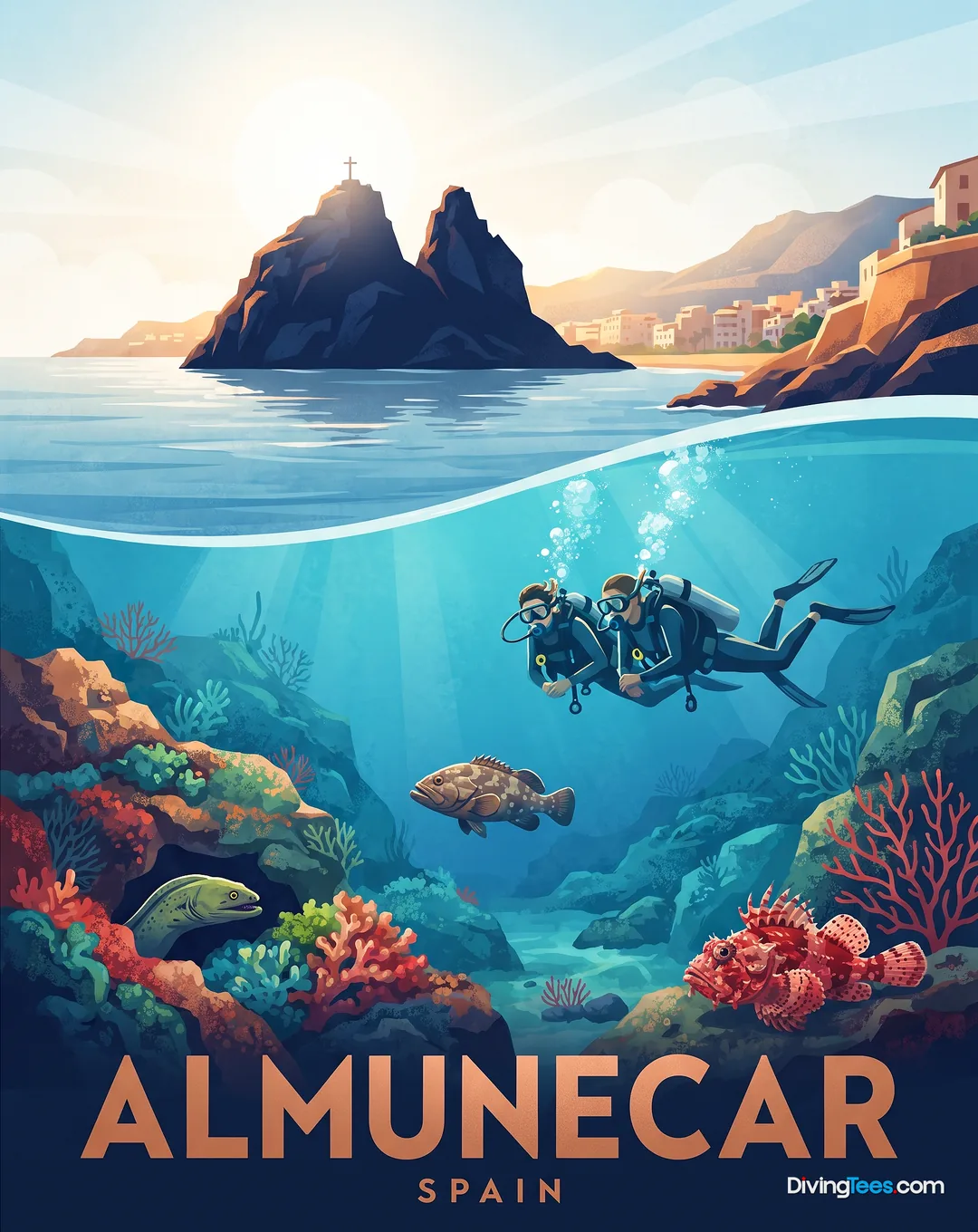
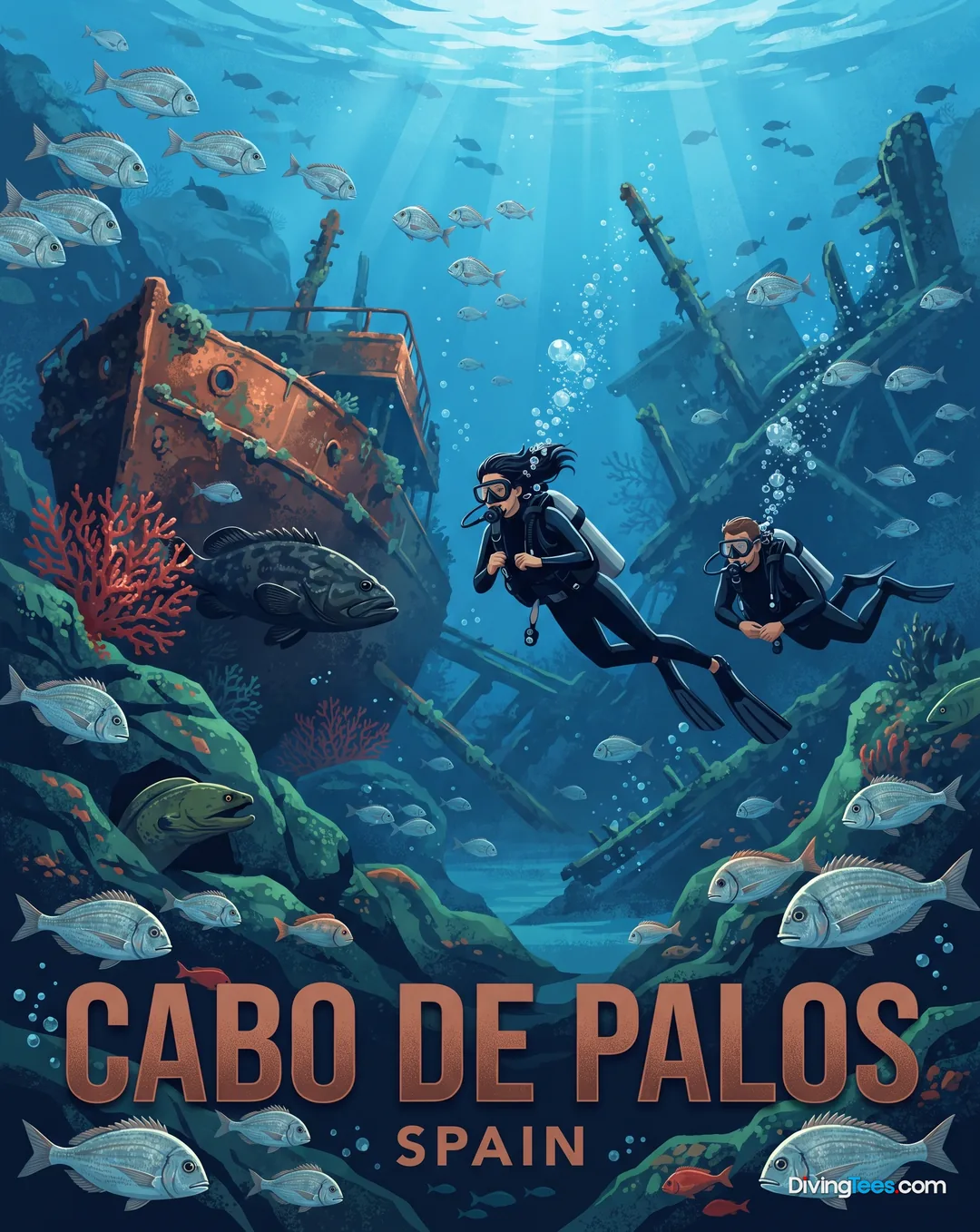
Wildlife changes the logic of a Spanish itinerary. The Cabo de Palos–Vera pairing is associated with sea bream, dentex, moray eel and ocean sunfish, giving the south-east a recognisable fish-and-pelagic flavour. Almuñécar, La Herradura and Malaga share a different signature: bogue, conger eel, nudibranchs and salema. That distinction matters when a diver is choosing between the Costa Tropical and the Murcian–Almerian side rather than simply following the warmest month. Mallorca adds corbines and dentex to the picture. Dentex therefore links an island experience with the south-east, whereas conger eel and nudibranchs point towards the Costa Tropical. These are regional markers for shaping a trip, not a promise that every dive will deliver the same encounter.
Getting between the areas
Short transfers make the Costa Tropical the easiest mainland combination. Almuñécar and La Herradura sit three kilometres apart, while Malaga is roughly an hour’s road journey from La Herradura and a little farther from Almuñécar. That allows one coastal base to cover nearby diving and a city stay without turning the holiday into a transfer exercise. On the Costa Brava, L'Estartit and Palamós are twenty-four kilometres apart, a workable pairing by car. Cabo de Palos and Vera are about 107 kilometres apart, but their opposite seasons make combining them less useful than the map suggests. Longer links quickly consume a half-day or more: Almuñécar and Vera are about 178 kilometres apart, Mallorca and Palamós require an island crossing or flight, and L'Estartit and Mallorca are separated by roughly 251 kilometres. Combining the Costa Tropical, Costa Brava and Mallorca in one fortnight means accepting repeated transport days.
Take off your mask
Spain’s regional identity is unusually visible once you leave the waterfront. Around Almuñécar and La Herradura, the Costa Tropical combines white villages, fishing ports and the Moorish and Roman inheritance of Andalucía. Castillo de San Miguel, Parque El Majuelo and the Cueva de Siete Palacios – Museo Arqueológico de Almuñécar give the town a concentrated historical character, while Granada and the Alhambra make a substantial inland excursion. Salobreña adds a white village and hilltop castle, and the market of Almuñécar keeps the local fishing economy tangible. Food changes with the landscape. Málaga and the coast favour pescaito frito, sardines in espeto, gazpacho and salmorejo cordobés. Catalonia brings pa amb tomàquet, cava and vermut, with fishing villages around Palamós and L'Estartit relying on fish markets and straightforward menus. Mallorca has sobrasada, ensaimadas and fish calderetas. Meal times run late: comida is generally around two or three in the afternoon, while cena begins after nine. Semana Santa, San Juan and summer fiestas can alter streets, bookings and opening hours.
What holds true everywhere here
Across Spain, the practical question is rarely whether a site exists, but how the day’s sea conditions shape the programme. Centres may switch sites when calm water is required, so a clear briefing on the local selection matters more than choosing by map alone. On an island, accommodation also needs to be judged against the centres’ departure points, since transfers can erode a day’s flexibility. Repeated boat diving makes nitrox worth considering, particularly for divers planning several immersions daily. Where a reserve or protected sector is involved, stable buoyancy, careful approaches and respect for anchoring and speed rules are part of the ordinary briefing. High-season ports become busier, especially around Mallorca and L'Estartit, bringing more waiting and less freedom to alter departure times.
Frequently asked questions about Spain
When should you plan a diving trip to Spain?
Timing depends on the coast you choose. Mallorca and Palamós are associated with diving from April to September, while Almuñécar and La Herradura offer an opposite seasonal choice. Consider the region alongside the calendar, since Spain’s wildlife and diving character change between the Costa Tropical and the south-eastern coast.
What marine life might you see while diving in Spain?
Cabo de Palos and Vera are associated with sea bream, dentex, moray eel and ocean sunfish. Almuñécar, La Herradura and Malaga feature bogue, conger eel, nudibranchs and salema. Mallorca adds corbines and dentex. These regional patterns help shape expectations, but individual dives can vary.
How can you choose the right Spanish diving region for your stay?
Base your itinerary on the wildlife and atmosphere you want. Choose the Costa Tropical for conger eel, nudibranchs and salema, Cabo de Palos and Vera for sea bream, dentex, moray eel and ocean sunfish, or Mallorca for corbines and dentex. Regional dishes also change along the coast.
What can you do beyond diving during a stay in Spain?
A Spanish diving trip can include regional food and cultural visits. Try gazpacho, pescaito frito and sardines in espeto, with local dishes varying from coast to coast. If you stay around Almuñécar, Granada and the Alhambra provide an additional cultural focus beyond the Mediterranean shore.