
Brisbane Scuba
Google 4.9/5 (71 reviews)
Australia · Pacific
Tangalooma Wrecks, grey reef sharks at Flat Rock, turtles and rocky drop-offs define Brisbane’s diving around Moreton Bay and its islands.
For subtitles in English: start the video firstthen click the gearat the top right of the video, select “Subtitles/CC”, then “Auto-translate” and choose “English”.
Brisbane is a practical mainland base for exploring Moreton Bay by boat, with the city supplying the beds, transport and non-diving days. Underwater, the destination shifts from coastal sites and sheltered bay water to the Tangalooma Wrecks, rocky reefs and drop-offs around Moreton Island and North Stradbroke Island. That spread is the point: a stay can combine wreck structure, exposed island diving and marine-life encounters rather than revolve around one tropical reef. It also means each day needs planning around its departure point and sea conditions.
The diving moves between wrecks, rocky reefs, drop-offs and coastal sites. Tangalooma offers the most obvious change of scene, with submerged wreck structure to explore, while Flat Rock, Cherubs Cave and Henderson Rock are more exposed sites where grey reef sharks are part of the appeal. Currents are variable rather than a constant feature, but swell and current can make the island sites substantially more demanding than sheltered parts of Moreton Bay. More experienced divers may encounter a downcurrent or a drift dive, depending on the site and conditions, so a proper briefing matters. Boat trips are the main way to reach the signature sites, and the day is shaped by the port or ramp used, navigation time and the return journey. A lamp is worthwhile around wreck interiors and shaded relief. Some sites suit shore diving, but they do not replace the island outings.
Grey reef sharks are a regular presence in the designated areas around Flat Rock, Cherubs Cave and Henderson Rock, where divers must give the animals space and follow the site rules. Marine turtles can be seen throughout the year, alongside nudibranchs, shrimps and pipefish for those prepared to slow down around the reef and rock. Manta rays appear occasionally, particularly in the warmer season, while schools of snapper are a seasonal possibility. The wildlife is not confined to one signature encounter, which suits divers who enjoy moving between large animals, reef detail and wreck structure. Do not block cave entrances or approach sharks closely. In these regulated areas, the behaviour of the diver is part of the site experience, not an optional extra.
October to April is generally the most rewarding window, as spring through early autumn tends to bring calmer seas and better visibility around Moreton Bay and the islands. That matters most when a trip includes exposed sites such as Moreton Island, North Stradbroke Island or Wolf Rock, where a marginal day can change the plan. Heavy summer rain can send coastal run-off into the bay and reduce visibility, while swell and plankton-rich water can have the same effect at other times. There is no absolute closed season, so the sensible approach is to allow more than one diving day and keep the boat schedule flexible. Early departures and weekdays can also make the better sea days less crowded.
Brisbane can suit a newly qualified diver on sheltered sites and outings matched to the group, but it is not wise to treat every trip as entry-level. Current, depth, swell and exposure become more significant around the islands and at Wolf Rock. Advanced Open Water is useful for deeper or more exposed dives, while a Wreck qualification is appropriate for anyone planning to explore the Tangalooma Wrecks beyond a simple exterior tour. Your recent experience in current and boat diving should guide the booking more than the city name.
From London or Manchester, reach Brisbane with the necessary flight connections, then arrange the journey by road to the relevant Moreton Bay port or launch ramp. The important constraint is that Brisbane itself is not the departure point for every dive: Moreton Island and North Stradbroke Island require a separate boat crossing, and the Tangalooma Wrecks depend on the boat schedule and navigation plan. Allow time between your arrival, transport and the first outing rather than assuming a city address equals a dock. Once in Brisbane, centres and embarkation points can be reached by car, taxi or public transport, although locations outside the city centre are easier with a car. Keep the road transfer and the boat departure as separate parts of the day when planning.
Check the Moreton Bay Marine Park zoning before booking, especially if the itinerary includes Flat Rock, Cherubs Cave or Henderson Rock. These are regulated shark areas, not ordinary reefs: do not enter or obstruct occupied cavities, and remember that night diving is restricted in designated grey reef shark zones. Secure your regulator, camera and gauges so they cannot drag across coral, and treat the park’s restrictions as site-specific rather than assuming one rule covers the whole bay. For Tangalooma, confirm that the wreck outing and its guided format match the group’s experience. Keep a lamp in your kit for wrecks and shaded rock. Arrange the road transfer to the port separately from the dive booking, and leave room for a changed plan when rain, swell or current affects an island departure. Do not book a single day while expecting the bay, wrecks and exposed islands to be interchangeable. A weekday morning departure usually gives the least pressured start.
A five to seven-day stay works well as a base-building trip: use Brisbane or the bay area for accommodation, put several boat days into the programme, and reserve a separate day for the Tangalooma Wrecks or nearby bay reefs. Keep at least some flexibility for island conditions. Non-divers have plenty to do in Brisbane, Moreton Bay and the neighbouring islands, from museums and riverfront districts to beaches, dunes, wildlife watching, kayaking and paddleboarding. North Stradbroke Island adds coastal walks and birdlife to a day out of the water.
Hello, I'm Marina, DivingDeal.com's AI assistant. I guide you through destinations, areas and countries.
Thinking about the whole trip and the flights? Talk it over with Edith →
Marina is an AI. Some links are affiliate links: DivingDeal may earn a commission, at no extra cost to you. Bookings are made with the partner.
October to April is generally the most rewarding period, with calmer seas and better visibility around Moreton Bay and its islands. Heavy summer rain can reduce visibility through coastal run-off, while swell and plankton-rich water may also affect conditions. Allow several diving days and keep boat plans flexible.
Brisbane can suit newly qualified divers on sheltered sites and outings matched to the group, but island sites and Wolf Rock may involve greater current, depth, swell and exposure. Advanced Open Water is useful for deeper or exposed dives, while a Wreck qualification suits divers planning to explore the Tangalooma Wrecks.
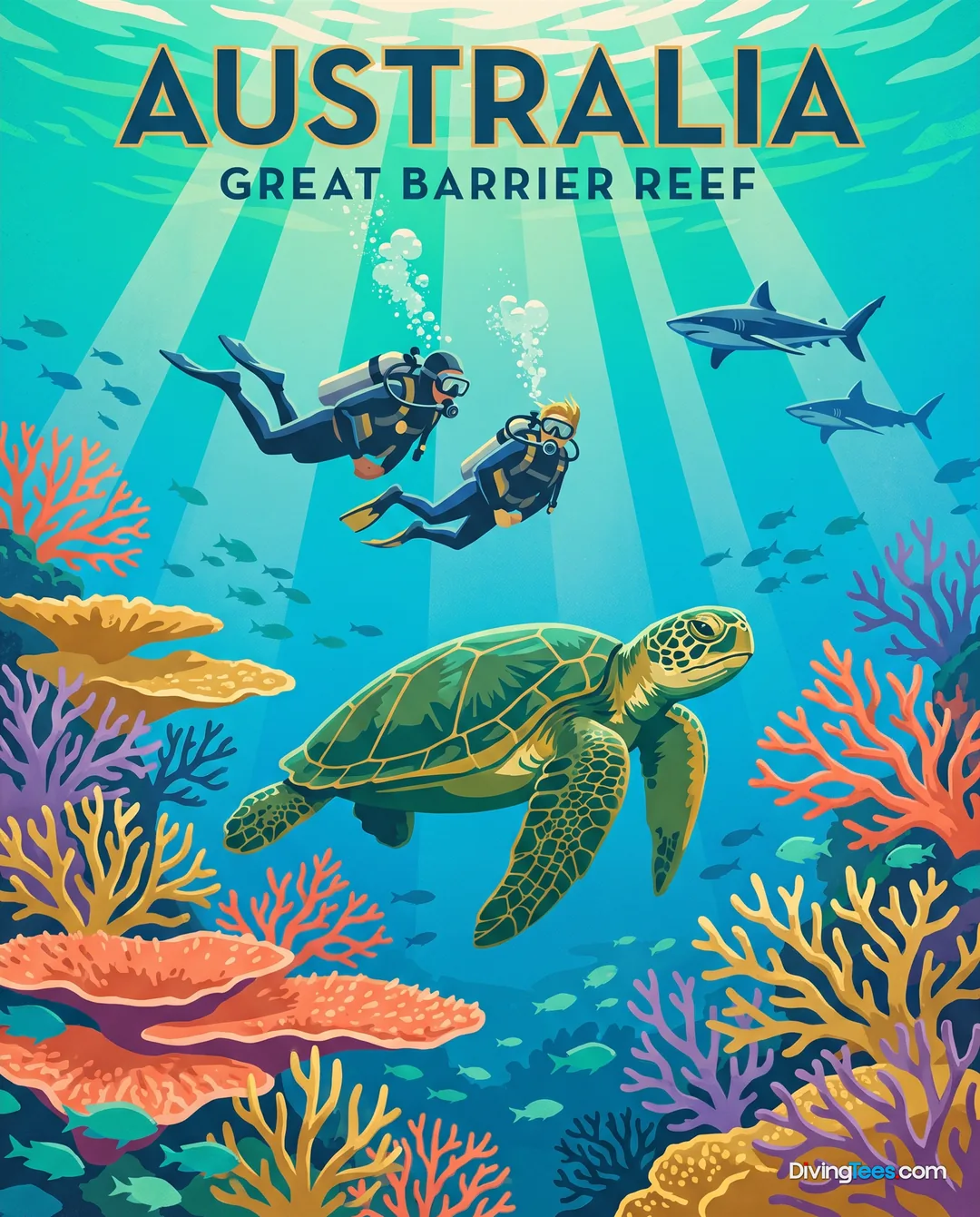
You can explore the Tangalooma Wrecks, rocky reefs, drop-offs and coastal sites around Moreton Bay and its islands. Grey reef sharks occur around Flat Rock, Cherubs Cave and Henderson Rock, while marine turtles are seen throughout the year. Nudibranchs, shrimps, pipefish and occasional warmer-season manta rays add smaller and larger encounters.
Use Brisbane or the bay area as an accommodation base, then schedule several boat days and a separate outing to the Tangalooma Wrecks or nearby bay reefs. Arrange road transfers to the relevant port or ramp, check marine park zoning, and leave flexibility for rain, swell, current and changed island departures.