
Extra Divers Christmas Island Australia
Google 4.8/5 (47 reviews)
Australia · Pacific
Fringing reef, sheer drop-offs, whale sharks and turtles meet off Christmas Island, with Flying Fish Cove keeping a shore dive close at hand.
For subtitles in English: start the video firstthen click the gearat the top right of the video, select “Subtitles/CC”, then “Auto-translate” and choose “English”.
The fringing reef at Christmas Island drops into deep water close to shore, with walls and caves giving both boat dives and shore dives real substance. Whale sharks, manta rays, turtles, dolphins and reef sharks are part of the attraction. This is a land-based trip, not a liveaboard, and its remoteness rewards autonomous divers who can leave room for the sea to dictate the plan. It suits those who value empty water and a proper sense of place over resort convenience.
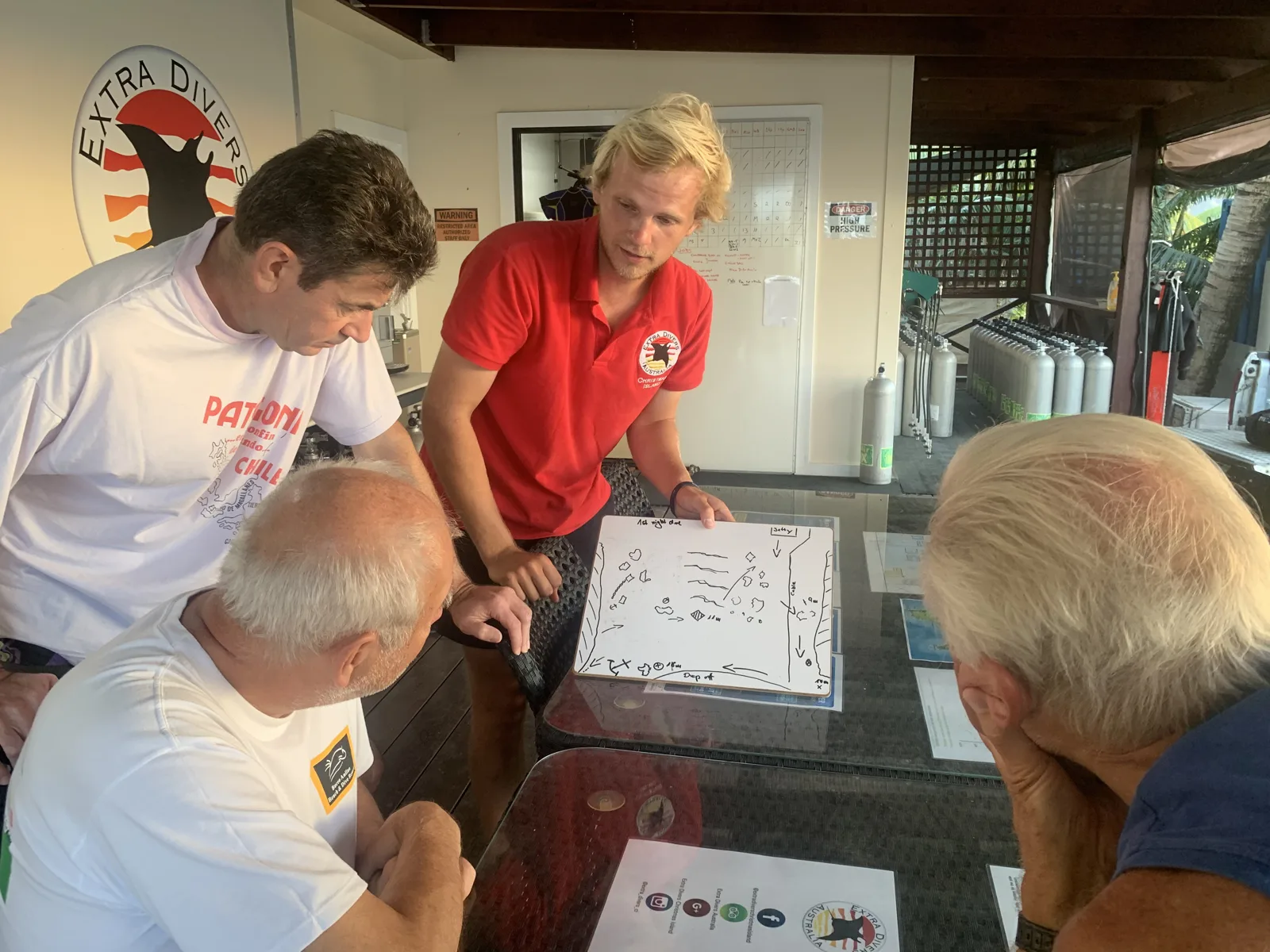
At Christmas Island, the recurring shape underwater is a fringing reef ending in a wall, with caves and deep water close to the coast. Flying Fish Cove makes a useful shore option, while local boats reach other launch points and exposed sections. Some dives begin only minutes from the cove, but the short run does not make them predictable: currents vary and must be checked before entry. A downcurrent can turn a planned route into a drift dive, particularly along the drop-offs, so the briefing matters more than the map. Visibility is commonly 20 to 30 metres and can be better, although cold-water upwelling linked to the Java Trench may cloud the water, especially around August and September. Rainy-season swell and runoff can have the same effect. Expect a mixture of boat and shore diving, with the final choice often following the sea state rather than a fixed itinerary.
Christmas Island’s appeal is the chance of pelagic encounters beside a reef that starts near land. Whale sharks are usually associated with the rainy season, from November to April, and manta rays may also appear then, though less predictably. Turtles, dolphins and reef sharks add interest when the larger visitors are absent. The productive water around the island is part of the explanation: cold-water upwelling can bring nutrients, but it can also take the edge off visibility. Treat whale sharks as a seasonal possibility, not a timetable. In the dry season, the clearer, calmer conditions may make the walls, caves and reef life easier to enjoy, even without the headline animals.
The practical choice at Christmas Island is between steadier diving and seasonal wildlife. May to October is generally the dry season, when south-easterly winds tend to leave the northern and western coasts calmer, with visibility often at its most useful. August and September can bring cold-water upwelling and reduced clarity. From November to April, the rainy season and monsoon pattern can make the north coast rougher, but this is the usual window for whale sharks and occasional manta rays. Come then for the animals, allowing alternatives and spare days. Come in the dry season for a better chance of regular boat departures, calmer water and clearer views.
All levels are catered for, but Christmas Island suits divers comfortable making decisions in changing conditions. Advanced Open Water training, or the BSAC equivalent, is useful for the deeper drop-offs. Experience with current is more important than collecting a particular qualification, because a downcurrent or drift dive may change the shape of an immersion. Nitrox is useful on repetitive days, especially when boat dives are combined with shore diving. Anyone still building confidence should use Flying Fish Cove as a practical option and follow the local current briefing closely.
From London Heathrow or Gatwick, or from Manchester, the journey is built around Perth: Christmas Island is reached by air, with a direct flight from Perth taking about four hours. An alternative routing via the Cocos (Keeling) Islands takes about eight hours. There is no ferry to the island, so do not build the itinerary around a sea crossing. Flights are infrequent, making a missed connection or timetable change more disruptive than on a mainland holiday. Allow generous margin around the Perth connection and keep the return plan equally conservative. Once on Christmas Island, dive centres and accommodation are concentrated in or around Settlement; Flying Fish Cove is a short road transfer away, and other sites are reached by road and local boat.
Build the trip around weather windows, not a rigid sequence of boat departures. In the rainy season, the northern coast may be too rough and the eastern side can become the better option, so keep both the route and the shore day flexible. Do not assume that arriving for whale sharks means arriving for calm seas. Leave several spare days: flights are infrequent, and a rough spell can remove a boat outing even when conditions look acceptable ashore. Put a Flying Fish Cove shore dive into the plan as a genuine fallback, not an afterthought. Ask before travelling exactly what equipment and transfers are available, because island logistics limit choice. Avoid booking every dive on one coast. Keep the final 24 hours before flying free of immersion, and remember that a delayed flight is especially awkward here. A locally confirmed current briefing before each dive matters on the walls and exposed sites.
Stay for seven to ten days if possible. That gives the flight pattern some margin, leaves weather days for boat diving, and allows a switch between coastal sectors without sacrificing the whole programme. Base yourself around Settlement, where accommodation and dive services are grouped, then use short local transfers to Flying Fish Cove and other launch points. Keep non-diving time for the national park, forest walks, coastal viewpoints, caves and the red crab migration. Snorkelling from Flying Fish Cove is an easy companion activity when the boats cannot run.
Hello, I'm Marina, DivingDeal.com's AI assistant. I guide you through destinations, areas and countries.
Thinking about the whole trip and the flights? Talk it over with Edith →
Marina is an AI. Some links are affiliate links: DivingDeal may earn a commission, at no extra cost to you. Bookings are made with the partner.
Choose the dry season for calmer water, clearer views and a better chance of regular boat departures. Visit during the rainy season if whale sharks and possible manta rays matter more, while allowing alternatives and spare days. August and September may bring cold-water upwelling and reduced visibility, regardless of wildlife plans.
Christmas Island caters for all levels, but you should be comfortable making decisions in changing conditions. Experience with currents matters because downcurrents and drift dives can alter your route. Advanced Open Water training or an equivalent is useful for deeper drop-offs. Flying Fish Cove offers a practical option while you build confidence.
You can explore fringing reef walls, caves and deep water close to shore, with boat and shore dives available. Whale sharks usually visit during the rainy season, while manta rays may also appear. Turtles, dolphins and reef sharks add interest, and visibility can commonly reach twenty to thirty metres in season.
Base yourself around Settlement and build the trip around weather windows rather than fixed boat departures. Keep routes, shore dives and coastal sectors flexible, with spare days for rough conditions and infrequent flights. Flying Fish Cove is a useful fallback. Ask about equipment and transfers, and keep the final day before flying free of diving.