
Jetty Dive Centre
Google 4.9/5 (263 reviews)
Australia · Pacific
Rocky walls, kelp forests, anemones, grey nurse sharks and summer visitors from the tropics shape Coffs Harbour’s boat diving around the Solitary Islands
For subtitles in English: start the video firstthen click the gearat the top right of the video, select “Subtitles/CC”, then “Auto-translate” and choose “English”.
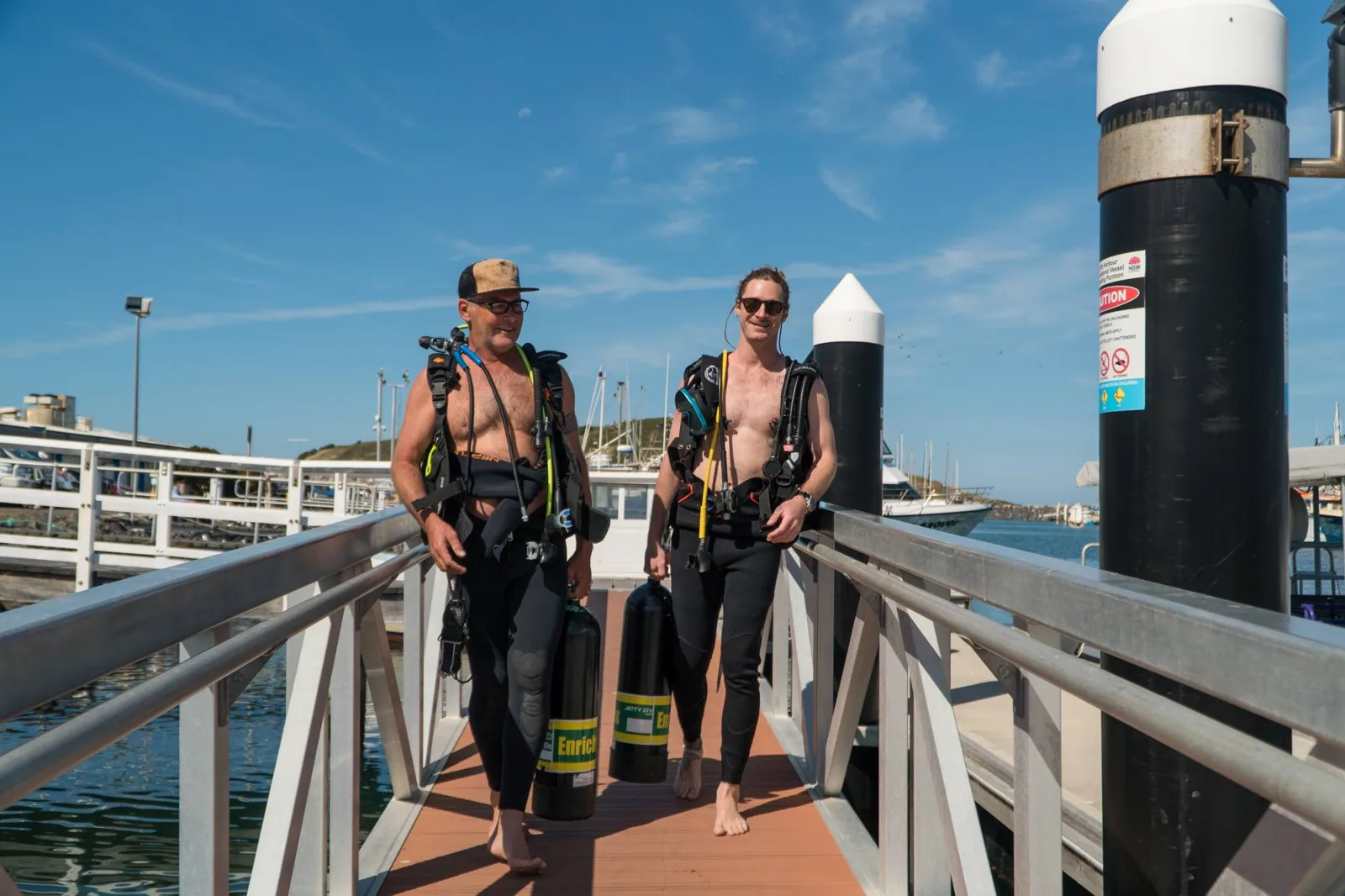
Coffs Harbour is a land-based gateway to the Solitary Islands, where dive boats leave the marina for rocky walls, boulder fields, kelp, coral and shallow caves. The appeal is the meeting of temperate and tropical life rather than a single headline animal. One season may bring tropical fish and an occasional manta ray, while winter shifts the interest towards grey nurse sharks and giant cuttlefish. It suits a week built around boat diving, with the coast providing a useful second act.
The underwater scenery is made of rock rather than a uniform reef: walls, ledges, cracks, boulders, shallow caves, coral growth and kelp give the islands their character. North Solitary’s Anemone Bay is known for its anemones, while South Solitary and Split Solitary bring varied relief and resident fish life. Expect boat dives from Coffs Harbour, not shore entries or a liveaboard itinerary. Currents are variable, so the same site can feel straightforward on one day and more demanding on another. Visibility also changes with swell and coastal run-off, and should not be treated as a fixed selling point. The practical rhythm is a dive, a safety stop and a return to the boat, with the skipper and guide adapting the plan when conditions affect one side of the archipelago. Several days allow that flexibility without turning the trip into a gamble on one departure.
The Solitary Islands bring together residents of temperate rocky habitat and seasonal visitors carried by the East Australian Current. From November to April, tropical species are more evident, and this is also the period when manta rays, leopard sharks and ornate ghost pipefish may appear. North Solitary’s anemones provide a particularly distinctive subject, while South Solitary and Split Solitary are associated with fish, turtles, eels and grey nurse sharks. Winter changes the emphasis: grey nurse sharks are more regularly encountered, and giant cuttlefish may join the cast. Humpback whales pass the Coffs Coast from June to October, making the surface interval, boat ride or a separate coastal outing part of the wildlife experience rather than an afterthought.
The warm season, from November to April, is the logical choice if tropical fish are the priority. The stronger seasonal influence of the East Australian Current brings those visitors south and is also when manta rays, leopard sharks and ornate ghost pipefish are most likely to turn up. Choose the Australian winter instead for grey nurse sharks, with giant cuttlefish as a possible bonus. Diving remains possible throughout the year, but sea conditions can interrupt boat plans, so the most sensible season is the one that matches the species you want and leaves room for a weather-related change of plan.
The islands are suitable for divers of all levels, provided they are comfortable with boat procedures, changing conditions and the possibility of current. There is no special certification requirement identified for the area, so BSAC, PADI and SSI divers can approach it through their existing training and experience. Beginners should be candid about current and seasickness before booking a full run of outings. Experienced divers will appreciate the freedom to investigate walls, cracks, kelp and caves without mistaking variable conditions for a technical-diving requirement.
From London Heathrow, Gatwick or Manchester, reach Coffs Harbour either by travelling overland from Sydney or Brisbane, or by taking a domestic flight to Coffs Harbour and continuing by land. The journey therefore needs connection time rather than a simple international arrival followed by a marina transfer. Once in town, the diving departure point is the Coffs Harbour marina, with local accommodation sometimes close enough for walking, otherwise requiring a car or taxi. There is no public ferry to arrange for the islands: the dive operator’s boat makes the offshore crossing. Build the onward transfer and marina departure into the day, particularly if an international and domestic itinerary are being combined.
Book more than one boat-diving day. The islands are offshore, and a poor sea state can remove a planned outing, whereas several days give the operators room to use a more sheltered part of the archipelago. Ask what remains workable when swell affects the exposed sites, rather than assuming every island will be visited. North Solitary and Anemone Bay make sense for anemones and summer tropical influence; South Solitary or Split Solitary better suit a plan centred on rock, kelp and resident wildlife. Do not reserve the trip solely for tropical species, since winter offers the more dependable grey nurse shark season. Keep a non-diving day for June to October if humpback whales are a priority, and use Muttonbird Island for coastal views, dolphins and seabirds. Finally, treat the marine-park zoning as part of the itinerary: sanctuary zones allow diving, but fishing and activities that damage animals, plants or habitats are prohibited. Most islands are not places to land and explore freely.
Allow four to seven days on the ground, combining several boat-diving days with a weather margin and time ashore. Coffs Harbour works as a base rather than a liveaboard destination, so mornings begin at the marina and evenings return to town. Between dives, Muttonbird Island, beaches, coastal walks and whale or dolphin watching keep non-divers occupied. Accommodation around town and the marina may be walkable, but a car or taxi can be useful when it is not.
Hello, I'm Marina, DivingDeal.com's AI assistant. I guide you through destinations, areas and countries.
Thinking about the whole trip and the flights? Talk it over with Edith →
Marina is an AI. Some links are affiliate links: DivingDeal may earn a commission, at no extra cost to you. Bookings are made with the partner.
Choose November to April if tropical fish are your priority, since the East Australian Current brings seasonal visitors south. Manta rays, leopard sharks and ornate ghost pipefish may also appear then. Australian winter shifts attention towards grey nurse sharks, with giant cuttlefish possible. Sea conditions can interrupt boat plans in any season.
Coffs Harbour suits divers of all levels who are comfortable with boat procedures, changing conditions and possible current. Beginners should be honest about their comfort with current and seasickness before booking several outings. Experienced divers can explore walls, cracks, kelp and caves, while variable conditions do not automatically make the diving technical.
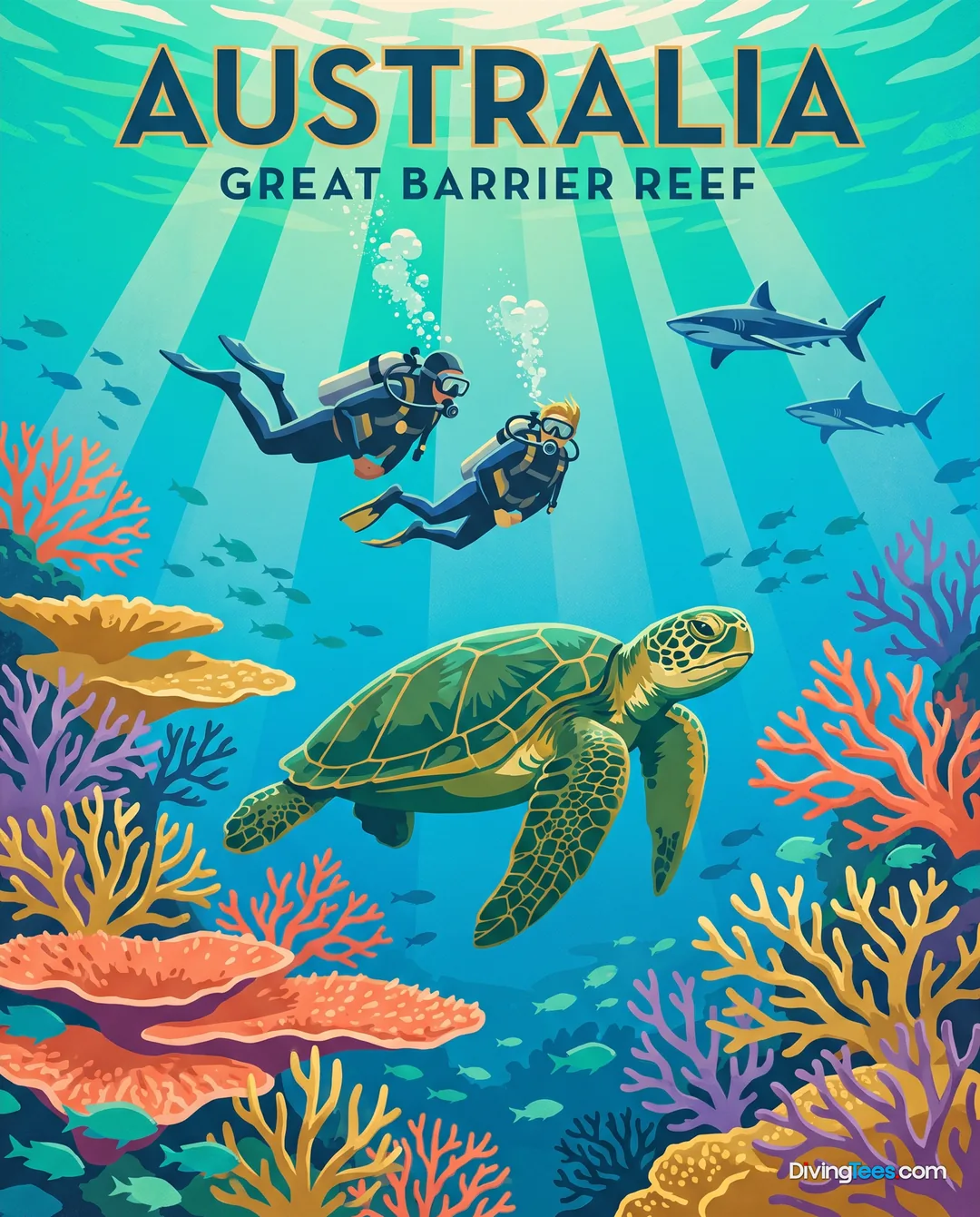
Diving around Coffs Harbour reveals rocky walls, ledges, cracks, boulders, shallow caves, coral growth and kelp forests. North Solitary’s Anemone Bay is known for dense anemones. Depending on season and site, you may encounter tropical fish, grey nurse sharks, giant cuttlefish, turtles, eels, manta rays, leopard sharks and ornate ghost pipefish.
Use Coffs Harbour as a land-based base for several boat-diving days from the marina, leaving room for weather changes and sheltered alternatives. Combine diving with beaches, coastal walks or Muttonbird Island. Accommodation may be walkable from the marina, while a car or taxi can help. Keep a non-diving day for whale watching from June to October.