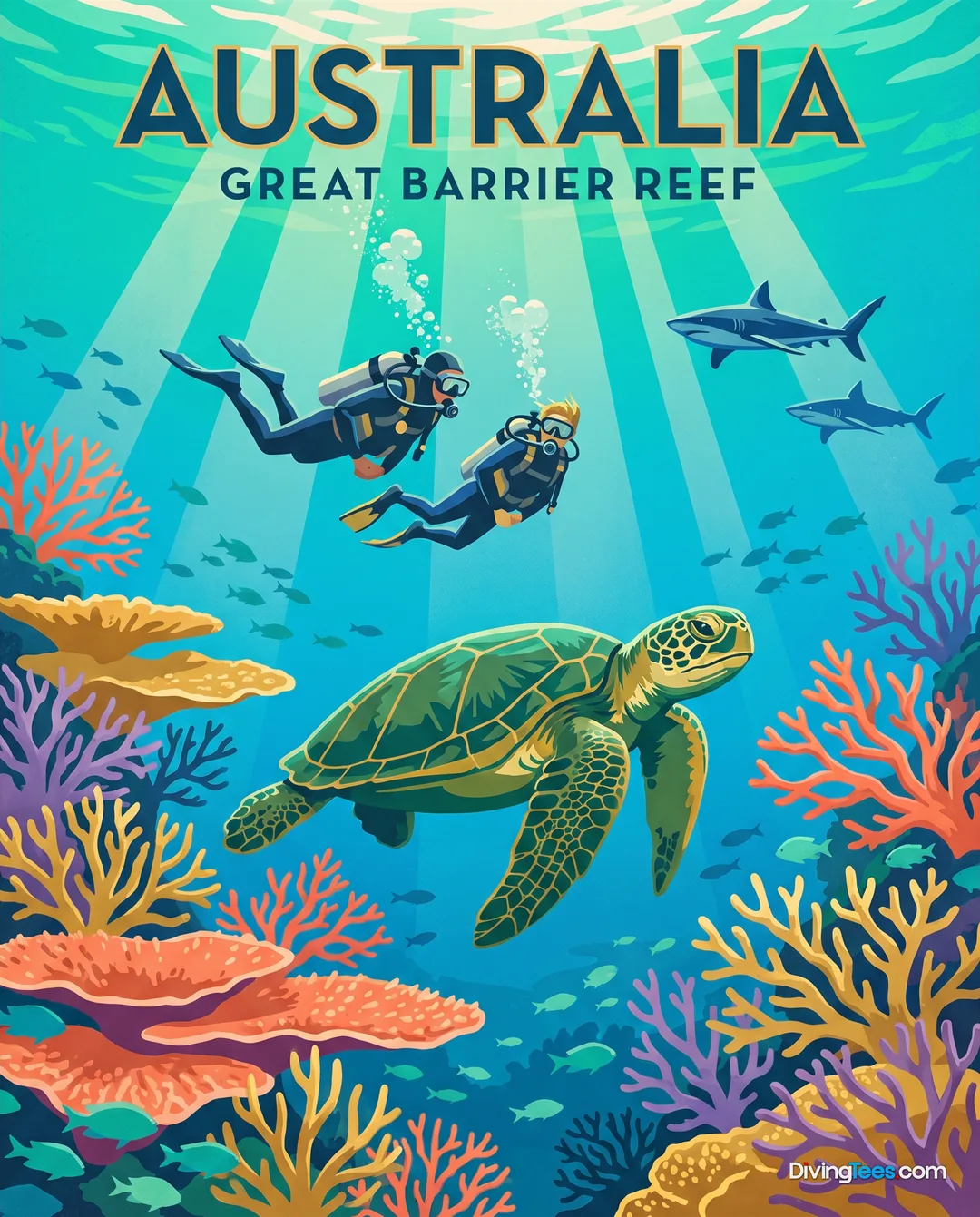
Liveaboards · Australia
Coral Sea Dreaming — a small-group sailing liveaboard for guided Great Barrier Reef diving
What makes this boat unique
- This steel sailing motor yacht carries up to 12 guests with two dive instructors and a skipper.
- The two-day, one-night trip leaves from Cairns at 8am and returns the following day around 4pm.
- All dives are guided, with two instructors for a maximum guide ratio of 6:1.
- The boat has air-conditioned cabins and saloon, a front dive platform, and a three-phase compressor with three air banks.
- Nitrox is not available, while rental diving equipment is provided for divers.
The invitation
Coral Sea Dreaming is for divers who would rather spend one night on the reef than join a crowded day boat and hurry back to Cairns. The group stays small, the dives are guided, and the boat can move between more than 25 moorings across the Cairns reef systems as conditions change. That makes the trip less about ticking off one fixed itinerary and more about finding a workable site for the weather on the day. It also suits mixed groups: certified divers can make several day dives and a night dive, while beginners and snorkellers have shallow water close to the boat. The sailing matters too. When conditions allow, the engine is turned off and Coral Sea Dreaming moves under sail, leaving only the water and the hull. It is a short liveaboard, but it gives the reef something a day trip cannot: an evening on site and a second morning in the water.
Boarding
Boarding starts at Marlin Marina in Cairns, where Coral Sea Dreaming lies at Finger A. The first impression is of a compact steel sailing motor yacht rather than a floating resort: the space is close, practical and organised around the reef. The dive area is at the front, the sundeck sits amidships, and the covered area near the wheelhouse becomes the main place to sit when people are out of the water. Inside, the saloon and galley are close to the cabins, so the boat feels like one working household rather than a collection of separate decks. Under way, the diesel engine is part of the experience; when the weather permits, the crew sails instead. With only a small group aboard, guests quickly learn who is diving, who is snorkelling and who is waiting for the next meal.
The atmosphere on board
The small capacity shapes the social life aboard. Twelve guests and three crew share the dive deck, saloon, meals and the spaces between them, so the group becomes familiar quickly. The crew's role is visible throughout the day: the skipper handles the boat and site choice, while the instructors brief, guide and help divers back into the routine after a long break from diving. Passengers describe the equipment as well looked after and the crew as knowledgeable, helpful and good company. That combination matters more on a compact boat than polished decoration. By evening, divers have returned from the night dive, the beer can come out, and the talk moves from what was seen to what might appear on the next site. The atmosphere is closer to a shared reef trip than a hotel with a dive centre attached.
The sites you’ll dive
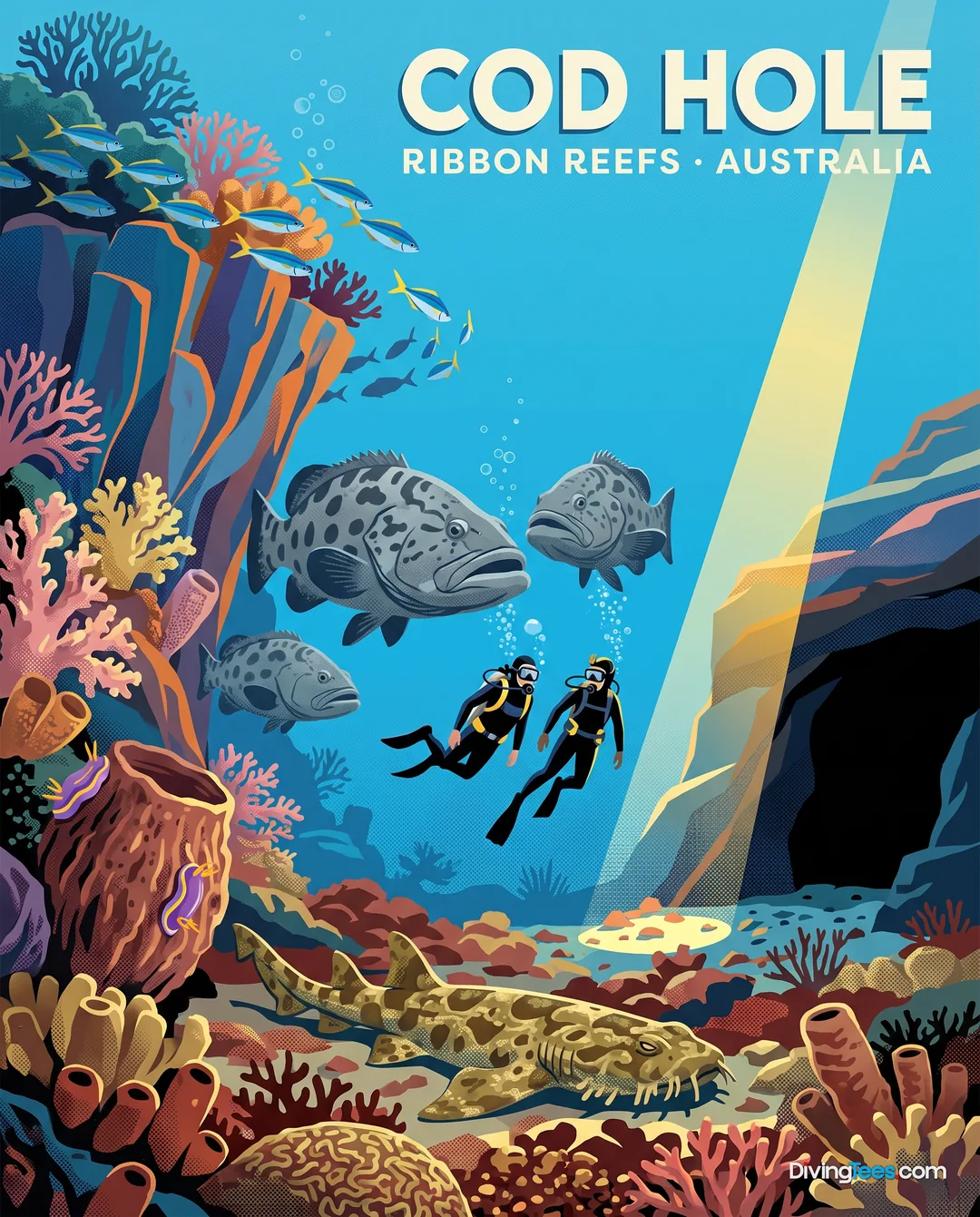
The two-day, one-night route leaves Cairns for the outer Great Barrier Reef and returns to Cairns the next day. Coral Sea Dreaming can work from more than 25 moorings across nine reef systems, so the exact sites change with wind and sea conditions: stronger winds generally favour northern reefs such as Hastings and Michaelmas, while lighter conditions can open Milln, Flynn and Thetford. Milln is known for schooling rock cod, red bass and chevron barracuda, with walls, coral gardens and night activity. Flynn combines wall dives, sloping gardens and sandy lagoon holes around coral bommies. Hastings offers protected water, shallow reef and walls, making it useful when conditions are stronger. Michaelmas adds protected diving beneath a seabird cay where the boat can stay overnight. At Cod Hole, the maximum depth is -16m, and the resident giant potato cod are the reason to descend there.
What you’ll meet underwater
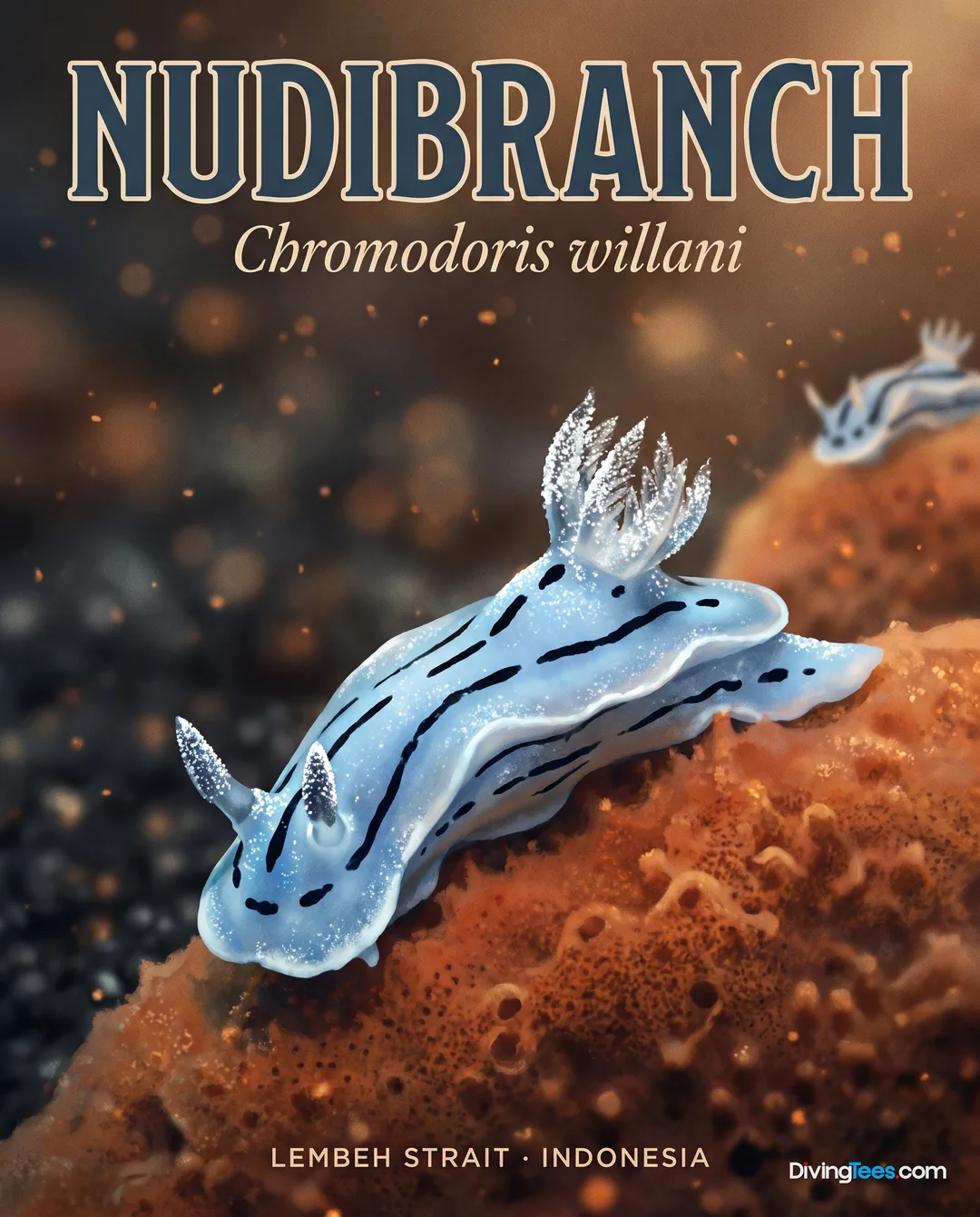
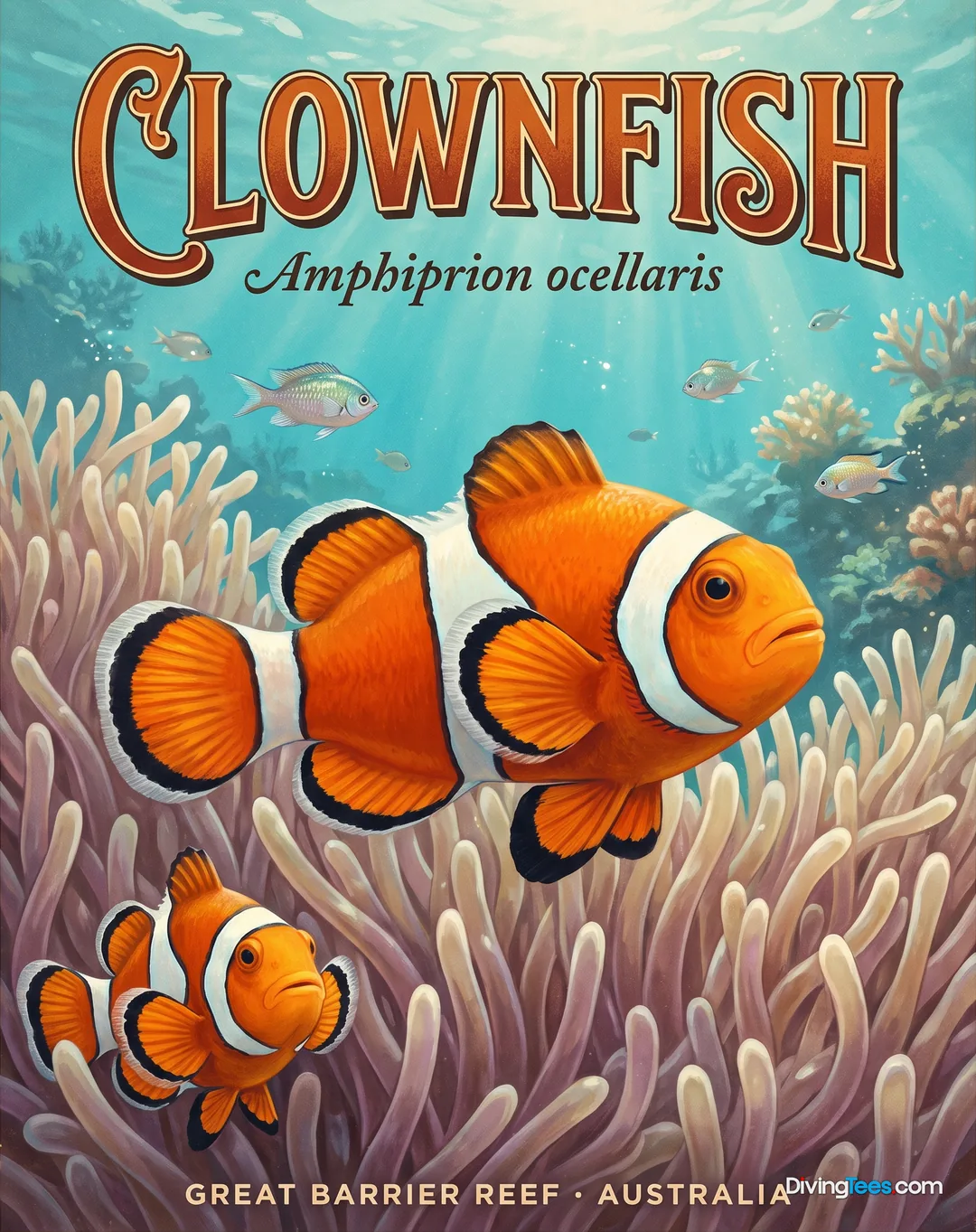
Across the reef systems, the likely cast ranges from small reef fish and nudibranchs to turtles, rays, pelagic fish and reef sharks. Coral gardens and bommies reward a slow search: clownfish sit among anemones, while larger animals may pass along the walls or through open water. The night dive changes the scene, with reef sharks and hunting fish appearing as daytime species settle into holes; sightings remain conditions-dependent rather than promised. Cod Hole has its own reason to go. The resident giant potato cod are the signature encounter, and the site also holds wobbegongs, sponges and small reef life among the structure. Soft corals and nudibranchs are recorded specifically at Cod Hole on this route. The attraction is not a long species list but the contrast between a familiar coral garden, a large animal approaching the group, and the small creatures found only when a diver slows down.
Who puts you in the water
Two dive instructors and a skipper run the trip, with a maximum guide ratio of 6:1 and English as the crew language. All dives are guided, including the night dive, so the instructors are not simply giving a site briefing and sending groups off alone. Certified divers can make four to five day dives and a night dive on the certified-diving option. Introductory divers receive a theory and equipment briefing before entering in a very small group, under direct instructor supervision and to a maximum depth of 12m. No previous dives or diver certification are required for the introductory experience. Refresher training and an Advanced Open Water course are also offered aboard. The boat's stated requirement is deliberately broad, but the practical division remains clear: instructors lead the dives, groups are kept small, and the skipper remains part of the safety watch from the vessel.
The dive deck and the gear
The dive deck is at the front, with tanks staged there and entries made from the platform; divers return by stairs lowered into the water. One tender is carried aboard, but the available details do not describe a separate tender-based pickup system. A three-phase compressor and three air banks keep fills moving during the surface interval, so tanks can be ready for the next dive without a long wait. Rental diving equipment is available, including a dive computer, and a torch is supplied for night diving. Nitrox is not available, and the boat is not set up for technical diving. Tank volume, tank metal and valve type are not stated. The deck is built for repeated recreational dives rather than technical staging: gear stays close to the entry point, the next fill is handled aboard, and the route back up is a ladder rather than a climb over the hull.
Between dives
Between dives, guests spread out across the sundeck, the shaded area near the wheelhouse and the open-air saloon. The sundeck is where a nap or a stretch in the hammock fits naturally between briefings. When Coral Sea Dreaming is able to sail, the engine goes quiet and the boat moves under sail; that is the rare interval when the vessel itself becomes the activity. Snorkellers can stay in the water longer than a diver's surface interval, with shallow areas usually only metres from the boat and the tender ready if help is needed. Others remain aboard with tea or a cold drink, watching the reef and waiting for the next group to gear up. There is no Wi-Fi, which keeps the gaps tied to the sea rather than a screen.
A day on board
The boat leaves Cairns at 8am, then the day takes its shape from the first site briefing, the first entry and the meals between dives. Certified divers can make four to five day dives, with time on deck for eating, resting, snorkelling or sailing between sites. The crew chooses locations according to the conditions, so the order is practical rather than fixed: a protected northern reef may replace a southern site when the wind rises. As daylight fades, the boat settles into the overnight anchorage and the night dive becomes the day's final underwater chapter. Afterwards, diving is finished and the open-air areas turn to dinner, tea or a drink. The following morning brings another chance to dive or snorkel before the return passage, with arrival back in Cairns around 4pm. It is a compact liveaboard rhythm, with the water setting the clock.
What you eat aboard
Breakfast, lunch and dinner are prepared aboard and served as part of the full-board stay. The food is Western-style and served at the table, with dietary restrictions accommodated when arranged. Hot and cold soft drinks are available, as are alcoholic drinks and spirits; alcohol belongs after the day's diving. Meals mark the gaps between the water, the surface interval and the next briefing rather than interrupting a shore excursion. The galley sits beside the saloon, keeping food close to the group and the working part of the boat. After several dives, that matters more than an elaborate menu: divers come back hungry, cold drinks are ready, and the same table brings everyone together before the next entry.
Nights at sea
The night is spent in an air-conditioned double-bed or bunk-bed cabin, with two shared bathrooms and a hot shower available aboard. These are compact liveaboard cabins, not hotel rooms, and the boat's steel hull and working engine remain part of the setting. The saloon is also air-conditioned and provides shelter when the weather turns unpleasant. Outside, the sundeck gives guests a place to lie down during the day and look at the stars after diving has finished. The small number of cabins keeps the arrangement personal, but it also means storage and movement are limited compared with a larger vessel. Couples can choose a private double-bed cabin; solo travellers and families can use the bunk cabins. The point is not space for its own sake. It is waking on the reef, with the next dive reached from the same deck rather than by another transfer.
Bunk Bed Cabin
Double Bed Cabin
What to know before boarding
Meet Coral Sea Dreaming at Berth 3, Finger A, Marlin Marina, 1 Spence Street, Cairns. Boarding starts at 7.45am, and the boat returns to Cairns around 4pm the following day. Transfers are not included; guests make their own way to the marina. Arriving in Cairns the night before keeps the morning boarding straightforward.
- Length
- 15.8 m
- Beam
- 0 m
- Maximum number of passengers
- 12
- Number of cabins
- 4
- Engines
- 140kw diesel
- Tenders
- 1
- Website
- coralseadreaming.com.au ↗
Hello, I'm Marina, DivingDeal.com's AI assistant. I answer in detail about hotels, dive centres and liveaboards.

Thinking about the whole trip and the flights? Talk it over with Edith →
Marina is an AI. Some links are affiliate links: DivingDeal may earn a commission, at no extra cost to you. Bookings are made with the partner.