
Ningaloo Reef Dive
Google 4.8/5 (528 reviews)
Australia · Pacific
Shallow coastal reef, the Navy Pier, whale sharks and manta rays meet Cape Range’s arid gorges on an Australian diving holiday
For subtitles in English: start the video firstthen click the gearat the top right of the video, select “Subtitles/CC”, then “Auto-translate” and choose “English”.
At Ningaloo, the reef begins close to the coast, while boat trips open up the outer reef, the Muiron Islands and the Navy Pier. That gives a diver a choice between straightforward shore access, exposed sites with current, a pier dive with its own procedures, and seasonal encounters that happen on dedicated wildlife outings rather than an ordinary reef dive. It is a nature-led stay, not a compact resort base: Exmouth or Coral Bay, a car, and room for weather changes are part of the plan.
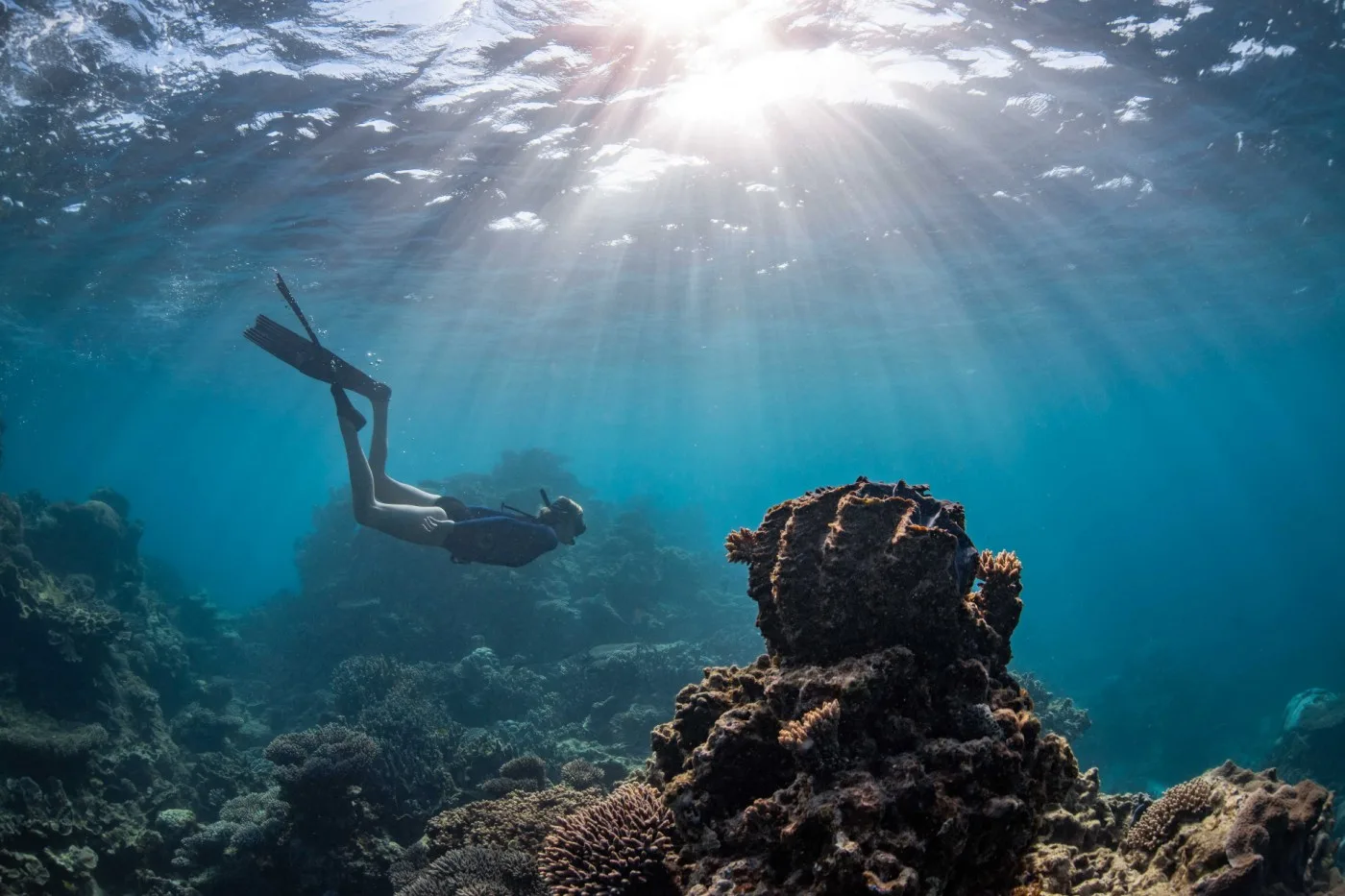
Ningaloo is not one underwater format. The coastal reef allows shore-based diving and snorkeling, while boats reach the outer reef and the Muiron Islands. Expect reef scenery, drop-offs, wreck diving and sites where current changes the character of the dive. The Navy Pier adds a more controlled but deeper and more exposed outing, available only through the authorised local operation. Visibility commonly ranges from 5 to 25 metres, with plankton, swell and runoff able to alter it sharply from one site to another. Sheltered reef areas are the sensible choice when conditions are unsettled; outer sites and the pier need more favourable sea conditions. Depending on the site, the dive may be a conventional reef descent, a current-affected drift dive or a boat excursion with surface time between dives. Leave room in the programme rather than assuming every day will suit the same water.
The major seasonal draw is the whale shark, usually sought from March to July and sometimes into August. This is generally a dedicated, free-swimming wildlife outing, not a chance encounter during a normal reef dive, and it may involve both a boat and an observer aircraft. Manta rays are regularly seen from May to November, while humpback whales pass between June and November, with in-water encounters more likely towards August to October. Coral spawning is a further seasonal event around March and April. Turtles and other marine wildlife can also be watched from the coast. Ningaloo’s protected zones are important here: the reef is managed as part of Ningaloo Marine Park, with approach rules around large animals and sanctuaries where fishing and collecting are prohibited.
March to October is the practical window for a first diving trip, because the dry season generally brings the most favourable marine conditions and the clearest overlap of seasonal attractions. March and April can add coral spawning, while March to July gives the strongest reason to plan around whale sharks. Manta rays extend the wildlife season into November, and humpback whales pass from June to November, with better prospects for entering the water later in that period. Ningaloo remains diveable all year, but conditions, visibility and animal encounters vary. The busiest period is usually the whale-shark season, especially from April to July, so quieter travel means accepting less certainty over those encounters.
Ningaloo can suit a beginner on sheltered reef dives with proper supervision, but it is not exclusively gentle water. Deeper sites, exposed outer reef, current and the Navy Pier demand stronger experience and comfort in changing conditions. Advanced Open Water is useful for the deeper sites and some Navy Pier diving, with the equivalent experience level for BSAC, PADI or SSI divers. Nitrox can be worthwhile during repeated diving, where the operator and certification arrangements allow it. Confidence in entries, exits and current management matters more than chasing every available site.
From London Heathrow, Gatwick or Manchester, the usual route is via Perth, followed by a domestic flight of about two hours to Learmonth. Allow for a long overall journey, with roughly 24 to 36 hours from a European departure depending on connections and the wait in Perth. The alternative is the Coral Coast Highway from Perth, a road journey of about 1,200 to 1,250 kilometres to Exmouth, normally requiring 12 to 13 hours of driving before stops. There is no ferry forming the backbone of access. Once in Western Australia, choose Exmouth or Coral Bay according to the planned diving, then use a hire car for the most flexible local transport. Operator pick-ups may exist, but they depend on the booking and location.
Book whale-shark outings early if they are central to the trip, particularly between March and July, but do not build the whole holiday around one wildlife departure. It is a different day from a normal dive, usually involving free swimming, boat logistics and sometimes an observer aircraft. Keep spare days for the Navy Pier and Muiron Islands, because exposed sites are more vulnerable to weather and sea conditions than sheltered reef. Do not book the return flight immediately after the final dive. Choose Exmouth or Coral Bay according to the actual departure point, since the two bases are not interchangeable for daily transfers, and take a car if Cape Range and several launch points are on the plan. Expect visibility to vary with plankton, swell and runoff. Finally, check the marine-park zones before entering the water: sanctuaries, navigation rules and wildlife distances are part of diving Ningaloo, not optional extras.
Most visits are organised as a land-based stay in Exmouth or Coral Bay, with day boats and shore dives rather than a liveaboard. Allow seven to ten days to combine outer-reef or Muiron Islands trips, the Navy Pier, coastal reef diving and weather reserve. A hire car makes the distance between diving, Cape Range National Park and the coast manageable. Non-divers have plenty to do, including snorkeling, turtle watching, whale-shark or manta excursions, kayaking, paddleboarding, beaches and walking through the park’s gorges.
Hello, I'm Marina, DivingDeal.com's AI assistant. I guide you through destinations, areas and countries.
Thinking about the whole trip and the flights? Talk it over with Edith →
Marina is an AI. Some links are affiliate links: DivingDeal may earn a commission, at no extra cost to you. Bookings are made with the partner.
March to October is a practical window, with generally favourable dry-season conditions and several seasonal attractions. Whale sharks are usually sought from March to July, manta rays from May through November, and humpback whales pass from June through November. March and April may also bring coral spawning, while quieter travel means less certainty around wildlife encounters.
Ningaloo can suit beginners on sheltered coastal reef dives with proper supervision, but exposed outer reef, deeper sites, changing currents and the Navy Pier require greater experience. Advanced Open Water is useful for deeper sites and some pier diving. Confidence with entries, exits and current management matters when choosing more demanding sites.
You can explore shallow coastal reef, drop-offs, wrecks, outer-reef sites, the Muiron Islands and the Navy Pier. Seasonal wildlife includes whale sharks, manta rays and passing humpback whales, while turtles and other marine life can be watched from the coast. Visibility varies with plankton, swell and runoff, so underwater conditions can change between sites.
Organise a land-based stay in Exmouth or Coral Bay, using a hire car for flexible access to dive sites and Cape Range gorges. Combine shore dives with boat trips to the outer reef or Muiron Islands, and leave spare days for weather-sensitive outings. Book whale-shark trips early and avoid scheduling your return flight immediately after diving.