
The Scuba Dive Shop aka The Scuba Doctor Dive Shop
Google 4.6/5 (276 reviews)
Australia · Pacific
Rye puts you above sandy bottoms and seagrass beneath a pier, with seahorses, octopuses, nudibranchs and occasional leafy sea dragons in reach.
For subtitles in English: start the video firstthen click the gearat the top right of the video, select “Subtitles/CC”, then “Auto-translate” and choose “English”.
Rye is a shore-diving base on the Mornington Peninsula, centred on Rye Pier and the coastal sites around Port Phillip Bay. The pier gives easy access to sand, seagrass and submerged structure, where patient divers look for small animals rather than chase distance or depth. It works for beginners as well as experienced divers, with daylight and night options from the shore. Guided trips add other jetties and sites around the peninsula, while the beach, pier and open-air setting make it practical for a mixed-age group.
Rye Pier is a shallow-looking, close-focus dive: sand lies beneath the structure, with patches of seagrass around it and plenty of small hiding places in the pier’s underside. The sensible pace is slow, scanning the stems, the sand and the shadows rather than swimming quickly from point to point. Currents are variable, and the bay’s condition and tide affect both the feel of the dive and the view ahead, so this is not a place to assume identical conditions from one visit to the next. Rye Pier can be dived by day or at night. Other jetties and coastal sites on the Mornington Peninsula broaden the terrain through guided local outings, with boat trips available as a supplement rather than the basis of the destination. Check how divers are expected to enter and leave around the pier before getting in.
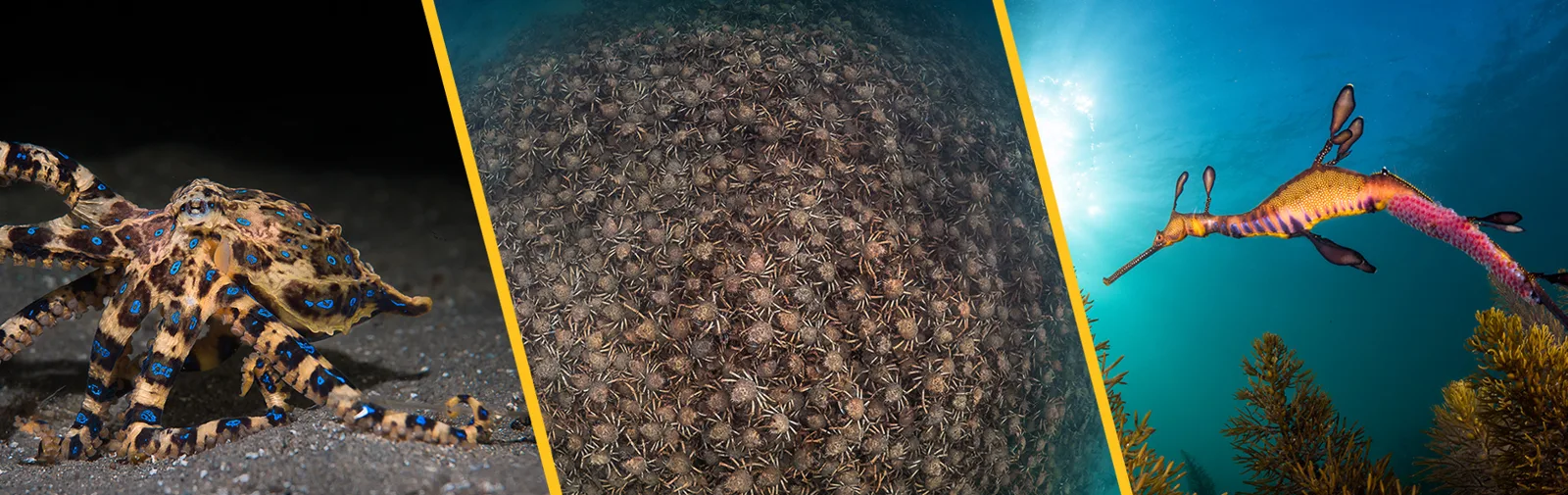
The reward at Rye is the small stuff that disappears when a diver moves too quickly. Seahorses, octopuses, nudibranchs, spider crabs and cuttlefish are associated with the seagrass, sand and pier structure, while rays may pass over the bottom. A torch earns its place after dark, both for night life and for examining the underside of the jetty. Leafy sea dragons are a possibility in the wider peninsula, but Flinders Pier is the more relevant place to consider when that is the main objective. Rye itself is better approached with seahorses, octopuses and close inspection in mind. Treat all larger-animal and seasonal sightings as opportunistic, and allow time for a careful search rather than expecting a particular creature on cue.
Rye is best planned around conditions rather than a fixed annual calendar. For Rye Pier, high tide and calm water are the useful combination: they make the entry and exit more manageable and favour a clearer, more settled look beneath the structure. Keep the schedule flexible enough to move a dive when the bay is unsettled. A night dive is worth considering when conditions allow, because the same sand, seagrass and pier supports take on a different character after dark. This is a land-based destination, so there is no need to force a long run of dives into one narrow seasonal window.
Rye suits all levels, provided beginners are assessed in the actual tide and sea conditions rather than promised an automatic easy dive. PADI, SSI and BSAC divers can use the shore sites within their training and experience, while night diving and variable current call for appropriate confidence and planning. The pier environment also demands awareness of other people using the waterfront. Divers wanting leafy sea dragons or a broader range of sites will get more from a guided outing beyond Rye Pier.
From London Heathrow, London Gatwick or Manchester, the journey continues to Australia, then by road from Melbourne along the Mornington Peninsula Freeway, Peninsula Link and the peninsula roads to Rye. There is no compulsory domestic flight or ferry crossing for the usual approach. The Searoad ferry links Sorrento with Queenscliff, but it is an excursion across the peninsula rather than the normal route into Rye. Once there, Rye Pier is the obvious local reference point, while more distant jetties and coastal sites may require a car or taxi. Do not assume that accommodation and every dive site sit within an easy walk of one another, and arrange the day around the actual meeting point for any guided outing.
Build Rye Pier around high tide and calm water, rather than treating the tide table as background information. Before entering, check how local divers are using the waterfront and where the agreed entry and exit points are, because swimmers, snorkellers, anglers and other pier users share the space. Do not move beneath or close to the structure without accounting for that traffic and the local instructions. Bring a torch if a night dive is planned, or if you want to inspect the pier’s darker underside properly. Search the seagrass and sand slowly, where the site’s seahorses, octopuses and smaller animals are easier to find. If leafy sea dragons are the priority, include Flinders Pier instead of expecting Rye to deliver them. Likewise, use a guided outing for sites farther around the peninsula or southern bay, rather than assuming they are practical walks from Rye. Keep the plan flexible when the bay is unsettled, and do not build the trip around guaranteed visibility or a promised species.
Organise the stay on land, using Rye Pier for shore dives and adding guided trips to other Mornington Peninsula sites when conditions and interests line up. A car or taxi may be useful beyond the pier, as local transfers are not automatically covered by accommodation. Non-divers have the beach, pier, waterfront walks and peninsula landscapes, while a Sorrento to Queenscliff crossing can fill a day away from the water. Rye therefore works well as a shared holiday base, not just a place to sleep between boat departures.
Hello, I'm Marina, DivingDeal.com's AI assistant. I guide you through destinations, areas and countries.
Thinking about the whole trip and the flights? Talk it over with Edith →
Marina is an AI. Some links are affiliate links: DivingDeal may earn a commission, at no extra cost to you. Bookings are made with the partner.
Plan Rye around high tide and calm water, which help make entry and exit more manageable and support a clearer, more settled view beneath the pier. Keep your schedule flexible when Port Phillip Bay is unsettled. Night diving is also worth considering when conditions allow, as the site changes after dark.
Rye suits beginners and experienced divers, but beginners should be assessed in the actual tide and sea conditions rather than assuming an automatic easy dive. You should stay within your training and experience, with extra confidence and planning for night diving, variable current and the shared waterfront around the pier.
Diving Rye rewards slow searches through seagrass, sand and pier structure. You may encounter seahorses, octopuses, nudibranchs, spider crabs and cuttlefish, while rays can move across the sandy bottom. Leafy sea dragons are a possibility around the wider peninsula, with Flinders Pier more relevant if they are your main objective.
Use Rye as a land-based base, with shore dives at Rye Pier and guided outings to other Mornington Peninsula sites when conditions and interests align. A car or taxi may help with distant sites and meeting points. Non-divers can enjoy the beach, pier, waterfront walks and peninsula landscapes during the stay.