

Taveuni Dive Resort
Google 4.6/5 (100 reviews)
8.8 km away as the crow flies
Savusavu · Fiji · Pacific
Descend into a gentle slope vibrant with coral, where endemic blue ribbon eels peek from their homes and white-tip reef sharks nap on the sandy flats.
From your initial descent at Blue Ribbon Eel Reef, you'll find yourself gliding along a gentle slope, a canvas of vibrant corals occasionally interrupted by soft sandy stretches. It's a dive profile that encourages a relaxed pace, allowing you to truly immerse yourself in the intricate details of the reef system. This natural contour provides a diverse habitat, shifting from the dense, colourful coral gardens that dot the main slope to the more open, reflective sand patches where different marine life congregates.
The reef lives up to its name with several resident blue ribbon eels (Rhinomuraena quaesita) that are a highlight of any visit. Keep a keen eye on the crevices and small holes along the reef's side; you'll often spot their distinctive blue and yellow forms gracefully swaying as they emerge from their burrows. Approaching these elegant creatures requires patience and deliberate, slow movements to avoid startling them, ensuring a longer, more rewarding observation. They are typically found in the calmer sections, nestled deep within the coral structure.
Beyond the eels, the reef is home to a resident pair of leaf scorpionfish (Taenianotus triacanthus), masters of camouflage. These fascinating creatures are frequently sighted perched almost imperceptibly on the numerous small bommies scattered across the slope. Their uncanny resemblance to dead leaves makes them a challenging but rewarding find, demanding a careful search through the reef's contours. Remember to maintain a respectful distance, observing their unique form without disturbance.
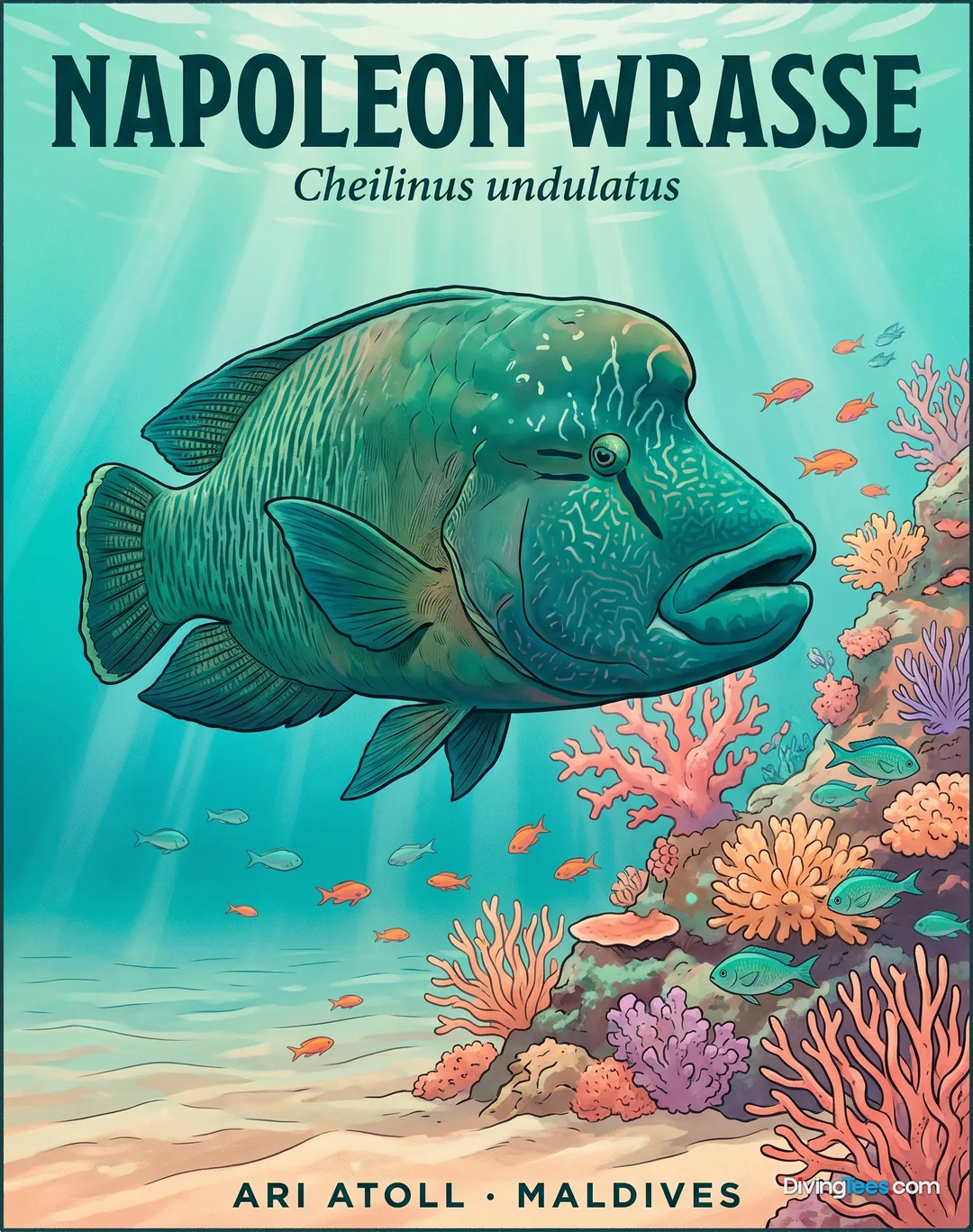
As you explore the deeper sections, particularly where the sand flats expand, you'll often encounter white-tip reef sharks (Triaenodon obesus) in a more docile state. These common reef predators are frequently seen taking their afternoon siestas on the flat, sandy expanses, a calm contrast to their usual nocturnal hunts. Other larger pelagic species, such as Spanish mackerel (Scomberomorus commerson) and the imposing bumphead wrasse (Cheilinus undulatus), are also regular visitors, often cruising gracefully near the deeper reef edges, reminding you of the open ocean beyond.
The current here can vary, and its direction will often dictate the flow of your dive. In certain conditions, you might find yourself drifting gently across the reef, allowing for expansive views of the diverse ecosystem without much effort. Depending on the current's speed and the dive plan, your journey might conclude on the opposite side of the reef, offering a natural shelter from the main current and a tranquil spot for your safety stop. This dynamic allows for varied dive experiences each time you visit.
This site does not have specific operational depth or certification requirements, nor does it specify visibility. Currents can be present and may be strong in the Somosomo Strait, requiring careful planning and execution. Dive operations typically feature drift dives when conditions are favourable, with a descent line used to manage entry and exit.
Blue Ribbon Eel Reef is suited to dives when conditions are favourable for drift diving. The prevailing current shapes the experience and may carry you along the gently sloping coral reef before bringing you toward shelter for a safety stop. Careful planning helps match the dive to the conditions and current direction.
Blue Ribbon Eel Reef has no specific certification or operational depth requirements stated. However, currents in the Somosomo Strait can be present and may be strong, so you need to be prepared for careful planning and execution. Dive operations commonly use a descent line to help manage your entry and exit.
At Blue Ribbon Eel Reef, the current can vary in speed and direction, often determining how your dive unfolds. When conditions allow, you may drift across the reef, while a stronger flow requires careful planning. Your dive may finish on the opposite side, where natural shelter can provide a calm safety-stop area.
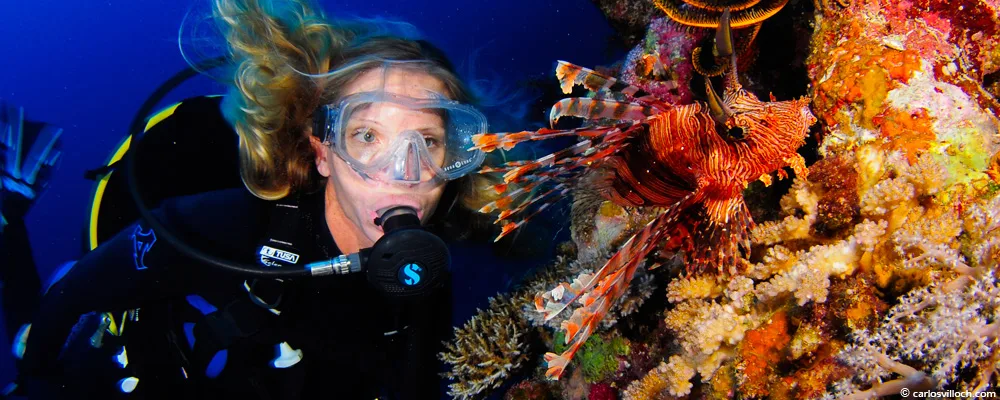
At Blue Ribbon Eel Reef, look for resident blue ribbon eels in reef crevices and leaf scorpionfish camouflaged on bommies. White-tip reef sharks rest on sandy flats, while Spanish mackerel and bumphead wrasse cruise near reef edges. The gently sloping coral reef also offers vibrant gardens and open sand patches to explore.