Liveaboards · French Polynesia
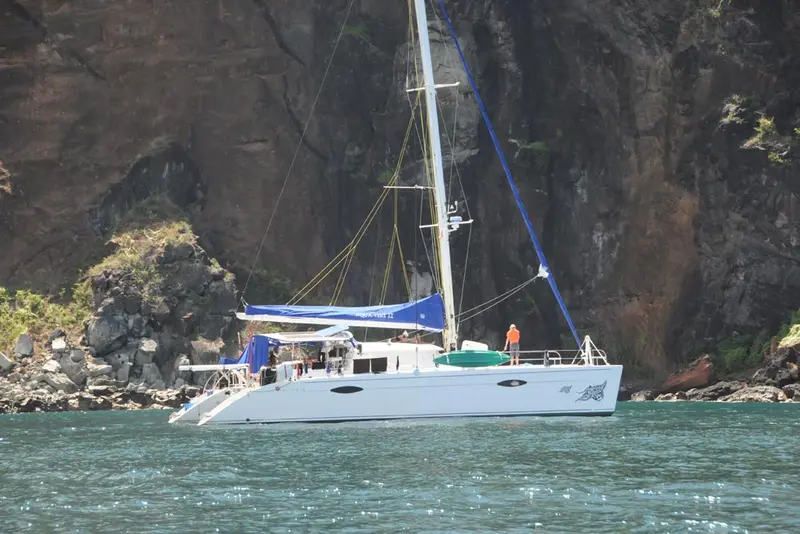
Aqua Tiki III — a small, dive-first base for Fakarava’s passes
What makes this boat unique
- Aqua Tiki III carries up to 10 passengers in five cabins, with one bathroom per cabin.
- The route centres on Fakarava’s north and south passes, with recorded cruises lasting 11 to 16 days.
- Nitrox is available on board at no extra charge, with a dedicated Nitrox compressor.
- The crew speaks English and French, and passenger feedback places the crew and diving among the boat’s strongest points.
The invitation
Aqua Tiki III is for divers who come to Fakarava to spend the trip in the passes, not to collect another floating hotel. The boat keeps the group small, carries only five cabins, and works a route built around coral plateaus, lagoon reefs and current-fed channels. Its boat rating sits below the marks for crew and diving; that distinction matters. Aqua Tiki III is not being chosen for polished resort styling, but for the people running it and for access to Tuamotu sites where grey reef sharks, mantas, tuna and barracuda are part of the possible picture. The crew and diving both receive the strongest feedback, while meals also rate well. That is the reason to book this one: a compact liveaboard, a crew that earns its place in the trip, and Fakarava beneath the hull.
Boarding
From the dock, Aqua Tiki III presents as a broad, purpose-built dive boat rather than a converted yacht dressed for show. The layout is made for a small group: cabins below, an indoor salon, an open terrace and an observation deck that give people somewhere to spread out between dives. The boat was built in 2019, so its character comes from active use rather than old-world patina. Once aboard, the useful details become clear. A single tender handles the transfers to and from the sites, while rinse tanks and diver equipment keep the wet work close to the water. The crew speaks English and French, which removes friction during briefings and throughout the trip. The impression is practical and social: there is enough common space to meet everyone quickly, but not the scale of a large ship where passengers disappear from one another.
The atmosphere on board
The atmosphere is shaped less by formal service than by a crew that stays close to the diving day. Passenger feedback gives the crew its highest mark, with the diving receiving the same strength and the food following closely behind. That pattern says something useful: the people running Aqua Tiki III are the part most likely to stay with a diver after the boat itself has blurred into the journey. A group of up to 10 passengers becomes familiar quickly, and English and French cover the main conversations on deck and in the briefings. In the late afternoon, the cocktail bar gives the evening a clear starting point. The salon, terrace and outdoor dining area then let the group choose its own volume. This is a boat for shared days, where the crew’s handling of the practical details leaves the passengers free to talk about the last pass, the next one, and what moved through the blue.
The sites you’ll dive
Fakarava is the reason to come. Recorded Tuamotu North cruises run from 11 to 16 days, giving the boat time to work both the northern and southern sides of the atoll rather than reduce the trip to one pass. At Maiuru, the dive starts on a channelled reef flat, moves through varied coral structures and ends at an abrupt, current-swept drop-off; the maximum depth is -20m. Pufana stays inside the North Pass lagoon, with calm, clear water over coral gardens and possible blacktip, grey reef and whitetip reef sharks; its maximum is -17m. Garuae Pass is the northern gateway, where grey reef sharks navigate the current, with a listed maximum of -70m. Ohotu Reef reaches -100m and brings dynamic pelagic diving within Garuae Pass. On the southern side, Tumakohua Pass is narrower and generally calmer than the northern counterpart, with a drift through dense life. Passe de Garuae also has a listed maximum of -30m, while Pufana Reef reaches -50m. The exact sequence depends on the cruise.
Itineraries, dates and prices
Prices per person. Each month shows its lowest price: click a month, or pick an itinerary.
Next departures · 2 departuresfrom £5,200$6,951€6,210
August 2028
2029-06
See dates and prices
If you click these links and make a purchase on the partner site, DivingDeal may earn a commission, at no extra cost to you.
Dates and prices taken from liveaboard.com, updated 22 October 2026
What you’ll meet underwater
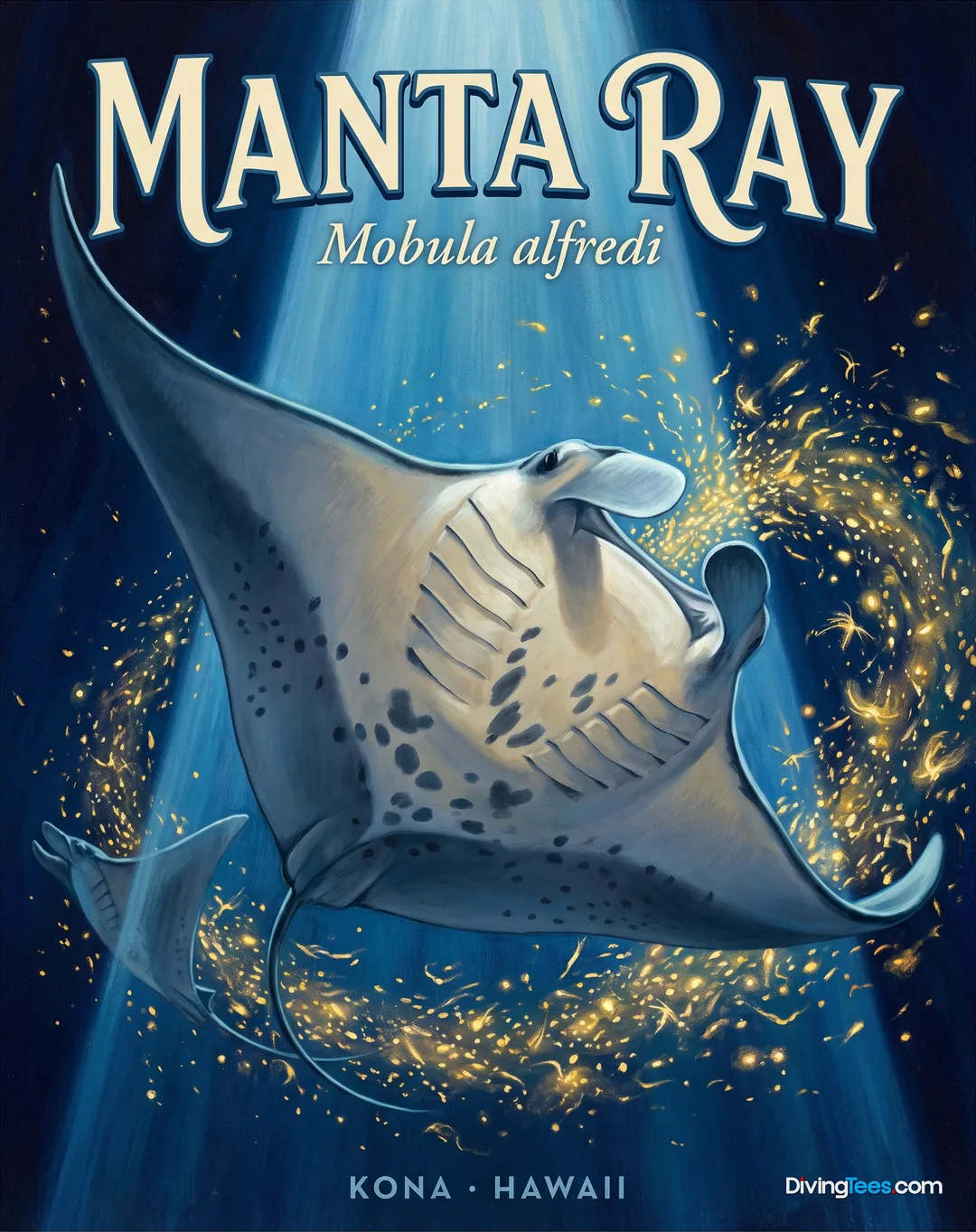
Across this route, the recurring cast is large enough to make every pass worth watching: barracuda, Napoleon wrasse, manta rays, reef sharks and tuna are recorded at several sites. The setting explains the variety. Fakarava’s channels move water through coral gardens and reef edges, bringing pelagic animals close to the structure and giving drift dives their pace. Passe de Garuae is the specialist stop. Dolphins and whitetip reef sharks are recorded there and nowhere else on this route, alongside schools of fish and grey reef sharks moving through the pass. Pufana offers a different set of possibilities in calmer lagoon water: carangue, rays and eagle rays are recorded specifically at that site, as well as parrotfish, Napoleon wrasse and reef fish. A sighting is never a promise, and current, visibility and animal movement decide what appears. The attraction is the contrast: big animals in the passes, then a slower search over coral gardens.
Who puts you in the water
The crew speaks English and French, and crew members are trained in first aid. Oxygen and first-aid kits are carried on board, alongside marine safety equipment including a VHF radio, GPS, radar, sonar, distress beacon, life rafts, life jackets, fire alarms and extinguishers. Diving is guided around Fakarava’s passes and reefs, with briefings and group organisation at the centre of the day. The crew and diving are the strongest parts of the operation, which matters on Garuae and Tumakohua, where current is part of the site.
The dive deck and the gear
The dive operation is built around one tender, which takes divers from Aqua Tiki III to the sites and collects them after the dive. That matters in Fakarava’s passes, where divers can surface away from the boat instead of swimming back to a fixed entry point. Rinse tanks keep saltwater off cameras and equipment, and the boat has dedicated diver annex support. Nitrox is available free of charge from the on-board Nitrox compressor. Rental equipment is included. Oxygen and first-aid kits are carried on board, and the crew is trained in first aid.
Between dives
Between dives, the best places are the terrace and the observation deck, where the group can stay outside without crowding the working areas. The indoor salon gives a cooler retreat, with a library and audio-video entertainment for the quieter gaps. Kayaks and stand-up paddleboards let non-divers and surface intervals extend beyond the tender, while fishing, water-skiing and wakeboarding offer more active options when conditions and plans allow. Outdoor dining and a barbecue area shift the social centre outside when the weather suits it. The boat also welcomes non-divers and snorkellers, so a companion does not have to spend the whole trip waiting for the divers to return. These are useful spaces because Fakarava is not a destination where every hour needs filling: sometimes the right interval is simply shade, water and a view of the atoll.
A day on board
The day follows the diving rather than a rigid hotel timetable. A briefing comes before each entry, the tender carries the group to the reef or pass, and divers return to rinse equipment before settling on the terrace, in the salon or on the observation deck. Meals punctuate the surface intervals, with the boat moving between parts of the Fakarava route when navigation requires it. The pauses are long enough for a library, a kayak, stand-up paddleboarding or simply a place in the shade. Later, the cocktail bar opens in the late afternoon before dinner and the evening takes over above deck. Night dives are available as an optional extra, so the final descent is not automatically part of every day. The shape is simple: briefing, water, tender, food, recovery, then the next briefing. On a pass-heavy itinerary, that order is what lets the diving remain the centre of the trip without making the hours between dives feel like dead time.
What you eat aboard
Full-board meals cover the trip, with both Western and local cooking on the table. Beer and wine are available, alongside a selection of better wines, while welcome cocktails set the tone for the first evening. The bar opens for cocktails in the late afternoon, a useful handover between the last active part of the day and dinner. Food scores strongly in passenger feedback, behind only the crew and diving. That matters on a route where meals have to support repeated dives rather than compete with them. The offer is broad enough for different tastes without pretending that Aqua Tiki III is a restaurant at sea. Local dishes give the Tuamotu setting a place at the table; Western options keep the menu familiar when a diver wants something simple after getting out of the water.
Nights at sea
The five cabins come in bunk-bed, flexible and VIP double categories. Each has a standard window, air conditioning and its own bathroom, with hot-water showers available on board. That arrangement matters after several dives: there is no need to queue for a shared cabin bathroom or negotiate one shower for the whole group. Cabins also have independent sound systems and a 4K television, although most divers will use them more for quiet downtime than for entertainment. Sea views are part of the cabin offering, and the boat provides cabin and deck towels. The nights are therefore straightforward rather than elaborate: close the cabin door, cool the room, and let the boat become quiet around you. Internet is available as a paid extra, but the better reason to choose these cabins is privacy without giving up the small-group feel above deck.
Bunk Bed Cabins
Flexible Cabins
VIP Double Cabin
What to know before boarding
The recorded cruises depart from Fakarava and return to Fakarava for the Tuamotu North itinerary. Airport transfer is included, while hotel transfer is optional. Arrival and departure flight details are requested for the booking, so the transfer arrangements are tied to those travel plans. Arriving in Fakarava the night before is the sensible choice.
Deck plan
- Year built
- 2019
- Length
- 20 m
- Beam
- 9
- Maximum number of passengers
- 10
- Number of cabins
- 5
- Number of bathrooms
- 5
- Engines
- 2 × 170 hp
- Cruising speed
- 8 knots
- Tenders
- 1
- Website
- aquatiki.com ↗
Hello, I'm Marina, DivingDeal.com's AI assistant. I answer in detail about hotels, dive centres and liveaboards.
Thinking about the whole trip and the flights? Talk it over with Edith →
Marina is an AI. Some links are affiliate links: DivingDeal may earn a commission, at no extra cost to you. Bookings are made with the partner.