Pacific
French Polynesia: passes, high islands and Pacific culture
French Polynesia joins the marae of Taputapuatea, the passes of Fakarava and the evening roulottes of Papeete in one far-flung journey.
What makes this country unique
- Fakarava’s Passe de Garuae and strong pass currents
- Rangiroa’s Passe de Tiputa between two villages
- July Heiva dancing at Place To’ata, Papeete
- Poisson cru au lait de coco at Papeete
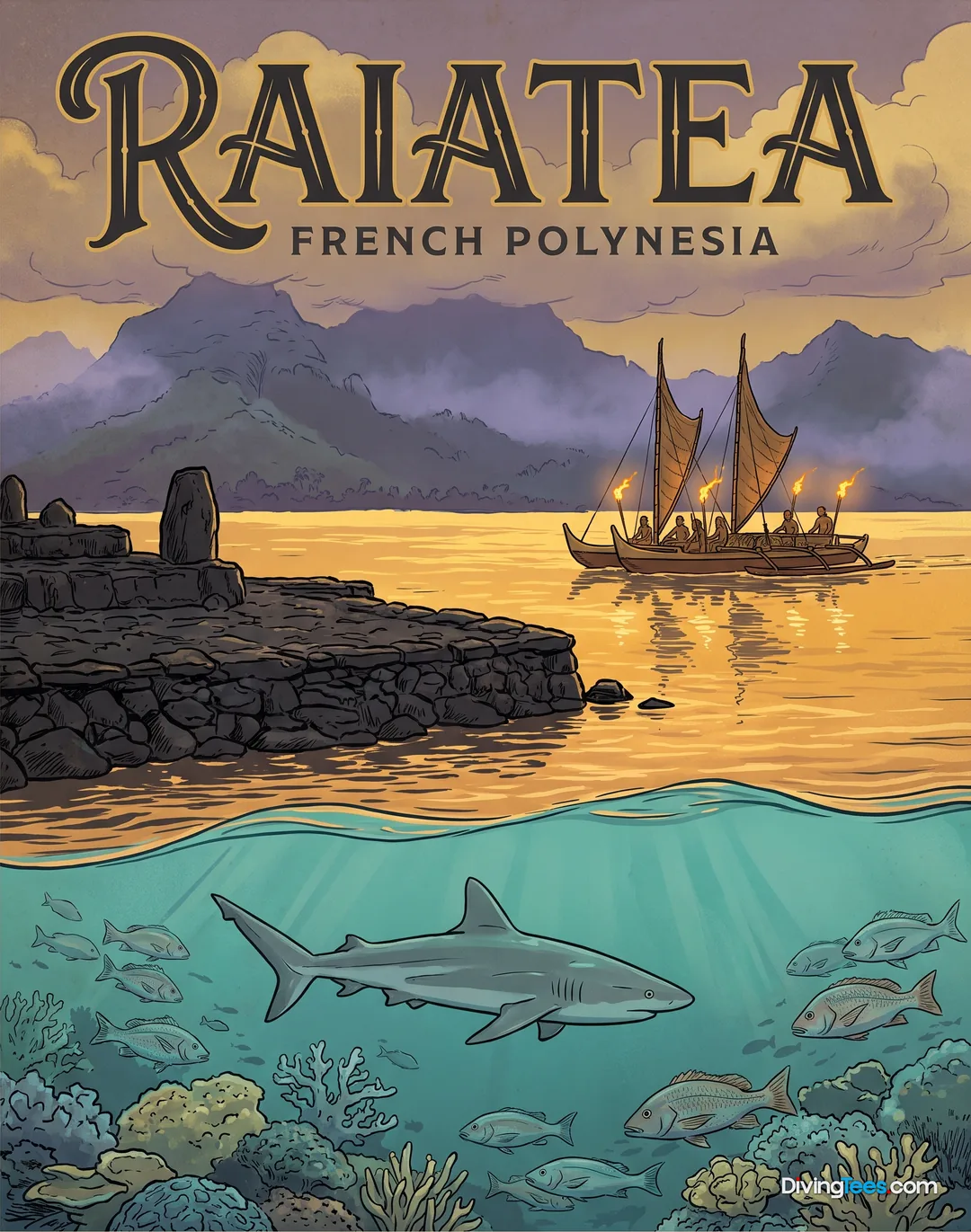
- The Taputapuatea marae beside Raiatea’s lagoon
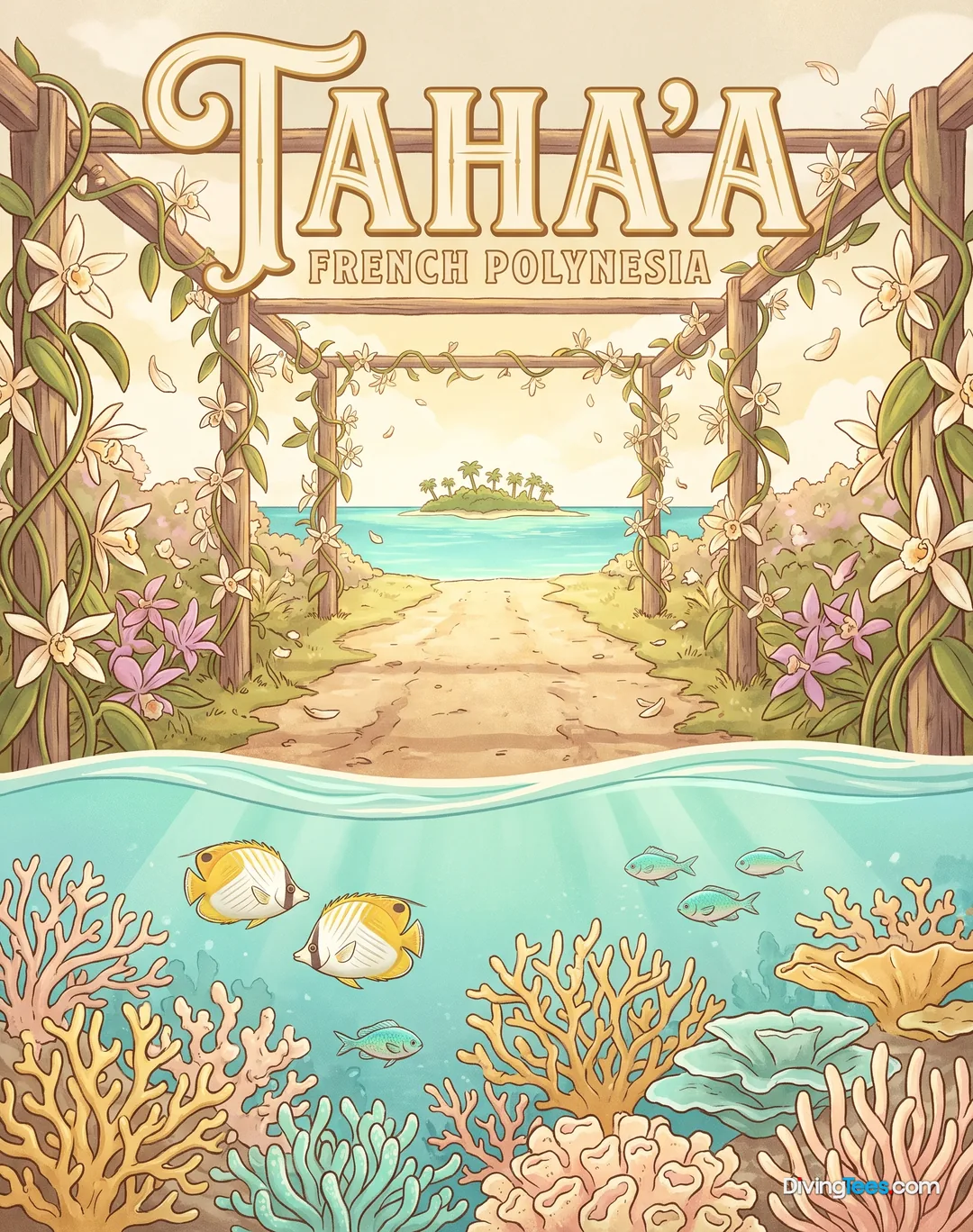
- Black pearls and Tahaa vanilla at island markets
- Green turtles and oceanic sharks around Society islands
- Rangiroa dolphins and silver-tip sharks in passes
For subtitles in English: start the video firstthen click the gearat the top right of the video, select “Subtitles/CC”, then “Auto-translate” and choose “English”.
This country for a diver
French Polynesia is a country of two quite different diving worlds: high volcanic islands with fringing lagoons, and low Tuamotu atolls built around ocean passes. That contrast is more useful than any postcard description. Moorea, Huahine, Raiatea, Tahaa and Tahiti make a varied island itinerary, while Rangiroa, Fakarava, Tikehau and Manihi focus the trip around current, boat work and lagoon access. The common thread is movement: flights between islands, boat departures from the settlement, and drift dives where timing matters as much as depth. Fakarava and Rangiroa suit experienced current divers; several high-island areas are more forgiving.
How the country divides
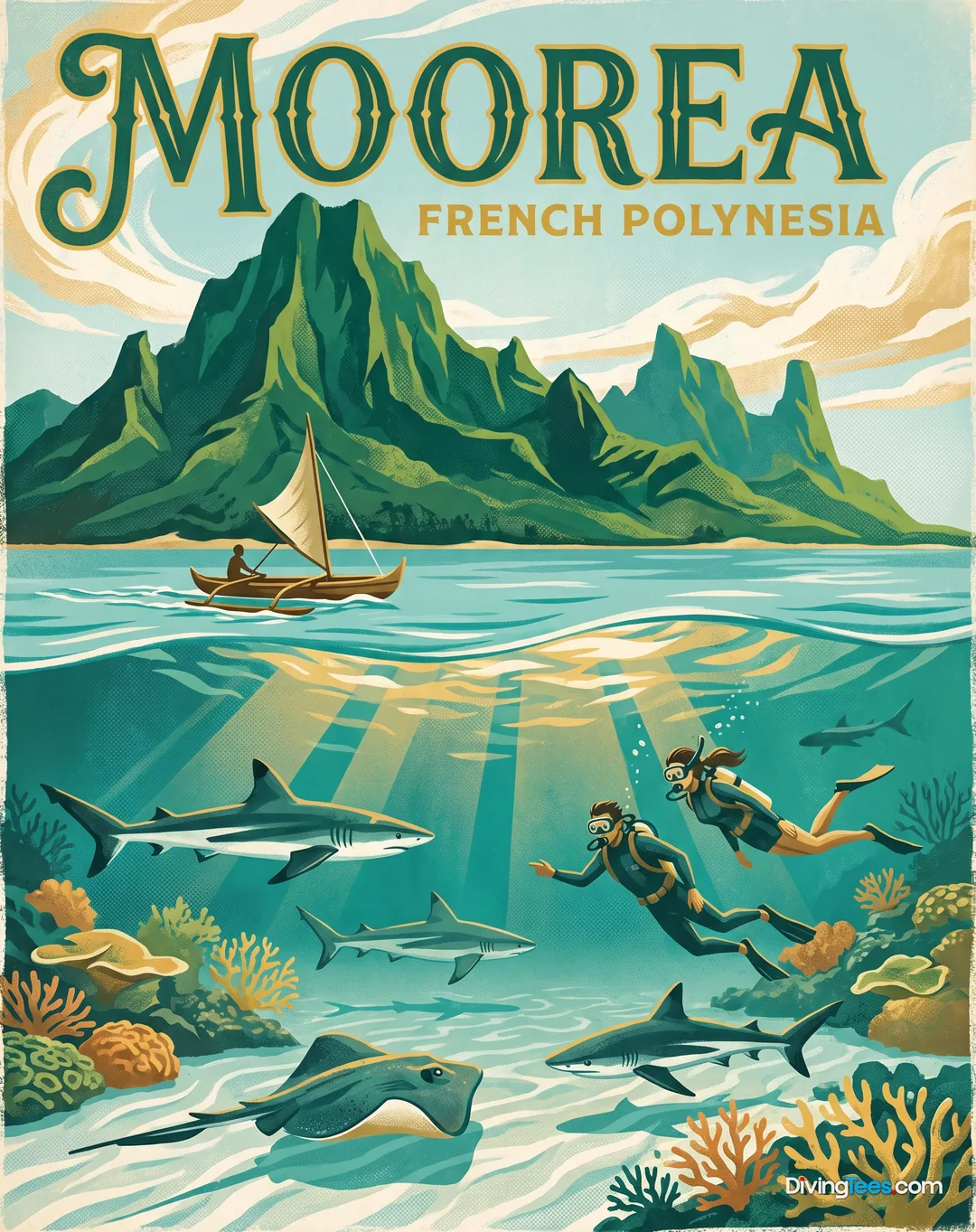
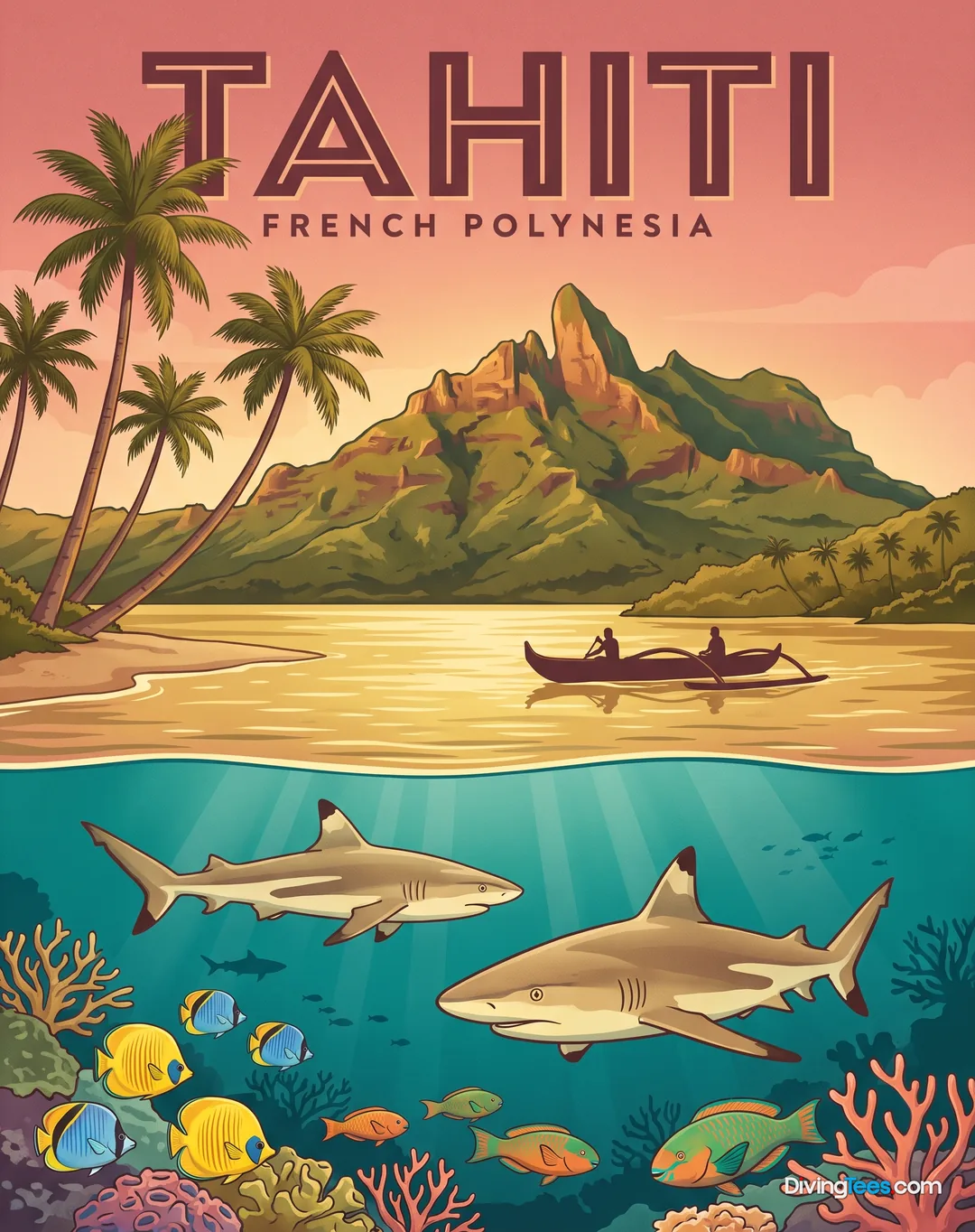
The Society grouping is the high-island choice: Tahiti, Moorea, Huahine, Raiatea and Tahaa combine mountains, villages and lagoon diving. It suits divers who want variety away from the boat, with Moorea offering a straightforward pairing with Tahiti and Raiatea providing a quieter base. Huahine has a lower-key feel, while Tahaa sits naturally beside Raiatea for an island-based itinerary. The Tuamotu grouping is a different proposition. Rangiroa and Tikehau are atolls where the lagoon and its passes dictate the day, with Rangiroa aimed at experienced divers and Tikehau accommodating a broader range. Fakarava stands apart for stronger current and demanding pass diving, making it a choice for divers comfortable with drift procedures and precise briefings. Manihi is also an atoll and is associated with drift diving, but retains an all-levels profile. The right area therefore depends less on scenery than on whether you want high-island variety or pass-led diving.
Diving destinations
Dive centres

Hotels
Liveaboards
When to go, and where by month
January, February and March are the broadest window for the Society islands: Huahine, Moorea, Raiatea and Tahiti are in season, alongside the Tuamotu choices of Rangiroa, Tikehau, Fakarava and Manihi. From April through October, Tahiti drops out of the seasonal picture, while Huahine, Moorea and Raiatea remain available and the atolls continue through the calendar. November and December restore the wider Society combination, with Tahiti joining the same atoll group. Rangiroa, Tikehau, Fakarava and Manihi are year-round options, so they form the dependable backbone of a date-led itinerary. There is no simple opposite-season rule here: the practical change is Tahiti’s November-to-March window against the year-round timing of the atolls and several high islands. That makes the early and late parts of the year useful for linking Tahiti with an atoll, whereas the middle months favour an atoll or the other Society islands. Tahaa belongs in the high-island planning conversation, but should be treated as its own choice when fixing dates.
Marine life, coast by coast
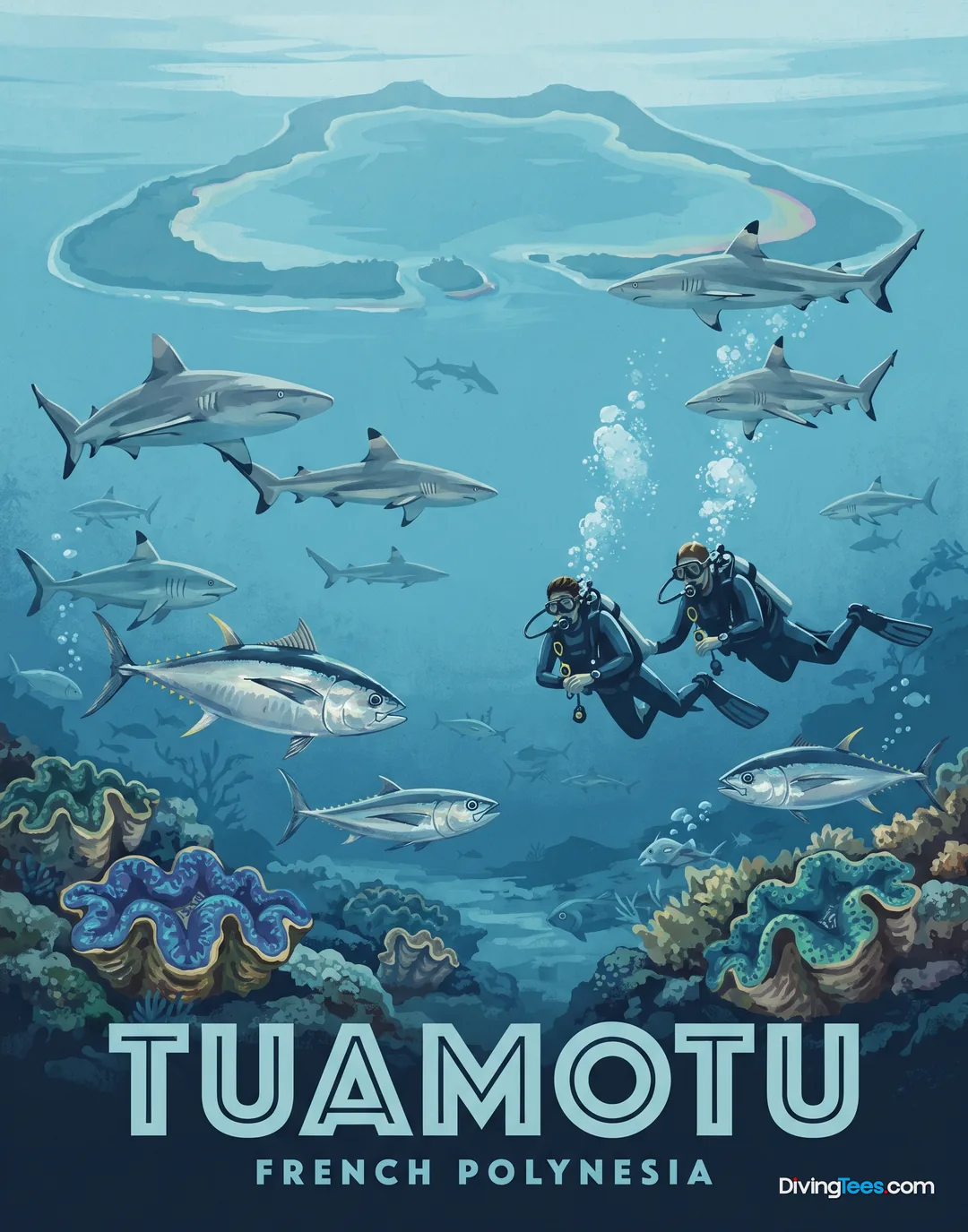
Wildlife changes noticeably between the high islands and the atolls, which can alter the shape of an itinerary. Around Huahine, Moorea, Raiatea, Tahaa and Tahiti, the picture includes green turtles, oceanic sharks, white-tip reef sharks, giant trevally, rainbow runners, barracuda-like fish and javanese morays, alongside the smaller reef species that reward a slower look. The Tuamotu pairing of Rangiroa and Tikehau shifts attention towards dolphins, hammerhead sharks, silver-tip sharks and tropical reef fish. A diver choosing Rangiroa or Tikehau is therefore choosing a different encounter profile from one based around Moorea or Raiatea, even though both may involve current and boat logistics. Fakarava sits within the wider atoll experience, with its pass setting shaping how the marine life is approached.
Getting between the areas
Tahiti and Moorea are the easy combination: the ferry between Papeete and Vaiare takes less than an hour and runs several times daily. Raiatea and Tahaa are similarly natural partners, only twelve kilometres apart, while Huahine links to Raiatea by a short inter-island connection. These high-island pairings can be arranged without turning the itinerary into a sequence of airport days. The Tuamotu pairing of Rangiroa and Tikehau is also plausible, at sixty-six kilometres apart, but it still depends on flight schedules rather than a simple road transfer. Fakarava, Manihi and the other atolls sit farther apart; moving between them can consume a substantial part of the day. Air Tahiti provides the main network, with Air Moana adding some Society connections. Tahiti is the practical hinge between island groups, but a buffer day remains sensible because a missed flight or boat connection can disrupt a tightly timed plan.
Take off your mask
Papeete gives the clearest introduction to the country away from the water. At the municipal market, the morning is built around fresh fish, tropical fruit and ready-to-eat poisson cru au lait de coco; upstairs, pareos, wood carvings, nacre jewellery and black pearls of Tahiti sit alongside everyday shopping. In the evening, the waterfront roulottes serve chao men, grilled food and Chinese-influenced dishes at open-air tables. The Society islands add a more traditional table: ma’a Tahiti brings together fish, fafa, cooked bananas, taro, coconut bread and sometimes poe, while poulet fafa is a familiar local dish around Tahiti and Moorea. Raiatea is the place for Taputapuatea, a marae beside the lagoon and a centre of ancient Polynesian navigation. In July, Heiva i Tahiti turns Place To’ata into a venue for dance, singing and traditional sports; Heiva i Uturoa offers a more village-scale version. Around Rangiroa, the villages of Tiputa and Avatoru show daily atoll life, with fishing, diving bases and the pass shaping movement between them. Tahaa is associated with vanilla, while markets across the islands carry the food and craft of the wider territory.
What holds true everywhere here
Pass diving sets the practical rhythm across French Polynesia, particularly on the Tuamotu atolls. A drift dive may begin with a precise entry window, then become a question of position, buoyancy and a controlled exit rather than maximum depth. A downcurrent is not something to improvise in: follow the guide’s line, avoid rising above the intended path and keep the safety stop organised in open water. The most committed dives are sensibly placed in the morning, leaving lagoon gardens for later when the programme allows. Personal drift equipment, including a delayed surface marker buoy, spool and secure strap, is useful where an atoll relies heavily on one exposed pass area. Repetitive boat days can also make Nitrox worthwhile when offered. The country’s distances add another rule: keep a final buffer day, because a domestic flight and a boat transfer can be linked to the same pass-dependent schedule.
Frequently asked questions about French Polynesia
When should you visit French Polynesia for diving and island experiences?
July adds Heiva dancing at Place To’ata in Papeete to a French Polynesia itinerary. Your timing also shapes the balance between high-island and atoll experiences, although the destination description highlights wildlife differences rather than a diving season. You can combine marine encounters with marae visits, island markets, roulottes and local food.
What diving level suits French Polynesia?
French Polynesia includes dive sites with strong pass currents, particularly around Fakarava and Rangiroa, as well as boat logistics around several islands and atolls. You should consider your comfort with current and boat-based diving when choosing an itinerary. The destination offers different settings, but no specific certification level is identified.
What marine life can you see in French Polynesia?
French Polynesia offers different encounters across its islands and atolls. Around Huahine, Moorea, Raiatea, Tahaa and Tahiti, you may find green turtles, oceanic and white-tip reef sharks, giant trevally, rainbow runners, barracuda-like fish and morays. Rangiroa and Tikehau shift attention toward dolphins, hammerheads, silver-tip sharks and reef fish.
How should you plan a stay in French Polynesia?
Plan French Polynesia around the experience you want. Pair high islands such as Moorea, Raiatea, Tahaa or Tahiti with cultural visits, or choose Rangiroa, Tikehau or Fakarava for atoll and pass diving. Add Taputapuatea beside Raiatea’s lagoon, island markets for black pearls and vanilla, and Papeete’s roulottes and poisson cru.