
Dave’s Diving Kaikoura
Google 5/5 (102 reviews)
New Zealand · Pacific
Kelp forests, pale limestone formations, New Zealand fur seals, Dusky dolphins and whales meet around a cold-water coastal base.
For subtitles in English: start the video firstthen click the gearat the top right of the video, select “Subtitles/CC”, then “Auto-translate” and choose “English”.
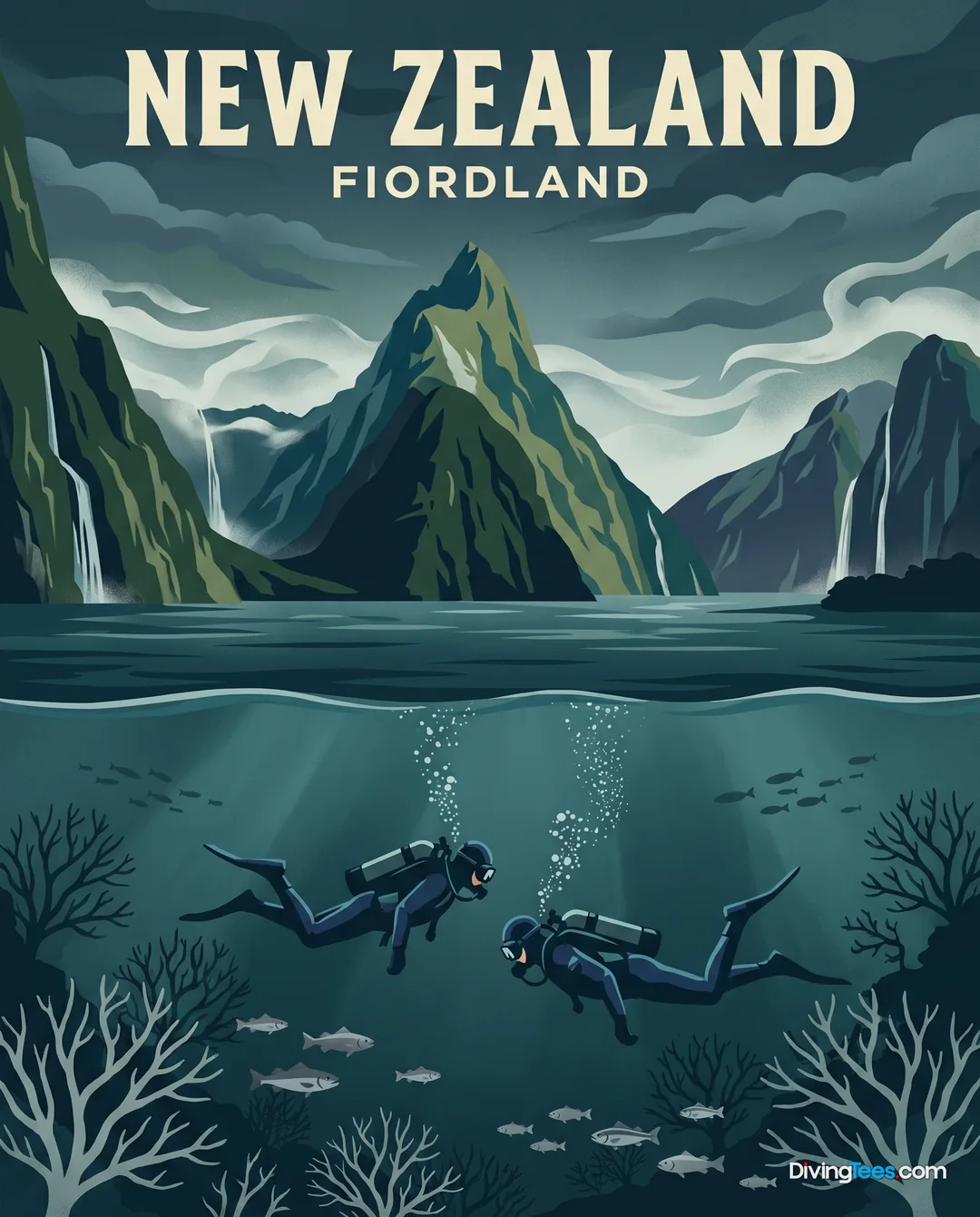
Kelp forests and pale limestone reef give Kaikōura its underwater character, rather than coral gardens or a liveaboard itinerary. From the town, you can combine shore dives with boat trips through rocky terrain, cavities, passages and drop-offs, then spend the surface interval watching whales, Dusky dolphins or New Zealand fur seals. It is a cold-water destination all year, but not an exclusively technical one. Sheltered areas can suit training and beginners, while the exposed shorelines demand sound judgement and a willingness to manage a demanding entry.
Expect rocky reef, limestone formations, kelp forest, small cavities and passages, with some deeper water beyond the more sheltered sections. Shore diving is a genuine part of the Kaikōura experience, but the entry may involve a difficult walk over rocks, and the conditions at the waterline can decide whether a dive is sensible. Boat diving opens different habitats and gives the weather a larger say in the day’s plan. Currents are variable rather than a constant downcurrent or drift dive, and swell can change the character of a site quickly. Visibility is not something to build an itinerary around, since coastal run-off and sea conditions can affect it. Treat the exit, entry and route back to shore as part of the dive, not as an afterthought.
The large animals are part of Kaikōura’s identity above and below the surface. New Zealand fur seals can be encountered throughout the year, as can Dusky dolphins and whales in the surrounding waters. Their presence makes the town unusually rewarding for a diver travelling with a non-diving partner, since a day on the water need not be limited to a submerged itinerary. Underwater, the appeal is the living structure of the kelp and rocky reef, with cavities and passages breaking up the terrain. Kaikōura Marine Reserve protects marine life and habitat by banning fishing, collecting and disturbance. Look, but do not touch, remove shells or rocks, or treat the reserve as a place to take specimens.
Plan the main diving window from October through April, the austral spring, summer and autumn. Commercial diving is concentrated then, so there is a better chance of arranging boat trips and of having alternatives when swell changes the plan. June, July and August are the awkward months, with fewer commercial departures and some operators closing for winter. The water remains cold outside the main season, so this is not a case of waiting for tropical warmth. Summer brings more demand for marine activities, while shore sites can be easier away from holiday periods. Keep more than one weather window available if boat diving matters, because a short visit can lose its central outing to sea conditions.
Kaikōura can suit all levels, provided the site matches the diver rather than the other way round. Sheltered areas such as Baxters Reef offer a more forgiving introduction, including for training, while exposed rocky entries, swell and deeper outer sections need experience in cold water and a realistic assessment of conditions. PADI, SSI and BSAC qualifications are not the deciding factor here. Comfort in a thick wetsuit or drysuit, with hood, gloves and appropriate weighting, matters more than collecting another speciality card.
From London Heathrow, London Gatwick or Manchester, the journey normally begins with a flight to a major New Zealand gateway, followed by an internal journey to the South Island. Kaikōura then lies on State Highway 1, about two and a half hours by road from Christchurch, about two hours from Picton and about an hour and a half from Blenheim. The inland route via Waiau provides an alternative. The Coastal Pacific train links Kaikōura with Christchurch, Blenheim and Picton during its operating season. Kaikōura’s airstrip is used for scenic flights and charters, not as the basis for a regular international arrival. The town centre is compact, and the station is walkable from it, but reach the launch point or a shore site by arranging a taxi, transfer or car in advance.
Book the first planned boat dive early in the stay, not on the final day, and leave several days in Kaikōura if that trip matters. A swell-related cancellation is much easier to absorb when a shore dive, a peninsula walk or a marine excursion can take its place. For a first shore dive, start with a sheltered sector such as Baxters Reef, then assess the outer areas locally. Do not choose from a map alone: check the rock walk, the surf at entry and exit, and the retreat if conditions deteriorate. Bring the cold-water accessories that are easiest to lack, especially a hood, gloves and thermal underlayer, because available rental sizes may not match your needs. In the marine reserve, collecting a shell, organism or rock is prohibited, as is disturbing the bottom. Organise local transport before leaving the compact centre, since getting to every shore entry is not a simple walk.
A four- to seven-day land-based stay gives Kaikōura room to work as a diving trip rather than a single weather gamble. Base yourself in or near the compact town, arrange transport to the launch point or shore entry, and keep at least one day flexible. When the boat is cancelled, the peninsula’s coastal walks, whale and dolphin excursions, seal watching, or a scenic drive towards Waipara keep the day worthwhile. The Coastal Pacific adds another practical scenic option when it is operating.
Hello, I'm Marina, DivingDeal.com's AI assistant. I guide you through destinations, areas and countries.
Thinking about the whole trip and the flights? Talk it over with Edith →
Marina is an AI. Some links are affiliate links: DivingDeal may earn a commission, at no extra cost to you. Bookings are made with the partner.
Plan your main diving window from October through April, when commercial diving is concentrated and boat trips are more likely to operate. June, July and August bring fewer commercial departures, with some operators closing for winter. Keep several weather windows available, because swell can change boat plans and shore conditions.
Kaikōura can suit beginners and training in sheltered areas such as Baxters Reef, while exposed rocky entries, swell and deeper outer sections require cold-water experience and sound judgement. Comfort in a thick wetsuit or drysuit, with hood, gloves and suitable weighting, matters more than holding a particular qualification.
Expect kelp forests, rocky reef, pale limestone formations, cavities, passages and deeper water beyond sheltered areas. New Zealand fur seals, Dusky dolphins and whales occur in the surrounding waters throughout the year. Kaikōura Marine Reserve protects marine life and habitat, so you must not touch, collect or disturb anything.
Stay four to seven days, arrange transport to the launch point or shore entry, and book the first boat dive early rather than on your final day. Keep at least one day flexible for swell. Start shore diving at a sheltered sector, check entries locally, and bring your own hood, gloves and thermal underlayer.