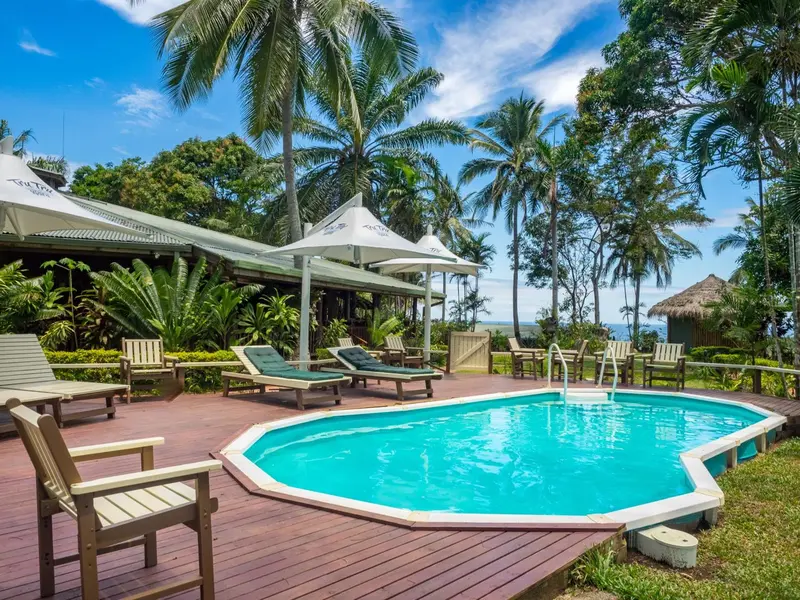
 Dive centre in the hotel
Tufi Resort
★★★★
Google 4.6/5 (75 reviews)
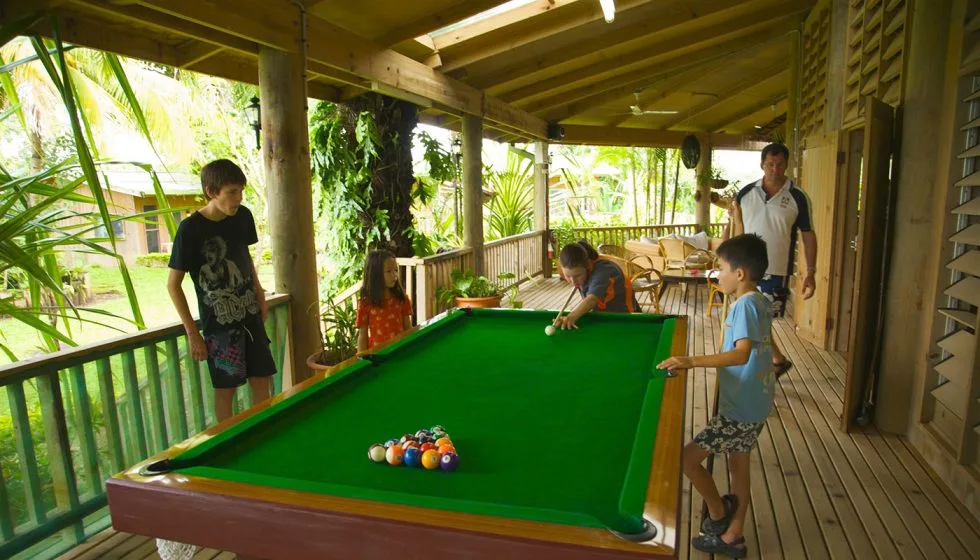
The dive centre
Tufi Dive
PADI
Google 4.6/5 (75 reviews)
Dives: House Reef (Tufi Wharf), Wrecks (PT Boats & Landrover), B17 Bomber Black Jack
Papua New Guinea · Pacific
Volcanic fjords, muck-covered structures, hard and soft corals, pelagic schools and occasional hammerhead sharks meet around Tufi.
For subtitles in English: start the video firstthen click the gearat the top right of the video, select “Subtitles/CC”, then “Auto-translate” and choose “English”.
Volcanic fjords are the defining sight at Tufi, but they are only half the story. Inside these sheltered inlets, muck and macro diving unfolds around the house reef, pontoon and old structures colonised by marine life. Boats then head out to distant reefs where coral gardens, pelagic fish and occasional hammerhead sharks replace the small-scale searching. This is a remote, shore-based Papua New Guinea trip for divers happy to trade convenience for a distinctly different combination of fjord diving and open-water reef excursions.
Tufi changes character with the site and the weather. The fjords provide protected water for muck, macro and night dives, with the house reef close enough to reach on foot from the main shore accommodation. Expect to search rather than simply swim over a reef, particularly around the pontoon and older structures now covered in life. Outer-reef trips are a different proposition: the reefs lie several nautical miles offshore, the boat journey can take from about fifteen minutes to more than an hour, and wind and swell decide whether they are practical. There are hard and soft corals, schools of pelagic fish and occasional hammerheads, but currents are variable rather than a constant feature. Depending on the site offered, an Advanced qualification is useful for deeper or more exposed dives. When the outer reefs are out of reach, the fjords are a genuine alternative, not merely a consolation prize.
The fjords are where Tufi earns its reputation with photographers. Muck and macro subjects are found around the house reef, pontoon and other structures, including old debris that has become part of the underwater habitat. Slow searching suits these sheltered sites, and they also provide practical night-diving territory. On the outer reefs, the scale changes to hard and soft corals, dense fish activity and schools of pelagic fish moving over the reef. Hammerhead sharks are an occasional possibility rather than a scheduled encounter, so the outer reefs should be approached for their broader reef and pelagic character. There is no dependable seasonal wildlife calendar to build a trip around. Clearer conditions are most likely during the transition periods, while runoff after heavy rain particularly affects the fjords and coastal water.
The most useful windows are the transition periods, especially mid-March to mid-July and mid-September to mid-December, with October and November particularly practical choices. These periods generally bring calmer seas and better visibility, giving the boat a better chance of reaching the outer reefs. From mid-July to mid-September, south-easterly trade winds can raise the swell and keep exposed reefs off the programme. From mid-December to March, the sea may be relatively calm, but the rainy season and river runoff can cloud the fjords and coastal sites. A dry-looking day therefore does not automatically mean clear water close to shore.
Tufi can suit all levels, provided the itinerary is matched to the diver rather than to the most exposed sites. Sheltered fjord dives and some house-reef sessions are the sensible starting point for newer divers, while outer reefs may involve greater depth, boat exposure and variable currents. An Advanced qualification is useful when the programme includes deeper or more open-water diving. Divers qualified through BSAC, PADI or SSI should find the relevant experience matters more than the badge, particularly when deciding whether outer-reef conditions are comfortable.
From London Heathrow, London Gatwick or Manchester, the journey is built around a domestic flight from Port Moresby to the isolated airstrip at Tufi. There is no straightforward overland or regular ferry alternative to rely on, so the air connection is a structural part of the trip. Allow room for connections rather than building an international itinerary around a tight onward departure. Once in Tufi, the house reef is within walking distance of the main shore accommodation, while the outer reefs require boat trips from the coast. Some of those trips are more than an hour on the water, and wind or swell can delay them. Keep a margin before the return flight, as a disrupted boat programme and an isolated domestic air link leave little room to recover lost time.
Do not book a short trip built entirely around the outer reefs. They are distant, weather-dependent and vulnerable to the south-easterly winds, so keep enough days for the fjords and house reef to carry the diving when the boat cannot go. Treat the transition seasons as a better planning guide than the label dry season, because the latter can still bring a rough outer sea. After heavy rain, expect runoff to reduce visibility near the coast, even if the surface looks calm. Bring your own macro and photography equipment if small subjects matter to the trip, as specialist rental provision should not be assumed. Use the fjords for night dives and as a productive weather back-up, not as a reluctant substitute. Finally, leave spare time before the flight home. A delayed outer-reef outing and a missed domestic connection are a poor combination in such an isolated setting.
Tufi works best as a seven- to ten-day shore-based stay. The days can alternate between slow macro searches in the fjords, house-reef or night dives, and longer boat outings to the outer reefs when the sea allows. Keeping several days flexible is more useful than fixing every dive in advance. Non-divers can kayak through the fjords, snorkel in protected coastal water, visit villages or walk the shoreline, so a rest day need not mean sitting indoors.
Hello, I'm Marina, DivingDeal.com's AI assistant. I guide you through destinations, areas and countries.
Thinking about the whole trip and the flights? Talk it over with Edith →
Marina is an AI. Some links are affiliate links: DivingDeal may earn a commission, at no extra cost to you. Bookings are made with the partner.
In each one, the dive centre is inside the hotel: step out of your room and go diving.
Dive centre in the hotel★★★★
Google 4.6/5 (75 reviews)
The dive centre
Tufi Dive
PADI
Google 4.6/5 (75 reviews)
Dives: House Reef (Tufi Wharf), Wrecks (PT Boats & Landrover), B17 Bomber Black Jack
Choose Tufi during the transition periods, especially from mid-March to mid-July or mid-September to mid-December, when seas are generally calmer and visibility better. October and November are practical choices. South-easterly winds can affect exposed reefs from mid-July to mid-September, while rainy-season runoff may cloud fjords and coastal sites.
Tufi can suit divers of all levels when the itinerary matches your experience. Sheltered fjord dives and some house-reef sessions suit newer divers, while outer reefs may involve greater depth, boat exposure and variable currents. An Advanced qualification is useful for deeper or more exposed diving, regardless of whether you hold BSAC, PADI or SSI certification.
Tufi combines sheltered muck and macro diving with open-water reef excursions. Around the house reef, pontoon and old structures, you can search for small marine life and make night dives. Outer reefs offer hard and soft corals, pelagic fish schools and occasional hammerhead sharks, although hammerheads are not a scheduled encounter.
Plan a flexible shore-based stay with enough time for both fjord diving and outer-reef boat trips. Reach the house reef on foot, but allow for long journeys and weather delays offshore. Build in connection time for the domestic flight from Port Moresby, leave margin before flying home, and bring macro or photography equipment if needed.