Polar Bear
Ursus maritimus
The largest land carnivore is a marine animal.
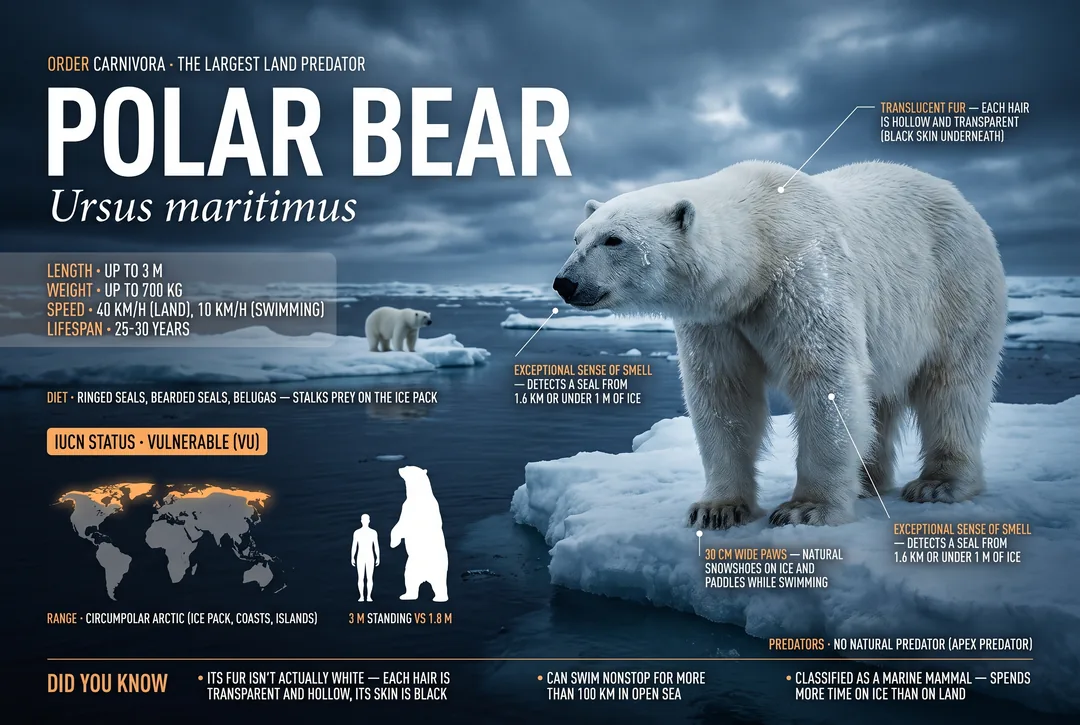
IDENTITY CARD
| Classification | Order Carnivora, family Ursidae |
| Scientific name | Ursus maritimus (Phipps, 1774) |
| Size | 2.40-3.00 m (males); 1.80-2.40 m (females) |
| Weight | 400-700 kg (males); 150-350 kg (females) |
| Speed | 40 km/h on land; 10 km/h swimming |
| Lifespan | 25 to 30 years in the wild |
| Depth | Dives to 4-5 m documented during hunting |
| Diet | Hypercarnivore — ringed seal, bearded seal, whale carcasses, seabirds, eggs |
| IUCN Status | Vulnerable (VU) — 22,000-31,000 individuals, population declining |
PORTRAIT
Ursus maritimus — the sea bear. Its Latin name says what textbooks still hesitate to admit: the largest land carnivore on Earth is, in every way that matters, a marine animal. It is born on land, yes, but it lives on sea ice — a platform that forms, drifts, fractures, and melts with the seasons, and that dictates every aspect of its existence. This is not a species you encounter underwater. You watch it from the deck of an expedition vessel, at a respectful distance, moving across the vastest and most silent landscapes left on the planet.
When the ice breaks up, the polar bear swims. And it swims distances that strain belief. GPS-tracked individuals have covered more than 680 kilometres nonstop, paddling for nine consecutive days across the open Beaufort Sea. Some biologists have long argued that it should be classified as a marine mammal outright — and the United States agreed, placing it under the Marine Mammal Protection Act since 1972, the only bear in the world to hold that legal status.
The polar bear sits at the intersection of expedition travel, wildlife observation, and the climate crisis. Every sighting, from a ship railing or the window of a tundra buggy, is both a privilege and a warning — a glimpse of an animal whose habitat is measured not in hectares but in degrees of temperature, and whose future is written in the ice charts of September.
HOW TO RECOGNIZE IT
The polar bear is the only large mammal that appears entirely white. The body is massive and elongated, carried on legs that seem short for its bulk, with a surprisingly long neck for a bear and a relatively small head that tapers into a distinctive Roman profile. The front paws are disproportionately large — up to 30 cm in diameter — and serve double duty as paddles in water and shovels on land, distributing the animal's weight across thin ice that would crack under a human step.
The fur is not actually white. Each hair is a hollow, transparent tube, entirely devoid of pigment, that scatters and diffuses light the same way snow does. The skin underneath is jet black — visible on the nose, the lips, and the paw pads. This combination makes the polar bear nearly invisible to infrared cameras: the hollow hairs insulate so efficiently that almost no body heat escapes.
The soles of the paws are covered in small papillae and dense hair that provide extraordinary grip on ice, while short, robust claws — curved and non-retractable — serve for both traction and pinning prey. In the field, what strikes first is the sheer scale: an adult male standing on its hind legs reaches over three metres, taller than any doorframe, heavier than a grand piano.
For subtitles in English: start the video firstthen click the gearat the top right of the video, select “Subtitles/CC”, then “Auto-translate” and choose “English”.
WAY OF LIFE
The polar bear is a solitary, patient hunter whose entire existence revolves around one animal: the ringed seal. Its preferred technique is still-hunting — finding a seal's breathing hole in the ice, lying flat beside it, and waiting, sometimes for hours, perfectly motionless, until a seal surfaces to breathe. The strike is instantaneous: one blow of the forepaw, and the seal is dragged onto the ice.
Its sense of smell is the most powerful of any bear, and among the most acute in the animal kingdom. A polar bear can detect a seal beneath a metre of compacted snow and ice from more than a kilometre away, and can scent a whale carcass at 30 kilometres downwind. This olfactory prowess is not a curiosity — it is survival equipment in a landscape where prey is invisible beneath an endless white surface.
The annual cycle is dictated entirely by ice. From November to June, the bear hunts on the frozen sea, building fat reserves at a rate of up to two kilograms per day. When summer breaks the ice apart, it is forced ashore into a prolonged fast that can last four to five months — living on stored fat, conserving energy, waiting for freeze-up. Pregnant females den between October and November, giving birth in December or January to cubs that are usually twins, each weighing roughly 600 grams — about one-thousandth of their mother's mass. The cubs stay with their mother for two and a half years, learning hunting techniques and the ice routes that connect feeding grounds across the Arctic. Nineteen recognised subpopulations circle the pole, each with its own territory, its own ice dynamics, and its own trajectory of decline.
WHERE TO SEE IT
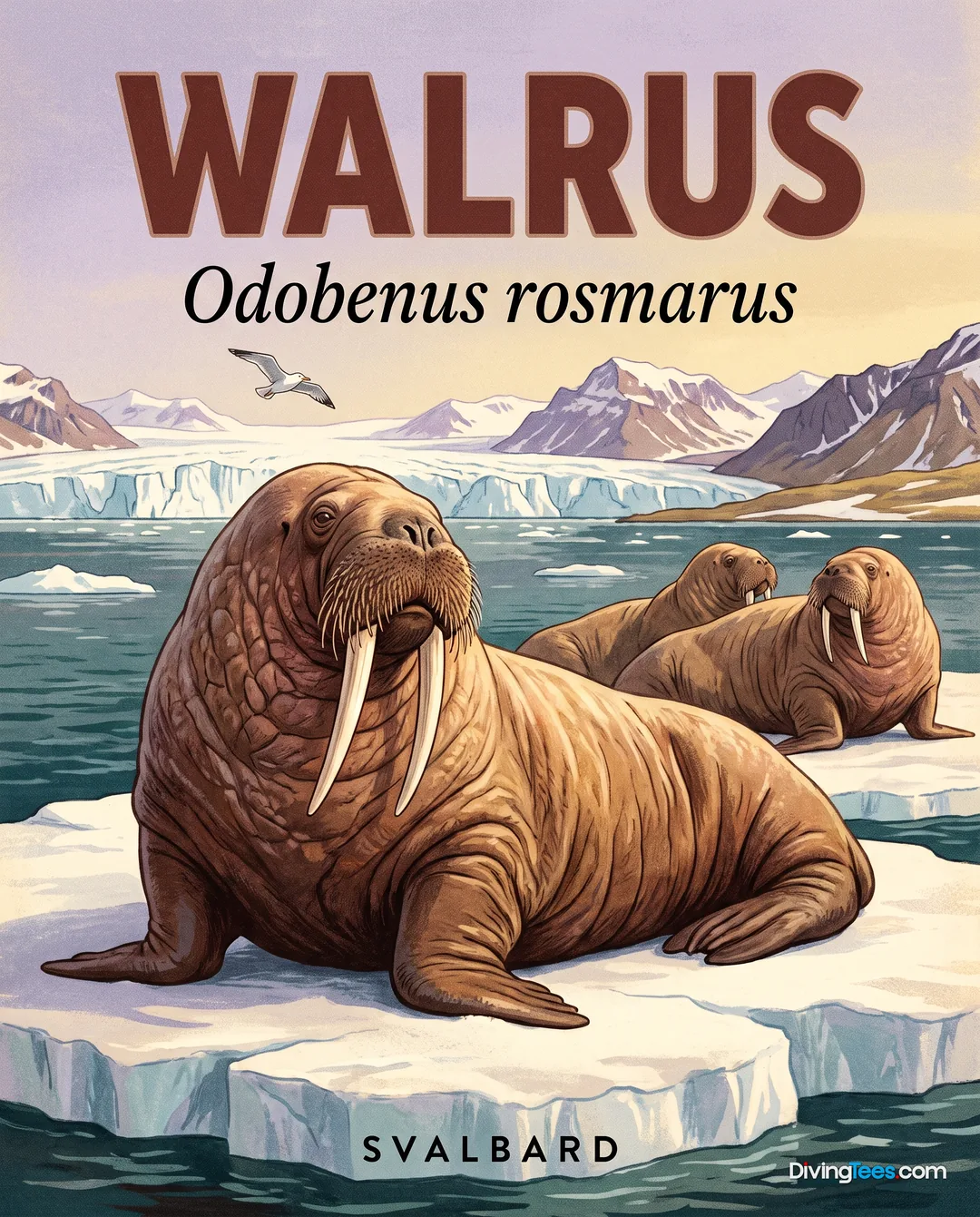
Svalbard, Norway. The reference destination for polar bear observation. Expedition cruises operate from June to September, navigating the drift ice north and east of Spitsbergen where bears hunt along the ice edge. Sightings happen from the ship's deck — the bear appears on a floe, sometimes close enough to hear the crunch of its paws, always at a safe distance enforced by armed guides. Svalbard offers the most complete Arctic experience: bears, walruses, reindeer, seabird cliffs, calving glaciers, and 24-hour light. The archipelago is home to an estimated 3,000 bears — roughly as many as the human population.
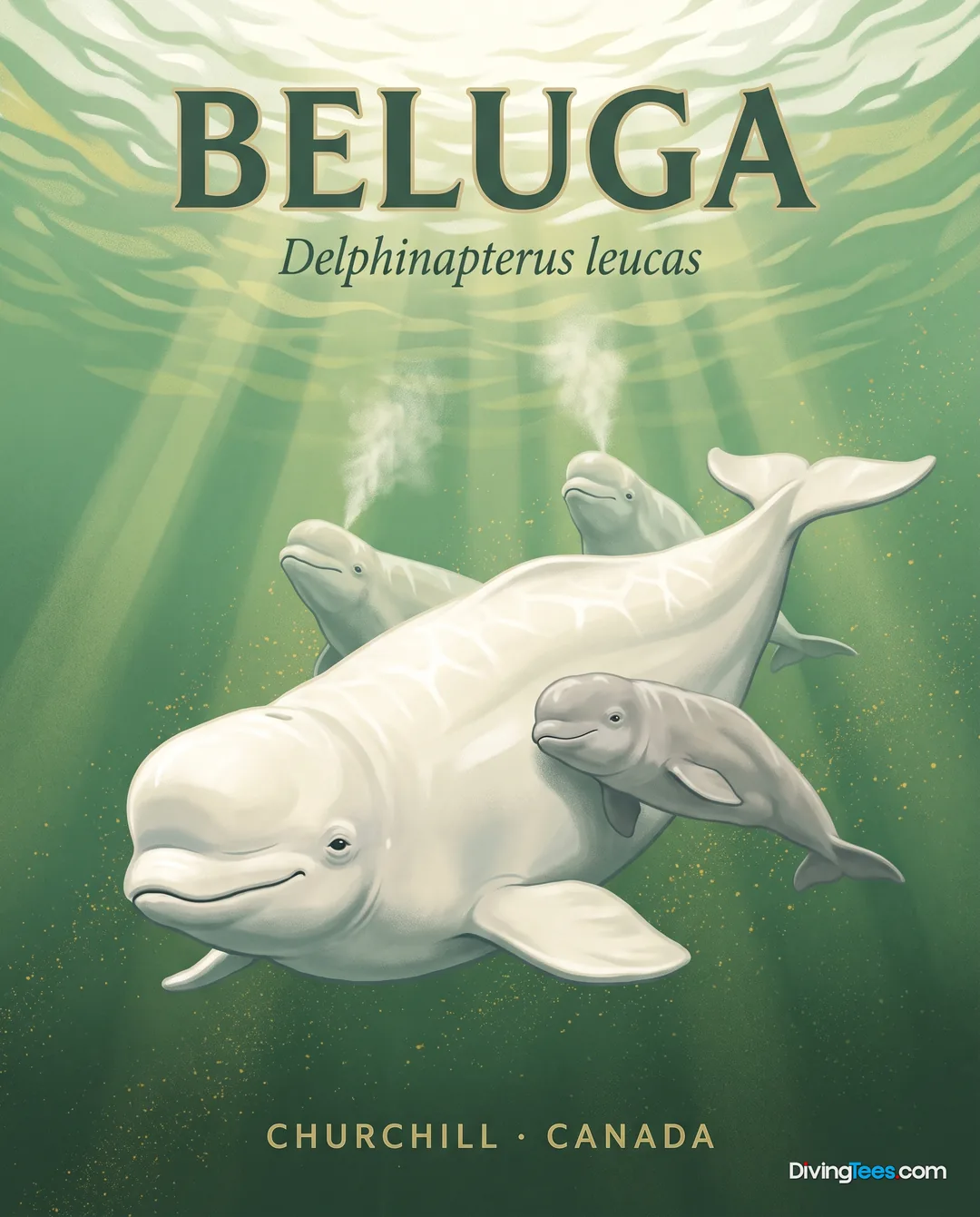
Churchill, Canada. Known worldwide as the "polar bear capital," this small town on the western shore of Hudson Bay hosts one of the most reliable wildlife encounters on the planet. Every October and November, bears gather along the coast waiting for the bay to freeze, and visitors observe them from purpose-built tundra buggies — elevated vehicles that bring you to eye level with a standing bear. Churchill is the only destination where polar bears can be seen from land-based vehicles without a ship.
Franz Josef Land, Russia. One of the most remote archipelagos in the Arctic, reached by icebreaker from Murmansk in July and August. Franz Josef Land offers encounters in a setting of extreme isolation — volcanic islands capped in ice, no permanent human population, and bears that have rarely seen a ship. Access is heavily restricted and expeditions are rare, making every sighting feel like a first contact.
Greenland. Two distinct experiences. On the east coast, expedition cruises through the Northeast Greenland National Park — the largest national park on Earth — offer summer encounters with bears patrolling the ice edge among colossal icebergs. On the west coast, the Disko Bay area provides a different context: bears are less frequent, but the combination of glacial calving, midnight sun, and the chance of a sighting makes it a compelling alternative for those who prefer smaller ships and fewer passengers.
OBSERVATION CALENDAR
| Destination | J | F | M | A | M | J | J | A | S | O | N | D |
|---|---|---|---|---|---|---|---|---|---|---|---|---|
| Churchill (tundra buggy) |
Click each button to show/hide
Polar bears are present in the Arctic year-round, but expedition access is limited to the brief summer window when ice conditions allow navigation. Churchill is the exception — its season falls in autumn, when bears congregate on the coast waiting for Hudson Bay to freeze.
CONSERVATION
Ursus maritimus has been listed as Vulnerable (VU) on the IUCN Red List since 2006. The global population is estimated at 22,000 to 31,000 individuals distributed across 19 subpopulations, several of which are in documented decline. The Western Hudson Bay population alone has lost roughly 30% of its numbers since the 1980s.
The primary threat is climate change, and the mechanism is direct. The Arctic has lost more than 40% of its summer sea ice since 1979, and the ice-free season is lengthening by approximately three weeks per decade. Less ice means less time to hunt, longer summer fasts, thinner females entering the denning season, and smaller litters with lower survival rates. Climate models project near-complete summer ice loss before 2050 — a scenario that would fundamentally alter the species' ability to feed.
Secondary threats compound the pressure. Persistent organic pollutants (POPs) concentrate as they move up the Arctic food chain, reaching their highest levels in the fat of top predators. Human-bear conflict is increasing as bears spend more time ashore near communities. And industrial activity — oil and gas exploration, commercial shipping — is expanding into formerly inaccessible Arctic waters as the ice retreats, opening new corridors of disturbance.
International protection began with the 1973 Agreement on the Conservation of Polar Bears, signed by the five Arctic nations (Canada, Denmark, Norway, the Soviet Union, and the United States). It remains the foundational treaty for the species, supplemented by national legislation and quota systems for Indigenous subsistence hunting.
Organisations to support:
- Polar Bears International — research, education, and advocacy focused exclusively on polar bear conservation
- WWF Arctic Programme — habitat protection and climate policy across the Arctic
- IUCN Polar Bear Specialist Group — scientific assessment of all 19 subpopulations
- Arctic Wildlife Fund — conservation projects in the Russian Arctic
3 THINGS YOU PROBABLY DON'T KNOW
1. Its fur is not white — it is transparent. Each hair is a hollow, pigment-free tube that scatters light the way snow crystals do, producing the illusion of whiteness. The skin beneath is black. In captivity, some polar bears have turned greenish — the result of microscopic algae colonising the hollow interior of the hair shafts, a phenomenon first documented in zoos with warm, humid enclosures.
2. It can smell a seal through a metre of ice. The polar bear's olfactory bulbs are far more developed than those of its closest relative, the brown bear — from which it diverged only about 500,000 years ago. It can detect a ringed seal's breathing hole beneath compacted snow and ice at more than a kilometre, and locate a whale carcass at 30 kilometres downwind. In a world where prey is invisible beneath a featureless white surface, that nose is the difference between eating and starving.
3. One female swam 687 kilometres without stopping. In 2011, a GPS-collared female in the Beaufort Sea swam continuously for nine days through water at 2 to 6 degrees Celsius, covering 687 kilometres before reaching ice. She lost 22% of her body mass during the crossing. Her cub did not survive. The feat illustrates both the species' extraordinary endurance and the escalating cost of sea ice retreat — as the ice pulls farther from shore each summer, the distances bears must swim to reach it grow longer, and the toll grows heavier.
PHOTO AND VIDEO TIPS
Polar bear photography is always conducted from a ship or a vehicle — never on foot, never at close range. The minimum recommended distance is 30 to 50 metres, enforced by expedition leaders and, in Svalbard, by law.
Lens. A telephoto in the 200-400 mm range is the standard working lens; a stabilised 100-400 mm covers most situations from a ship's deck. But do not neglect a wide angle — a 24-70 mm is essential for the images that actually matter. The classic mistake in polar bear photography is shooting too tight, too soon, without landscape context. A polar bear portrait, isolated against white, looks like any polar bear portrait. What makes an image unique is the context: the sea ice stretching to the horizon, an iceberg catching low Arctic light, the vast emptiness that defines this animal's world. Start wide. Tighten only when behaviour warrants it — a hunt, a play sequence, a mother nursing cubs.
Exposure. The Arctic is a light trap. Snow and ice reflect 80 to 90% of incoming light, and every camera's auto-exposure will be fooled into underexposing the scene, turning white into grey. Overexpose deliberately — +1 to +1.7 EV — and check the histogram after every burst. The histogram should push right without clipping highlights.
Shutter speed. From a ship, deck vibration is a constant enemy. Use a minimum of 1/1000s at telephoto focal lengths, even in good light. Brace against a railing or use a beanbag — monopods amplify ship vibration rather than dampening it.
The image that lasts. The bear in its landscape. The scale, the silence, the light. Every expedition photographer comes home with a tight portrait; the ones who come home with something memorable are those who resisted the urge to fill the frame.