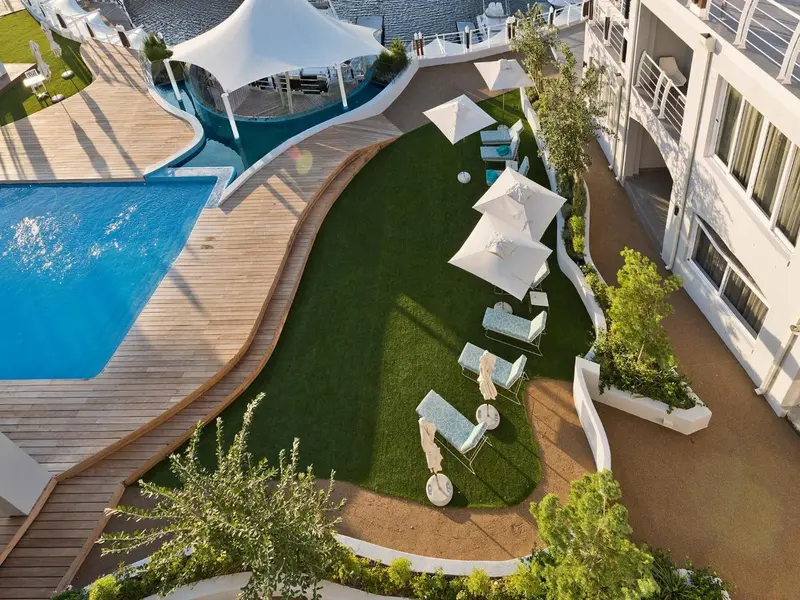
 Dive centre in the hotel
Krystal Beach Hotel
★★★★
Google 4.4/5 (3,172 reviews)
The dive centre
Just Africa Scuba
PADI
Google 4.9/5 (151 reviews)
Dives: MV Aster, MV Katsu Maru, Bos 400
South Africa · Africa
Kelp forests, rocky reefs, pyjama sharks and seals make Hermanus a cool-water South African base for weather-led shore and boat diving.
For subtitles in English: start the video firstthen click the gearat the top right of the video, select “Subtitles/CC”, then “Auto-translate” and choose “English”.
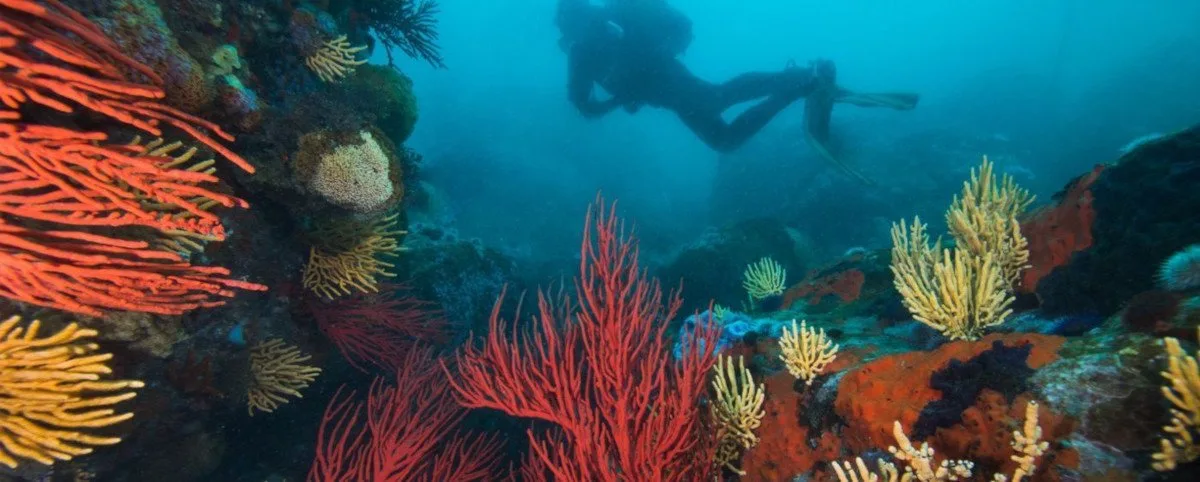
At Hermanus, diving means following rocky reef contours through kelp rather than drifting over tropical coral. Boat trips leave New Harbour for sites such as Table Top, Preekstoel and Tamatiebank, while selected shore entries bring the same cool-water character closer to town. Depths across the area run roughly from 9 to 40 metres. The reward is a distinctly South African mix of small sharks, seals, octopus and close-up reef life, with the day’s plan shaped by wind and swell.
Expect a mixture of boat diving and shore entries over rocky reefs, walls and kelp forests. Table Top, Preekstoel, Gearing’s Point and Tamatiebank each reflect the local pattern: a reef dive where terrain, swell and visibility matter more than a fixed route. Depths range approximately from 9 to 40 metres, so the area can suit a sheltered shallow outing or a more demanding deep dive. Currents are variable, and the main underwater difficulty is often the surface and shallow-water movement rather than a continuous current. Surge can make an entry or exit awkward, particularly where the reef is exposed. Visibility commonly sits between 3 and 12 metres, but south-easterly wind and swell can reduce it to 3 metres or less. Boat plans therefore need room to change, with sheltered kelp and reef options more useful than insisting on one named site.
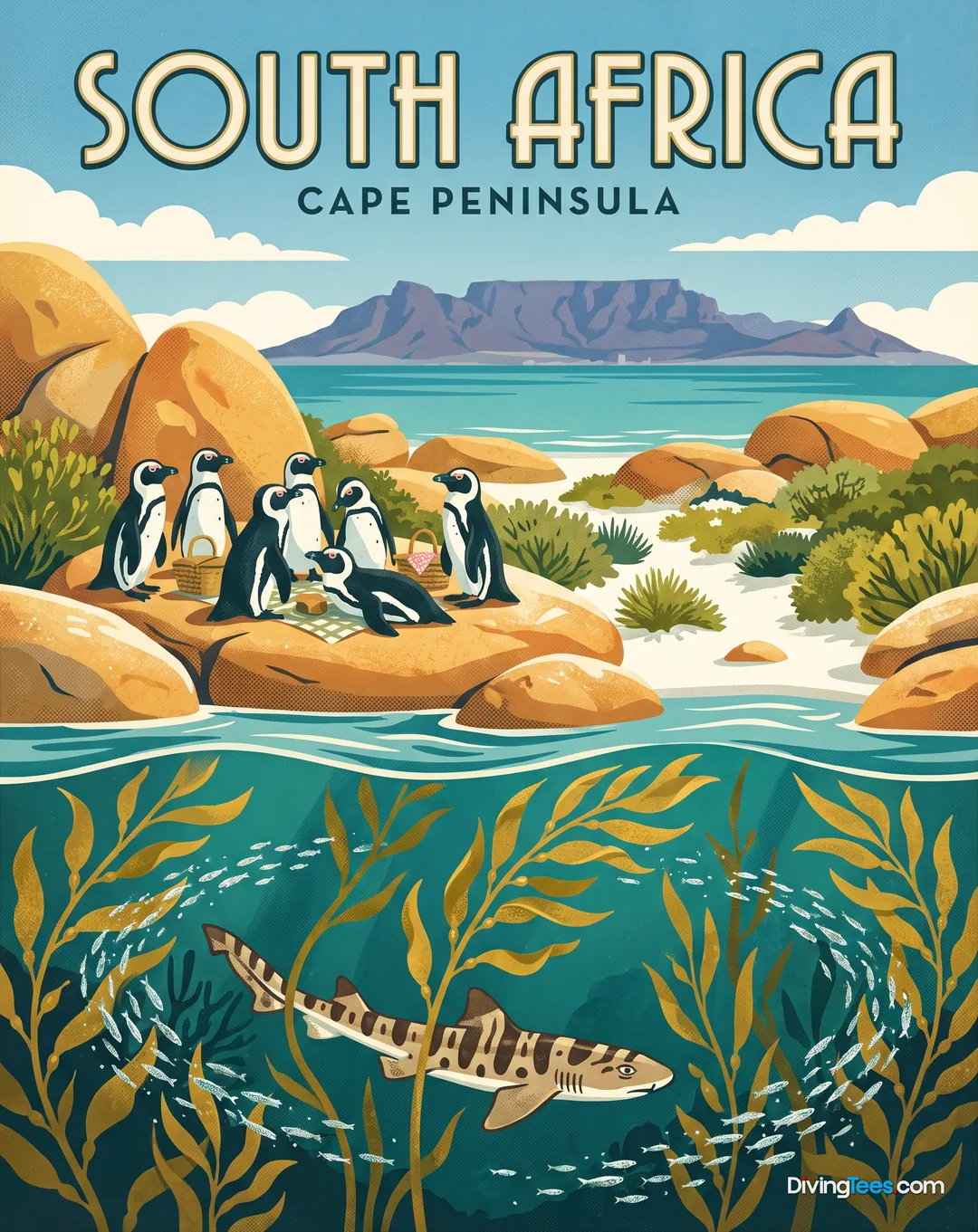
Hermanus rewards a diver who looks into the kelp, not just across it. Pyjama sharks and catsharks are among the characteristic encounters, while seals may pass through the forest and octopus, crayfish, pipefish and starfish occupy the reef. The close work can be as engaging as the larger sightings, with small crustaceans and other macro life appearing among rock and kelp. Ormers are also associated with the protected area, although they are not something to collect. These animals are part of the local reef character rather than a seasonal guarantee. The better question on any day is where the wind has left enough clarity and shelter to explore slowly. Whale watching belongs to the wider Walker Bay experience above water, while white-shark cage trips are associated with nearby Gansbaai, not Hermanus reef diving.
The most useful diving window runs broadly from March through October. North-westerly winds are more often associated with clearer water and workable anchorages during this period, although Hermanus remains weather-dependent throughout the year. From September into February, prevailing south-easterlies can stir the water, cut visibility sharply and cancel boat trips, making the warmer-calendar months a poor basis for a tightly packed dive programme. September and October are a shoulder period rather than a simple yes or no, so keep flexibility even then. The practical answer is to allow several reserve days, follow the forecast, and treat a promising surface as an invitation to check conditions, not a guarantee of a dive.
Some sheltered shore sites and shallower kelp reefs can suit beginners, but neither swell nor visibility should be taken for granted. A recent diver needs comfort with a shore entry, surge and changing plans, as well as the judgement to turn a dive when the shallow water is uncomfortable. Advanced certification, or equivalent BSAC, PADI or SSI training, is useful for deeper sites and rougher conditions. This is a better fit for divers happy to trade tropical certainty for cool-water reef detail and flexible scheduling.
From London Heathrow, Gatwick or Manchester, reach the Cape Town area and continue to Hermanus by road. No ferry or domestic flight is needed for the final approach. Allow proper margin for the onward connection, since the diving day starts from Hermanus rather than from the arrival point. Boat departures are concentrated at New Harbour, while some sites are reached from the shore. Depending on where you stay, the harbour may be walkable or may require local transport, and a standard shuttle should not be assumed. Once in town, arrange the final connection with the accommodation and diving schedule rather than building a plan around transport that may not be available.
Keep several days free for the sea, not for sightseeing. A run of south-easterly winds can push visibility down to 3 metres or less and stop departures, so avoid booking every day as a non-refundable sequence of dives. Before a shore entry, ask which access point suits the day’s swell: a site that looks manageable on a calm morning can become an uncomfortable scramble in shallow water. Ask for a sheltered reef and kelp alternative instead of insisting on one exposed site. Bring any small or comfort-critical equipment you rely on, because the available rental range is not something to take for granted. Check that the Walker Bay Marine Protected Area diving permit is covered before entering the water. Do not collect or disturb marine life. Finally, keep Gansbaai in a separate part of the plan: its shark-cage trips are not a substitute for Hermanus’s rocky reefs and kelp.
Plan on five to seven days on land, with reserve days built into the diving schedule. Use Hermanus as the base for New Harbour boat trips and suitable shore entries, then leave the marine forecast to decide which comes first. Non-diving days can take in Walker Bay whale watching, coastal walks and cliff paths, or the Overberg landscape. Gansbaai works as a separate excursion for shark activities, rather than as an extension of the local reef programme.
Hello, I'm Marina, DivingDeal.com's AI assistant. I guide you through destinations, areas and countries.
Thinking about the whole trip and the flights? Talk it over with Edith →
Marina is an AI. Some links are affiliate links: DivingDeal may earn a commission, at no extra cost to you. Bookings are made with the partner.
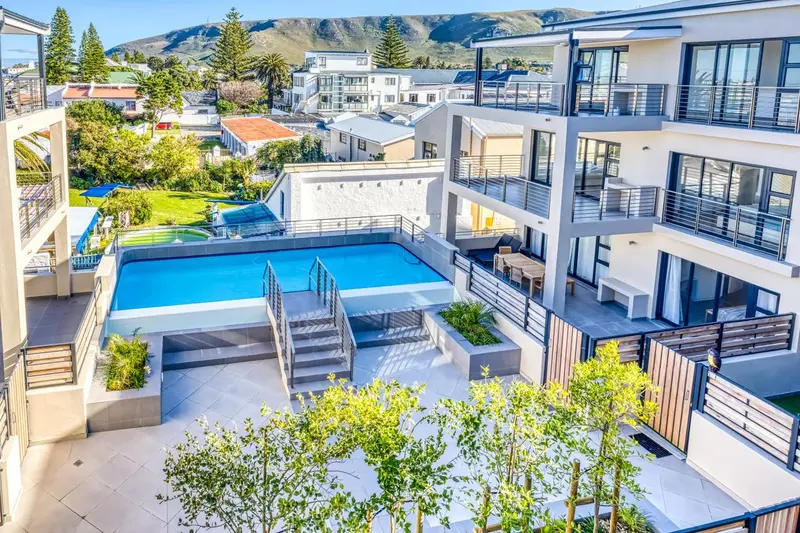
In each one, the dive centre is inside the hotel: step out of your room and go diving.
Dive centre in the hotel★★★★
Google 4.4/5 (3,172 reviews)
The dive centre
Just Africa Scuba
PADI
Google 4.9/5 (151 reviews)
Dives: MV Aster, MV Katsu Maru, Bos 400
Plan your diving broadly from March through October, when north-westerly winds are more often linked with clearer water and workable anchorages. Hermanus remains weather-dependent, so keep reserve days available. From September into February, south-easterly winds can reduce visibility and cancel boat trips, making tightly packed schedules unsuitable.
Some sheltered shore sites and shallower kelp reefs can suit beginners, but you need comfort with shore entries, surge and changing plans. Advanced certification, or equivalent BSAC, PADI or SSI training, is useful for deeper sites and rougher conditions. You should be ready to turn back when shallow water feels uncomfortable.
You can explore cool rocky reefs, walls and kelp forests where pyjama sharks and catsharks are characteristic encounters. Seals may pass through the kelp, while octopus, crayfish, pipefish, starfish and small crustaceans occupy the reef. Visibility and shelter vary with wind and swell, so sightings are not guaranteed.
Use Hermanus as your base for New Harbour boat trips and suitable shore entries, keeping several days flexible for weather. Allow reserve days rather than booking every dive tightly. Arrange local transport with your accommodation and diving schedule, confirm the Walker Bay Marine Protected Area permit, and consider whale watching or coastal walks on non-diving days.