Nova Boutique Hotel and Spa
★★★★★
Google 4.8/5 (175 reviews)
South Africa · Africa
Reefs, wrecks and offshore pinnacles meet Cape fur seals, African penguins and dives approaching 40 metres across Algoa Bay.
For subtitles in English: start the video firstthen click the gearat the top right of the video, select “Subtitles/CC”, then “Auto-translate” and choose “English”.
Port Elizabeth, now Gqeberha, is a shore-based diving destination built around boat trips into Algoa Bay. Reefs, wrecks and offshore pinnacles lead towards the islands of Sainte-Croix and Bird Island, with the Addo Elephant National Park Marine Protected Area adding a strong wildlife context. Depths range from beginner-friendly shallows to about 40 metres. It suits divers wanting marine life, changing sites and a land-based holiday rather than a liveaboard.
Boat diving is the main business here, taking you across Algoa Bay to reefs, pinacles, wrecks and exposed sites near Sainte-Croix. Evan’s Peak is the obvious example of the more committed outing: an offshore pinnacle, weather-dependent and reaching towards 40 metres. Elsewhere, shallower reefs make room for less experienced divers, while shore entries and night dives add useful alternatives. Currents are variable rather than a constant feature, but sea conditions can be demanding. Visibility may be little more than 1.5 metres when wind, swell and suspended material work against you, yet can exceed 15 metres when the water settles. The right plan is therefore flexible, with the dive director matching the site to the day. Wrecks and bay reefs remain worthwhile fall-backs when the exposed boat trip is not sensible.
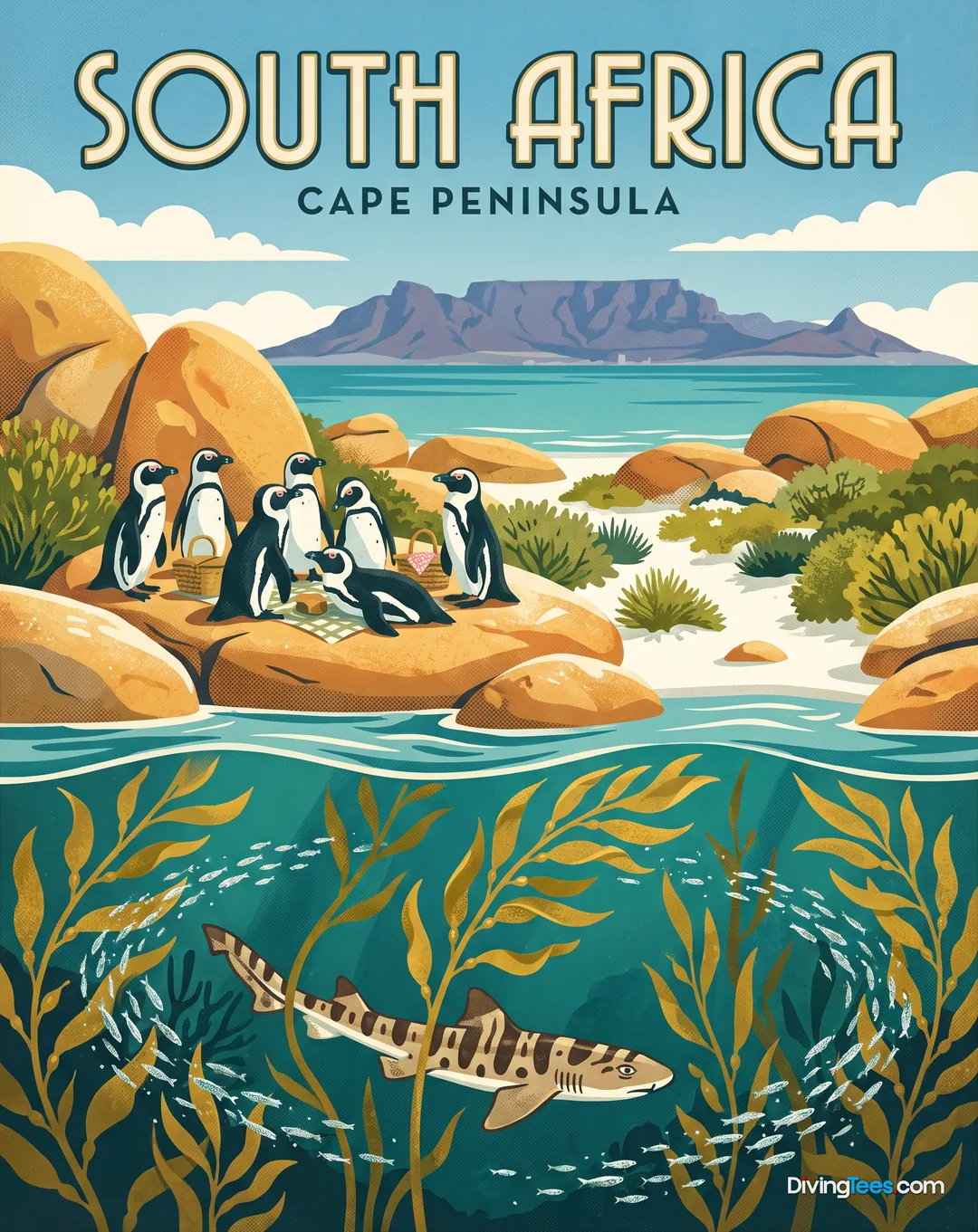
The islands and protected waters around Algoa Bay give the diving its wider appeal. Cape fur seals and African penguins are regular encounters, with Cape gannets adding movement and noise above the water around the island colonies. Great white sharks are also seen regularly, while Southern right whales are an occasional possibility. The Addo marine protected area links these encounters to a landscape that includes important bird and seal habitat, rather than treating the dive as reef scenery alone. Wildlife sightings remain just that, sightings, and the changing visibility can make a close encounter either wonderfully clear or fleeting. Outside the dive, authorised marine excursions provide another way to look for whales, sharks, seals and seabirds.
Diving is possible throughout the year, but January to July is generally the more favourable window. That is less a promise of calm water than the period worth giving priority when planning a trip. Wind and swell can close exposed sites in any month, while poor visibility and heavy underwater agitation may affect even a sheltered outing. The water calls for a proper cold-water set-up, commonly a 5 to 7 mm wetsuit, adjusted to the season and your own tolerance. Leave room in the itinerary for conditions to change rather than treating a single booked day as decisive.
The destination works for all levels, provided the site is matched properly to experience and conditions. Beginners can use the shallower reefs, while deeper profiles and exposed offshore pinnacles demand more comfort in open water, boat procedures and changing sea conditions. Advanced Open Water is useful for the deeper sites, and a Wreck qualification is appropriate for planned wreck exploration. Evan’s Peak, with its exposure and depth approaching 40 metres, belongs with experienced divers and a conservative decision about the day.
From London Heathrow, London Gatwick or Manchester, the route is by air to Gqeberha airport, followed by the local journey to the coast or harbour. The offshore sites are reached by boat from the shoreline or port, so the dive schedule depends on being in the right place before departure. Allow time for the flight connections and for the onward transfer rather than building the holiday around a tight first-day boat. Departures are mainly from the Hobie Beach area or Gqeberha harbour. Depending on where you stay, a taxi or hire car is the practical way to reach them. The farther sites, including Evan’s Peak, may not run when wind or swell rises.
Build in spare days. Evan’s Peak and other exposed sites are not outings to make or break a short schedule, because wind and swell can keep the boat in harbour. Keep at least one day free for Addo or a marine wildlife trip, which also gives the weather a chance to rearrange the diving without wasting the holiday. Do not judge Algoa Bay from one murky descent: visibility can fall to around 1.5 metres, while a later day may open out beyond 15 metres. Ask about the bay reefs and wrecks when the offshore pinnacle is unsuitable, rather than insisting on the most exposed plan. Pack a full thermal layer for cold water, not a light suit. Finally, check the permit required for the particular marine zone before boarding. Controlled or restricted areas around Sainte-Croix, Cannon Rock and Sundays are not places to enter on assumption alone.
Plan on a five- to seven-day land-based stay, with several possible diving days and room for cancellations caused by wind, swell or visibility. Accommodation can be arranged around the Hobie Beach or harbour departures, but local transport may still be needed from your chosen neighbourhood. Add a day for the terrestrial Addo park or a marine wildlife excursion. A liveaboard is not the organising principle here, so evenings and non-diving days remain on land in Gqeberha.
Hello, I'm Marina, DivingDeal.com's AI assistant. I guide you through destinations, areas and countries.
Thinking about the whole trip and the flights? Talk it over with Edith →
Marina is an AI. Some links are affiliate links: DivingDeal may earn a commission, at no extra cost to you. Bookings are made with the partner.
Diving is possible throughout the year, but January to July is generally the more favourable window. Wind and swell can still close exposed sites in any month, and visibility may change quickly. Plan flexibly, leaving spare days so conditions can rearrange your boat schedule without wasting the holiday.
Port Elizabeth suits all levels when the site matches your experience and the conditions. Beginners can use shallower reefs, while deeper profiles and exposed offshore pinnacles require comfort in open water, boat procedures and changing seas. Advanced Open Water helps with deeper sites, and wreck exploration is appropriate for qualified wreck divers.
Port Elizabeth offers reefs, wrecks and offshore pinnacles across Algoa Bay, with Cape fur seals and African penguins around protected island waters. Cape gannets move above the colonies, while great white sharks are regularly seen and Southern right whales are an occasional possibility. Changing visibility can make encounters clear or fleeting.
Plan a land-based stay of five to seven days, with several possible diving days and spare time for wind, swell or visibility cancellations. Boat departures mainly use Hobie Beach or Gqeberha harbour, so arrange local transport. Add time for Addo or a marine wildlife trip, and ask about bay reefs and wrecks when exposed sites are unsuitable.