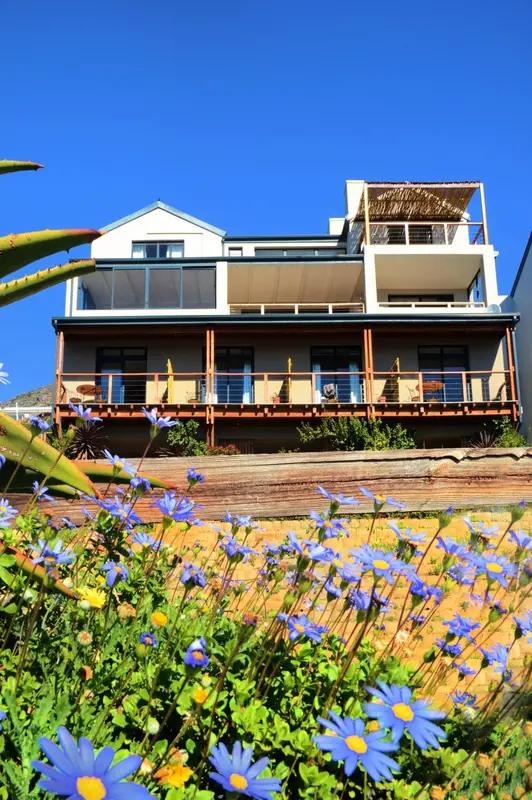
Mariner Guesthouse & Villa
★★★★
Google 4.7/5 (185 reviews)
South Africa · Africa
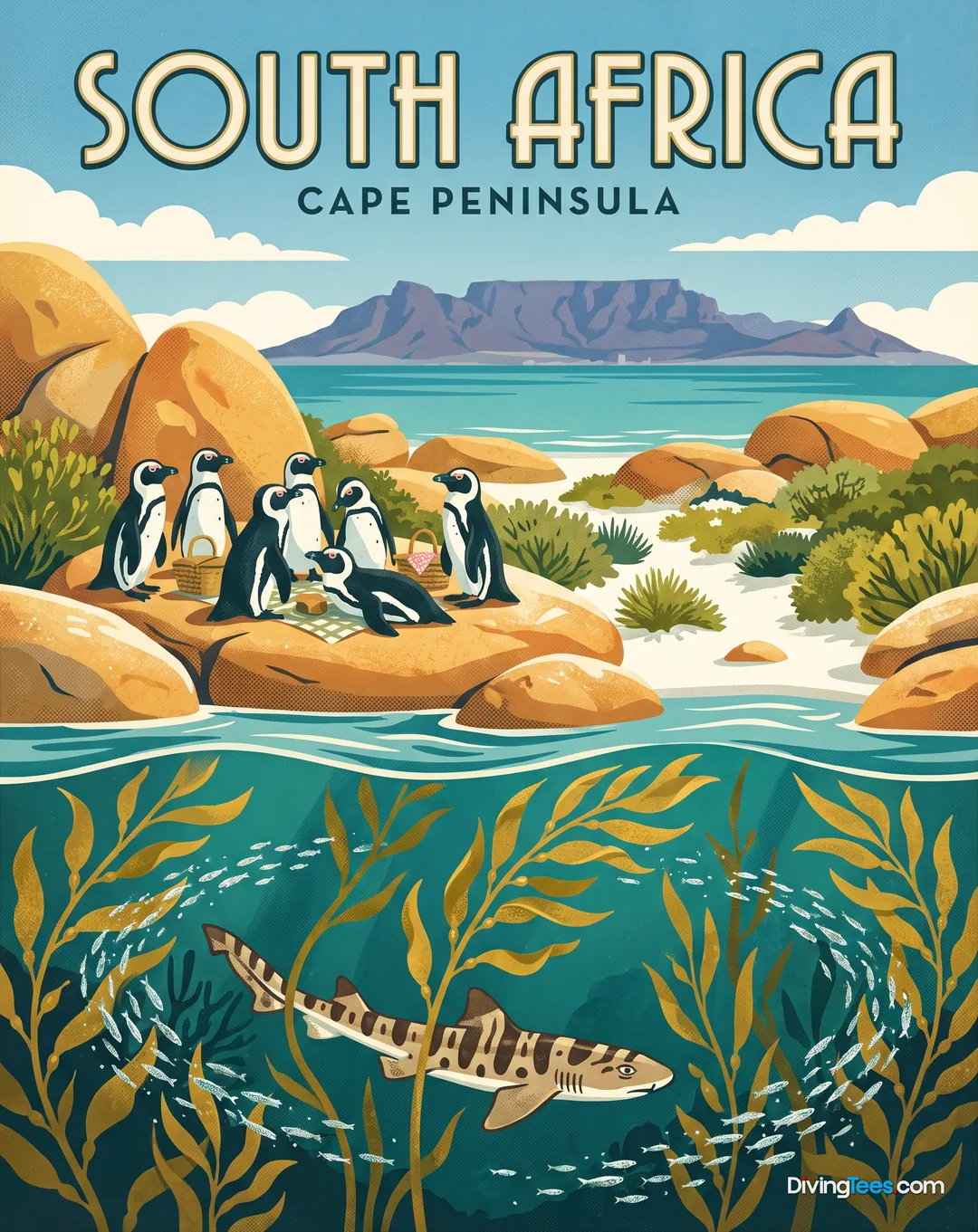
Kelp forests, granite reefs, coastal wrecks, Cape fur seals and pyjama sharks shape diving from Simon’s Town across the western side of False Bay.
For subtitles in English: start the video firstthen click the gearat the top right of the video, select “Subtitles/CC”, then “Auto-translate” and choose “English”.
Granite reefs and dark kelp forests are the underwater signature of Simon’s Town, where a shore dive can be as relevant as a boat trip. False Bay gives access to rocky ground, coastal wrecks and encounters with distinctly South African marine life, while the peninsula supplies plenty to do between dives. This is a land-based destination for divers who prefer to follow the weather, switch between sheltered and exposed sites, and combine diving with time ashore rather than commit to a liveaboard.
The diving alternates between shore entries and boat outings over granite reefs, kelp forests and coastal wrecks. Conditions are not fixed: swell, wind, current and suspended sediment can change the character of a site, sometimes leaving visibility poor after a rough spell. Typical visibility is around five to ten metres, though it can be better or considerably worse. Some coastal sites are within reach of less experienced divers, while wrecks and exposed entries demand more judgement. An Advanced Open Water qualification is useful for deeper work and wrecks, and proper wreck training matters before any penetration. The practical choice is made locally each morning: a sheltered shore dive may be sensible when a boat is cancelled, while another day may favour a boat-accessed reef or wreck. In kelp, good buoyancy is more important than clever finwork, since the fronds are easily damaged.
The kelp is where much of Simon’s Town’s character lies. Move slowly and you may find a pyjama shark resting among the reef, an octopus tucked into a rocky opening, or nudibranchs picked out against the granite. Cape fur seals are a regular part of the local wildlife, although they should be watched rather than chased. Seven-gill sharks occur occasionally, and African penguins are present in the area, but seeing one underwater is never something to plan a dive around. The same applies to wildlife encounters generally: conditions decide which sites are accessible, and the animals decide whether they are seen. Staying still in the kelp gives a better chance of an undisturbed encounter than following anything through the forest.
May to October is generally the most favourable period on the Simon’s Town side of False Bay. During the austral winter, conditions are often cleaner and the summer winds are less likely to disrupt the bay’s diving plans. December, January and February are the awkward months for a tightly scheduled trip, as wind and wave action can reduce visibility and stir up sediment. Diving remains possible throughout the year, but allow several weather windows rather than treating a booking as a fixed sequence. Early starts are worthwhile, particularly when the wind tends to build later in the day.
Simon’s Town can suit beginners on carefully selected, sheltered coastal sites, but this is not a place to ignore swell, surge or changing visibility. Divers should be comfortable adjusting a plan to local conditions rather than insisting on a particular wreck or entry. Advanced Open Water is useful for deeper dives and wrecks, while a wreck-diving qualification and real penetration experience are needed before entering confined spaces. A solid cold-water routine and reliable buoyancy will make the kelp considerably easier to manage.
From London Heathrow, London Gatwick or Manchester, the onward journey is overland once you have reached the Cape Town area. Simon’s Town lies along the M4 beside False Bay, and there is no ferry leg to arrange. Allow for the transfer from your arrival point and for road time along the peninsula rather than assuming that every dive begins beside your accommodation. In Simon’s Town, central accommodation may be close to shops and some shore entries, but the dive sites are spread out. A hire car, taxi or transport arranged for the day is therefore useful for more distant entries. Boat dives leave from the departure point specified by the operator, so that meeting point needs to be built into the morning’s travel plan.
Treat the weather forecast as a site-selection tool, not merely a reason to cancel. False Bay and the peninsula’s other side respond differently to wind and swell, and a south-easterly can degrade conditions in the bay. Keep a replacement day for exposed sites, start early before the wind strengthens, and do not lock every dive into one sector. If a boat outing is called off, a sheltered shore dive can preserve the day, but choose the entry with local advice rather than improvising. Visibility may remain poor for several days after rough weather, so build flexibility into a five to seven day stay. Check that the required marine protected area permit is covered before the first dive, and remember that night diving is subject to notification and time restrictions. Bring or reserve suitable thermal protection for repeated dives, since available rental sizes cannot be assumed. Leave kelp fronds untouched, and do not pursue seals, penguins or sharks.
Plan Simon’s Town as a land-based stay of roughly five to seven days, with spare space for weather rather than a rigid run of dives. Mix shore entries with boat trips, using sheltered sites as the practical fallback when conditions change. Central accommodation keeps shops and some access points close, but a car, taxi or organised transport is often needed elsewhere. Non-diving days can include Cape penguin viewing, coastal walks, Table Mountain National Park viewpoints, the historic waterfront, Cape Point and the wider peninsula.
Hello, I'm Marina, DivingDeal.com's AI assistant. I guide you through destinations, areas and countries.
Thinking about the whole trip and the flights? Talk it over with Edith →
Marina is an AI. Some links are affiliate links: DivingDeal may earn a commission, at no extra cost to you. Bookings are made with the partner.
May to October is generally the most favourable period for diving on the Simon’s Town side of False Bay, with cleaner winter conditions and less disruption from summer winds. Diving remains possible throughout the year, but December, January and February can bring wind, waves and stirred sediment. Early starts help before wind strengthens.
Simon’s Town has carefully selected, sheltered coastal sites suitable for beginners, but you need to manage swell, surge and changing visibility. Advanced Open Water is useful for deeper dives and wrecks. Proper wreck training and real penetration experience are needed before entering confined spaces, while reliable buoyancy helps protect the kelp.
You can explore granite reefs and dark kelp forests, with typical visibility ranging from five to ten metres. Slow, careful diving may reveal pyjama sharks, octopus and nudibranchs. Cape fur seals are regularly seen, while seven-gill sharks occur occasionally. African penguins are present in the area, but wildlife sightings depend on conditions and animal behaviour.
Plan a flexible land-based stay of roughly five to seven days, mixing shore entries with boat dives and keeping replacement days for weather. Central accommodation helps with shops and some shore access, but distant sites require a car, taxi or organised transport. Check marine protected area permits, arrange suitable thermal protection and follow local advice on entries.