
Catalina Scuba
Google 4.8/5 (198 reviews)
United States · Americas
Giant kelp, Casino Point’s protected shore entry and boat routes towards exposed island reefs put Californian underwater landscapes within reach of an island stay.
For subtitles in English: start the video firstthen click the gearat the top right of the video, select “Subtitles/CC”, then “Auto-translate” and choose “English”.
Avalon puts a proper shore dive beside the town. At Casino Point, steps lead into a protected no-take area where kelp frames the underwater landscape, while boat trips reach the reefs, drop-offs and wrecks around Santa Catalina Island. That combination suits a mixed trip: several straightforward dives from shore, more committed days on exposed sites, and enough of Avalon above water for a non-diving companion. It is Californian diving with an unmistakably island-shaped timetable.
The diving changes noticeably once you leave Casino Point. The park is a shore entry with steps and relief suitable for a range of divers, while the outer sites are generally reached by boat and bring greater depth, swell, surge and sometimes current. Kelp can turn a simple route into careful three-dimensional navigation, particularly beneath a dense canopy. Stable buoyancy matters more here than forceful finning, both to avoid entanglement and to protect the habitat. Visibility commonly falls somewhere between 9 and 24 metres, and may differ above and below the thermocline as plankton, swell and season alter the water. Plan for reefs, drop-offs and wrecks rather than assuming that an easy entry means an easy boat dive. Nitrox can be useful on a full day of diving when the operator and profile allow it, but the sea state remains the deciding factor.
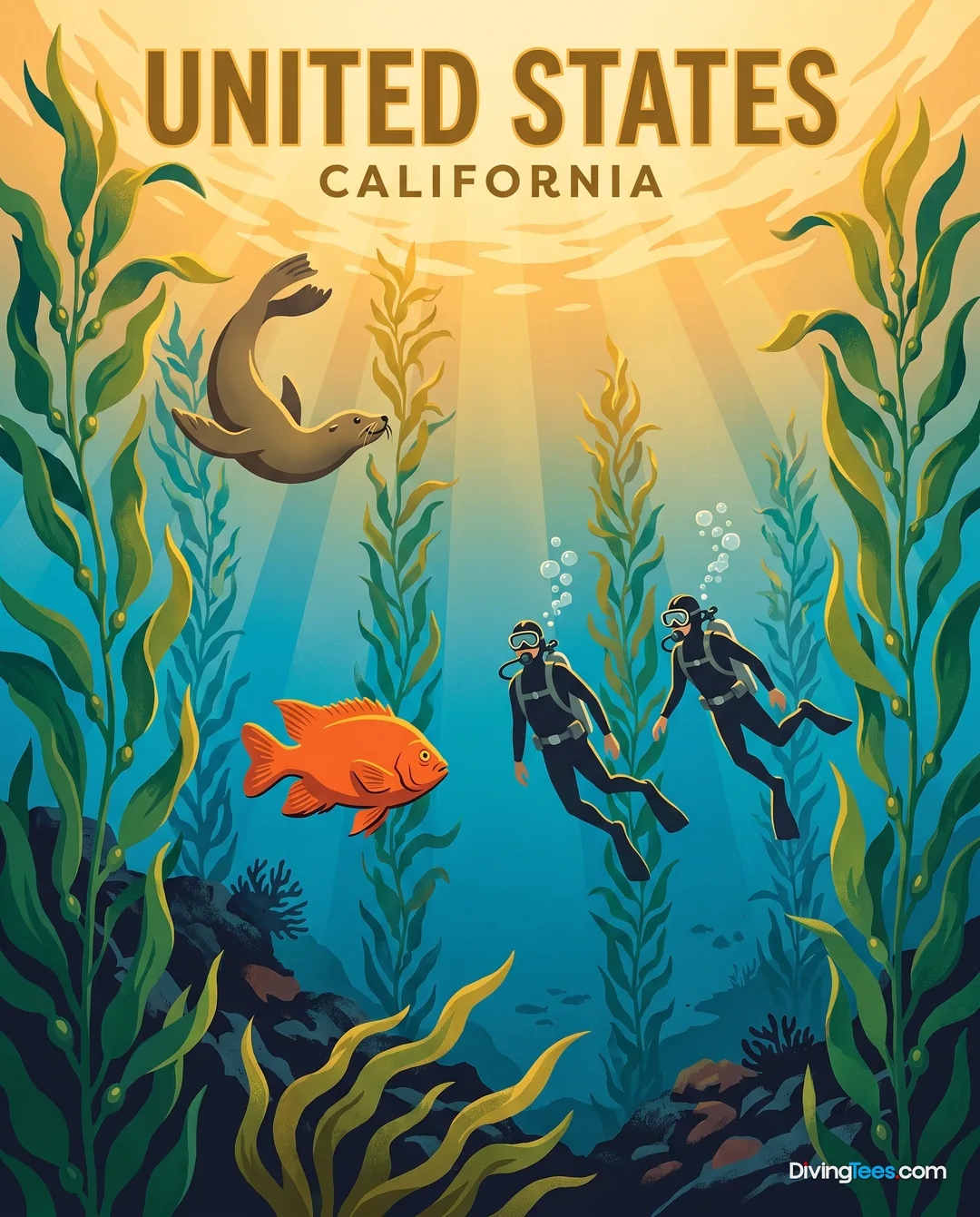
Giant kelp is the defining sight around Avalon, forming tall underwater structure whose density and condition change with the season and local conditions. It is not just background scenery: the fronds affect your line, your buoyancy and the way you leave the bottom. In the Casino Point State Marine Conservation Area, the no-take rules help maintain kelp habitat close to a heavily used shore entry. Giant sea bass are an occasional possibility from July to October, rather than a dependable appointment. The most rewarding encounters therefore come from paying attention to the forest itself, watching how the light and visibility alter between the surface and the thermocline, and treating the kelp as living terrain rather than something to swim through.
July to October is generally the most practical window, with warmer water, more favourable sea conditions and good visibility. Autumn and early winter can bring the clearest water, although conditions remain changeable and the thermocline may separate a comfortable surface from colder water below. Diving is possible throughout the year, but winter and spring are more likely to bring swell, colder water and variable visibility. Summer weekends and the busiest months put more pressure on the Casino Point steps, shore entry and boat spaces. A weekday visit, or a plan outside the height of summer, usually gives the diving more breathing room.
Casino Point can suit a beginner with appropriate training and sensible conditions, provided the diver is comfortable with steps, surface planning and kelp. The outer boat sites are a different proposition. Depth, exposure, swell, surge, current and kelp navigation call for sound buoyancy and calm equipment handling, with Advanced Open Water useful for deeper or more exposed profiles. BSAC, PADI and SSI divers should judge the boat itinerary rather than the easy shore entry when deciding whether Avalon matches their experience.
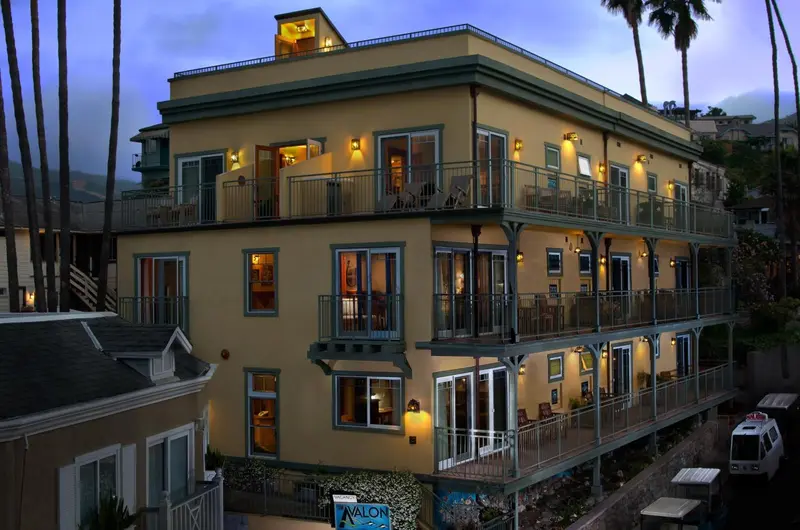
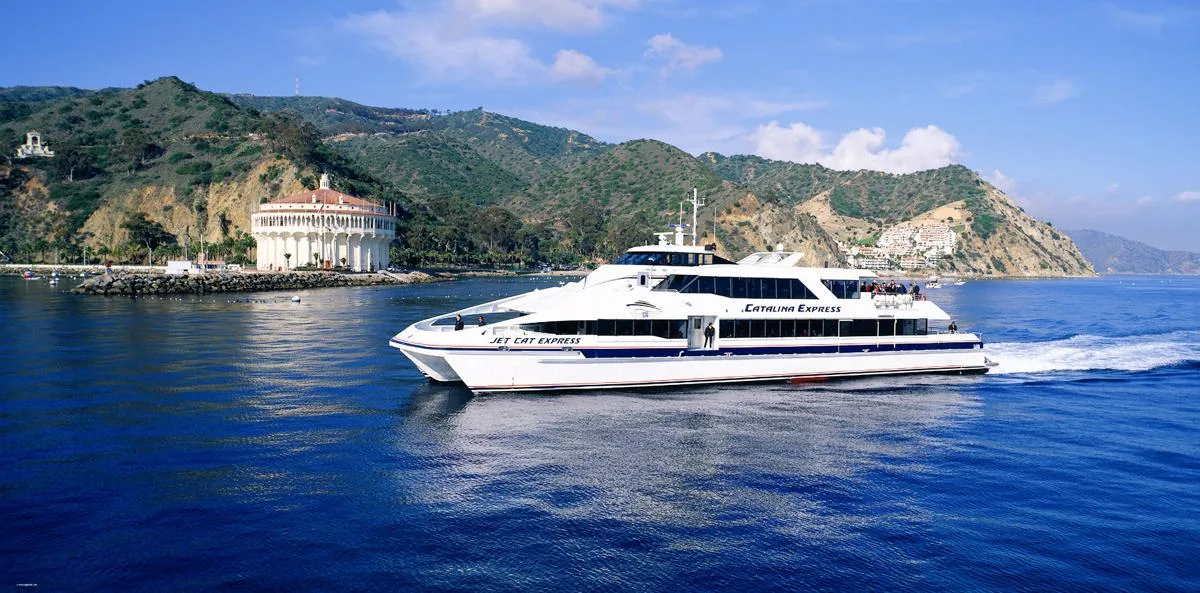
From London or Manchester, reach Southern California and continue to a passenger-ferry departure at San Pedro, Long Beach, Newport Beach or Dana Point. The ferry crossing to Avalon takes about an hour and is the structural constraint of the journey, so its timetable needs to be allowed for on both the outward and return legs. Helicopter transfer from the mainland is another possibility. The ferry arrives at Cabrillo Mole, close enough to the centre to continue on foot. Once in Avalon, central accommodation, Casino Point and the quays are generally walkable. Staying farther around the bay may mean using a local taxi or shuttle, and boat diving needs separate arrangement from the ferry.
Start at Casino Point before booking an exposed boat site. The steps, swell, kelp and exit tell you quickly whether your buoyancy and surface routine are ready for Catalina’s more committed diving. Go early or on a weekday when possible, because the shore entry and shallow water become busier. In dense kelp, keep your trim steady, avoid powering through the fronds and sort out any snag calmly rather than thrashing. Treat every boat itinerary as separate from the park: check its depth, exposure, swell and current requirements rather than assuming the easy shore dive is representative. Take a way to carry and rinse mask, snorkel and fins, plus small shore-diving equipment. Leave flexibility before the ferry home, and do not put a tight flight connection after the final dive. Casino Point is no-take water, so leave the giant kelp and wildlife untouched.
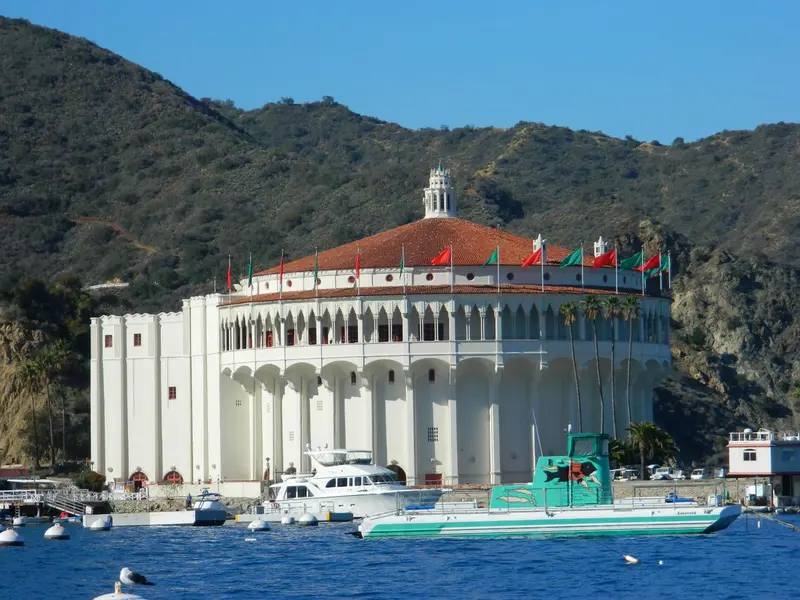
Allow three to five days on the island. Use the compact centre to combine repeated Casino Point dives with at least one boat day, keeping spare time for sea conditions and ferry schedules. Central accommodation makes the park and quays walkable, while places farther from the bay may need a taxi or shuttle. Non-divers have promenades, beaches and coves, glass-bottom boat trips, kayaking, island walks and the Casino’s architecture and history to fill the surface hours.
Hello, I'm Marina, DivingDeal.com's AI assistant. I guide you through destinations, areas and countries.
Thinking about the whole trip and the flights? Talk it over with Edith →
Marina is an AI. Some links are affiliate links: DivingDeal may earn a commission, at no extra cost to you. Bookings are made with the partner.
July to October is generally the most practical period, with warmer water, more favourable sea conditions and good visibility. Autumn and early winter can bring clearer water, but conditions remain changeable and thermoclines may separate warmer surface water from colder depths. Winter and spring are more likely to bring swell and variable visibility.
Casino Point can suit a beginner with appropriate training and sensible conditions, provided you are comfortable with steps, surface planning and kelp. Outer boat sites require more preparation because of depth, exposure, swell, surge, current and kelp navigation. Sound buoyancy and calm equipment handling are important, with Advanced Open Water useful for deeper profiles.
Giant kelp is the defining sight, forming tall underwater structure that changes with season and local conditions. Around Casino Point, protected no-take waters support the kelp habitat close to shore. Boat routes reach Catalina Island reefs, drop-offs and wrecks, while giant sea bass are an occasional possibility from July to October.
Allow three to five days to combine repeated Casino Point dives with at least one boat day, while keeping spare time for sea conditions and ferry schedules. Central accommodation makes the park and quays walkable. Arrange boat diving separately from the ferry, and leave flexibility before your return journey.