
North County Scuba Center
Google 4.2/5 (32 reviews)
United States · Americas
Low rocky reefs, kelp forests, calico bass and steep beach access define Encinitas, where a shore dive can be as demanding above water as below it.
For subtitles in English: start the video firstthen click the gearat the top right of the video, select “Subtitles/CC”, then “Auto-translate” and choose “English”.
Encinitas is a North County San Diego shore-diving base built around low rocky reefs, kelp and an exposed surf coast. The attraction is the simple, physical business of carrying your kit down to the water and looking for temperate life over shallow rock. It is not a boat-diving destination, and it is not a place where every famous surf break doubles as a legal dive site. Swami's State Marine Conservation Area protects important habitat, but diving is prohibited within its boundaries.
The diving is predominantly from shore, over low rocky reef and kelp rather than walls, wrecks or deep offshore structure. Depths in the area are generally shallow, but that does not make the outing effortless. Variable currents, surf exposure, steep stairs and eroded paths can make the entry and exit the hardest parts of the dive, especially with a cylinder and weight belt. Visibility varies with conditions, so Encinitas rewards a check of the sea state rather than a fixed itinerary. The practical pattern is to inspect the access on foot, carry equipment down, and keep the dive comfortably within the conditions on the day. Swami's, Cardiff Reef and Seaside Reef are familiar coastal names, but their reputation as surf spots does not make them automatically legal dive entries. A shore dive here is a self-contained outing, not a boat departure or a drift dive.
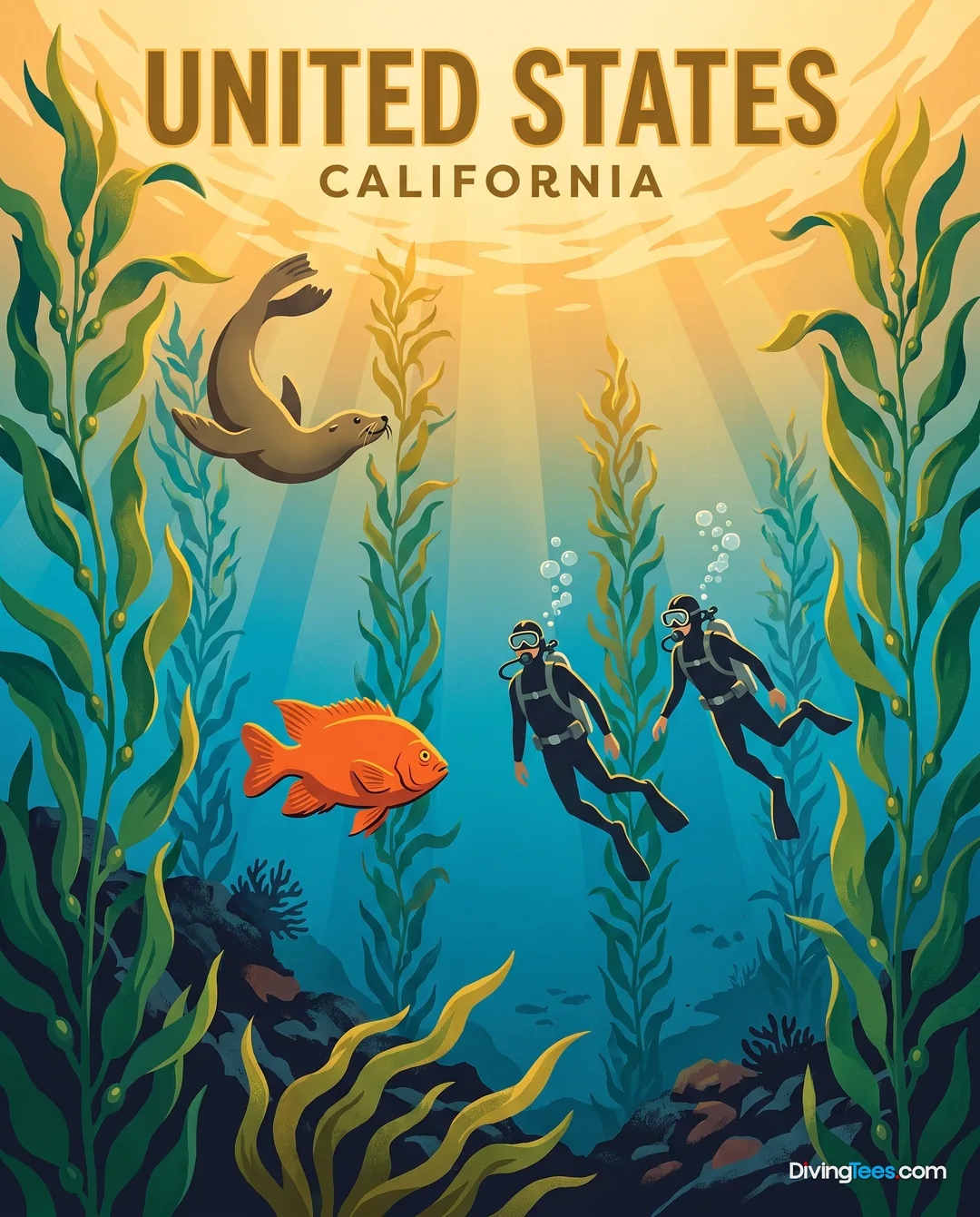
The low reefs and kelp provide habitat for calico bass and California sheephead, with smaller invertebrates among the rock. California spiny lobster is associated with the regulated fishing season, while octopus is an occasional encounter rather than something to build the whole trip around. The appeal is the temperate mixture of reef, kelp and intertidal habitat, not a guaranteed parade of large animals. At low tide, Swami's Point and Table Tops Reef bring the coastal habitat into view through their tide pools, where careful observers can examine the shoreline without turning that activity into a dive. Keep the two experiences separate: the protected Swami's area is valuable for observing habitat, but diving is prohibited within its boundaries.
Encinitas is best treated as a conditions-led destination rather than one with a dependable, fixed best month. Go when the local sea state allows a controlled entry and exit at the access you have checked, and keep a flexible day available in case the exposed coast is unsuitable. Surfing crowds can also make popular beach approaches busier, although the pattern of diver traffic is not predictable enough to plan around. The reason for this flexible approach is simple: the main variable is often the shore break and the condition of the access, not a seasonal event underwater. Tide pools are a separate reason to time a visit for low tide, particularly around Swami's Point and Table Tops Reef.
Encinitas suits divers with genuine shore-diving experience, even when the underwater terrain itself is shallow. A standard BSAC, PADI or SSI qualification is less important here than being comfortable judging a surf-exposed entry, carrying equipment down stairs or a steep path, and turning a dive before the exit becomes tiring. The destination is a poor match for anyone expecting a sheltered training platform or a boat crew to solve the logistics. Current can vary, so experience in changing coastal conditions is more useful than depth certification alone.
From London Heathrow, Gatwick or Manchester, arrange an international flight itinerary serving the San Diego urban area, then complete the approach to Encinitas by road. Interstate 5 and California State Route 101 are the principal road links, and no ferry or domestic flight is needed to reach the town once you are in the area. Plan on having to move dive equipment between your accommodation and the chosen coastal access. Depending on where you stay, the centre of Encinitas may be manageable on foot, but the beaches and shore entries generally call for a car or taxi. The final road leg matters more than any internal connection, because each dive begins at a particular access rather than from a central harbour.
Walk the access before carrying a cylinder, especially where stairs or an eroded, steep path lead down from the cliffs. An entry that looks fine for surfers may be awkward or unsafe for a diver loaded with equipment, and the same applies to the return climb. Check the exact boundary of the area you intend to dive: the name Swami's, Cardiff or Seaside does not by itself tell you whether diving is legal. Diving is prohibited in the Swami's State Marine Conservation Area and its associated ecological reserve, so do not rely on a spot name alone. Treat the coast as exposed and condition-dependent, not as a row of sheltered entries available every day. Organise equipment for an autonomous shore outing, and keep tide-pool observation at Swami's Point or Table Tops Reef as a separate low-tide activity. Do not enter from an unestablished cliff access simply to shorten the walk.
Encinitas works as a land-based stay, with shore dives fitted around the condition of the selected access. Accommodation near the centre can make local errands walkable, but dive equipment still needs transporting to the coast. A car or taxi is useful when moving between beaches and checking an alternative entry. Non-divers have plenty to do on the same coastline, including beaches, coastal paths, surf watching, tide pools and bird or wetland observation, so the trip need not revolve entirely around diving.
Hello, I'm Marina, DivingDeal.com's AI assistant. I guide you through destinations, areas and countries.
Thinking about the whole trip and the flights? Talk it over with Edith →
Marina is an AI. Some links are affiliate links: DivingDeal may earn a commission, at no extra cost to you. Bookings are made with the partner.
Choose Encinitas when the local sea state supports a controlled entry and exit at an access you have checked. Keep the day flexible because surf exposure, shore break and access conditions can change. If tide pools interest you, plan separate observation at Swami's Point or Table Tops Reef around low tide.
Encinitas suits you if you are comfortable with surf-exposed entries, changing coastal conditions and carrying equipment down stairs or steep paths. The reefs are shallow, but entry and exit can be demanding. Experience judging conditions matters more than depth certification, and the coast is not a sheltered training platform or boat-supported dive.
In Encinitas, you can explore low rocky reefs and kelp forests containing calico bass, California sheephead and smaller invertebrates. California spiny lobster is associated with the regulated fishing season, while octopus appears occasionally. At low tide, Swami's Point and Table Tops Reef offer separate tide-pool observation rather than diving.
Plan Encinitas as a land-based shore-diving stay, with equipment transported between your accommodation and the selected coastal access. A car or taxi helps you check alternatives and move between beaches. Walk each access before carrying gear, confirm where diving is legal, and keep tide-pool visits separate from dives.