
Hawaii Eco Divers
Google 4.8/5 (288 reviews)
United States · Americas
Volcanic lava tunnels at Shark’s Cove, the Haleiwa Trench, Galápagos sharks offshore and green turtles around Pupukea define Oahu’s North Shore.
For subtitles in English: start the video firstthen click the gearat the top right of the video, select “Subtitles/CC”, then “Auto-translate” and choose “English”.
Haleiwa puts two very different kinds of diving within the same North Shore base. From the small harbour, boat trips head offshore for Galápagos sharks and sandbar sharks. Along the coast, Shark’s Cove, Three Tables and Pupukea offer lava formations, tunnels and small cavities when the swell allows an entry. This is a place for divers who want a distinctly volcanic underwater landscape, but who are prepared to let the sea state decide what actually happens each day.
The coastal diving is shaped by black volcanic rock rather than a uniform coral garden. Shark’s Cove has lava tunnels, rocky passages and small caverns, while Three Tables and Pupukea bring the same exposed North Shore character in different forms. The Haleiwa Trench provides a deeper profile and should be treated as an advanced dive, not an extension of the shallower shore sites. Currents are variable, and entries can change quickly as the swell rises. Visibility can reach roughly 13 to 35 metres on some guided North Shore dives, although run-off, swell and recent bad weather can make it markedly poorer. Offshore shark trips are a separate experience from a conventional reef dive, with their own briefing, depth profile and operating pattern.
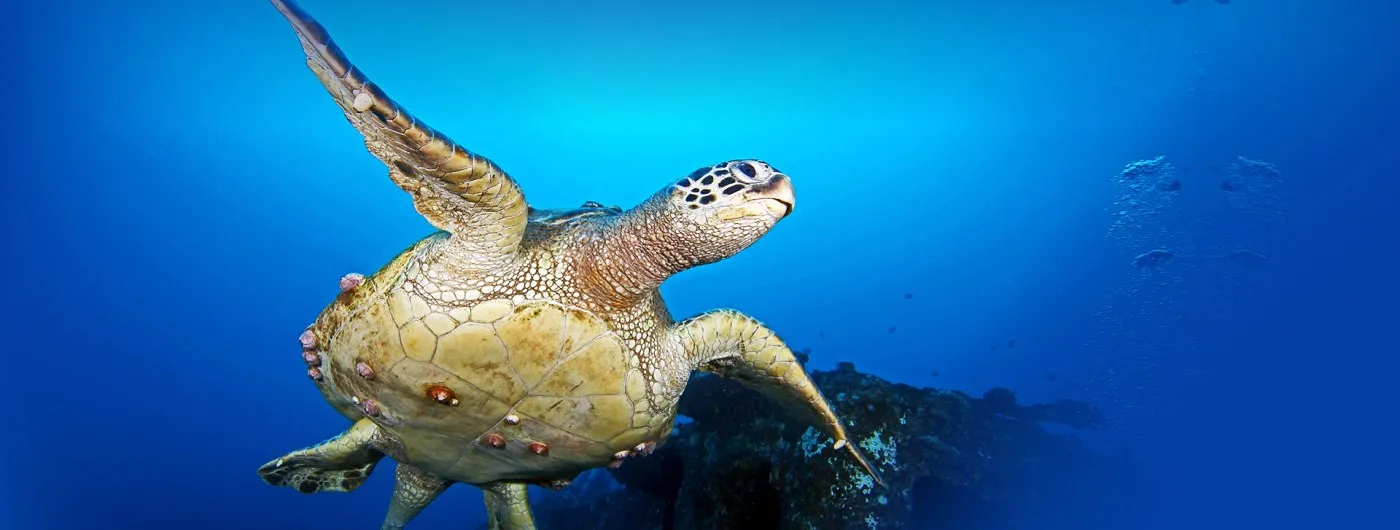
The offshore attraction is the regular possibility of meeting Galápagos sharks and sandbar sharks on dedicated boat trips from Haleiwa. Hawaiian green turtles are a year-round possibility around the coastal sites, alongside reef fish and invertebrates associated with Pupukea’s protected waters. Hawaiian spinner dolphins may appear offshore at any time, but are an occasional encounter rather than a reason to treat every trip as a wildlife cruise. Humpback whales are an occasional winter visitor. The shark encounters belong to the boat outings, not to a normal shore dive at Shark’s Cove, so plan the two experiences separately.
May to September is the useful window for putting coastal diving into a Haleiwa itinerary. Summer usually brings a lower swell, making rocky entries and exits more manageable and giving the coast its clearest chance of being diveable. November through March is a poor period to build a trip around shore diving, as large winter waves can close the sites altogether. Boat trips can run throughout the year when the sea permits, but they remain weather-dependent. Summer sites and snorkelling areas are busier, so early departures are worthwhile for calmer water and better light.
Haleiwa can suit a wide range of divers, but the qualification level does not remove the local conditions. A standard certification through BSAC, PADI or SSI is the relevant starting point, and shark outings do not generally require a separate specialist qualification, although the individual format sets its own requirements. Calm-water beginners may manage Shark’s Cove with suitable local guidance. The Haleiwa Trench is a different proposition, with its deeper profile and more advanced character. Shore experience, confidence in surface finning and comfort with rocky entries matter as much as the card in your wallet.
From London Heathrow or Gatwick, or from Manchester, plan the journey to Honolulu and then continue by road across Oahu to Haleiwa. There is no ferry crossing or domestic flight to arrange for the final leg. The boat trips leave from Haleiwa Small Boat Harbor, while Shark’s Cove, Three Tables and Pupukea are reached along the coastal road. A hire car is the practical way to combine harbour departures with shore diving and to change plans when the swell closes one sector. Allow flexibility around the boat booking, because sea conditions can cancel a departure as well as make a shore entry impracticable.
Treat Shark’s Cove as a conditional dive, not a booking that the car park guarantees. Check the actual entry on the day, because a surface that looks manageable can become dangerous when the swell lifts, and the different North Shore sectors may not share the same conditions. Bring protection for rocky entries, plus mask, snorkel and fins suitable for awkward surface work and extended finning. Keep spare time in the itinerary for a cancelled boat or a closed shore site, particularly outside summer, and reserve a land day rather than forcing the issue. After a strong storm, expect visibility to suffer from sediment and check it before entering. Take the morning boat when possible for calmer water and better light. Do not confuse the shark outing with a reef dive, and do not treat the Haleiwa Trench as a shallow-site repeat. Fishing and removing marine life are prohibited in the Pupukea conservation area.
A five to seven-day, land-based stay gives Haleiwa the breathing space it needs. Base yourself near the town and harbour for the offshore departures, then use the hire car for Pupukea and Shark’s Cove when the coast is open. Keep at least one flexible day for swell-related changes, with Haleiwa’s beaches, surf, walks, viewpoints and wildlife trips as useful alternatives. Non-divers have plenty to do on the North Shore while a boat trip is running or a shore entry is closed.
Hello, I'm Marina, DivingDeal.com's AI assistant. I guide you through destinations, areas and countries.
Thinking about the whole trip and the flights? Talk it over with Edith →
Marina is an AI. Some links are affiliate links: DivingDeal may earn a commission, at no extra cost to you. Bookings are made with the partner.
Choose Haleiwa between May and September if coastal diving is central to your trip, because summer usually brings lower swell and more manageable rocky entries. November through March can bring large winter waves that close shore sites. Offshore boat trips may operate year-round when sea conditions permit, but they remain weather-dependent.
A standard BSAC, PADI or SSI certification is the relevant starting point for Haleiwa. Calm-water beginners may manage Shark’s Cove with suitable local guidance, but rocky entries, surface finning and changing conditions require confidence. The deeper Haleiwa Trench has an advanced character, while shark outings follow their own briefing and operating requirements.
Haleiwa offers volcanic lava tunnels, rocky passages and small caverns at Shark’s Cove, with related exposed formations around Three Tables and Pupukea. Dedicated boat trips from the harbour provide the possibility of Galápagos sharks and sandbar sharks. Green turtles are possible year-round around coastal sites, alongside reef fish and invertebrates.
Plan a land-based stay near Haleiwa town and harbour, using a hire car for Shark’s Cove, Three Tables and Pupukea. Keep flexible time for swell-related closures, cancelled boats and poorer visibility after storms. Separate the shark outing from shore diving, check entries locally, and reserve alternatives such as beaches, walks, viewpoints or wildlife trips.