
Dive Kauai Scuba Center, Inc.
Google 4.9/5 (951 reviews)
less than 1 km away as the crow flies
Kauai · United States · Americas
Descend into Sheraton Caverns, where ancient lava tubes create a unique underwater labyrinth filled with marine life, offering a different experience day and night.
For subtitles in English: start the video firstthen click the gearat the top right of the video, select “Subtitles/CC”, then “Auto-translate” and choose “English”.
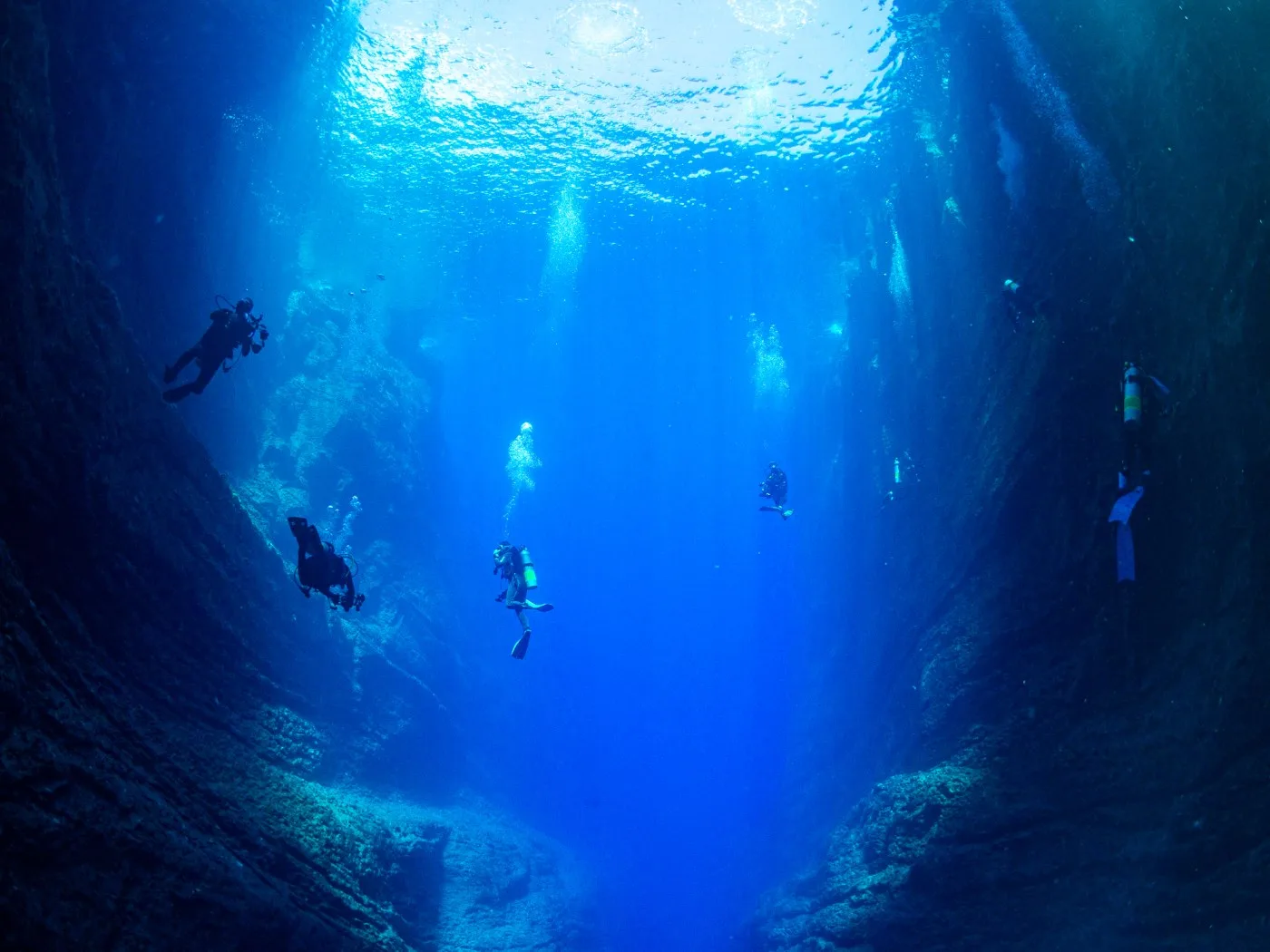
Sheraton Caverns reveals itself as a complex system of interconnected lava tubes, a product of Kauai's volcanic history. As you descend, you enter a series of open caves and chambers carved by ancient lava flows, providing shelter and a unique topography. It's a dive that prioritises exploration of structure, unlike many reef dives where the focus is solely on marine life. The natural architecture of these caverns dictates the dive profile, guiding you through passages and into larger domed areas, each revealing new geological details.
The site's volcanic origins mean you navigate through dark, enclosed spaces that open into shafts of light, creating striking visual contrasts. These formations vary in size, from wider hallways to more confined tunnels, offering a layered experience. This is not a deep dive, but it requires comfort in overhead environments. While sunlight streams into many areas, providing ambient light, a dive light is essential to fully appreciate the colours and discover the inhabitants within the darker recesses.
During daylight hours, the caverns are a haven for sleeping sea turtles, often tucked into quiet corners or resting on the sandy bottom. You find them here using the natural shelter afforded by the lava tubes. The site also supports a diverse population of reef fish, including triggerfish, surgeonfish, parrotfish, and butterflyfish, which inhabit the entrances and cleaner-fed areas. Moray eels are commonly seen within the crevices, and occasionally, you might spot a scorpionfish camouflaged against the volcanic rock.
The experience at Sheraton Caverns shifts significantly from day to night. As the sun sets, the resident marine life becomes more active. During a dusk or night dive, you witness a different behaviour pattern among the fish, with nocturnal species emerging and others seeking shelter. The lava tubes offer a natural setting for observing this transition, as the enclosed spaces amplify the feeling of exploring a hidden world under cover of darkness, requiring careful buoyancy and spatial awareness.
Beyond the general reef fish, the caverns are particularly known for their frogfish, which are masters of camouflage, blending seamlessly with the rough volcanic textures. Locating a frogfish requires a keen eye and patience, often becoming a highlight for those who take the time to scan the formations closely. This element of discovery adds another layer to the dive, encouraging a slower pace and detailed observation within the unique environment of the lava tubes.
This site is diveable throughout the year. While specific depth ranges are not defined, the nature of a cavern dive means navigating overhead environments. Expect visibility to be generally good, though this can vary locally within the caverns depending on diver activity and surge. No significant current is typically reported within the caverns themselves, though surface conditions on the south shore of Kauai can influence entry and exit.
You can dive Sheraton Caverns throughout the year. Daylight dives reveal sleeping sea turtles in quiet corners and on sandy bottoms, while dusk and night dives bring different marine behaviour as nocturnal species emerge. The experience changes after sunset, with enclosed lava tubes requiring careful buoyancy and spatial awareness in darkness.
You should be comfortable navigating overhead environments before diving Sheraton Caverns. The interconnected lava tubes include open caves, chambers, wider hallways, and more confined tunnels. A dive light is essential for seeing into darker recesses, while careful buoyancy and spatial awareness help you move through the enclosed spaces.
Inside Sheraton Caverns, you can generally expect no significant current. Surge and diver activity may affect local visibility within the caverns, while surface conditions on Kauai’s south shore can influence entry and exit. Good visibility is generally expected, but conditions can vary within different sections of the lava tubes.
At Sheraton Caverns, you can explore interconnected lava tubes, open caves, chambers, and volcanic formations with contrasting shafts of light. Sleeping sea turtles shelter inside, while triggerfish, surgeonfish, parrotfish, butterflyfish, moray eels, scorpionfish, and camouflaged frogfish inhabit the entrances, crevices, and darker recesses.