
Aloha Maui Diving
Google 5/5 (175 reviews)
United States · Americas
Coastal volcanic reefs, Hawaiian green turtles, Black Rock and Lanai’s lava arches meet shore dives, boat trips and changing conditions around Lahaina.
For subtitles in English: start the video firstthen click the gearat the top right of the video, select “Subtitles/CC”, then “Auto-translate” and choose “English”.
Lahaina is a practical base for exploring West Maui underwater, with volcanic reefs close to shore and boat departures towards Lanai. A day can combine an early shore dive at Airport Beach or Black Rock with a more committed outing to lava arches and caverns off Lanai. The appeal is the contrast: straightforward shallow water when conditions allow, turtle-cleaning stations on the coast, and exposed boat sites when the sea is settled. It is a land-based holiday, not a liveaboard destination.
The diving centres on volcanic reef, lava formations and shore entries, with Mala Wharf, Black Rock, Airport Beach and the Ka'anapali reefs providing the local framework. Lanai changes the scenery underwater, adding arches and cavities where a torch is useful because natural light can disappear quickly. Currents are variable rather than a constant feature, but wind, swell and visibility can alter the plan markedly between the beach and the bottom. Visibility commonly falls somewhere between nine and thirty metres, with the lower end more likely after swell, current or coastal run-off. Beginners can use sheltered, shallow sites when entry and exit are calm. More exposed dives and deeper profiles suit an Advanced Open Water diver, while boat trips offer the sensible way to reach Lanai rather than improvising a demanding shore entry.
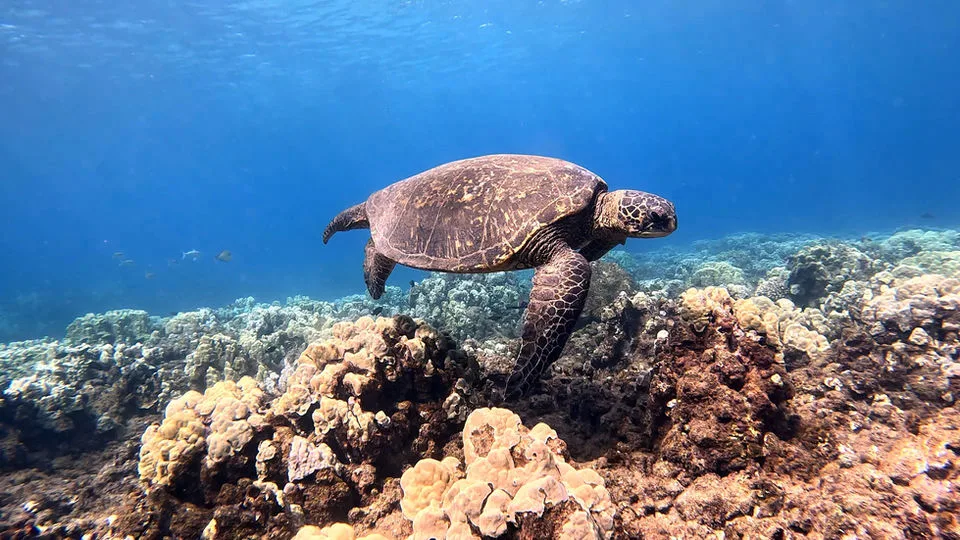
Hawaiian green turtles are the reliable wildlife encounter around Lahaina, and the coastal reefs include cleaning stations where they may settle for observation. They are accustomed to divers, but that does not make them approachable: watch from a respectful distance and never touch or pursue them. White-tip reef sharks occur occasionally, while Hawaiian monk seals are rare. The surface brings a different seasonal reward. Humpback whales are regularly present from January to March, making winter attractive for whale-watching trips even when swell restricts some western sites. Seeing whales underwater is not something to plan around, however. Lahaina’s wildlife is therefore less about a guaranteed dramatic encounter than about combining patient reef observation with the right season and the right conditions.
May to September is generally the most dependable window, when the west coast is more often calm, visibility is better and boat plans are less vulnerable to weather. December to February brings winter swell, which can make exposed West Maui entries and exits awkward or impossible, although sheltered shore dives and some boat trips may still run. Winter is also the period for humpback whale watching, so it is not simply a season to avoid. Summer sites can be busy, particularly during holidays, but an early start usually means less wind, less shore traffic and a better chance of getting the day’s conditions before they deteriorate.
Lahaina can suit all levels, provided the site is matched to the day rather than to the label in a guidebook. Shallow coastal sites work for newer divers and those returning to the water, when the entry and exit are benign. Advanced Open Water is useful for deeper profiles and more exposed locations, particularly on boat trips towards Lanai. Divers should be comfortable judging a shore break and turning a dive down when the route back over the rocks has become questionable.
From London Heathrow, London Gatwick or Manchester, reach Maui via a connection on the American mainland or through Honolulu. The final approach is by road, following the Honoapiilani Highway westwards from Maui’s main arrival area, with the drive to Lahaina usually taking roughly forty-five minutes to an hour depending on traffic. No ferry is needed for a Lahaina stay. The Maui to Lanai ferry is a separate option for an excursion or an onward stay, while dive boats make the island a day-trip destination from the harbour. A hire car is useful for shore diving and for moving along West Maui, although a shuttle or taxi can cover some central departures.
Treat Mala Wharf as a weather-dependent shore dive, not a fixed appointment. The problem is often getting out again over the rocks, so a rising swell is a reason to abandon the entry rather than shorten the dive. Start early, when wind, swell and beach traffic are usually less troublesome, and keep a sheltered alternative available instead of building the week around one exposed site. Before booking Lanai, leave a spare day in the programme: wind and sea conditions can change the boat plan, and a delayed return should never sit beside an inter-island or mainland flight. Take a torch for Lanai’s arches and lava cavities. Check the planned surface interval before flying, and leave a no-diving day before departure. Around turtles, the cleaning station is an observation point, not an invitation to get closer.
Plan on seven to ten days, using Lahaina or the Ka'anapali area as a land base. Put local shore dives on the mornings with the calmest outlook, then use a separate day for Lanai and keep another day free as weather insurance. A car makes it easier to group West Maui sites by area, while central accommodation can work with taxis or an available shuttle for some departures. Non-divers have beaches, snorkelling, volcanic landscapes, whale watching in winter and historical Lahaina to fill the surface interval.
Hello, I'm Marina, DivingDeal.com's AI assistant. I guide you through destinations, areas and countries.
Thinking about the whole trip and the flights? Talk it over with Edith →
Marina is an AI. Some links are affiliate links: DivingDeal may earn a commission, at no extra cost to you. Bookings are made with the partner.
For dependable conditions, visit Lahaina from May to September, when the west coast is more often calm, visibility is better and boat plans are less vulnerable to weather. Winter, especially January to March, adds humpback whale-watching opportunities, but swell can make exposed entries and exits awkward or impossible.
Lahaina suits different experience levels when you match the site to the day. Sheltered, shallow coastal sites can work for newer divers if entry and exit conditions are calm. Advanced Open Water experience is useful for deeper profiles, exposed locations and boat trips towards Lanai. You should also judge shore-break conditions carefully.
Diving Lahaina features volcanic reefs, lava formations, arches and cavities, with Hawaiian green turtles commonly seen around coastal cleaning stations. White-tip reef sharks occur occasionally, while Hawaiian monk seals are rare. Lanai’s arches may require a torch because natural light can disappear quickly, and visibility ranges from nine to thirty metres.
Plan a land-based stay in Lahaina or the Ka'anapali area, grouping local shore dives on calm mornings and reserving a separate day for Lanai. Keep another day free for weather changes, especially before flights. A car helps with West Maui shore sites, while taxis or shuttles can cover some central departures.