
Viking Diving
Google 4.3/5 (34 reviews)
United States · Americas
Steel decks, artificial reefs, goliath grouper and a 67-metre seabed define Pensacola, where shore dives lead towards the deep-water USS Oriskany.
For subtitles in English: start the video firstthen click the gearat the top right of the video, select “Subtitles/CC”, then “Auto-translate” and choose “English”.
The USS Oriskany gives Pensacola its defining image: an aircraft carrier lying offshore on a seabed about 67 metres deep. Around it, the diving is less about tropical coral than about metal wrecks, artificial reefs, natural bottoms and high spots, with shore entries available for uncomplicated shallow dives. That spread makes a land-based stay work well. Experienced wreck divers can build towards the Oriskany, while less demanding days remain possible close to the coast. Expect a working harbour setting and Gulf conditions, not a protected tropical lagoon.
Pensacola's underwater terrain moves from shallow coastal bottoms to boat-accessed artificial reefs, high spots and wrecks, then out to the USS Oriskany. Coastal visibility commonly sits around 8 to 30 metres, while offshore sites can offer roughly 15 to 30 metres, although rain, runoff and swell can change the picture quickly. Currents are variable, and the Oriskany may involve a downcurrent, a long boat ride and a controlled descent and ascent around the planned line. Its upper structure is shallower than the 67-metre seabed, but that does not turn the whole wreck into a routine recreational dive. Boat days are the norm for the offshore sites, with shore diving providing a useful alternative when sea conditions cancel a trip.
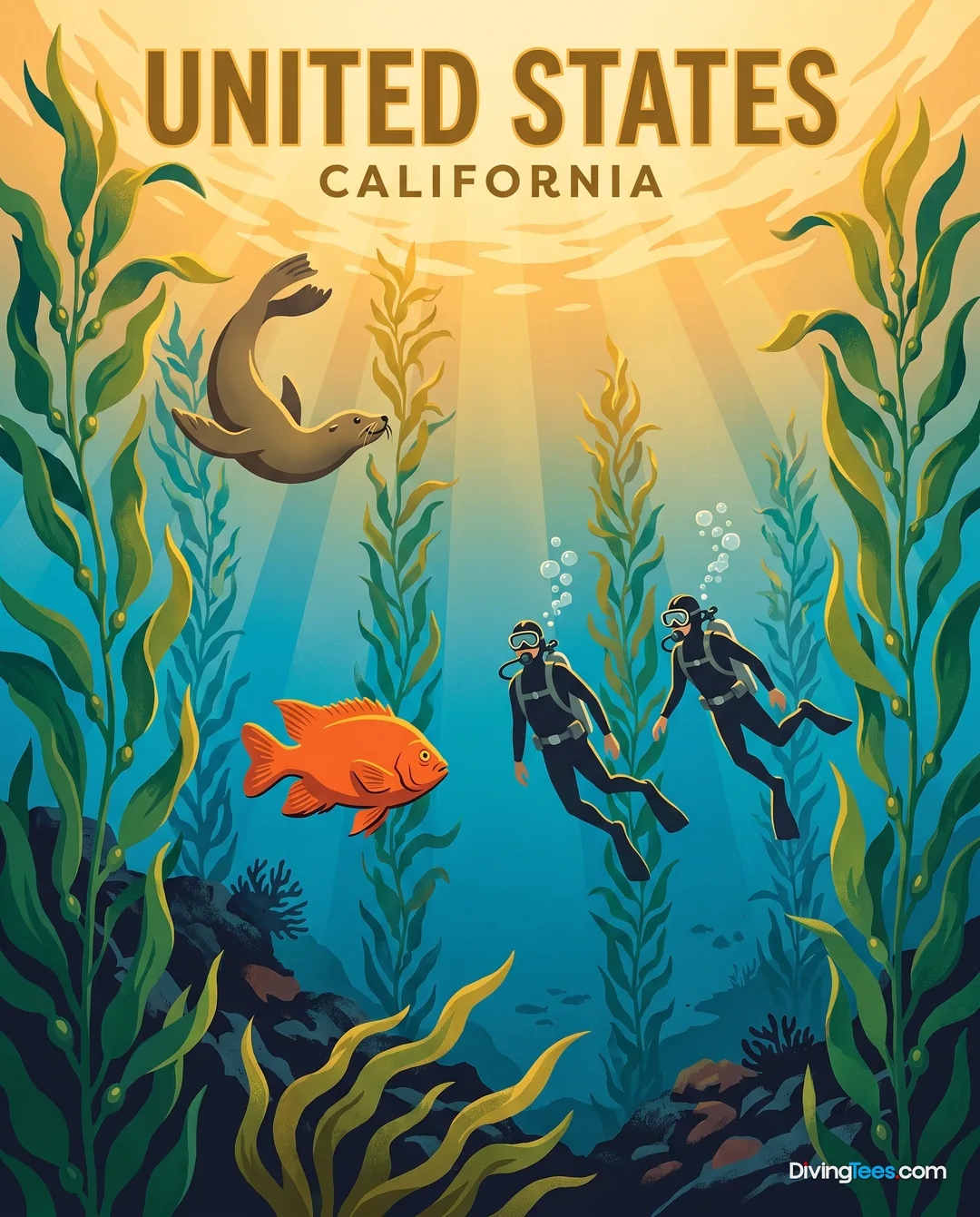
Artificial reefs and wreck structures concentrate the marine life here. From May to October, schools of jacks and other pelagic fish are regular possibilities around the offshore sites, while large groupers, including goliath grouper, are occasional visitors from summer into autumn. Manta rays and whale sharks can also appear during the warmer months, but they are rare encounters rather than reliable appointments. The attraction is therefore the combination of animals and structure: fish moving around metal wreckage, reef material and high spots, rather than a continuous field of tropical coral. Winter can bring clearer coastal water, but the species that follow warmer conditions are less likely to be present.
May through October is generally the most comfortable period for Pensacola diving. Water is warmer, the sea is usually calmer and marine activity is higher, which matters for both offshore wreck trips and encounters with pelagic fish. March and April are less dependable because rain and runoff can load the coastal water with sediment and reduce visibility. Winter remains worthwhile, particularly for coastal dives, with less crowding and often better visibility, but the water is cooler and warm-water visitors are less evident. A full-length suit remains the sensible approach, with more insulation needed in winter and lighter protection in summer.
Pensacola suits a wide range of divers, provided the site matches the training. Shore entries and shallow coastal dives work for beginners and occasional divers. Advanced Open Water or equivalent experience is appropriate for deeper wrecks, while wreck penetration calls for a dedicated wreck qualification, a suitable lamp and the right configuration. The USS Oriskany demands more: experience with depth, boat procedures, gas planning and possible current. Any section beyond recreational limits belongs to properly trained technical divers, not to a diver stretching a qualification for one holiday.
From London Heathrow, London Gatwick or Manchester, allow for a United States connection before continuing to Pensacola and then travelling by road to the diving areas. The destination does not depend on a ferry. Once in Pensacola, the shore sites, dive operations, boat ramps and marinas are spread around the bay and peninsula, so a hire car or an arranged transfer is usually important. Taxis or a centre shuttle may cover individual journeys, but walking will only work for some accommodation close to the waterfront or a dive operation. Offshore trips leave from local marinas, with the USS Oriskany about 25 miles south of Pensacola.
Treat the USS Oriskany as the main project of a properly planned day, not as an ordinary wreck excursion. Start the deep part first, descend and ascend on the agreed line, and retain enough gas to return to it before the safety stop. Visibility of 18 to 30 metres can make the superstructure look deceptively manageable, so depth discipline matters more than how clearly the wreck appears. Keep a reserve day if the Oriskany is essential, since rain, wind or swell can close offshore plans while a coastal dive may still be possible. After heavy rain, do not fill every day with shore diving because runoff can cloud the bay. If entering a wreck, bring a lamp and use equipment that matches the layout and training, rather than relying on depth alone.
Plan on five to seven days on land. That gives room for shallow coastal dives, several boat outings and a spare day for the Gulf to settle, with extra time sensible if the USS Oriskany and offshore wrecks are the priority. Keep the accommodation, dive operation and marina in the same transport plan rather than assuming they are walkable. Non-divers have beaches, water activities, historic Pensacola, coastal nature and the National Naval Aviation Museum to fill weather days.
Hello, I'm Marina, DivingDeal.com's AI assistant. I guide you through destinations, areas and countries.
Thinking about the whole trip and the flights? Talk it over with Edith →
Marina is an AI. Some links are affiliate links: DivingDeal may earn a commission, at no extra cost to you. Bookings are made with the partner.
May through October generally offers warmer water, calmer seas and higher marine activity, making it suitable for offshore wreck trips and pelagic encounters. Winter can bring clearer coastal visibility and fewer visiting divers, but water is cooler and warm-water visitors are less evident. March and April are less dependable because rain and runoff can reduce visibility.
Pensacola offers shallow shore entries suitable for beginners and occasional divers, while deeper wrecks call for Advanced Open Water or equivalent experience. Wreck penetration requires dedicated wreck training, a suitable lamp and appropriate equipment. The USS Oriskany requires depth, boat, gas-planning and current experience, with technical sections reserved for properly trained technical divers.
Pensacola features metal wrecks, artificial reefs, natural bottoms and high spots rather than continuous tropical coral. Schools of jacks and other pelagic fish are regular possibilities from May to October, while large groupers may appear from summer into autumn. Manta rays and whale sharks can occur during warmer months, but these encounters are rare.
Plan five to seven days on land for shallow coastal dives, several boat outings and a spare day for changing Gulf conditions. Keep accommodation, dive operators and marinas within one transport plan, as sites are spread around the bay and peninsula. A hire car or arranged transfer is usually important, especially for offshore trips.