
Aqualife Divers
Google 4.6/5 (197 reviews)
United States · Americas
Shallow Copenhagen, deeper Lady Luck, drifting reefs and artificial wrecks give Pompano Beach a practical Florida diving holiday with plenty to explore.
For subtitles in English: start the video firstthen click the gearat the top right of the video, select “Subtitles/CC”, then “Auto-translate” and choose “English”.
The Copenhagen lies in shallow water, making it an approachable introduction to Pompano Beach’s wreck diving. Further offshore, the Lady Luck and Okinawa move the emphasis towards depth, structure and more deliberate planning. Between them are natural reefs, drift dives and artificial wrecks colonised by marine life. It is a land-based Florida break rather than a liveaboard trip, with boats leaving local marinas and enough variety to build a week around weather, depth and certification.
Pompano Beach puts natural reefs close to the coast alongside an artificial-reef programme that includes recognisable wrecks such as the Copenhagen, Lady Luck and Okinawa. The underwater experience changes markedly between them. The Copenhagen is shallow and relatively forgiving, while deeper wrecks demand controlled descents, gas planning and a clear turn-around strategy. Some sites are drift dives, so the current becomes part of the dive rather than a background nuisance. Visibility is commonly around 15 to 35 metres from December to June, although plankton, algal growth, swell and storms can reduce it. Most outings are boat dives from local marinas, with the morning often offering the cleaner practical window before wind strengthens later in the day.
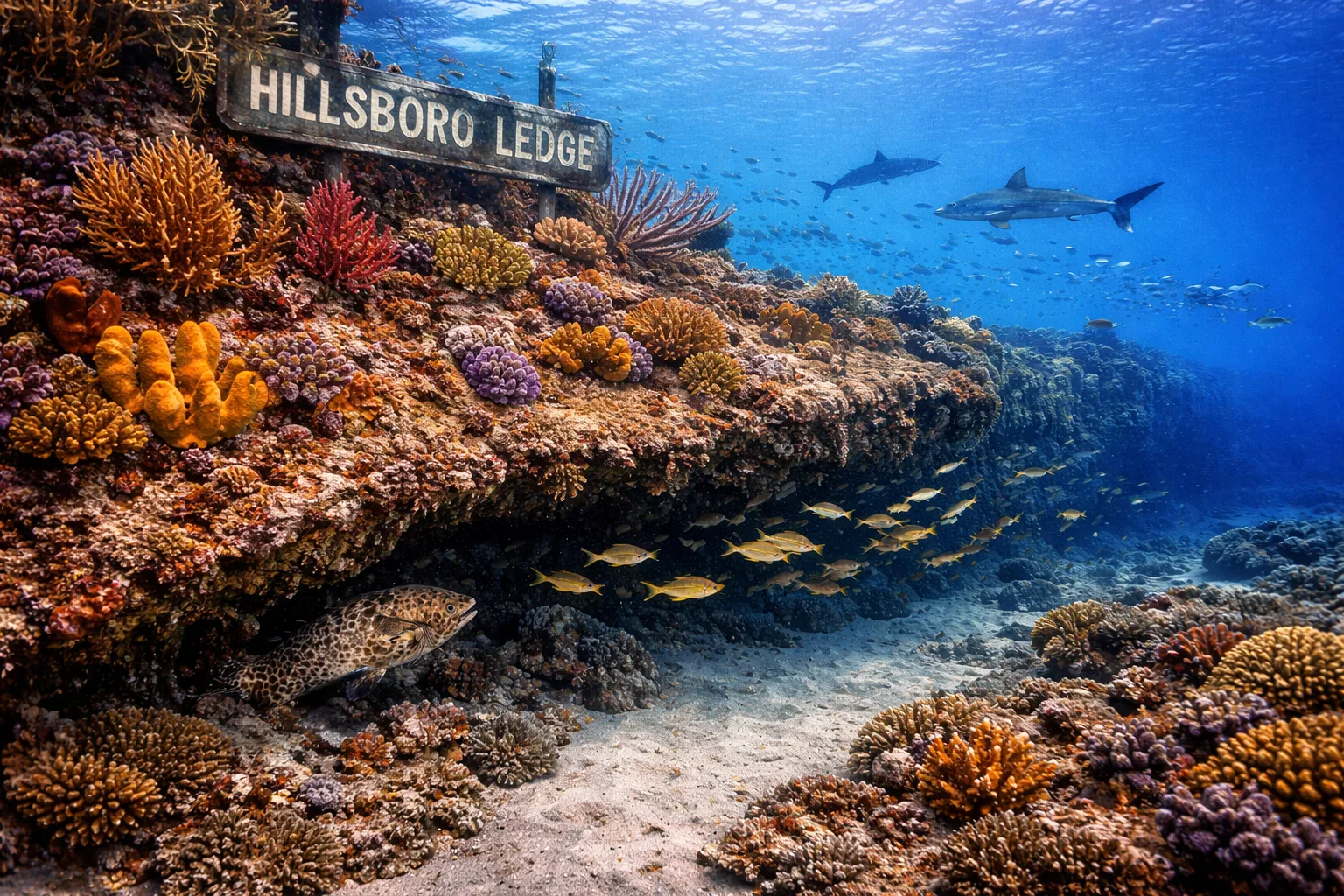
What you meet here is closely tied to the terrain. Natural reef sections offer coral structure, while the Copenhagen, Lady Luck, Okinawa and other artificial reefs provide hard surfaces, openings and shelter for fish associated with wreck habitat. The attraction is less a guaranteed species checklist than the change in character from low reef to steel wreck, with marine life gathered around the structures. Summer can bring more plankton, which may add activity in the water but reduce visibility. The same plankton, algal growth, swell and passing storms can make one site look very different from the next, so a good dive is often about reading the structure and the conditions together.
December through June is the sensible window for Pompano Beach, when conditions are generally more reliable and visibility is often at its most useful. Winter and spring also tend to bring less boat traffic than the busiest summer periods. June to November is not automatically off-limits, but tropical storm systems make the sea more changeable, while summer plankton can cut the view. Plan a five to seven-day stay rather than a tightly packed wreck schedule. That leaves room to switch to a shallow reef or move a boat trip when wind, swell or storms make the deeper option unsuitable.
Beginners can start with shallow reefs and the Copenhagen, provided they are comfortable with a boat dive and the local conditions. Advanced certification is useful for Lady Luck, Okinawa and other deeper wrecks, where depth and current change the risk picture. A Wreck qualification is essential for planned penetration, even where openings have been prepared. Nitrox can be useful on repeated reef and wreck days, but it does not replace depth training, gas planning or the ability to manage a drift dive.
From London Heathrow, London Gatwick or Manchester, fly to Florida and continue to Pompano Beach by road. There is no compulsory ferry or sea crossing to build into the journey. Once in the area, diving is organised around the local marinas rather than a single embarkation point, so allow for road travel between accommodation and the chosen departure. Depending on where you stay, that may mean walking, a taxi or other local transport. Compare the marina and boat departure with the planned reef or wreck outing, not simply the distance from your room. The journey is straightforward in structure, but the final connection to the right marina is part of the day’s logistics.
Ask before booking whether the boat is heading for a shallow reef, a recreational wreck or a deep wreck. In Pompano Beach, those labels describe genuinely different dives, not minor variations on one outing. Keep mornings for the sites you most want, because local operators report that wind can build later. Leave spare days in the programme, especially if Lady Luck, Okinawa or another deep wreck is the main reason for travelling. On current-affected sites, carry a reliable surface marker and be ready for the current to move you away from the wreck during ascent or after separation. Treat a drift dive as a moving dive, not a static descent with a safety stop added at the end. Do not book deep wrecks only, and do not plan penetration without Wreck training. Finally, do not confuse Wahoo Bay with a dive site: scuba diving is prohibited there.
Stay near the coast or the marinas if you want simpler boat mornings, but check the exact departure before assuming you can walk there. Pompano Beach works best as a land-based holiday, with reef and wreck trips fitted around the forecast rather than a fixed liveaboard timetable. A five to seven-day stay gives enough space to combine the Copenhagen, natural reefs and deeper wrecks without losing the whole plan to one bad-weather day. Non-divers have the beach, waterfront walks, the pier, surface activities and Wahoo Bay to explore.
Hello, I'm Marina, DivingDeal.com's AI assistant. I guide you through destinations, areas and countries.
Thinking about the whole trip and the flights? Talk it over with Edith →
Marina is an AI. Some links are affiliate links: DivingDeal may earn a commission, at no extra cost to you. Bookings are made with the partner.
Choose Pompano Beach between December and June, when conditions are generally more reliable and visibility is often useful. Winter and spring can also bring less boat traffic than the busiest summer periods. June through November remains possible, but tropical storms, summer plankton, wind and swell can make the sea and visibility more changeable.
You can begin with shallow reefs and the Copenhagen if you are comfortable with boat diving and local conditions. Lady Luck, Okinawa and other deeper wrecks are better suited to divers with advanced certification. Planned penetration requires a Wreck qualification, while Nitrox can support repeated dives but cannot replace depth training, gas planning or drift-diving skills.
You can explore natural reef sections with coral structure, alongside artificial reefs including the Copenhagen, Lady Luck, Okinawa and other wrecks. Their hard surfaces, openings and shelter attract fish associated with wreck habitat. The character changes from shallow reef to steel wreck, while plankton, algal growth, swell and storms can alter each site’s appearance.
Plan a land-based stay near the coast or local marinas, checking the exact boat departure before booking accommodation. Leave spare days so wind, swell or storms can shift your schedule, and keep mornings for preferred sites. Combine shallow reefs, the Copenhagen and deeper wrecks rather than relying only on deep outings, with transport arranged for each marina.