

Dive Zone Center
Google 4.9/5 (94 reviews)
Vietnam · Asia
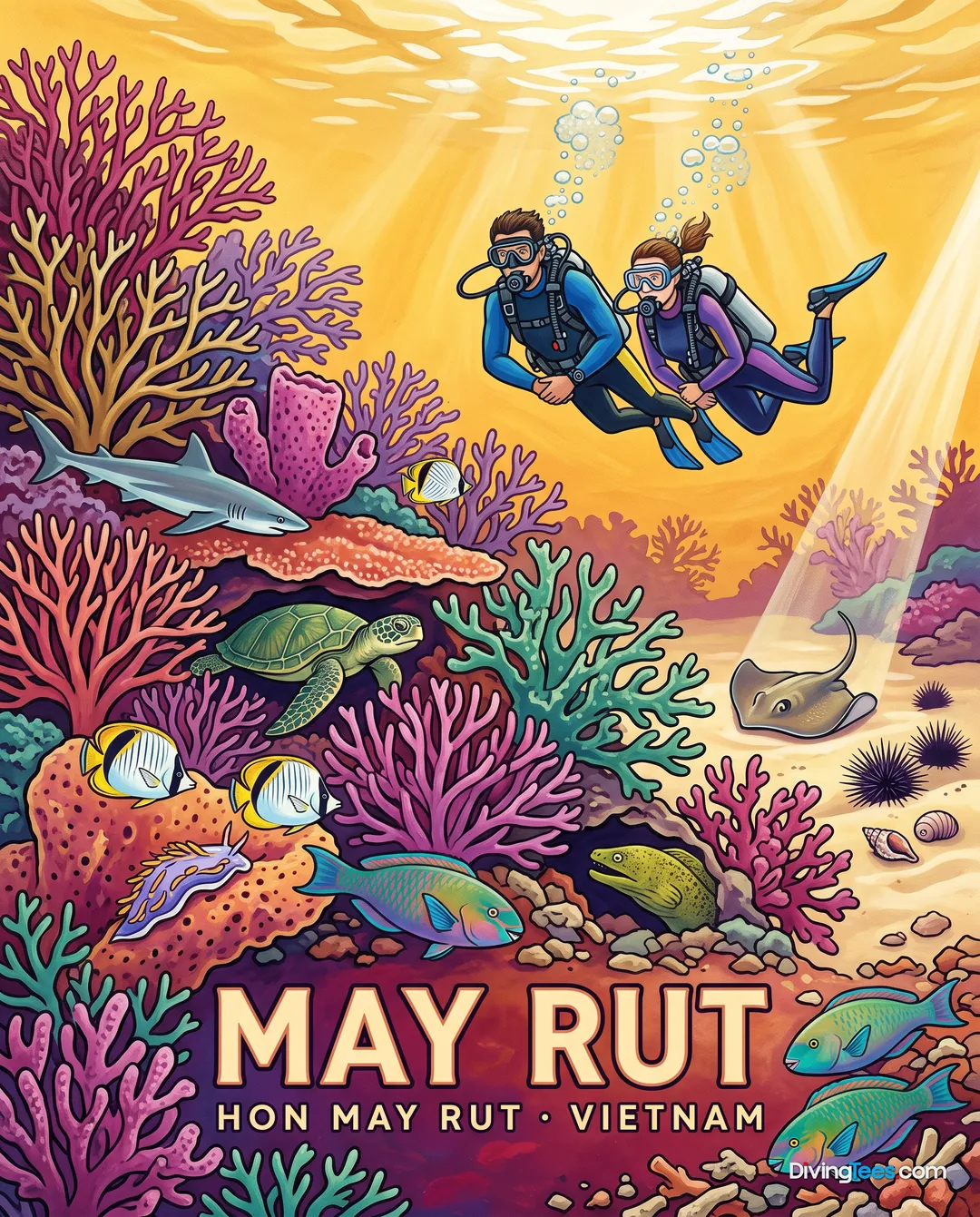
Hon May Rut combines hard and soft coral formations, one-metre shallows and a deeper route falling to 35 metres.
For subtitles in English: start the video firstthen click the gearat the top right of the video, select “Subtitles/CC”, then “Auto-translate” and choose “English”.
Hon May Rut is an island dive built around coral rather than dramatic wreckage or big-animal encounters. The named May Rut site runs from remarkably shallow water of one metre to a maximum of 35 metres, allowing a dive to develop gradually from reef-edge observation into deeper exploration. Its gentle profile makes sense for divers who want an uncomplicated day in the water, while the deeper section gives experienced divers room to extend the route without changing the character of the site.
The defining feature is the spread of hard and soft coral around the islands, with the May Rut profile offering a clear choice between very shallow reef work and a descent towards 35 metres. At the shallow end, the diver can remain close to the coral and spend time reading the reef rather than managing depth. The deeper section provides a more conventional exploration dive, but the site remains fundamentally reef-based. Currents are described as consistently light, particularly in the dry season, so this is not a place selected for current-riding or demanding drift work. Visibility generally falls between eight and 18 metres: enough to appreciate the coral formations, though not a guarantee of long-range views. Boat-diving logistics are part of the experience, with the site approached as an island rather than a shore entry.
The reliable subject here is the reef itself: extensive hard and soft coral formations occupy the May Rut site from the shallows down through its deeper sections. At one metre, the diver can work slowly over the upper reef, keeping the profile gentle and allowing time to inspect the coral structure at close range. Further down, the same formations become the backdrop for a deeper reef dive to 35 metres. No particular seasonal animal encounter is identified for Hon May Rut, so the sensible expectation is coral observation rather than planning the visit around a named species. The dry-season period is the more useful choice for seeing the reef in lighter current and generally better diving conditions.
November is the clearest starting point for planning the better diving window at Hon May Rut. The site information places the favourable period from November onwards, with the dry-season pattern associated with consistently light currents. That matters here because the attraction is the coral profile: calmer water makes it easier to stay close to the hard and soft formations, especially in the one-metre shallows. Visibility is generally eight to 18 metres, so the site is best approached for close reef viewing rather than guaranteed distant scenery. Outside the preferred window, conditions may be less settled, making the shallow-to-deep profile less relaxed.
May Rut is suitable from Open Water level, including divers making discovery or introductory dives. The one-metre shallows provide a forgiving place to settle into the environment, while the route to 35 metres gives more experienced divers a deeper option. PADI and SSI Open Water qualifications, or the comparable BSAC entry-level training, provide the appropriate foundation for the shallow sections. Anyone planning to use the full depth should hold certification and recent experience that match that depth, rather than treating the easy current as a substitute for training.
From London Heathrow, Gatwick or Manchester, the journey to Hon May Rut needs to be planned as a route to an island dive, not simply as a transfer to a hotel beside a beach. The practical structure is to reach the Vietnamese diving base first, then allow time for the boat journey out to the Hon May Rut islands. The final approach is therefore governed by boat departure times and sea conditions rather than by a taxi ride to a shore entry. Once the local departure point has been reached, the diving day is organised around that water transfer; carrying only the equipment needed for the boat makes the changeover easier.
Treat May Rut as a reef-observation dive, not a test of current skills. The light current means the diver can spend time close to the hard and soft corals, but the one-metre shallows demand careful depth and buoyancy control: a small change in position can put fins or equipment close to the reef. Plan the dive around the profile rather than dropping straight to depth; the site allows a gradual move from the shallow reef into the deeper section, with a maximum of 35 metres. Visibility of eight to 18 metres favours staying close enough to read the coral formations. Do not assume that a calm-looking surface guarantees identical conditions at depth. Keep the return boat in mind throughout the dive, since the island setting makes the water transfer part of the day rather than an incidental detail.
Hon May Rut works well as a focused island-diving stop within a Vietnamese diving stay. The May Rut site can be approached in stages, beginning in the shallows and moving deeper on a later dive or on the same profile if certification and conditions allow. Its light-current character also leaves room for relaxed surface intervals and a straightforward day organised around the boat transfer.
Hello, I'm Marina, DivingDeal.com's AI assistant. I guide you through destinations, areas and countries.
Thinking about the whole trip and the flights? Talk it over with Edith →
Marina is an AI. Some links are affiliate links: DivingDeal may earn a commission, at no extra cost to you. Bookings are made with the partner.
November onwards is the preferred starting point for diving Hon May Rut, during the dry-season pattern associated with consistently light currents. Visibility generally ranges from eight to 18 metres. This period suits close coral viewing, particularly in the one-metre shallows, where calmer conditions help you stay near the reef.
Hon May Rut is suitable from Open Water level, including discovery and introductory dives in the one-metre shallows. PADI or SSI Open Water training, or comparable BSAC entry-level certification, supports the shallow sections. To use the route down to 35 metres, you should have certification and recent experience appropriate to that depth.
You can see hard and soft coral formations spread around the Hon May Rut islands, from the one-metre shallows through the deeper reef section. The site is focused on coral observation rather than named animal encounters or wreckage. Visibility generally ranges from eight to 18 metres, supporting close reef viewing.
Plan Hon May Rut as an island boat-diving stop within a Vietnamese diving stay. Reach the local diving base first, then allow time for the boat journey and check departure times and sea conditions. Organise the day around the water transfer, bring only the equipment needed on the boat, and allow relaxed surface intervals.