


Con Dao Dive Center
Google 4.9/5 (323 reviews)
Vietnam · Asia
Wall drops to 16 metres, coral slopes fall to 25, and turtles, remoras and barracuda give Dao Con Son its underwater character.
For subtitles in English: start the video firstthen click the gearat the top right of the video, select “Subtitles/CC”, then “Auto-translate” and choose “English”.
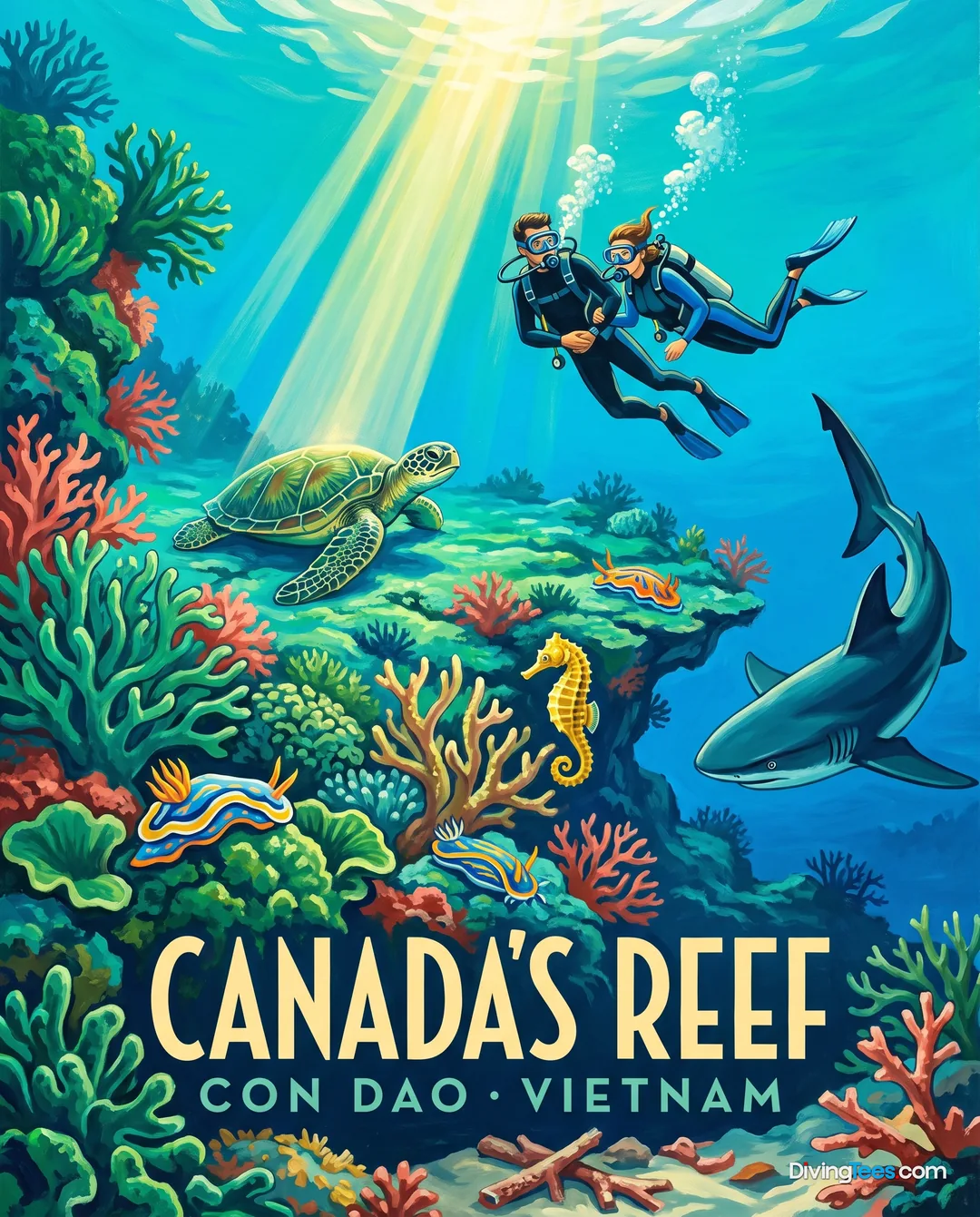
Dao Con Son is a destination for divers who like coral scenery with some proper underwater movement. Canada's Reef combines healthy hard-coral sections with drop-off terrain down to 25 metres, while Remoras Romance offers a gentler slope over the same maximum depth. Sask Wall is a shorter, more exposed dive, reaching 16 metres and bringing the possibility of large barracuda schools, sharks and dolphins. The character changes with the site: calm coral observation in one place, current-aware wall diving in another.
The diving ranges from a gently sloping coral reef to a wall exposed to northern currents. Remoras Romance starts at five metres and falls to 25, giving Open Water divers room to remain shallow or follow the slope deeper. Canada's Reef is more demanding, with hard coral and a drop-off between 10 and 25 metres. Current is usually light to moderate there, but tidal changes can strengthen it enough to turn the dive into a drift. Sask Wall reaches 16 metres and requires good buoyancy control in current. Visibility is commonly 10 to 25 metres at Canada's Reef and Remoras Romance, while Sask Wall can reach 30 metres. These are not simply sightseeing dives: positioning, timing and a controlled ascent matter when the water begins to move.
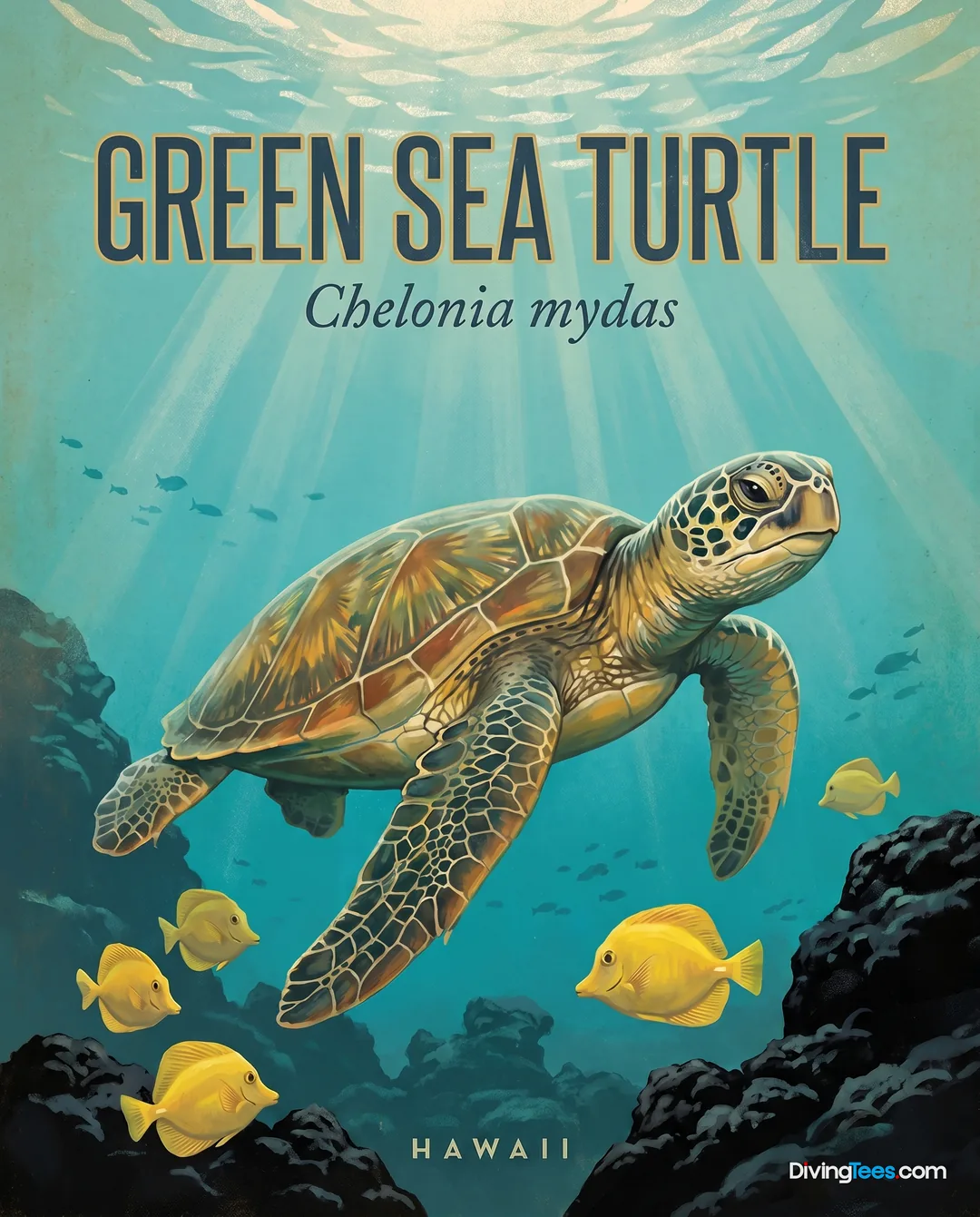
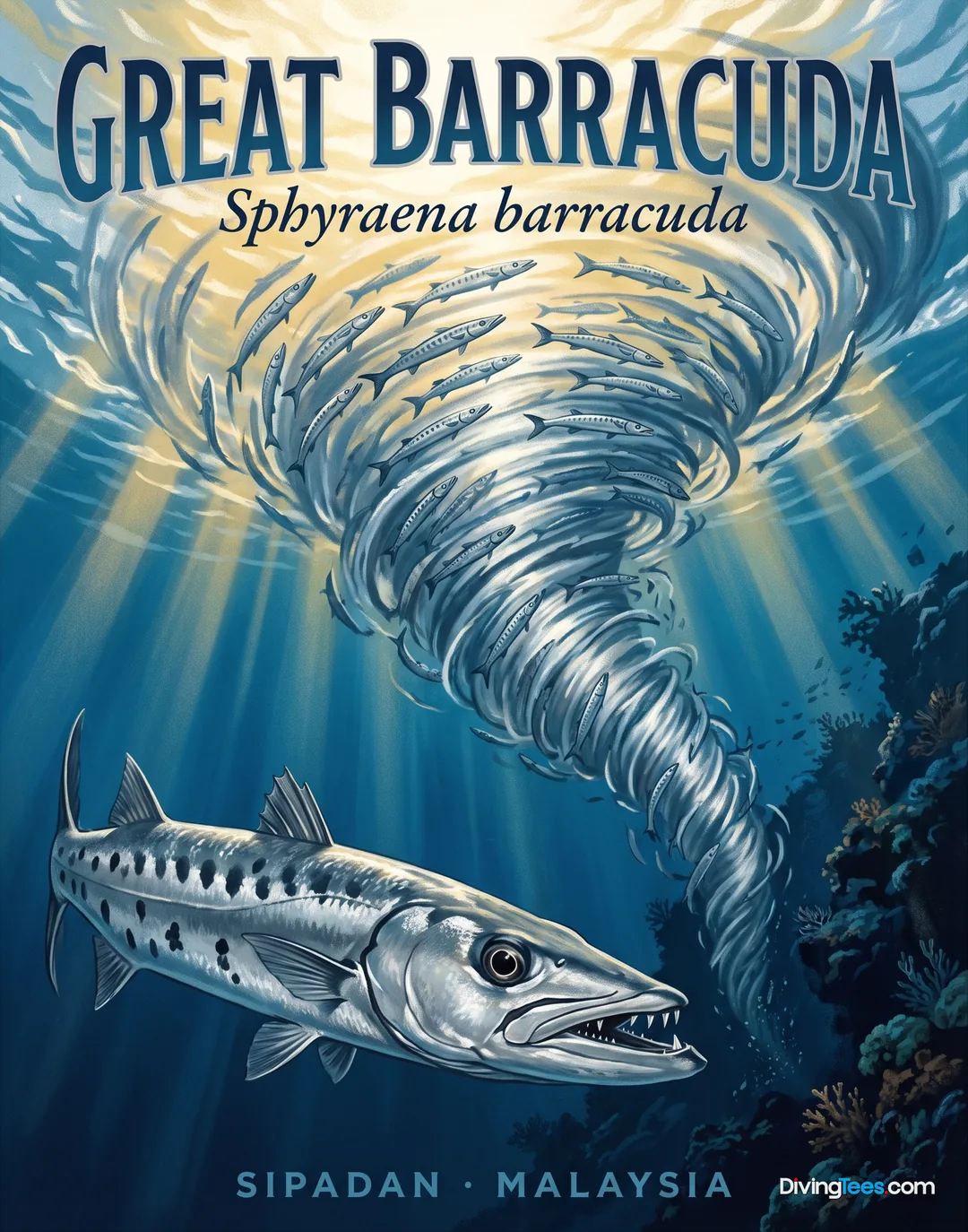
Sea turtles are part of the appeal at Dao Con Son, particularly around the coral slopes of Remoras Romance and the reef scenery at Canada's Reef. Remoras Romance is noted for the relationship between remoras, sharks and turtles, giving divers something to watch closely rather than merely passing through the reef. Canada's Reef also suits macro searching among healthy hard-coral sections. Sask Wall changes the scale of the encounter: large schools of Great barracuda are associated with its northern-current exposure, with occasional sharks and dolphins adding a pelagic possibility. The strongest seasonal indication is for March to August, when Sask Wall generally has more favourable conditions, while April is identified as a prime period for the area.
March to August is the most useful general window in the supplied site information, with April standing out as a particularly promising month. The reason is not simply a calendar preference: Sask Wall is more favourable during this period, although current remains a constant feature, and Remoras Romance is described as calmer and clearer in the main season. Visibility can reach 15 to 25 metres at Remoras Romance and up to 30 metres at Sask Wall. Conditions still vary with tides and local weather, so the clearest month does not remove the need to allow flexibility in the dive plan.
Remoras Romance is suitable from Open Water level, provided the diver is comfortable on a slope reaching 25 metres. Canada's Reef is for Advanced Open Water divers, with a deeper drop-off and possible tidal current. Sask Wall also calls for Advanced experience, good buoyancy control and previous current diving. The same applies to BSAC, PADI and SSI divers: the agency matters less than whether the diver can hold position, manage depth and respond calmly when a light current becomes stronger.
For departures from London or Manchester, the journey to Dao Con Son needs to be planned around the final connection rather than treated as a straightforward resort transfer. The diving described is based off Dao Con Son, with Remoras Romance located within Con Dao National Park, so the local diving schedule depends on reaching the destination and then making the offshore trip to the sites. Allowing time for connections is sensible, particularly if a missed onward movement would cost a diving day. Once on Dao Con Son, the key practical distinction is between being based at the destination and travelling out to the sites; the site descriptions do not support a more detailed transport itinerary.
Treat Canada's Reef as a site where the tide can change the character of the dive. Its current is normally light to moderate, but tidal changes may strengthen it, so the planned route should allow for a drift rather than assuming the reef can always be explored at leisure. Sask Wall deserves similar respect: its northern exposure is linked to current, and the site is better suited to divers already comfortable holding position in moving water. Keep Remoras Romance for a steadier coral-focused dive, particularly when a group includes divers who do not want a wall or current dive. At the two deeper sites, the difference between a relaxed dive and a rushed one is often buoyancy control: Canada's Reef reaches 25 metres and Sask Wall is an exposed wall to 16 metres. Do not mistake maximum visibility for guaranteed calm conditions.
A sensible stay alternates the three different underwater experiences rather than treating every dive as interchangeable. Remoras Romance provides a gentler coral slope and a useful introduction to local conditions; Canada's Reef adds depth, hard coral and a possible drift; Sask Wall supplies the current-aware wall dive and the chance of barracuda action. Keeping flexibility in the programme is worthwhile, especially around tidal changes. The site information supports a diving stay centred on Dao Con Son, but not a liveaboard arrangement or a specific shore-based accommodation pattern.
Hello, I'm Marina, DivingDeal.com's AI assistant. I guide you through destinations, areas and countries.
Thinking about the whole trip and the flights? Talk it over with Edith →
Marina is an AI. Some links are affiliate links: DivingDeal may earn a commission, at no extra cost to you. Bookings are made with the partner.
Plan your diving at Dao Con Son between March and August, when conditions at Sask Wall are generally more favourable and Remoras Romance is calmer and clearer. April is identified as a particularly promising month. Tides and local weather can still change conditions, so keep your schedule flexible rather than relying on one fixed dive day.
Dao Con Son offers a suitable option for Open Water divers at Remoras Romance, where the slope begins shallow and reaches 25 metres. Canada's Reef is intended for Advanced Open Water divers because of its deeper drop-off and possible tidal current. Sask Wall also requires Advanced experience, good buoyancy control and previous current-diving experience.
Diving at Dao Con Son combines hard coral, sloping reefs and exposed walls. You may see sea turtles around Remoras Romance and Canada's Reef, along with remoras, sharks and macro life. Sask Wall brings the possibility of large Great barracuda schools, with occasional sharks and dolphins around its northern-current sections.
Base your diving stay at Dao Con Son around three contrasting sites. Use Remoras Romance for a gentler coral slope, Canada's Reef for hard coral and possible drift conditions, and Sask Wall for current-aware wall diving. Allow time for final connections and the offshore trips, and keep the programme flexible around tides and weather.