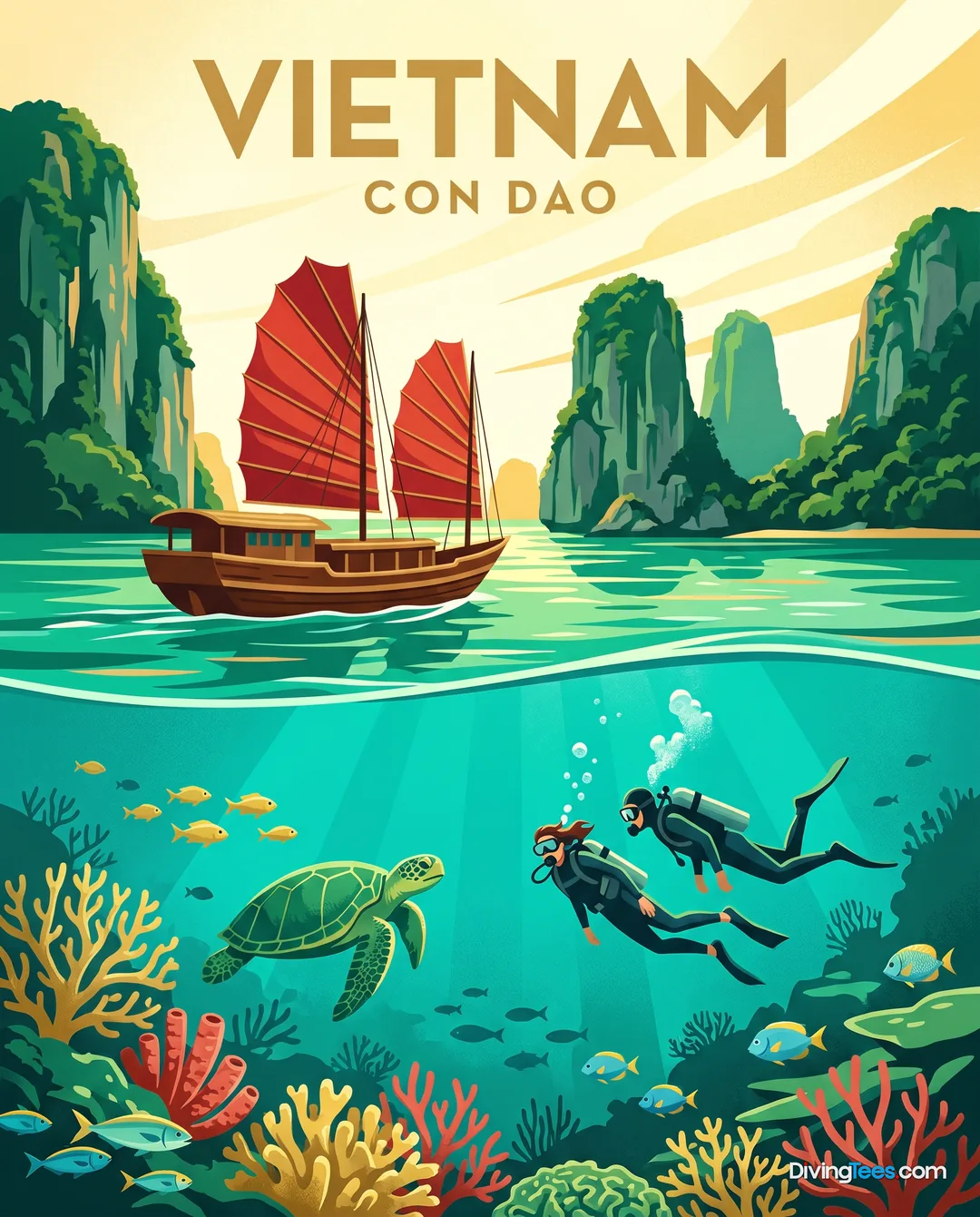
Vietnam · Asia
Diving Mun Island: pinnacles, walls and shallow macro reefs
Swim-throughs at Madonna Rock, the Blue Wall’s coral face, and Seahorse Bay II’s shallow nudibranch habitat define Nha Trang’s boat-diving base.
What makes this destination special
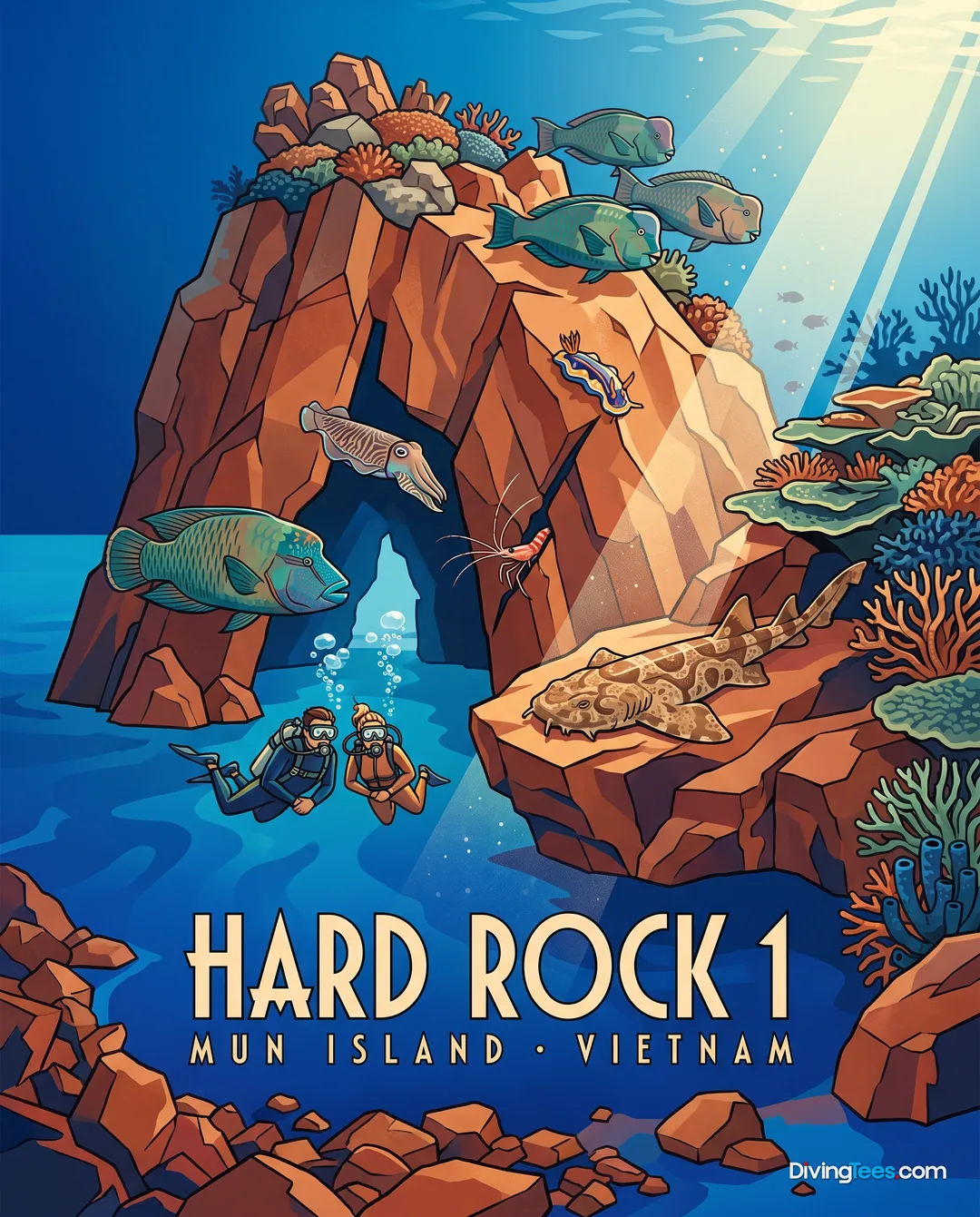
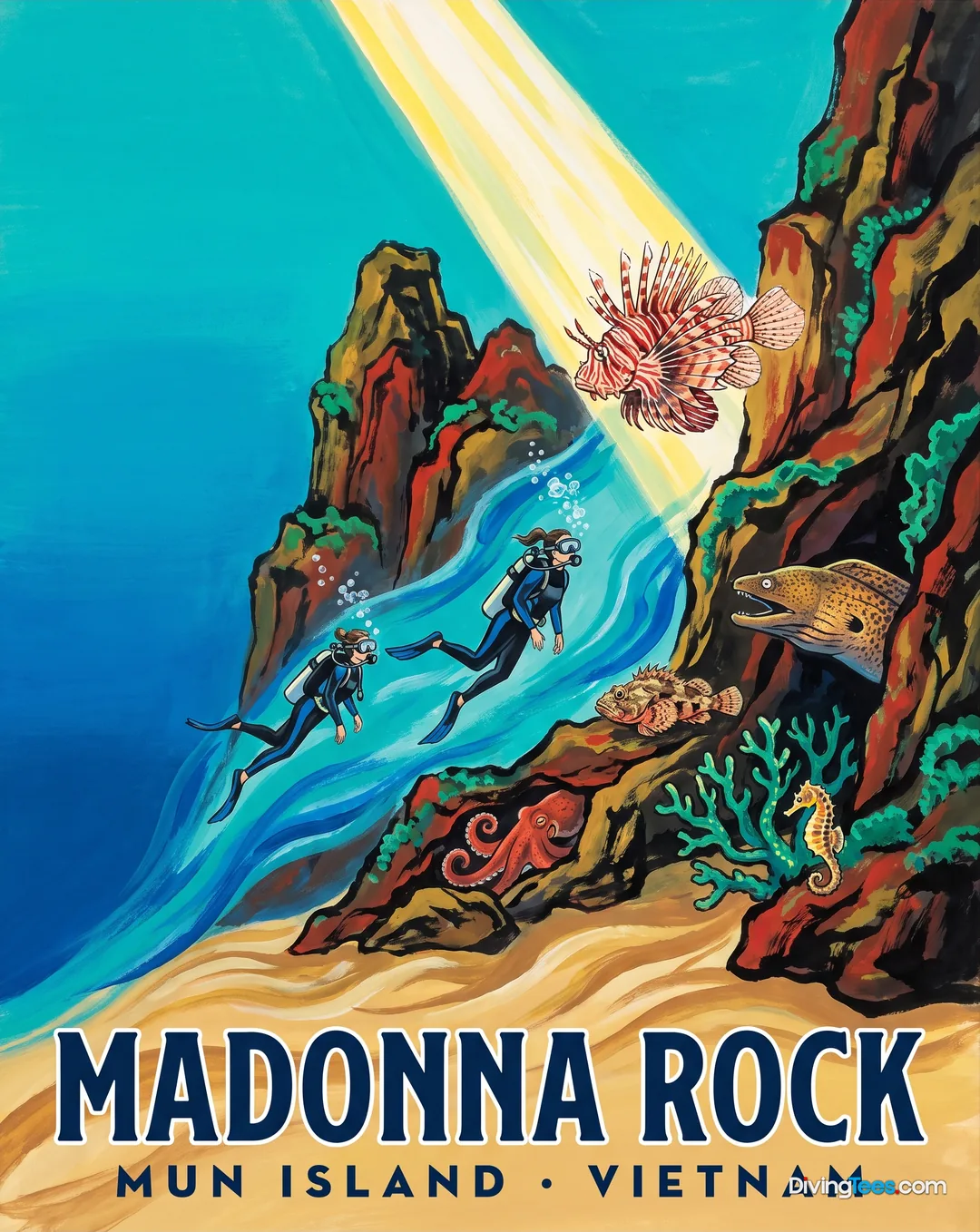
- Madonna Rock’s caves and swim-throughs down to 35 metres
- Blue Wall’s vertical coral-covered face and changing current
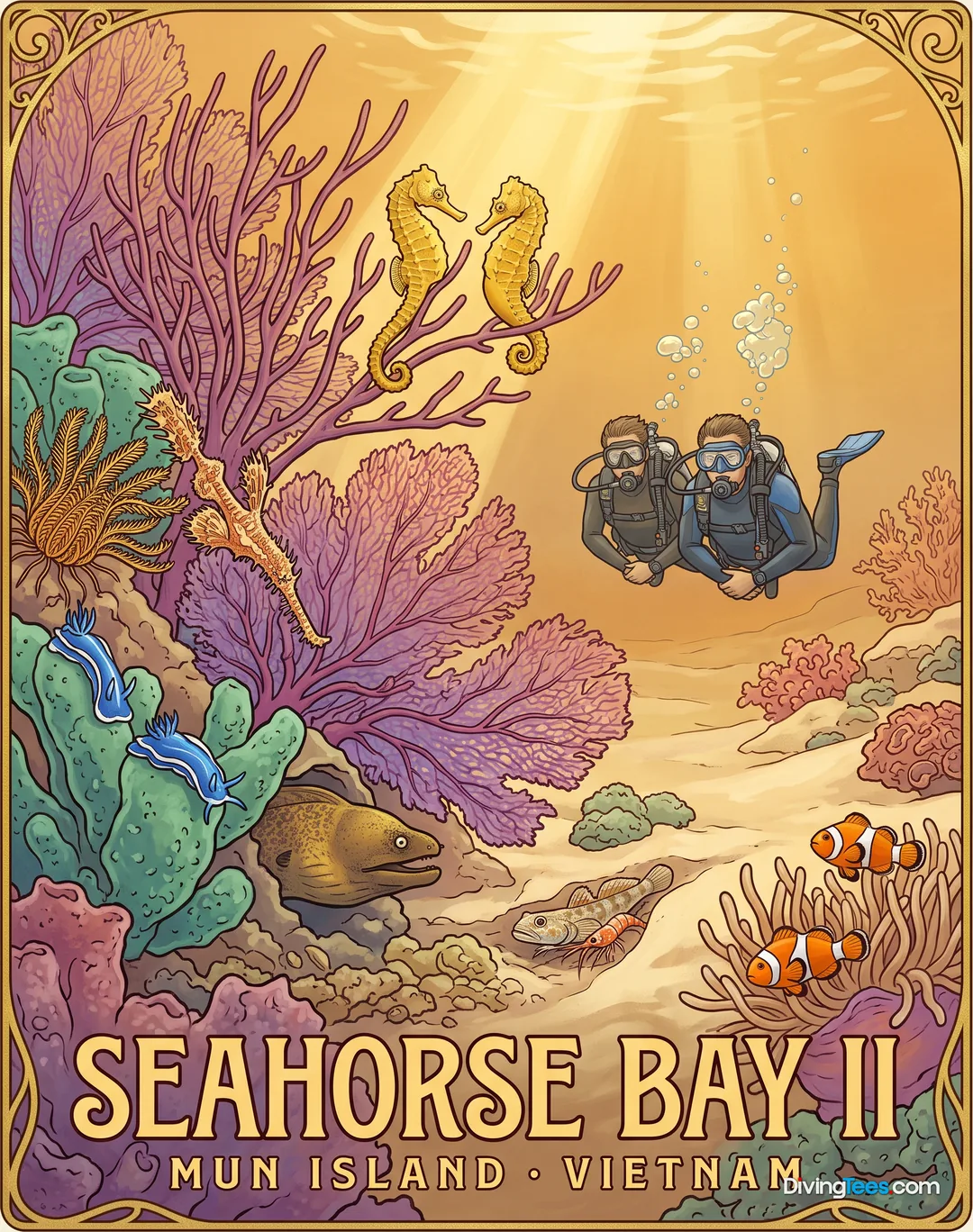
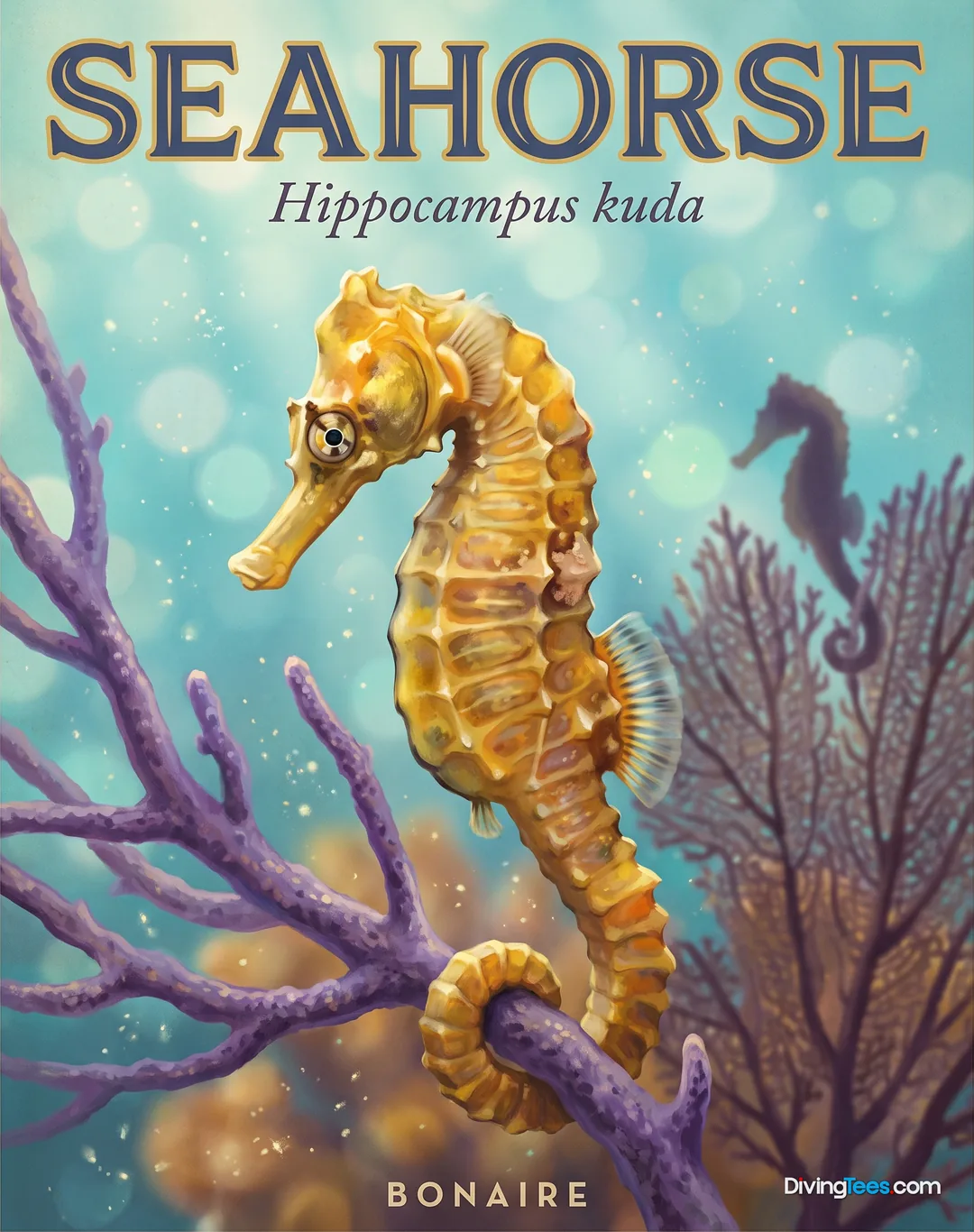
- Seahorse Bay II’s nudibranchs and ornate ghost pipefish
- Seahorse Bay II’s light current and 18-metre maximum depth
- Hon Mun Marine Protected Area around the island
- Short boat dives from a mainland base in Nha Trang
- Macro-friendly reefs for seahorses and small reef life
For subtitles in English: start the video firstthen click the gearat the top right of the video, select “Subtitles/CC”, then “Auto-translate” and choose “English”.
Overview
Madonna Rock begins in shallow water and drops through pinnacles, caves and swim-throughs to 35 metres, giving Mun Island a more sculpted character than a simple reef slope. Elsewhere, Blue Wall offers a vertical coral face, while Seahorse Bay II keeps things shallow and calm, with small subjects rewarded by careful observation. The island is reached by boat from Nha Trang and suits divers who want repeated recreational dives, training opportunities and straightforward days on the water rather than an expedition built around large pelagic encounters.
Diving here
The underwater scenery is built around rocky outcrops, pinnacles, reef slopes and walls. Madonna Rock is the site for divers who enjoy moving through a three-dimensional landscape: its caves and swim-throughs start at about five metres and continue towards 35 metres. Blue Wall provides a more conventional wall dive, with coral growth running down the vertical face. Currents are generally light across the area, but they are not uniform. Madonna Rock can have moderate current, while both Hard Rock 1 and Blue Wall may shift from mild flow to stronger water around the rock or along the wall. Visibility varies by site and conditions, from around five metres at Madonna Rock to as much as 30 metres at Blue Wall and Seahorse Bay II. All sites are reached by boat, with early departures often giving the calmest bay conditions.
Three dives not to miss
The underwater wildlife
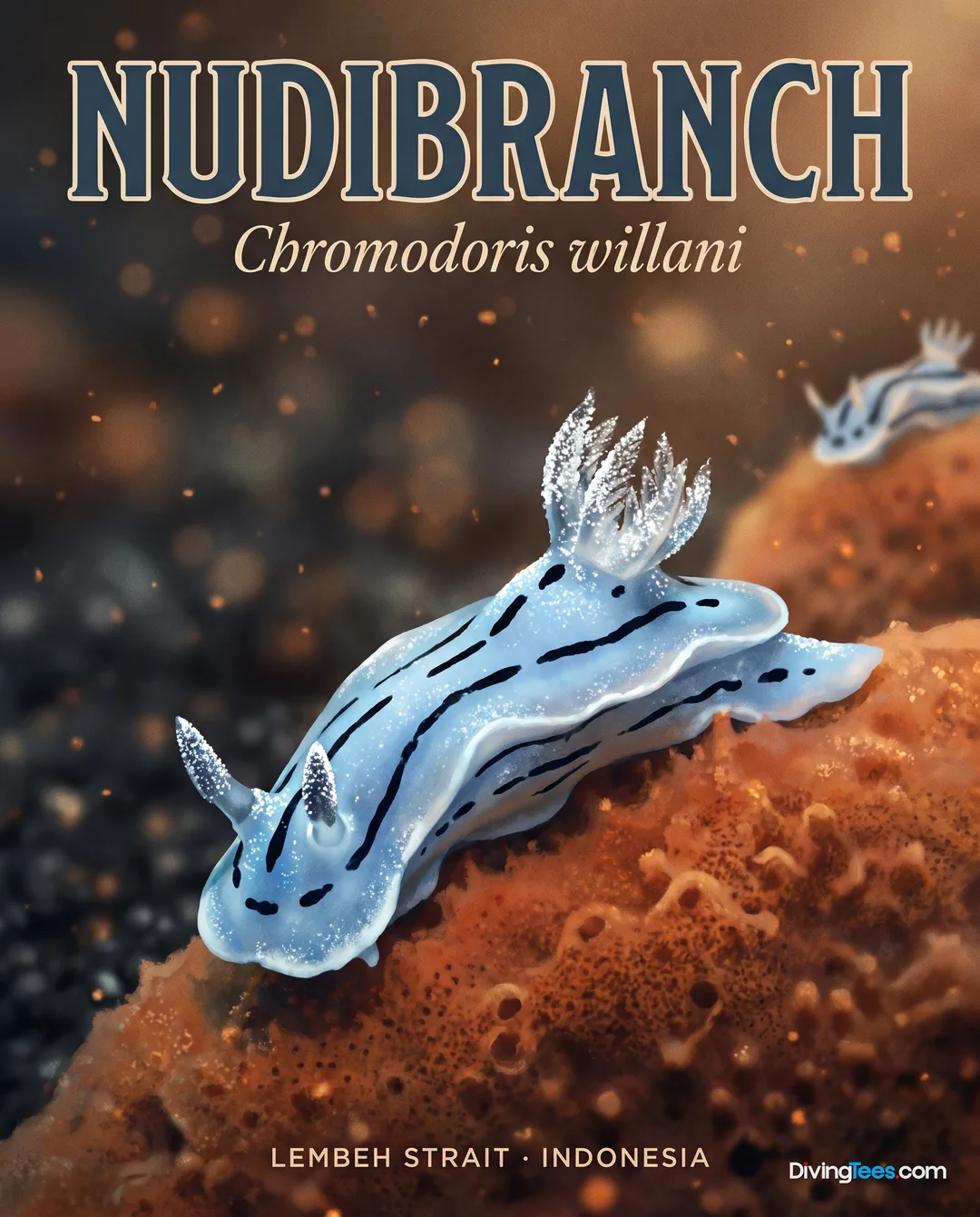
Mun Island is better approached as a close-looking reef destination than as a place for large-animal sightings. Seahorse Bay II is the clearest expression of that character: at depths from three to 18 metres, divers can search slowly for seahorses, nudibranchs and ornate ghost pipefish among the reef. Nudibranchs are the most dependable macro interest identified for the area, and the shallow profile makes repeated searches practical rather than rushed. Madonna Rock adds reef life tucked into its rugged rock formations, while the coral surfaces of Blue Wall provide a broader backdrop for observation. Seahorse Bay II can be dived year-round; Blue Wall is particularly suited to diving between March and September. A macro lens, patience and controlled hovering will generally produce more rewarding encounters than scanning the blue for pelagics.
Possible underwater encounters
When to go
Mun Island works as a year-round base for Seahorse Bay II, where light current and shallow reef make the site usable in different seasonal conditions. For Blue Wall, the stated favourable window is March to September, when its wall profile and variable flow are a more attractive combination. In practical terms, the day matters as much as the calendar: early boat departures are advisable because the bay is usually calmer then. A three- to five-day stay gives enough flexibility to repeat the sheltered sites and avoid making the whole trip depend on one boat day or one set of sea conditions.
Level required
The area is suitable for all levels, including divers on PADI, SSI or BSAC pathways who are comfortable with normal boat procedures. Seahorse Bay II is particularly accommodating for newer divers, with light current and a maximum depth of 18 metres. Madonna Rock is accessible to Open Water divers, but its swim-throughs and possible moderate current demand calm positioning and sensible limits. Blue Wall and Hard Rock 1 can also experience stronger or shifting flow. Nitrox is useful for divers planning several shallow, repetitive dives over consecutive days.
On the ground
From London Heathrow, London Gatwick or Manchester, the journey to Mun Island is structured in two parts: first reach Nha Trang by road or by an internal flight to the nearest airport, then travel by boat from the coast to the island and the surrounding dive sites. There is no final land transfer to an autonomous dive island; Nha Trang remains the practical base. That makes the destination easier to organise around a normal coastal holiday, but the boat leg is unavoidable on every diving day. Once in Nha Trang, divers generally reach the dive centre on foot, by taxi or by an arranged transfer, depending on where they are staying. Allowing flexibility around the boat schedule is sensible, particularly when planning consecutive dive days.
Local tips
Treat Mun Island as a Nha Trang base with daily boat outings, not as an island-transfer holiday. That keeps rest days and poor boat-weather days manageable, and avoids building the trip around a single departure. Early boats are worth favouring: the bay is generally calmer earlier, which matters more here than chasing a dramatic current. Keep Madonna Rock separate in your expectations from Seahorse Bay II; the former involves caves, swim-throughs and possible moderate current, while the latter is a slow, shallow macro search. Bring equipment suited to small subjects, particularly if seahorses, nudibranchs and ornate ghost pipefish are the aim. Nitrox earns its place when several shallow dives are planned over successive days, mainly by making the schedule more comfortable. Finally, expect boat traffic and other bay activities. The Hon Mun Marine Protected Area is not an invitation to treat the reef casually: follow the local visit rules and avoid contact with the bottom, especially on busy sites.
Planning your stay
Three to five days works well as a land-based diving break. Divers stay in Nha Trang, travel to the coast each morning and return to the same town for meals, rest or a non-diving afternoon. The format suits mixed groups: a diver can spend the day on the boat while a non-diving companion remains on the coast. Keep one day flexible for weather, and use the remaining time for beach and city activities, a non-diving bay trip or a gentle coastal day before flying home.
Hello, I'm Marina, DivingDeal.com's AI assistant. I guide you through destinations, areas and countries.
Thinking about the whole trip and the flights? Talk it over with Edith →
Marina is an AI. Some links are affiliate links: DivingDeal may earn a commission, at no extra cost to you. Bookings are made with the partner.
Map of hotels, dive sites and dive centres in Mun Island
Things to do in Mun Island beyond diving
Your last day stays dry: no diving in the 18-24 hours before a flight, the perfect window to see the destination from another angle.
 Nature
Hidden Hon Ba Nature Reserve Motorcycle Tour BBQ,Beer,Waterfall
⏱ 5 h · ★ 5.0 (132 reviews)
from £57$76€68
see on Viator ↗
 City
CityStreet Food Tour With Chef Dat
⏱ 4 h · ★ 4.8 (6 reviews)
from £51$68€61
see on Viator ↗

Amazing Snorkeling at Mun Island ( Group Tour )
⏱ 6 h · ★ 4.0 (62 reviews)
from £22$29€26
see on Viator ↗
 Culture
Full Day Car Tour Dalat (Min 4 guest)
⏱ 10 h · ★ 3.8 (4 reviews)
from £70$94€84
see on Viator ↗
Ratings and reviews collected by Viator and Tripadvisor.
Frequently asked questions about Mun Island
When should you go diving at Mun Island?
Mun Island works year-round for Seahorse Bay II, where shallow water and light current suit different seasonal conditions. Blue Wall is particularly suited to diving from March to September. Whatever the season, favour early boat departures because the bay is generally calmer then, making conditions more comfortable for diving.
What experience level suits diving at Mun Island?
Mun Island suits divers of all levels who are comfortable with normal boat procedures, including those following PADI, SSI or BSAC pathways. Seahorse Bay II is especially accommodating for newer divers. Open Water divers can visit Madonna Rock, but its swim-throughs and possible moderate current require calm positioning and sensible limits.
What can you see while diving at Mun Island?
Mun Island offers rocky outcrops, pinnacles, reef slopes and walls rather than a focus on large animals. Madonna Rock has caves and swim-throughs, Blue Wall has a vertical coral-covered face, and Seahorse Bay II rewards slow searches for seahorses, nudibranchs and ornate ghost pipefish in shallow reef.
How should you plan a diving stay at Mun Island?
Use Nha Trang as your base and plan daily boat outings to Mun Island and nearby sites, rather than staying on a dive island. Build in flexibility for boat conditions, favour early departures, and keep a day open for weather. This format also leaves room for rest, city activities or non-diving companions.