Santa Cruz · Azores · Atlantic
Max. depth · 32 mBaixa da Penedia, Santa Cruz: Azorean Offshore Seamount
Descend onto Baixa da Penedia, an accessible offshore seamount rising from 32 metres to a shallow reef top at 3 metres, just 50 metres from the Santa Cruz coastline.
What makes this site special
- Accessible offshore seamount profile
- Shallow reef top at 3 metres
- Oval cave at 15 metres with sponge-covered walls
- Black coral formations at deeper sections
- Natural aggregation point for schooling fish
- Dusky grouper and white trevally frequently observed
- Varied topography of ledges and drop-offs
For subtitles in English: start the video firstthen click the gearat the top right of the video, select “Subtitles/CC”, then “Auto-translate” and choose “English”.
Baixa da Penedia about the site
Baixa da Penedia, also known as Penedia Reef or Baixa da Penedia Shoal, is an offshore seamount located approximately 50 metres from the eastern coast of Santa Maria, near Maia Bay. Unlike the more distant, deeper pinnacles common in the Azores, this site offers a profile that begins with a broad, relatively shallow summit at 3 metres, making it accessible for a range of dive plans. The seamount then gradually slopes down, revealing a series of ledges and small drop-offs that transition from sunlit upper sections to more subdued, deeper areas.
The topography of Baixa da Penedia is defined by its rocky structure, which extends down to a maximum depth of 32 metres. As you descend, you'll find recesses in the rocky bottom and cracks near the base of the reef, providing shelter and habitat. A notable feature is an oval cave situated around 15 metres, its walls covered with sponges. This cave, along with areas of black coral found deeper, creates a distinct micro-ecosystem within the seamount's overall structure.
This seamount acts as a natural aggregation point for marine life due to its standalone position near the coast. While exploring, you will frequently encounter schooling fish navigating around its perimeter, orienting themselves to the prevailing water movement. The light penetration on the upper reaches illuminates the substrate, highlighting the textures and colours of sessile organisms like barnacles and various sponges that anchor here, drawing in smaller feeders and their predators.
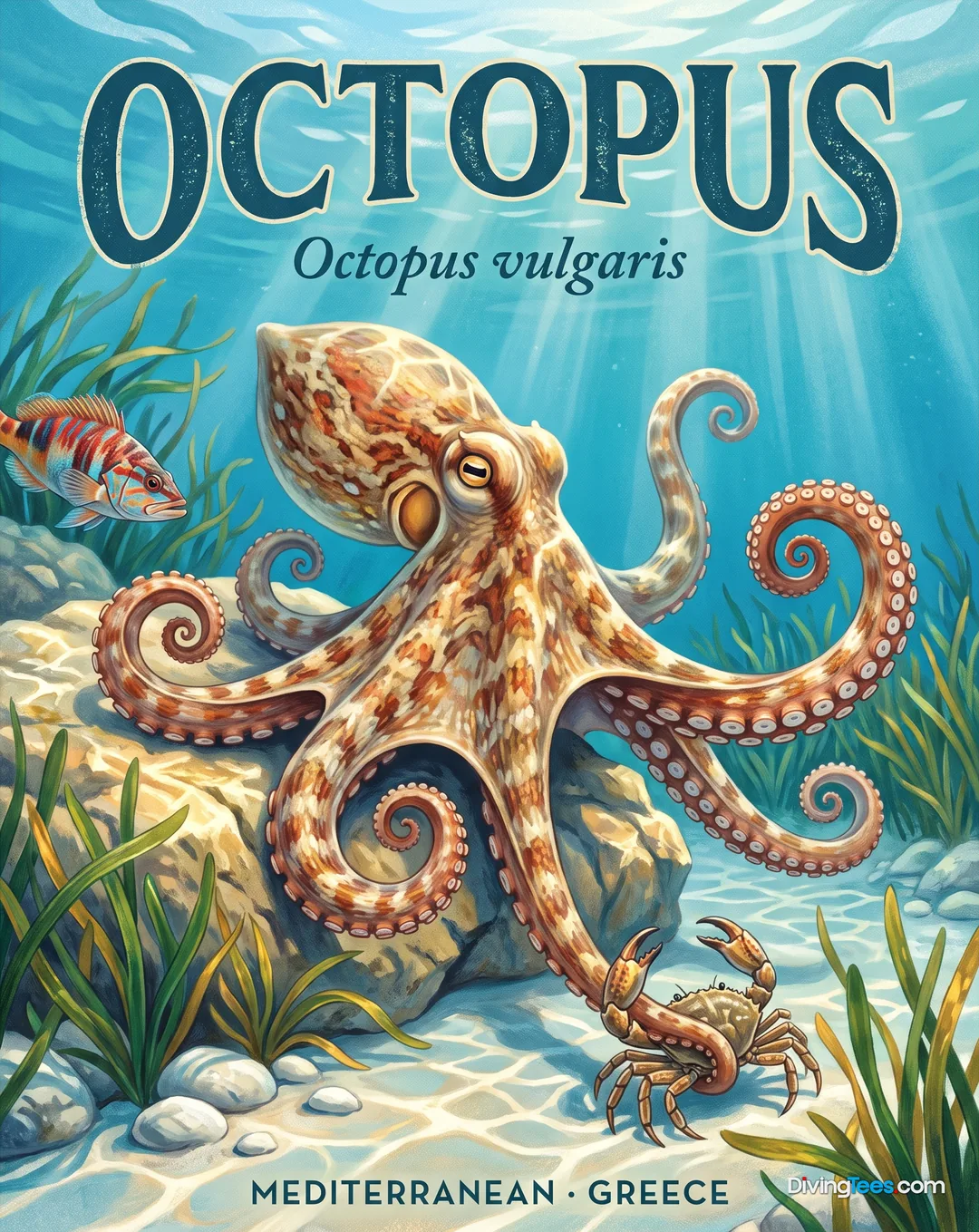
The site's marine fauna includes a variety of species adapted to this rocky reef environment. You can expect to see ornate wrasse and peacock wrasse moving across the reef, while common octopus and moray eels inhabit the cracks and recesses. Mystery blenny are often observed, along with larger species such as dusky grouper and schools of white trevally, particularly near the black coral formations and within the oval cave at 15 metres.
Baixa da Penedia is influenced by the rich currents characteristic of the Azorean waters. While the seamount itself can offer some shelter depending on its specific orientation, the surrounding water columns are dynamic. These currents, fed by nutrient-rich flows, contribute to the site's productivity, creating an environment where activity can be observed at various depths simultaneously. Understanding how fish position themselves in relation to these flows provides insight into the site's natural rhythm.
The shallow reef top at 3 metres makes the upper sections of Baixa da Penedia suitable for extended bottom time and also for snorkelling, with multicoloured small reef fish present. As you move deeper, the environment changes, offering different encounters. The transition from the sunlit upper reef to the deeper, more sheltered areas with black coral and larger groupers provides a varied dive profile within a single site.
Observing the characteristic Azorean barnacles covering the rocky bottom, alongside the diverse wrasses, octopus, morays, and blennies, gives a clear picture of the resident community. The presence of large dusky groupers and schools of white trevally, especially around the deeper features, indicates a healthy ecosystem. This layered environment, from the shallow summit to the deeper rocky base, offers a comprehensive experience of an Azorean offshore seamount.
Diving Baixa da Penedia: the marine life you’ll meet
Diving conditions
Dive depths at Baixa da Penedia range from a minimum of 3 metres at the reef top to a maximum of 32 metres. This site is generally recommended for at least intermediate divers due to the potential for variable currents, which can range from moderate to strong, particularly at the extremities of the seamount. Visibility typically ranges from 10 to 30 metres, though seasonal plankton blooms, especially in spring, can reduce clarity. Water temperatures vary from 16 to 25°C. The best period to dive Baixa da Penedia is from June through October, when conditions are most stable.