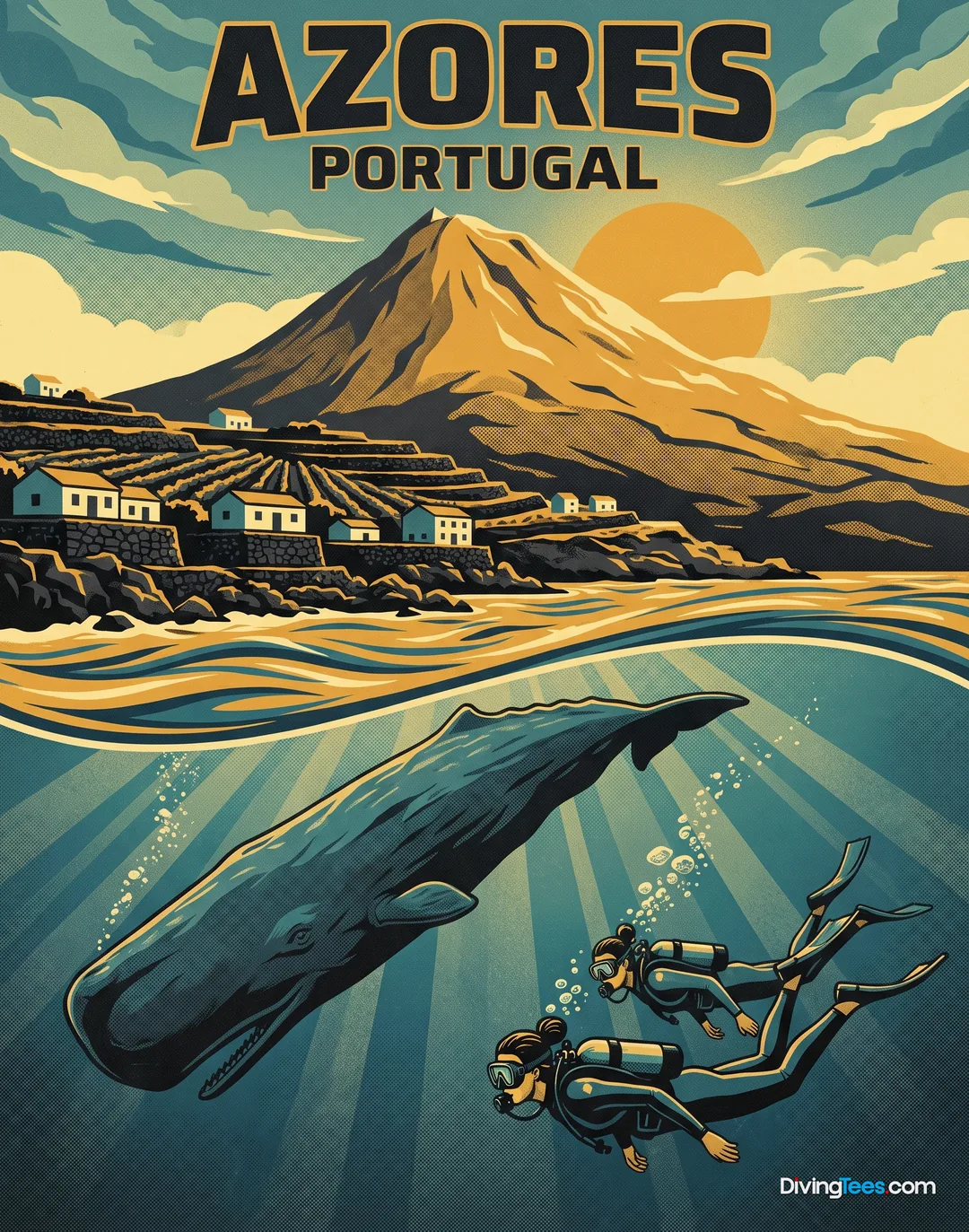
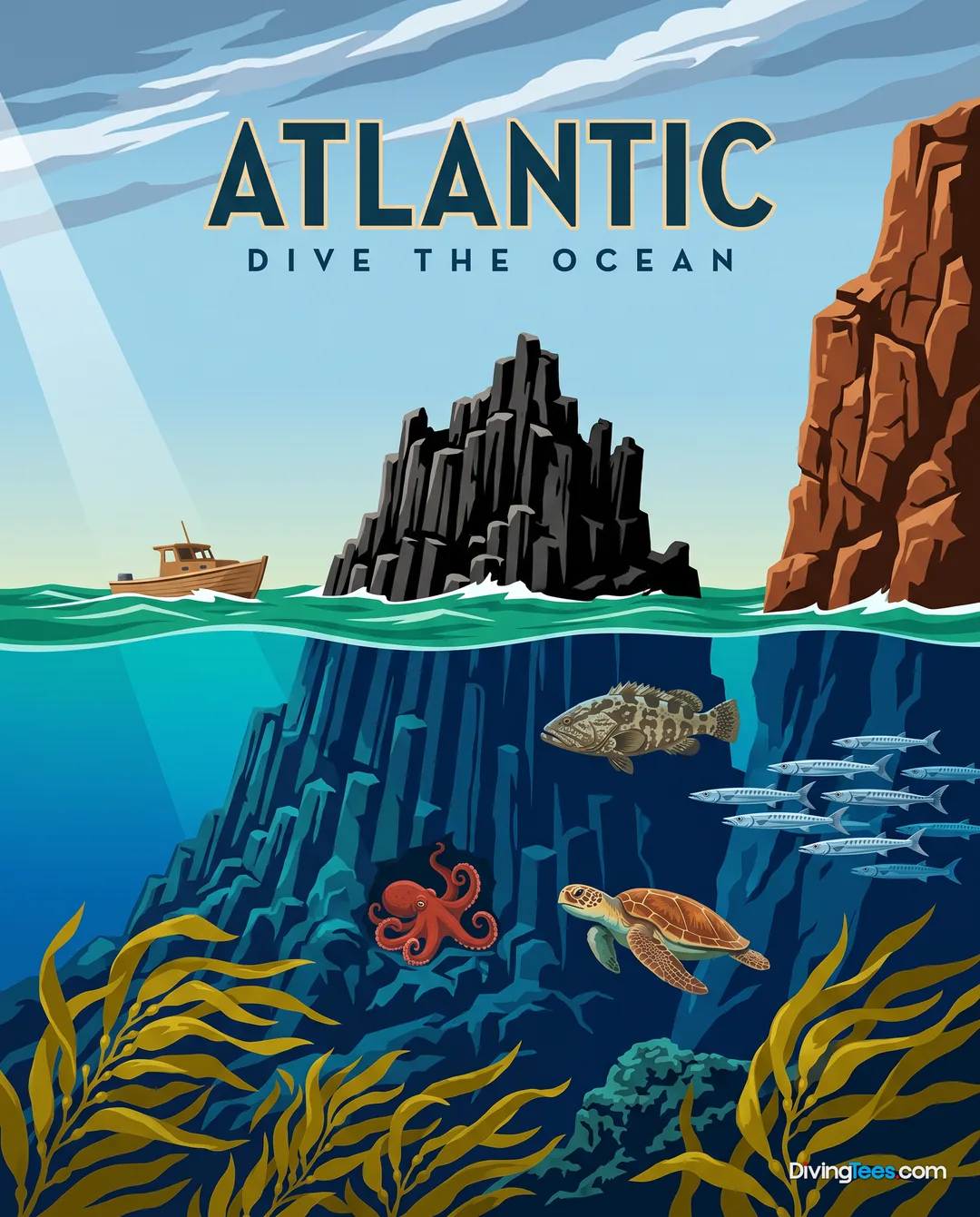
Azores · Atlantic
Diving Santa Cruz: volcanic arches and Atlantic diving
Lava arches, black corals, barracudas and pinnacles dropping to 40 metres define Santa Cruz, with calm coves alongside current-affected offshore sites.
What makes this destination special
- Arcos da Formosinha’s lava arches between 10 and 18 metres
- Baixa da Barca’s plateau descending to 40 metres
- Baixa da Feteira with barracudas, groupers and black corals
- Baixa da Penedia, a seamount close to the coast
- Baía de Entre Montes, sheltered water to 20 metres
- Azores chromis, moray eels and common octopus
- May to September, when the sea is generally calmest
For subtitles in English: start the video firstthen click the gearat the top right of the video, select “Subtitles/CC”, then “Auto-translate” and choose “English”.
Overview
Santa Cruz is a shore-based diving stop on Flores, suited to divers who want volcanic scenery rather than tropical coral. The island’s underwater identity is written in lava: arches, pinnacles, natural pools and rocky walls, with occasional pelagic visitors moving through the currents. Some dives are straightforward coastal explorations; others are boat outings where the sea decides the plan. It is a small-island base, not a liveaboard destination, and works best for travellers who can leave room in the itinerary.
Diving here
The diving ranges from sheltered coastal sites to exposed pinnacles with moderate or strong current. At Arcos da Formosinha, the practical attraction is moving through lava arches between 10 and 18 metres, while Baixa da Feteira rises to 12 metres before falling towards 35 metres. Baixa da Barca is a more demanding proposition: its plateau begins at 17 metres and the site drops to 40 metres, with current bringing in pelagic life. For a quieter profile, Arcadas do Judeu stays between 10 and 16 metres, and Baía de Entre Montes offers sheltered diving to 20 metres with generally light current. Visibility is changeable rather than guaranteed; swell and rapid changes in sea conditions can alter both the water and the day’s choice of site. Entries may be from the coast or by boat.
Three dives not to miss
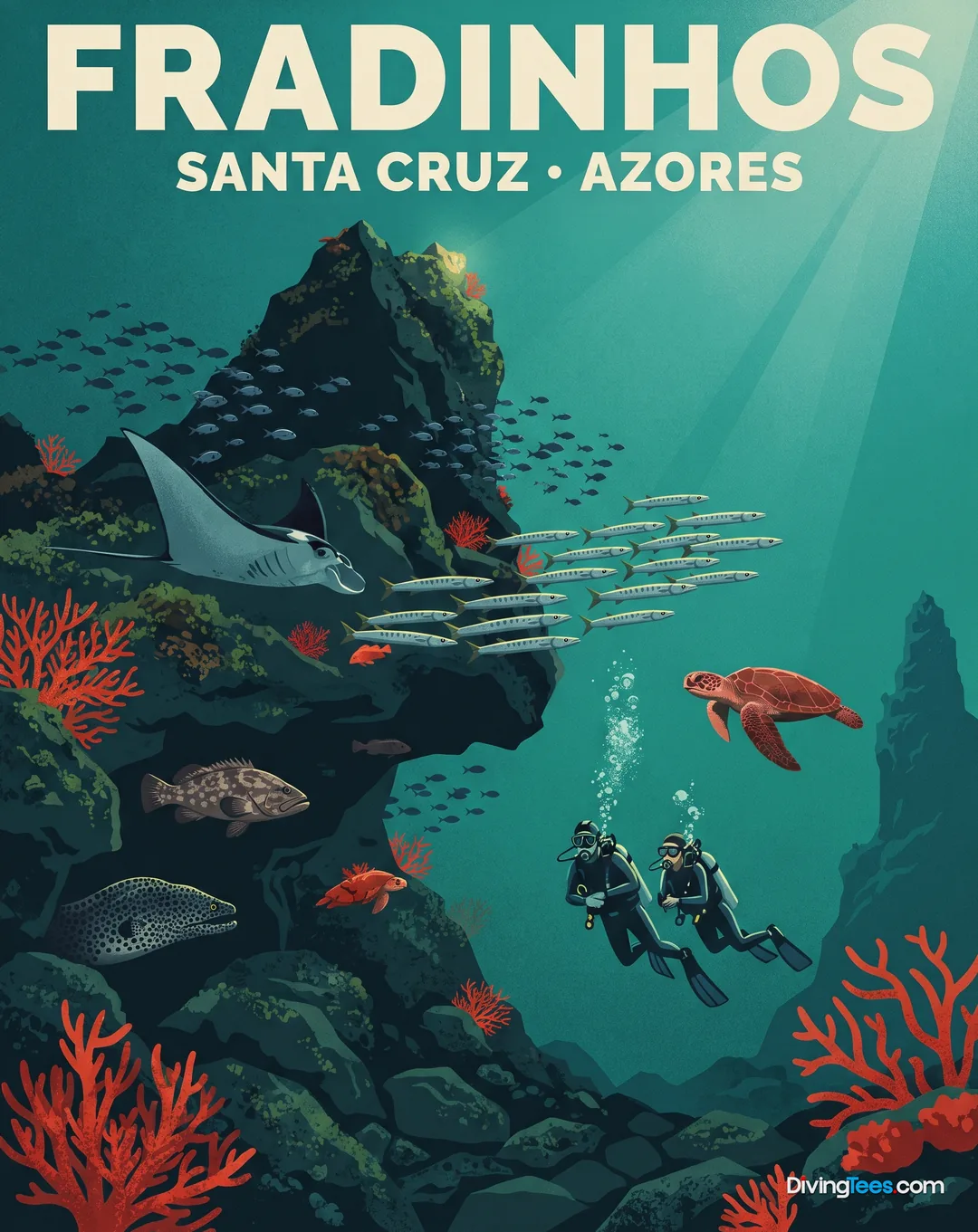
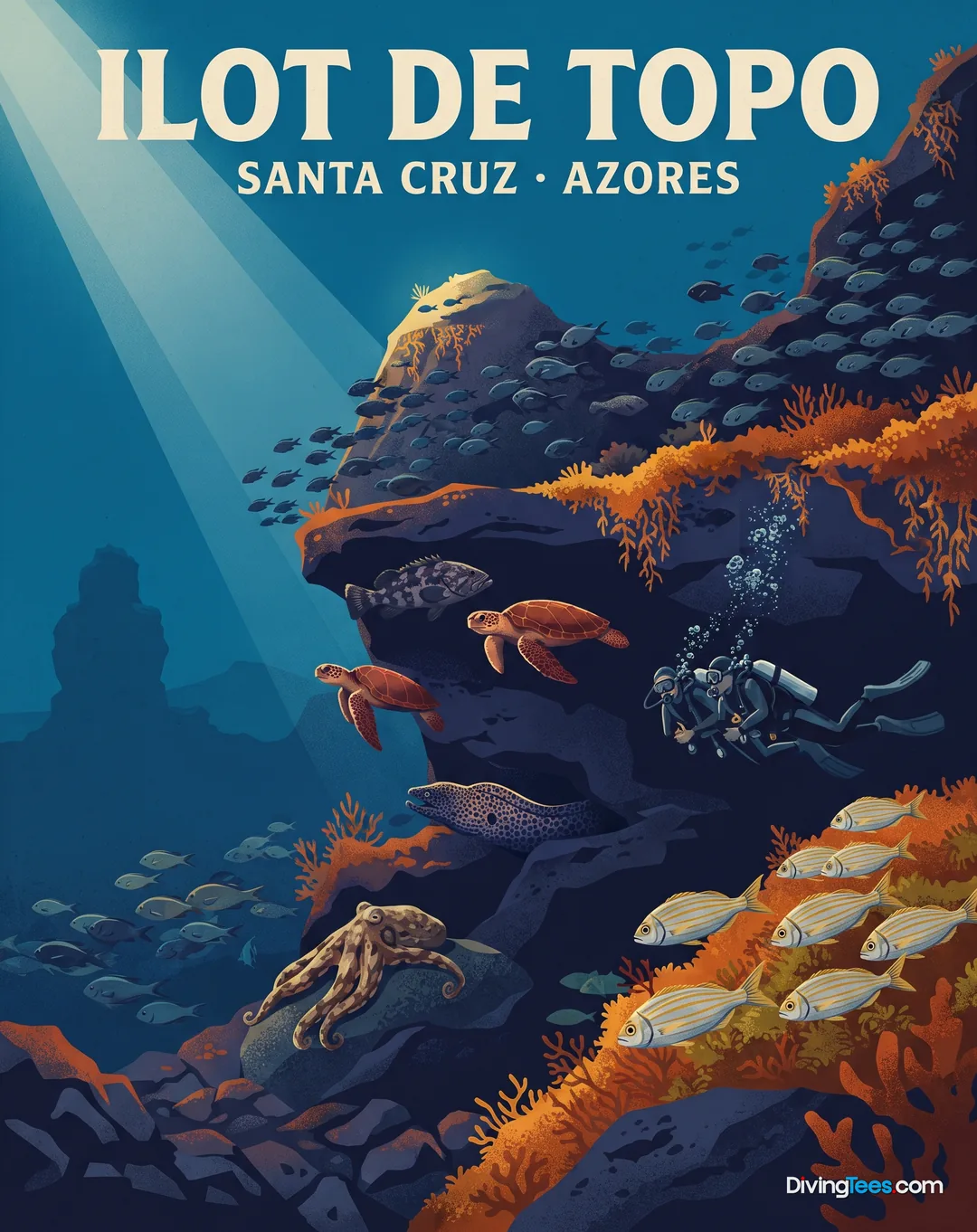
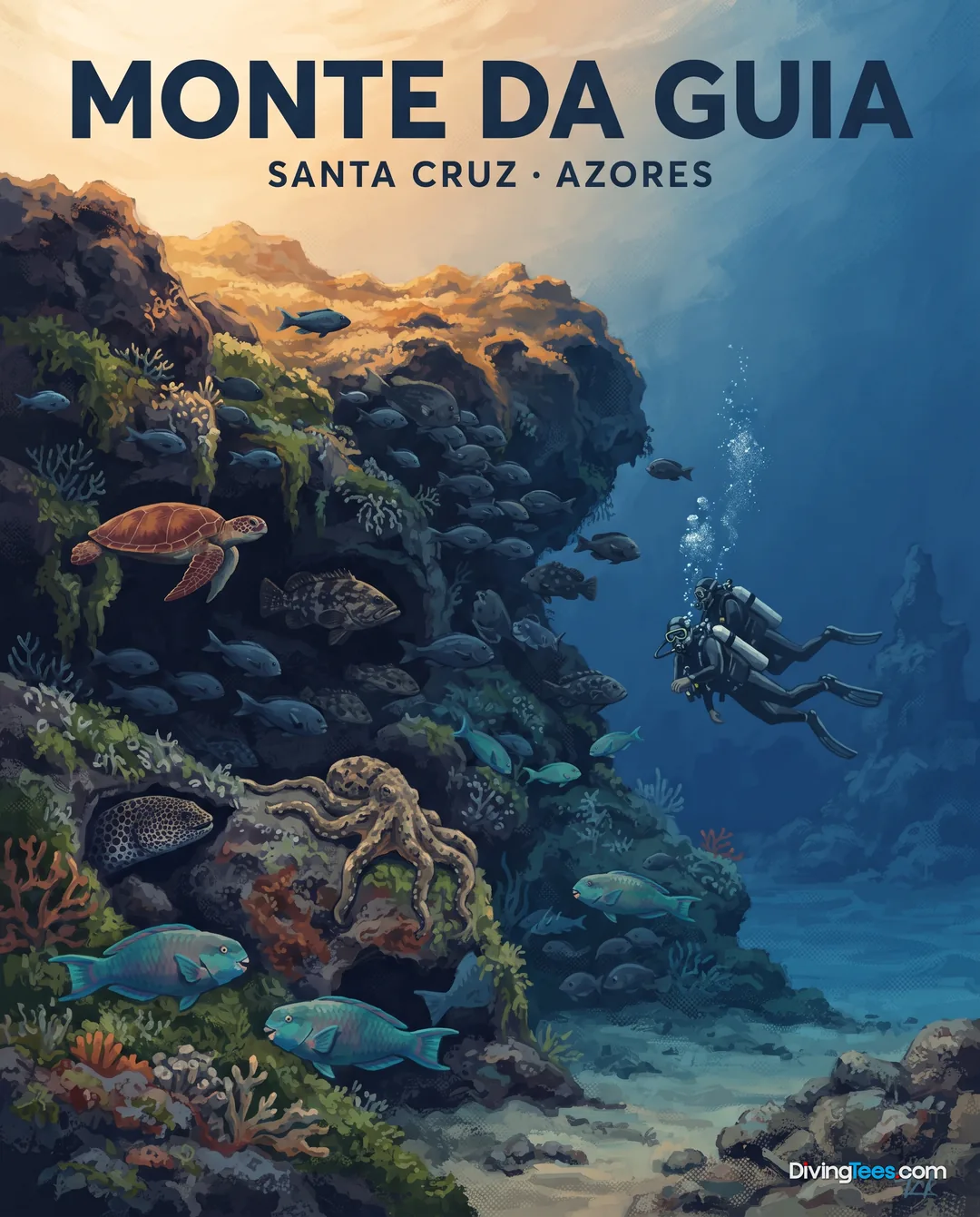
The underwater wildlife
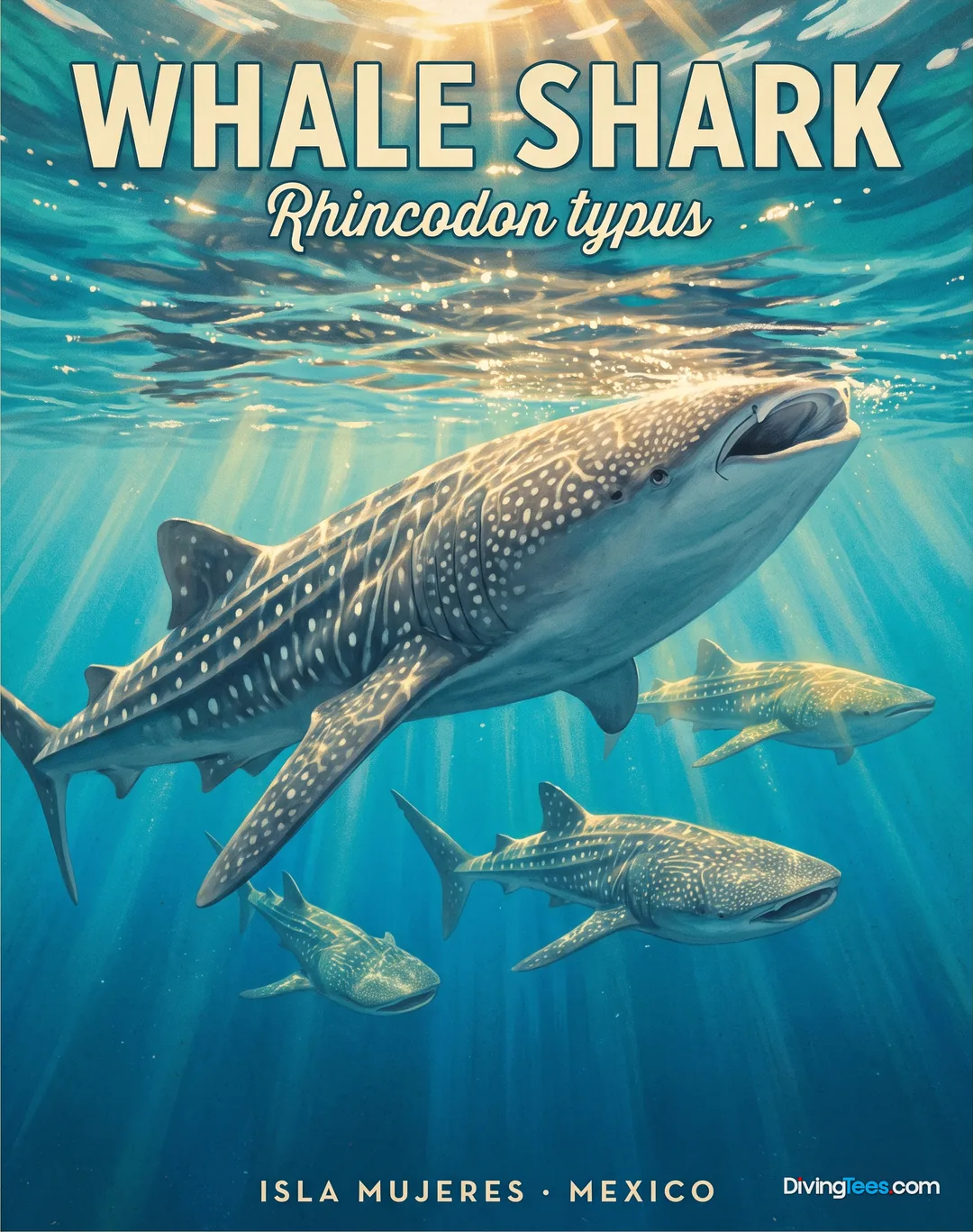
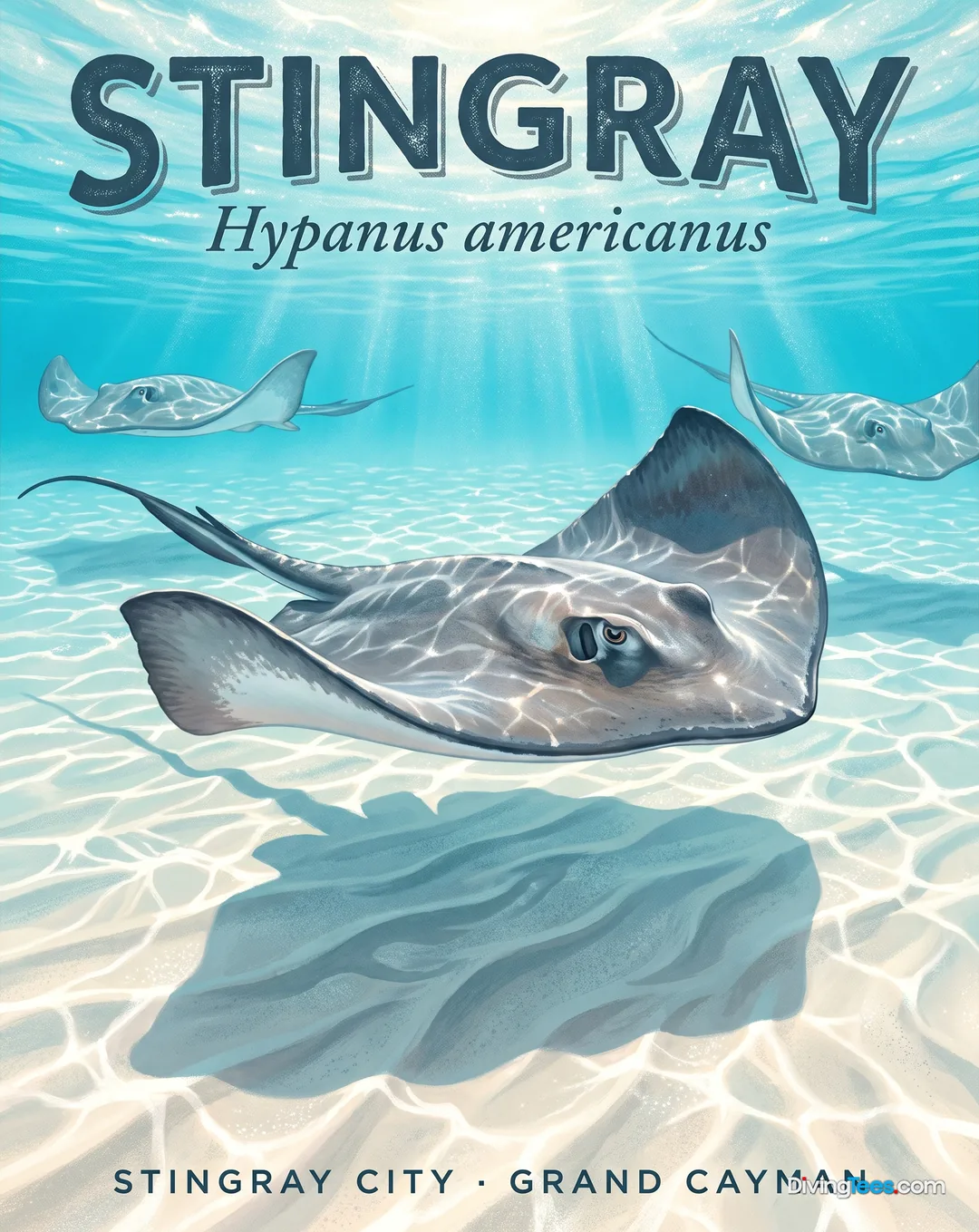
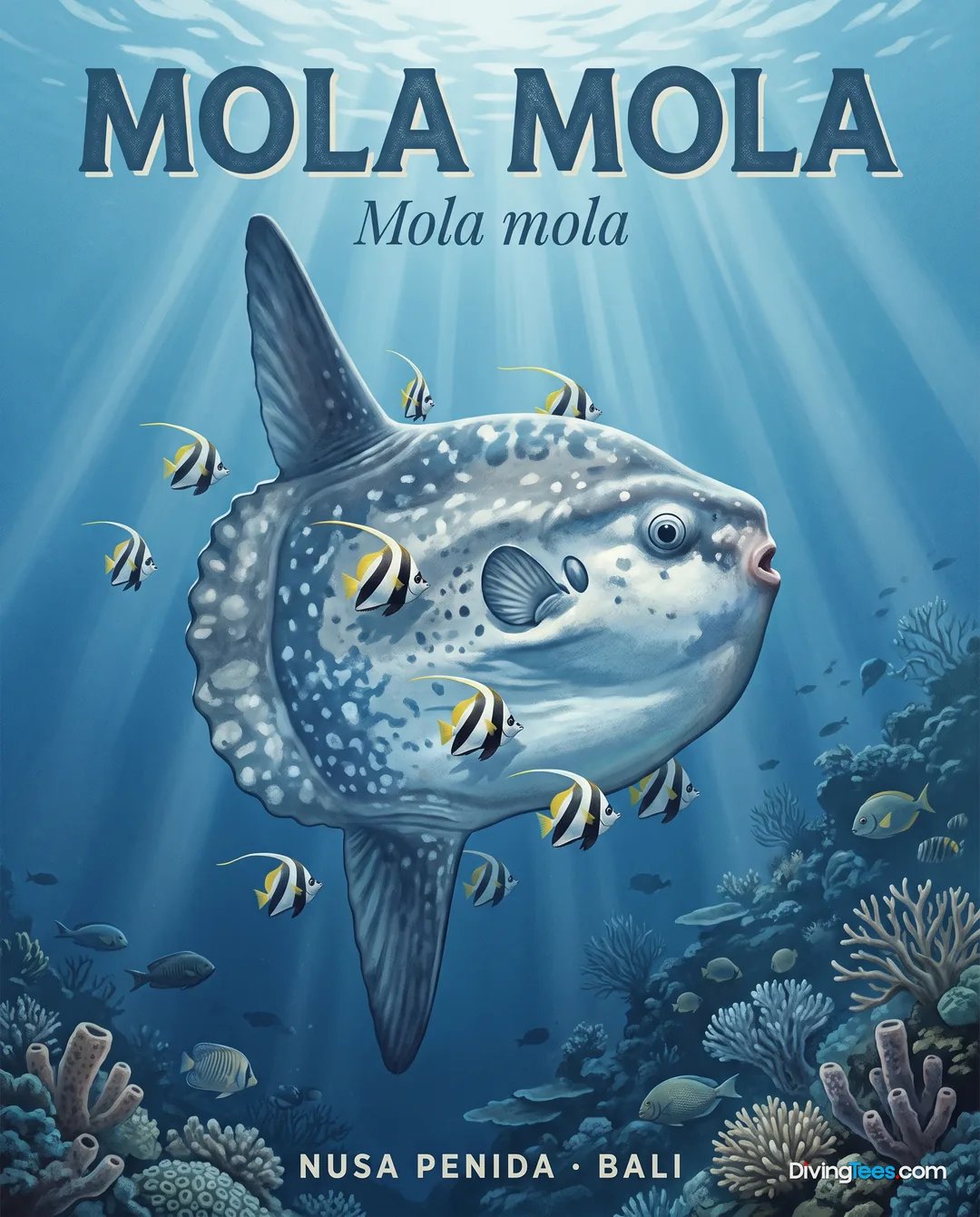
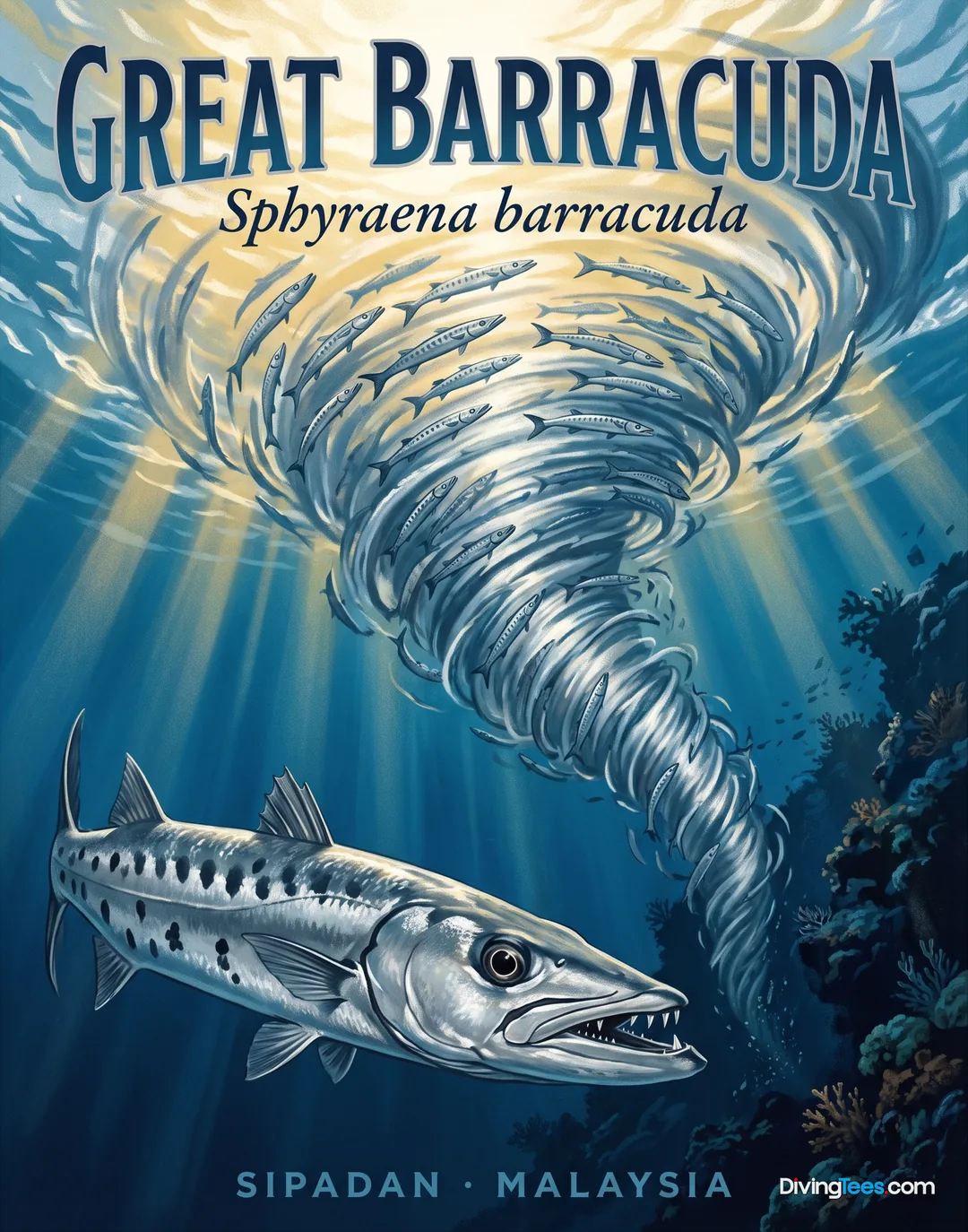
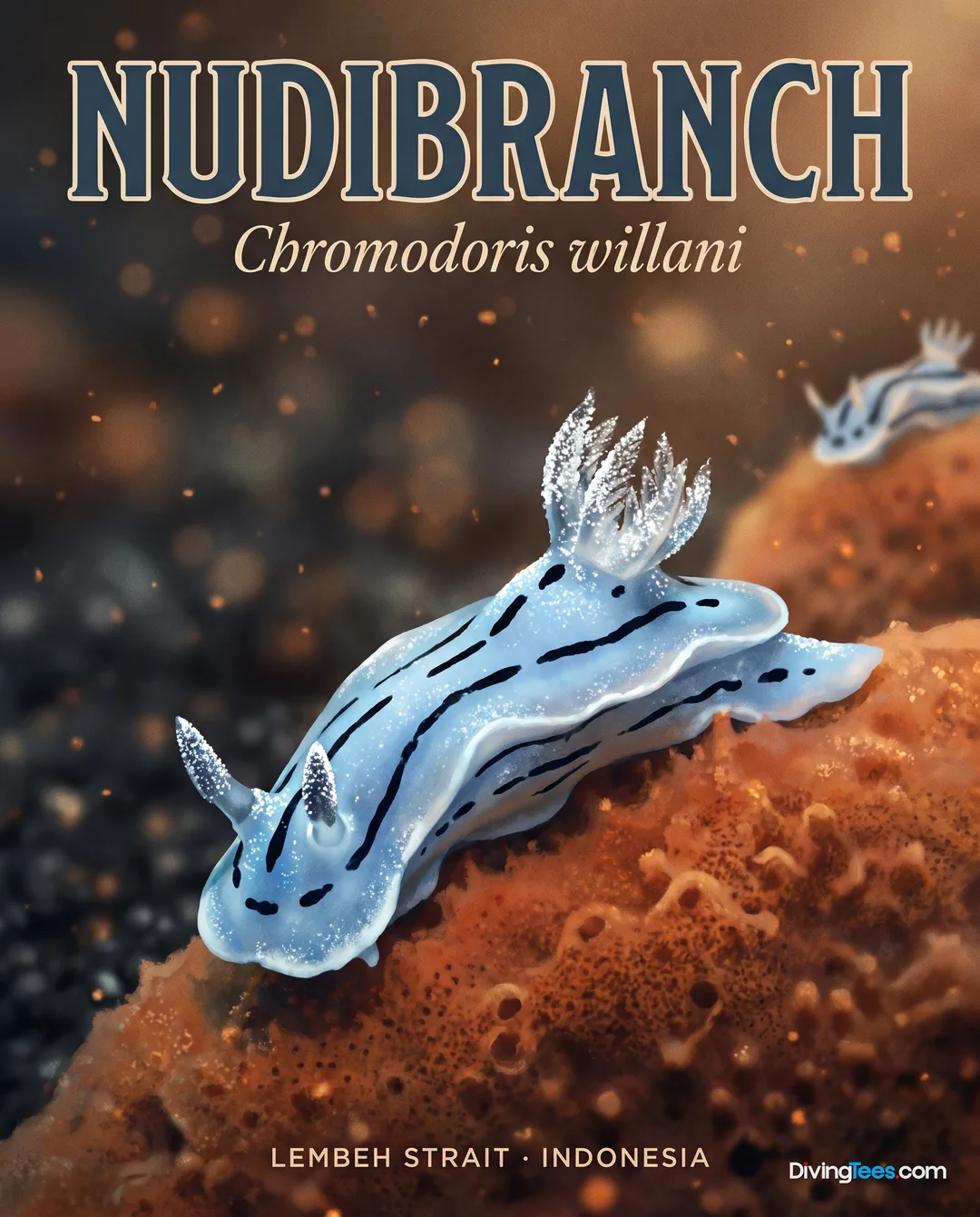
The regular cast includes Azores chromis, grouper, ornate wrasse, moray eel, nudibranchs, damselfish, lizardfish, mullets and common octopus. Wide-eyed flounder and mystery blenny reward a slower look along the rock, while yellow cluster anemone and black corals add colour to the volcanic surfaces. Barracudas, white trevally and rays are among the more mobile encounters, particularly where current concentrates life around pinnacles such as Baixa da Feteira or Baixa da Barca. Yellowmouth barracudas may also pass through. These are possibilities rather than a guaranteed daily spectacle: Santa Cruz is better approached for intermittent pelagic meetings, varied Atlantic rock and small discoveries than for a single signature animal or dependable aggregation.
Possible underwater encounters

When to go
May to September is the clearest practical window because the sea is generally at its calmest then, giving coastal and boat programmes more chance to run as planned. Regional site information also places the main diving period around the summer months into October, but the important point is not a fixed calendar: swell and Atlantic conditions can change the plan quickly. The calmer May-to-September period is therefore useful for scheduling, not a promise of identical visibility every day. Divers planning a short visit should treat those months as the sensible choice and allow spare days for weather-related changes.
Level required
Santa Cruz can suit all levels, especially on sheltered sites such as Arcadas do Judeu, Arcadas de São Roque and Baía de Entre Montes. An Advanced qualification, whether PADI, SSI or the BSAC equivalent experience, is useful because it opens more options when current and depth become part of the dive. Experience with drift diving, buoyancy in moving water and an honest assessment of comfort around pinnacles will matter more than collecting a particular agency card. Arcos da Formosinha, Baixa da Feteira and Baixa da Barca are aimed at more experienced divers.
On the ground
From London or Manchester, Santa Cruz is reached by air via a domestic flight to Flores, followed by a short road transfer from the airport into town. TAP Air Portugal is listed among the carriers serving the route; the journey needs planning around the domestic sector rather than assuming a direct arrival at the dive base. There is no compulsory sea crossing to reach Santa Cruz itself. Once on Flores, access to the diving is arranged from the coast or by boat, depending on the site and the sea. The island’s size keeps local transfers simple, but the diving schedule remains tied to whether a boat can run or a coastal entry is suitable. Keeping the arrival and departure days free of tightly timed diving is sensible.
Local tips
Santa Cruz rewards a flexible diary. Booking only one possible dive day is a poor fit for Flores, because a change in sea conditions can remove a boat outing or alter the coastal plan without warning. Before travelling, establish whether the intended programme is shore-based or boat-based; the distinction affects how much weather flexibility is needed. Keep a spare day before the return flight rather than trying to place the final dive against a fixed transfer. Bring expectations suited to volcanic Atlantic diving: Arcos da Formosinha’s arches, Baixa da Penedia’s near-shore seamount and the fish around current-swept pinnacles are the point, not a tropical reef or guaranteed massed fauna. A more capable certification and comfort in variable current will preserve options, but sheltered sites remain available. The island’s small scale is part of the appeal; it also means that a tightly packed, Mediterranean-style schedule can become frustrating quickly.
Planning your stay
A sensible stay combines several possible diving days with non-diving time that can absorb a weather change. Coastal dives and boat trips can be mixed according to the sea, rather than assigned rigidly before arrival. On a day without diving, Flores offers coastal walks, viewpoints, volcanic scenery and crater lakes, while Santa Cruz itself provides an easy small-town and seafront outing. Those activities also make useful buffer days before the flight home.
Hello, I'm Marina, DivingDeal.com's AI assistant. I guide you through destinations, areas and countries.

Thinking about the whole trip and the flights? Talk it over with Edith →
Marina is an AI. Some links are affiliate links: DivingDeal may earn a commission, at no extra cost to you. Bookings are made with the partner.