
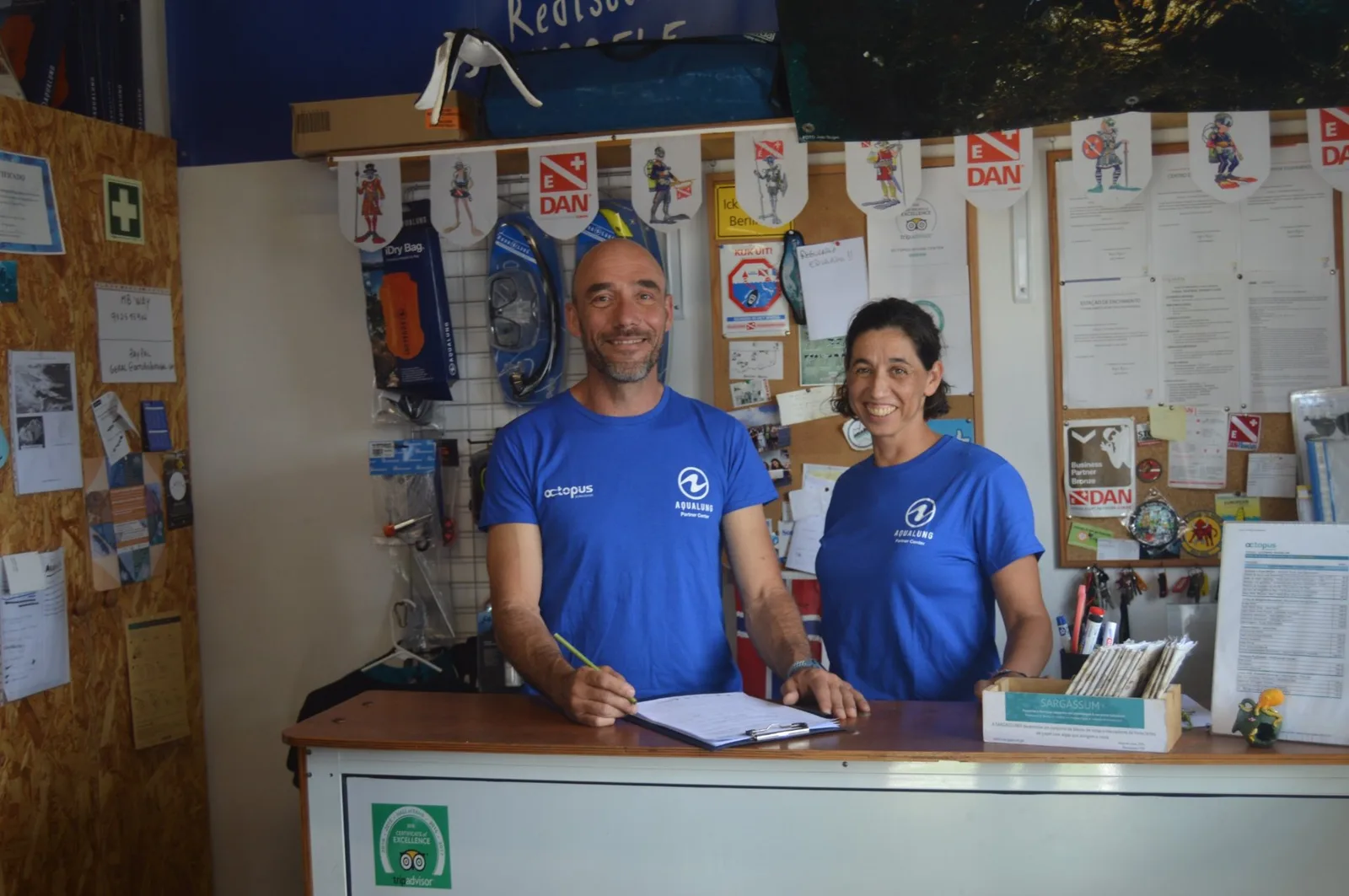

Octopus Diving Center
Google 4.9/5 (213 reviews)
Azores · Atlantic
Lava arches, pinnacles, caverns and eagle rays shape Terceira’s diving, with sheltered shallows for beginners and current-swept walls descending towards 40 metres.
For subtitles in English: start the video firstthen click the gearat the top right of the video, select “Subtitles/CC”, then “Auto-translate” and choose “English”.
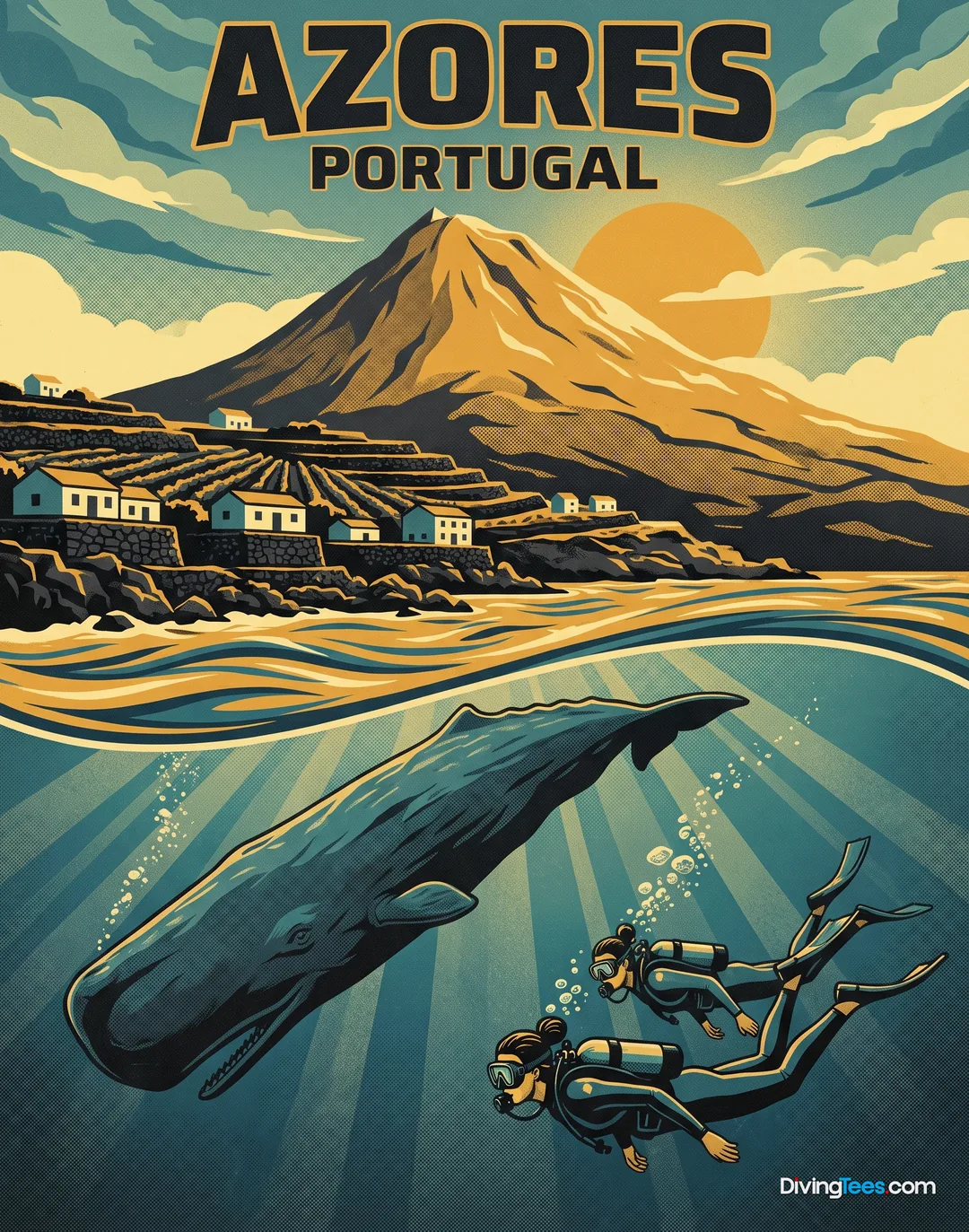
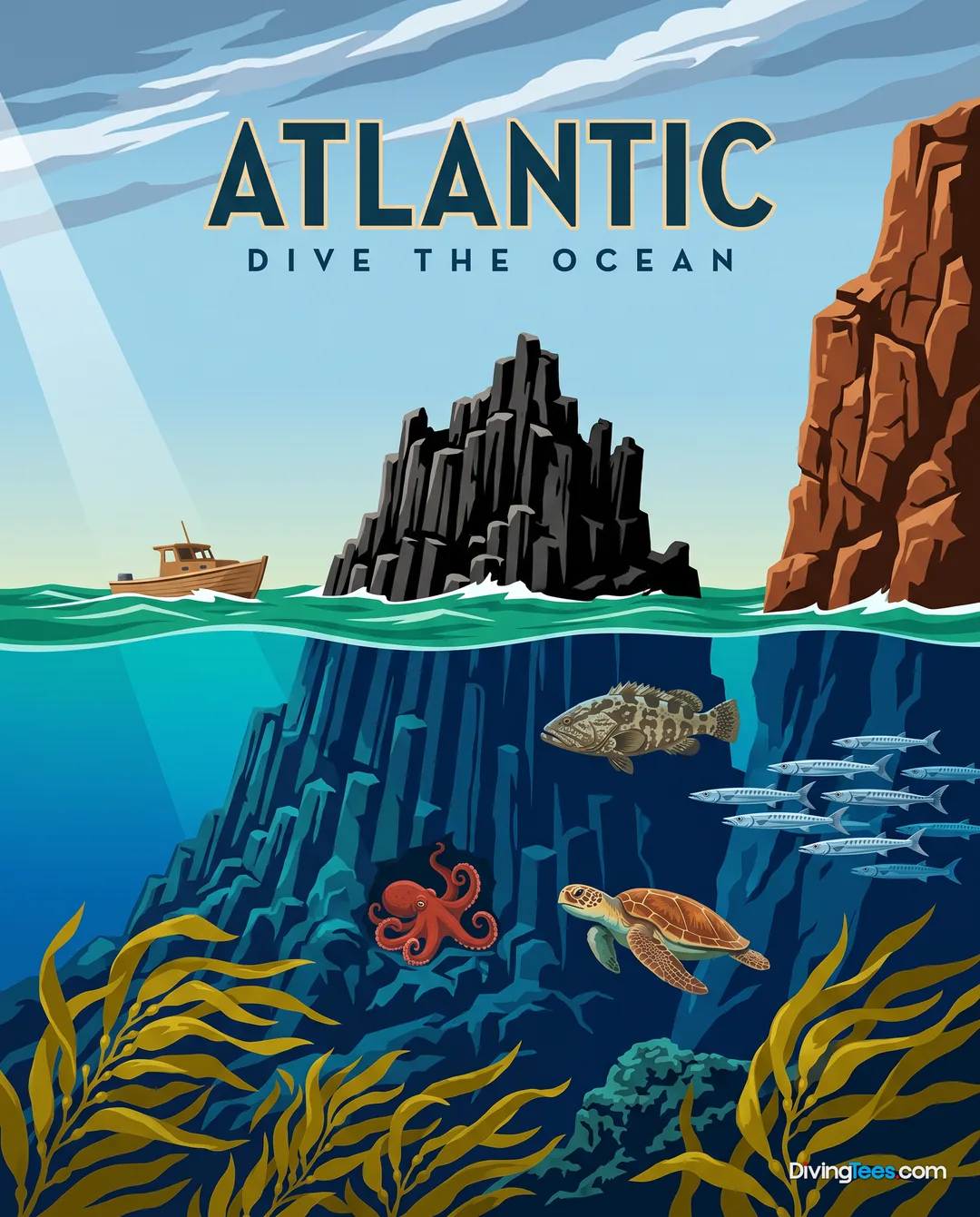
Terceira is an island for divers who prefer volcanic structure to coral scenery. Underwater, lava forms walls, arches, craters, slopes and caverns, while the marine life includes dusky grouper, moray eel, stingrays and passing barracuda. The diving works as a land-based holiday, combining shore-accessible sites with boat trips to offshore walls and pinnacles. It suits a mixed group, provided the itinerary leaves room for changing Atlantic conditions rather than treating every dive as fixed.
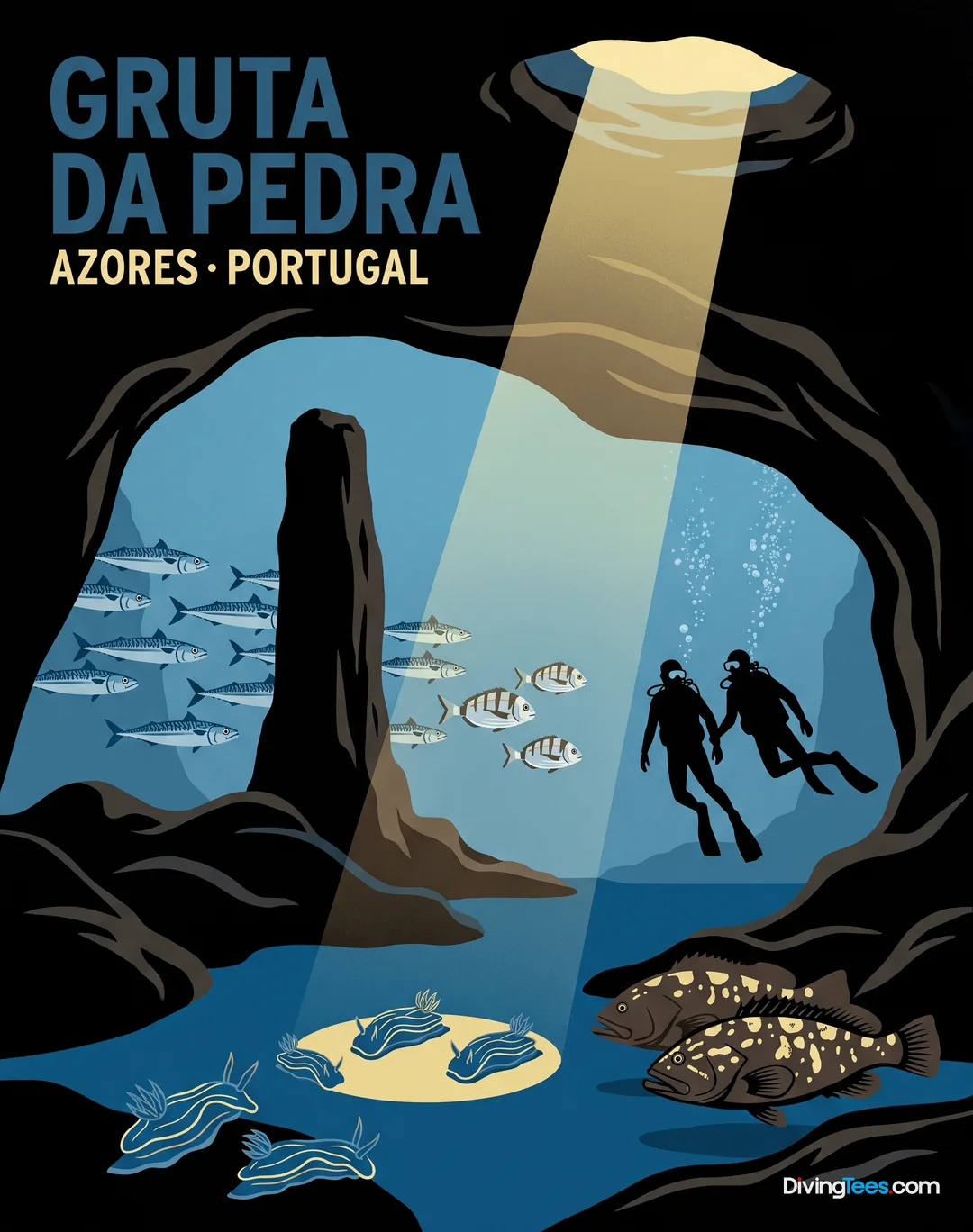
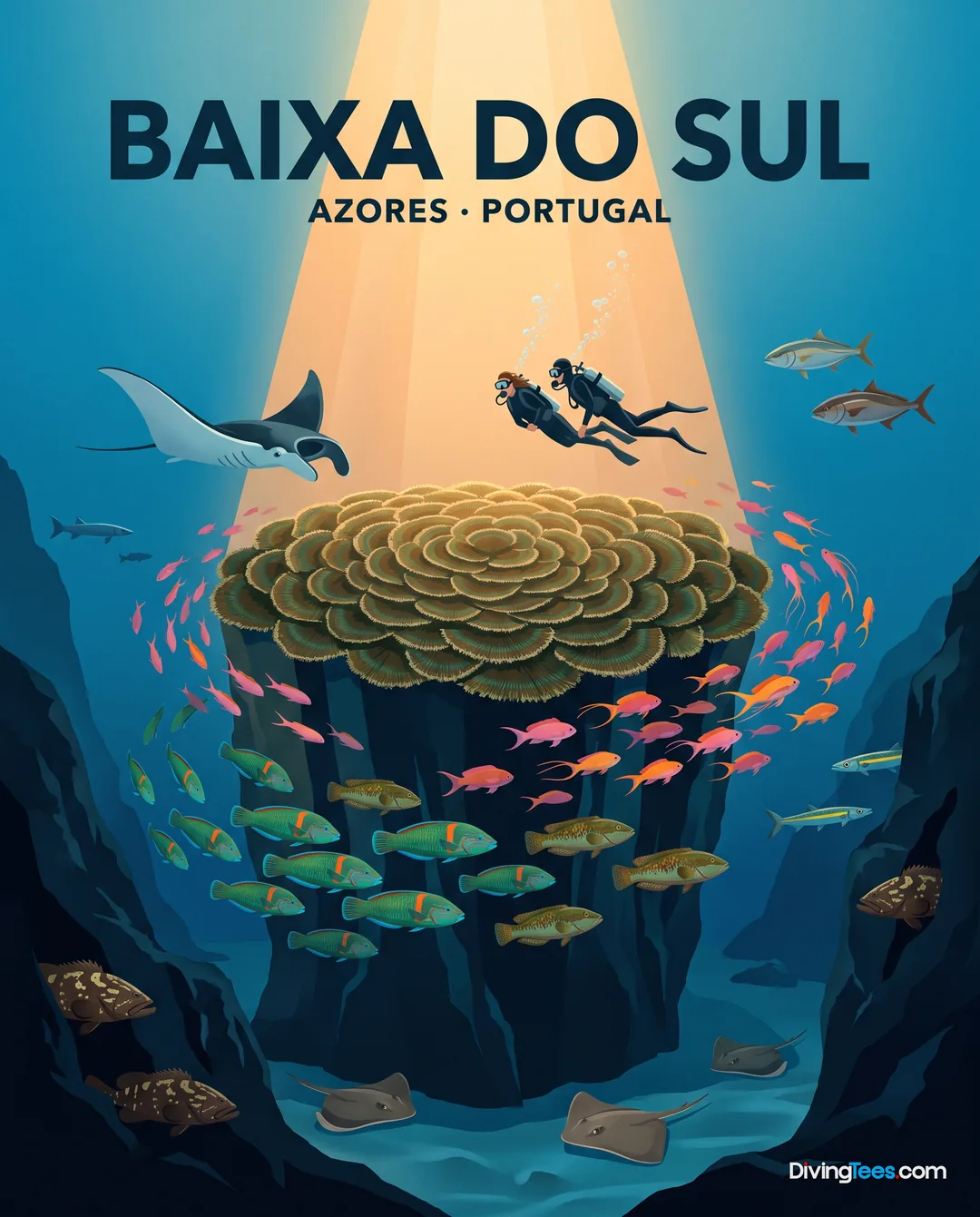
The main attraction is the shape of the seabed. Arcos do Calhau threads between two lava arches, while Boca das Caldeirinhas combines a shallow plateau with canyons, crevices and an underwater crater before dropping towards 40 metres. Gruta da Pedra and Gruta do Ilhéu Negro add cavern and wall features at more moderate depths. Offshore sites such as Baixa do Sul and Radares are more exposed, with variable currents and, at times, moderate to strong flow. Radares is approached as a drift dive rather than a leisurely circuit. Visibility is often described as 20 to 30 metres, although the day’s swell and exposure still matter. The practical pattern is a mixture of shore dives and boat-supported outings, with local operators deciding which side of the island and which site is sensible on the day.
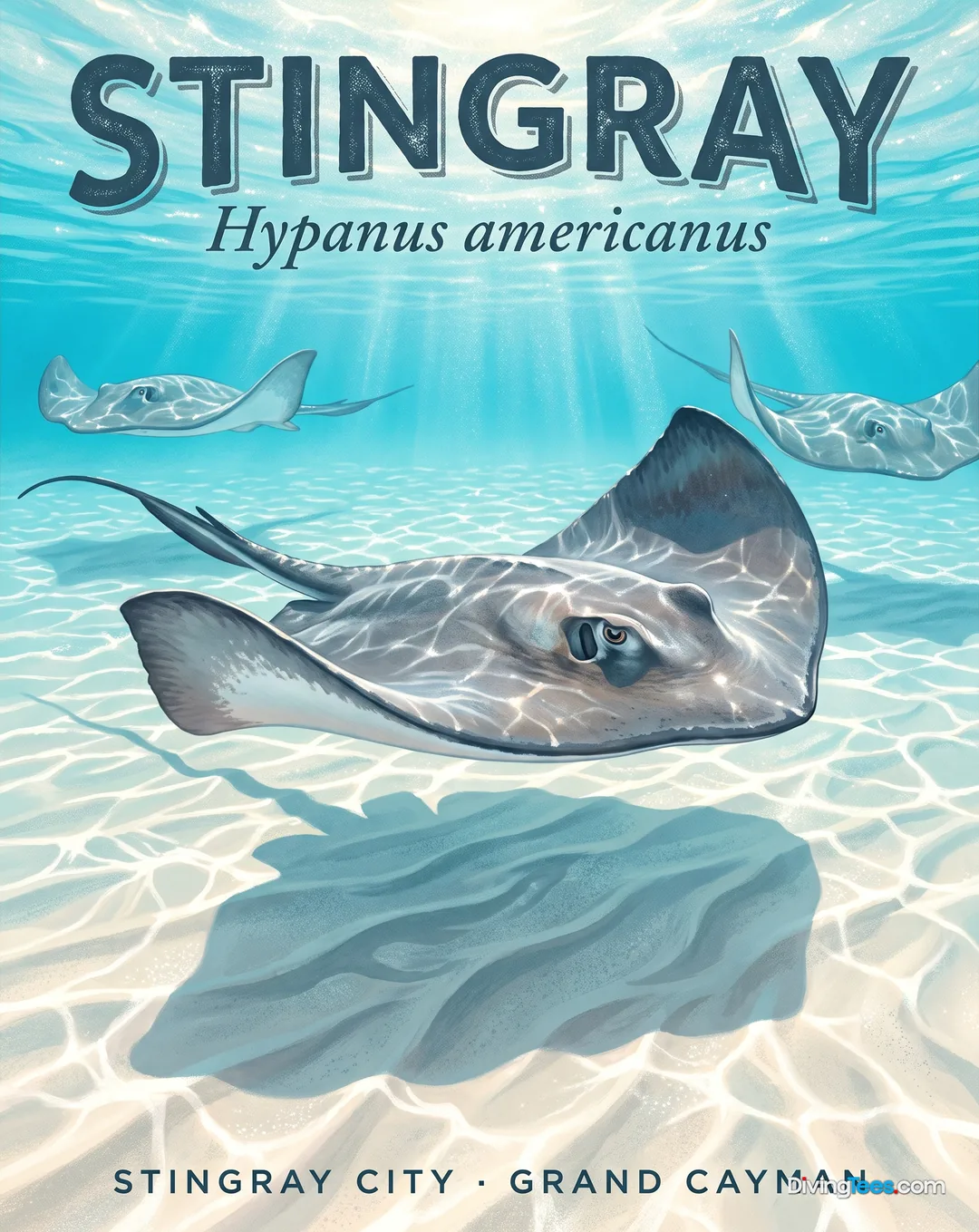
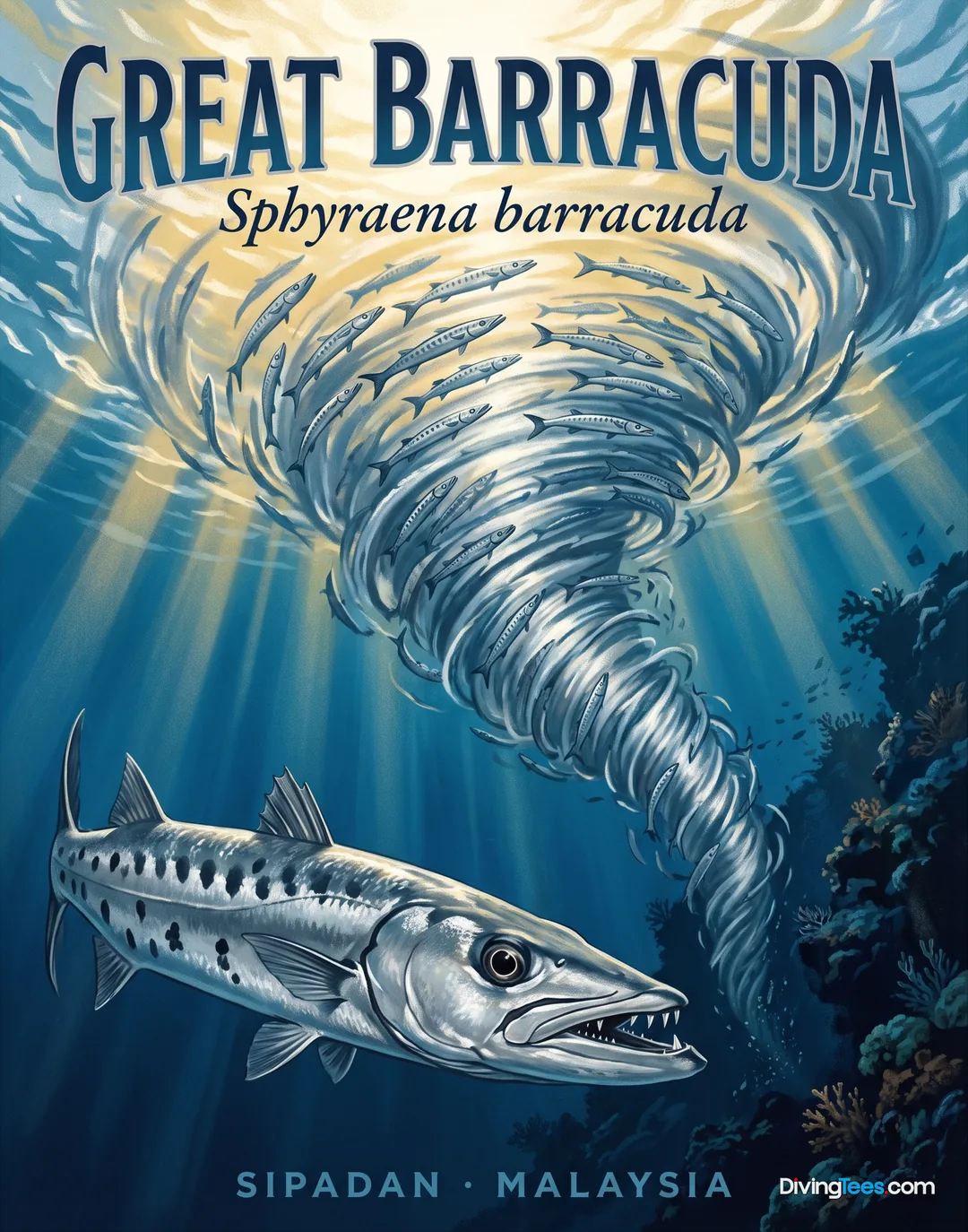
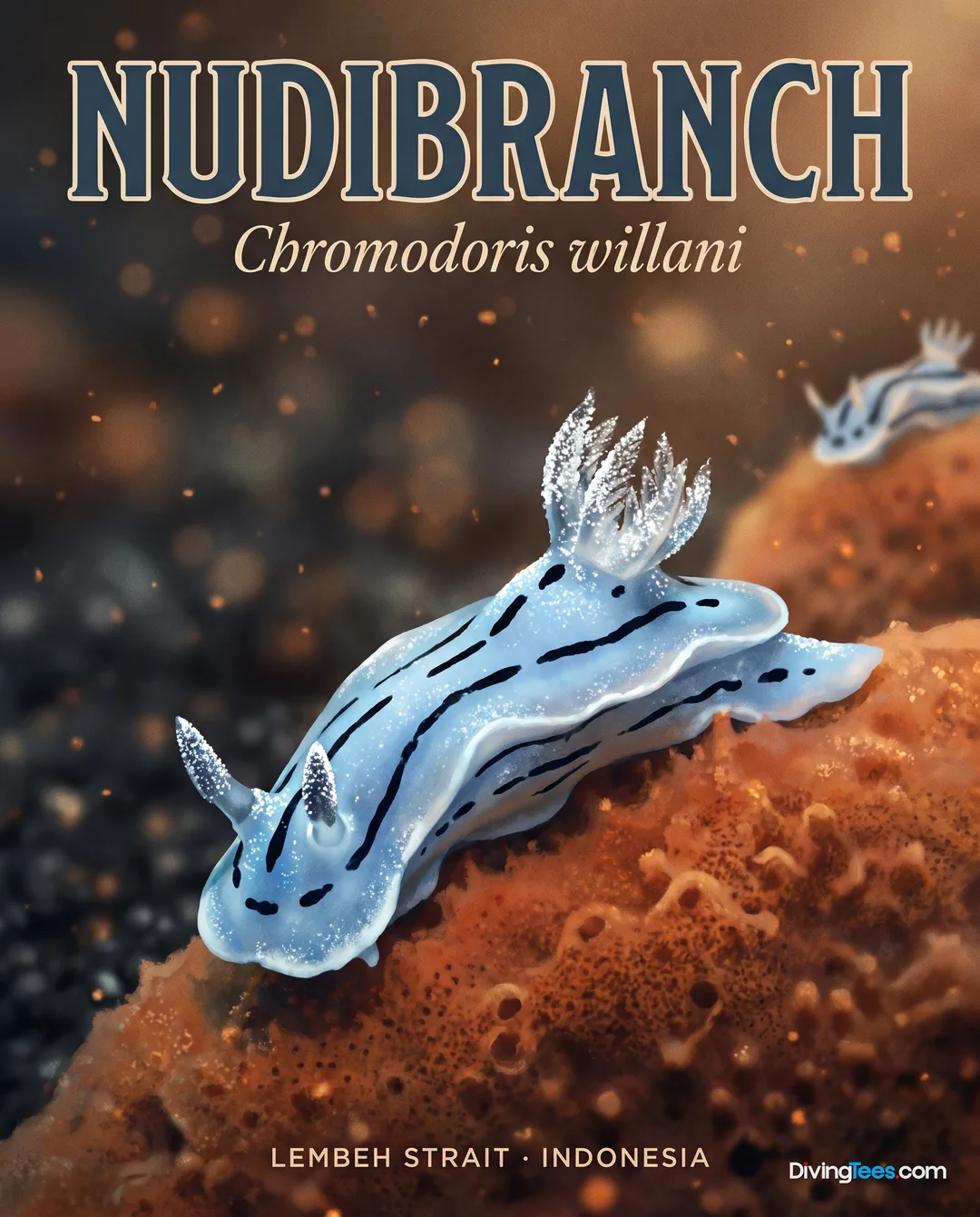
Terceira’s wildlife is distributed through the lava rather than presented as a coral-garden spectacle. Entre Montes is known for common stingrays over sand and volcanic rocks, with schools of small fish and grouper nearby. Ilhéu Negro and Gruta do Ilhéu Negro also offer stingray encounters in relatively shallow water. Dusky grouper, moray eel, sea bream, jack, parrotfish and turkish wrasses are typical residents, while yellow anemones and nudibranchs reward slower inspection of the rock. At deeper or more exposed sites, great barracuda and pelagic fish add movement. Furnas is associated with eagle rays and brown groupers, and Baixa do Sul offers a chance of manta rays particularly during August and September.
The measured calmer period runs from May to September, making those months the sensible window for combining shore and boat diving. July, August and September are repeatedly favoured for individual sites, especially where depth, exposure or current makes a settled sea more useful. This is not a destination where the calendar removes all judgement: Atlantic swell and local conditions still influence which coastline is workable. Divers planning around eagle rays should note Furnas, while Baixa do Sul has its specific manta-ray possibility in August and September. Outside the calmer season, the island’s volcanic diving may still appeal, but the boat programme is less straightforward to plan.
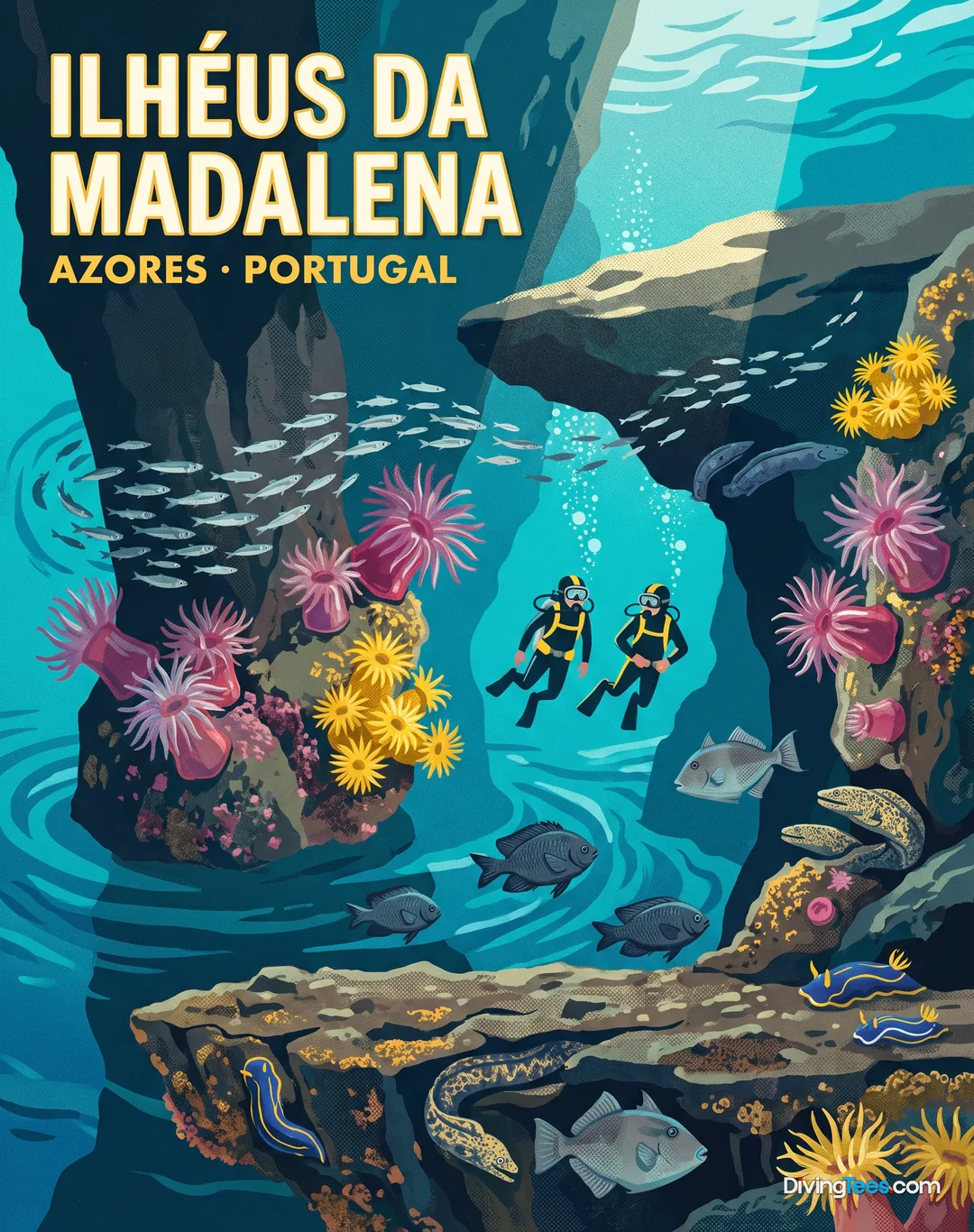
Terceira genuinely covers more than one level. Ilhéu Negro, Gruta do Ilhéu Negro, Ilhéus da Madalena and Entre Montes offer shallow profiles from roughly 5 to 20 metres for beginners and less experienced divers. The deeper walls, caverns and current-affected sites are another matter: Boca das Caldeirinhas, Radares, Furnas, Gruta dos Camarões and Baixa do Sul call for solid buoyancy, comfort with depth and sensible current management. PADI, SSI and BSAC qualifications are relevant according to the dive planned; no wreck speciality is central here.
From London Heathrow, London Gatwick or Manchester, Terceira is reached by air to Lajes Airport; a flight is mandatory because there is no ferry or road connection from mainland Europe. The journey therefore needs to be planned around the available flight connections rather than around a mainland ferry route. Travel between Azorean islands can use domestic flights or ferries, but that is not a substitute for reaching Terceira from Europe. Once on the island, the diving model is deliberately land-based: shore sites are reached locally and boat dives depart with local operators. For a short visit, staying with one Terceira base avoids adding island-crossing connections to a trip whose useful diving is already arranged around local conditions.
Treat Terceira as an Atlantic volcanic trip, not a tropical reef holiday. A camera setup that handles darker lava walls and subjects at different distances will make more sense than equipment chosen for bright coral gardens. Bring exposure protection that suits cooler water if you feel the cold; small-island rental ranges can be narrower than those in major tropical centres. Ask on the day which side of the island is clearest, since swell direction can change the practical choice of site. Do not assume an offshore site is always available: local conditions and management rules may alter the plan. Keep the itinerary flexible enough to move a current-sensitive dive, and do not build it around wreck certification or a liveaboard schedule. For several consecutive dives, ask whether Nitrox fits the planned sequence. A non-dive day is best used for Terceira’s volcanic landscapes and coastal viewpoints, while the final day before flying should remain low exertion.
Terceira works best as a single-base stay, with diving arranged across shore sites and boat outings rather than through a liveaboard circuit. A few days allow the programme to respond to swell and current while still leaving time for the island’s volcanic scenery. Keep one day free for coastal viewpoints and island driving. That flexibility matters more than changing accommodation, and it avoids turning a compact diving holiday into a chain of unnecessary transfers.
Hello, I'm Marina, DivingDeal.com's AI assistant. I guide you through destinations, areas and countries.
Thinking about the whole trip and the flights? Talk it over with Edith →
Marina is an AI. Some links are affiliate links: DivingDeal may earn a commission, at no extra cost to you. Bookings are made with the partner.
Your last day stays dry: no diving in the 18-24 hours before a flight, the perfect window to see the destination from another angle.
 City
City⏱ 7 h · ★ 5.0 (257 reviews)
from £126$168€150
see on Viator ↗
 Adventure
⏱ 8 h · ★ 5.0 (62 reviews)
from £116$156€139
see on Viator ↗
 Nature
⏱ 6 h · ★ 5.0 (55 reviews)
from £151$201€180
see on Viator ↗
 Culture
⏱ 4 h · ★ 5.0 (20 reviews)
from £50$67€60
see on Viator ↗
Ratings and reviews collected by Viator and Tripadvisor.
May to September is the calmer period for combining shore and boat diving. July, August and September are favoured for sites where depth, exposure or current makes a settled sea useful. Atlantic swell still affects which coastline is workable. For eagle rays, consider Furnas, while Baixa do Sul has a manta-ray possibility in August and September.
Terceira suits mixed groups because Ilhéu Negro, Gruta do Ilhéu Negro, Ilhéus da Madalena and Entre Montes offer shallow profiles for beginners and less experienced divers. Deeper walls, caverns and current-affected sites require solid buoyancy, comfort with depth and sensible current management. Qualifications from PADI, SSI or BSAC may be relevant.
Terceira offers volcanic walls, lava arches, pinnacles, craters, slopes and caverns rather than coral scenery. You may encounter stingrays at Entre Montes, eagle rays around Furnas, and barracuda at exposed sites. Dusky grouper, moray eels, sea bream, jacks, parrotfish, turkish wrasses, nudibranchs and shrimp also inhabit the lava formations.
Plan Terceira as a land-based trip with one island base, combining locally reached shore dives with boat outings arranged by operators. Keep the itinerary flexible because swell, currents and conditions can change the suitable site. Leave time for volcanic landscapes and coastal viewpoints, and keep your final day before flying low exertion.