
Wahoo Diving
Google 4.8/5 (194 reviews)
Azores · Atlantic
Volcanic walls, three caves at Pedrinha, Mobula rays at Baixa do Ambrósio, and clear blue water around Ilhéus das Formigas define Santa Maria.
For subtitles in English: start the video firstthen click the gearat the top right of the video, select “Subtitles/CC”, then “Auto-translate” and choose “English”.
Santa Maria suits divers who want an Atlantic island base rather than a liveaboard routine. The underwater scenery is volcanic and distinctly three-dimensional: walls, offshore banks, arches, caves and exposed rock formations reached mainly by boat. Ilhéu da Vila lies close to the coast, while Baixa do Ambrósio and Banco João Lopes offer a more open-water feel. The island works best for a five- to seven-day stay, allowing the weather to decide which dives are sensible on each day.
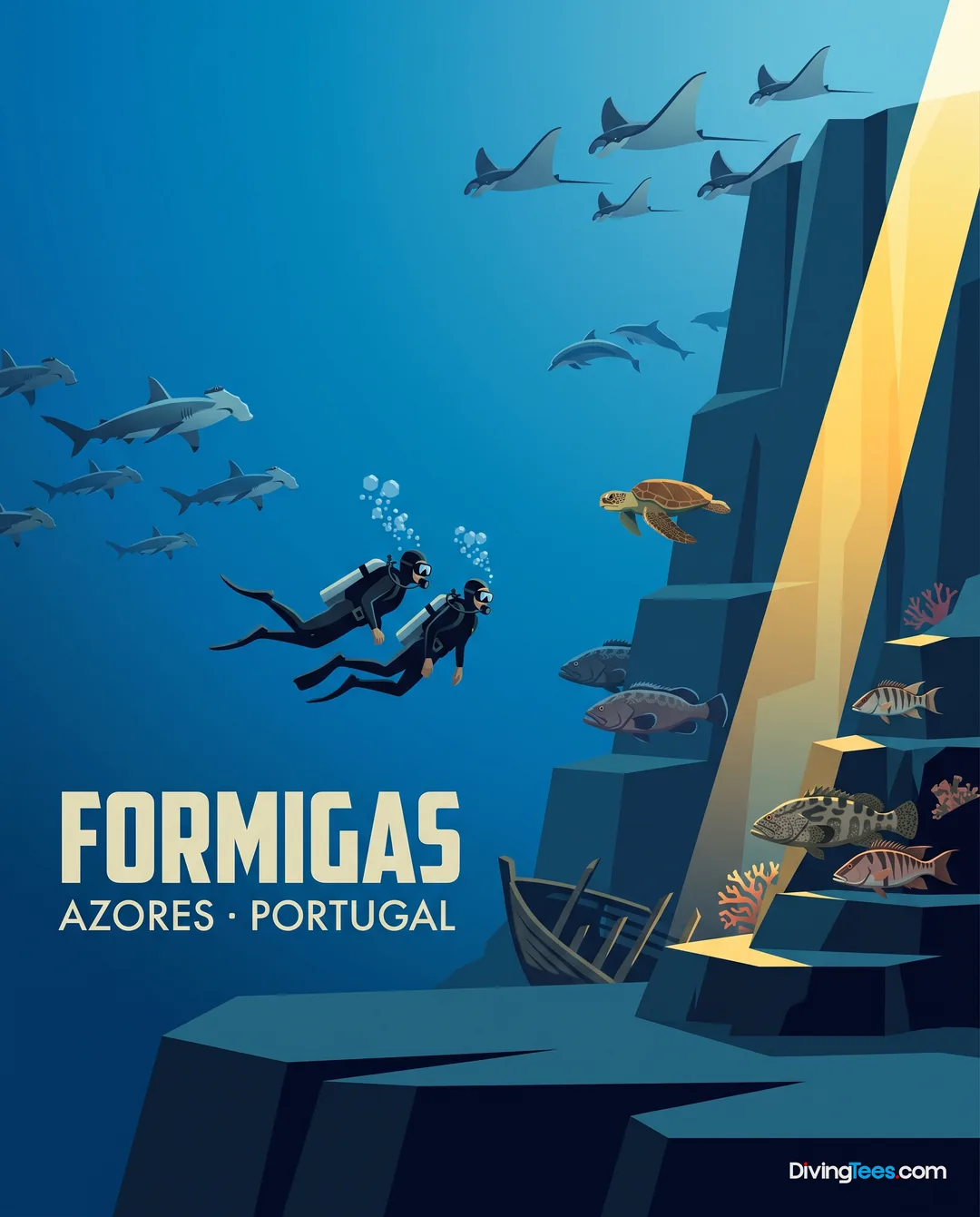
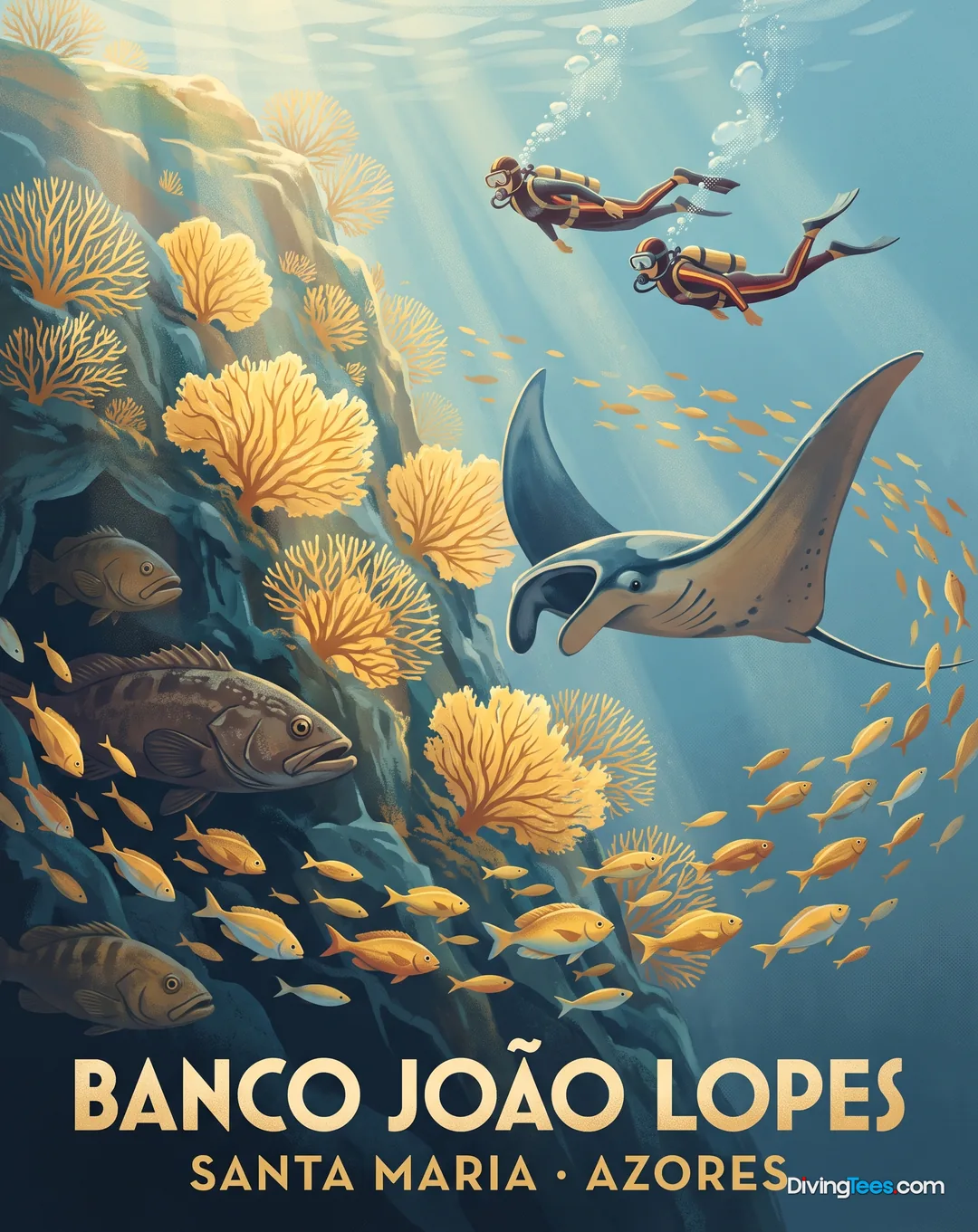
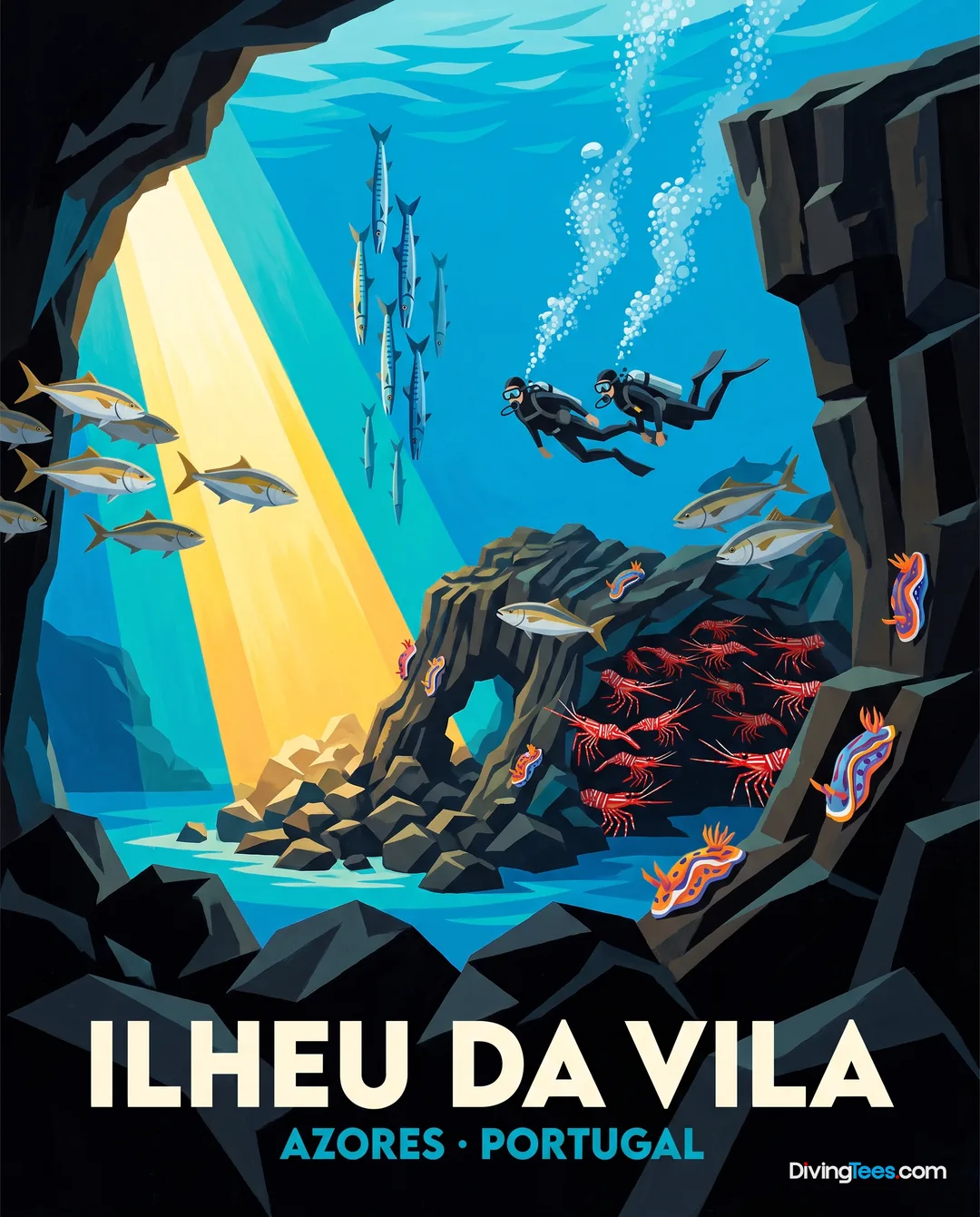
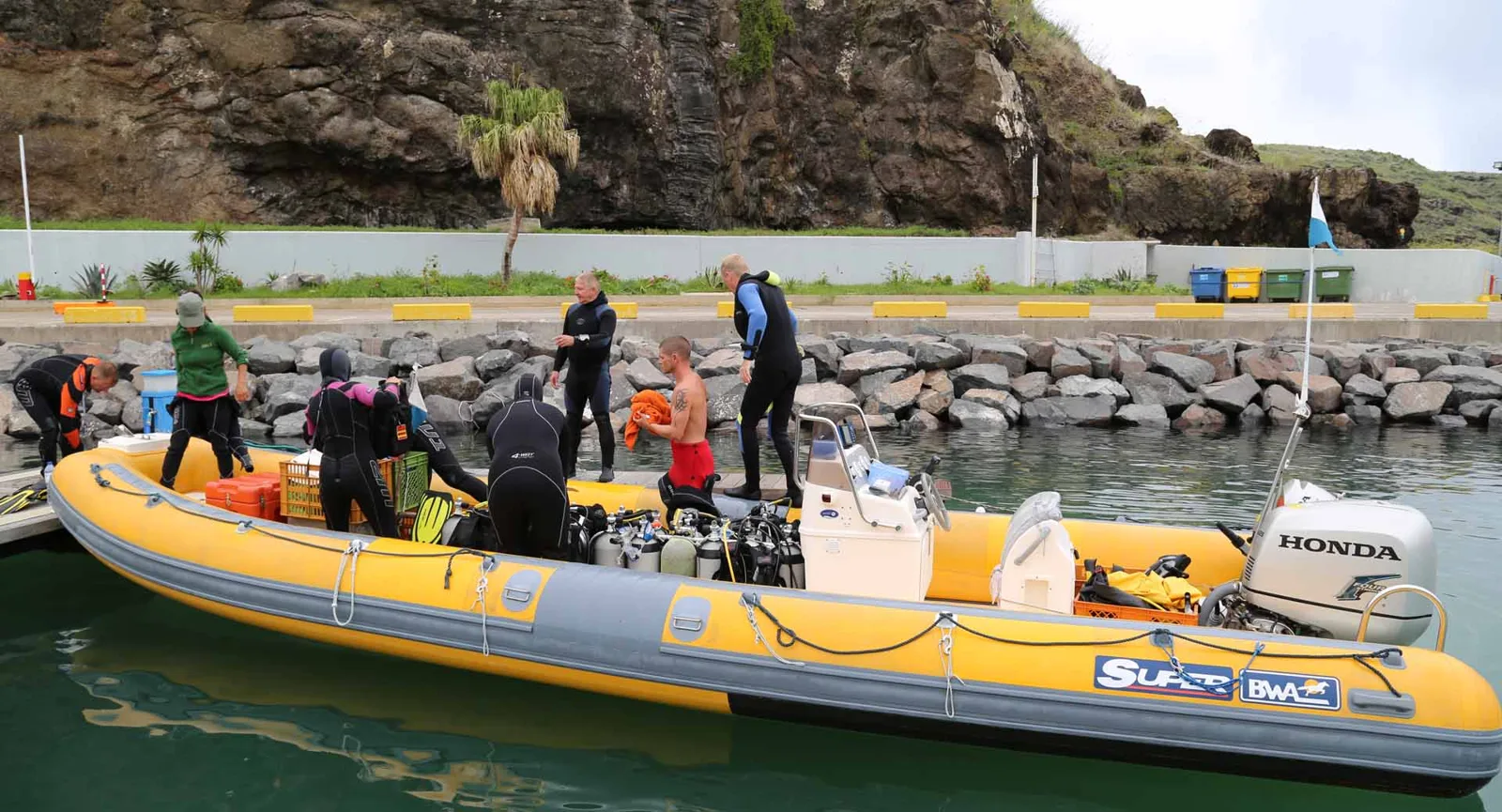
Diving here moves between sheltered volcanic features and exposed offshore sites. At Pedrinha, a shallow reef top gives way to a broad plateau, caves and a southern slope reaching forty metres. Ilhéu da Vila combines pelagic fish around the northern side with a twelve-metre cave, while Banco João Lopes rises from forty metres to a summit at fourteen. Baixa do Ambrósio ranges from five to forty-six metres and can carry moderate to strong current. Ilhéus das Formigas is the more demanding proposition, with vertical walls, rocky blocks, a wreck and depths beyond fifty metres. Visibility is often notably clear in summer and early autumn, particularly around the offshore sites, but the Atlantic can change the picture quickly. These are principally boat dives, and flexible site selection matters more than trying to preserve a fixed daily schedule.
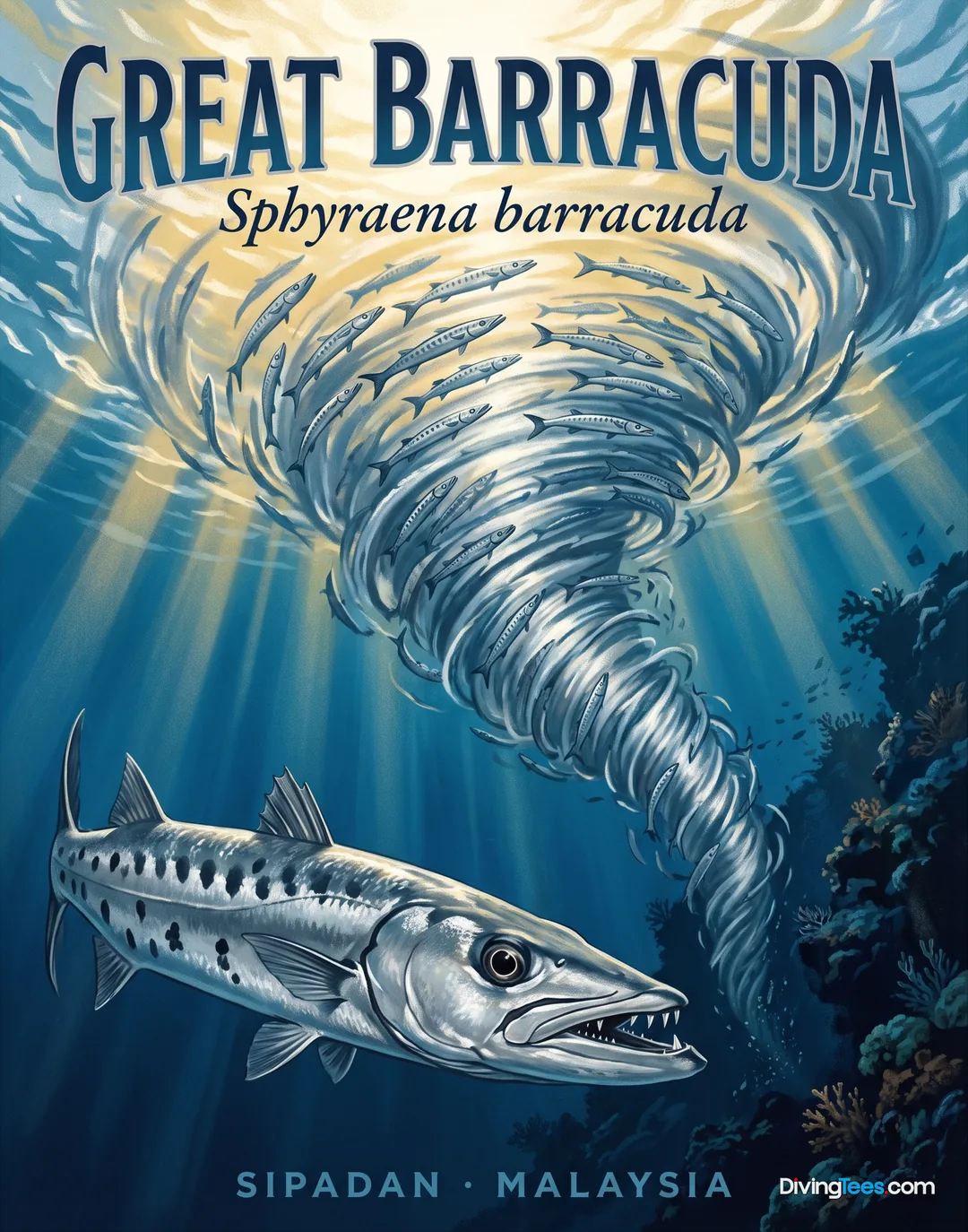
The attraction is not a guaranteed single-species encounter but the chance to combine resident coastal life with passing pelagics. Groupers (Mycteroperca spp.) and coastal fish schools are possible throughout the year, with barracudas and lírios adding movement to the blue. Ilhéu da Vila brings pelagic fish close to the islet, while its cave offers a slower search through macro life. Baixa do Ambrósio is the seasonal focus for Mobula rays, with the strongest expectations in summer and early autumn; manta rays and other pelagics remain occasional rather than assured. Whales and other cetaceans may pass from spring into autumn, although they are not a substitute for planning the diving around reliable volcanic structure. Encounters at Banco João Lopes can also include large pelagic species, especially when current brings life over the walls.
The measured calmest and most favourable period runs from May to September, when sea conditions and rainfall are generally more forgiving. July, August and September are the practical core for divers seeking the best chance of stable boat departures, clearer water and summer Mobula activity. Early October can still work well and is included in the destination’s preferred late-summer and early-autumn window, but the Atlantic influence means conditions remain changeable. November through March brings more swell and a greater likelihood of cancellations. The reason to allow extra days is simple: a good forecast opens the offshore sites, while a rough spell can shift the programme towards more sheltered options or keep the boat in port.
Santa Maria can suit all levels, provided the site is matched honestly to experience and conditions. Open Water divers have manageable options around Ilhéu da Vila, while Advanced Open Water experience is useful for deeper profiles, offshore banks and changing current. Ilhéus das Formigas and Banco João Lopes demand confidence in exposed boat diving and potentially strong flow. Nitrox is useful for divers planning several dives and making sensible use of moderate depths, but it does not remove the need for current awareness, buoyancy control and a calm response when the sea state changes.
From London Heathrow, London Gatwick or Manchester, the journey normally involves reaching the Azores via a connection at São Miguel or on mainland Portugal. The structural point is that Santa Maria is not reached as a simple direct European transfer: after the international leg, travellers must allow for either a domestic inter-island flight from Ponta Delgada or a seasonal ferry from São Miguel, depending on the operator and timetable. Once on Santa Maria, roads connect the main settlement with the ports and dive centres. A hire car is the most flexible option; taxis work for transfers, and walking is possible when accommodation is in the main village. Ferry and flight schedules should be treated as part of the dive planning, not an afterthought.
Build the itinerary around a weather margin rather than a promised run of daily departures. Consecutive diving days are more useful than scattering dives across the week, because a calm window may arrive briefly and the exposed sites may need to be taken when conditions allow. Morning departures are worth favouring in the stable summer period, before the sea can become more formed later in the day. Ask, before committing to a site, whether the plan fits the group: Ilhéu da Vila and the shallower parts of Pedrinha are not the same proposition as Banco João Lopes or Ilhéus das Formigas. Bring carefully chosen personal kit if correct sizing and buoyancy trim matter, as island stock is more likely to be standard than tailored. Keep expectations realistic about Mobula rays, manta rays and other pelagics; they are a reason to stay flexible, not a viewing guarantee. On protected sites, do not anchor carelessly, collect anything or damage the seabed.
A five- to seven-day land-based stay gives enough room to combine coastal dives with one or more offshore windows without making the whole trip depend on a single calm day. Non-divers have beaches and sheltered bays, coastal walks, volcanic viewpoints, cliffs and plenty of quiet surface time. The island is better suited to a relaxed programme than to a tightly packed sequence of dives. After the final day underwater, leave the usual no-fly interval before travelling, while keeping the last part of the stay available for rest or land activities.
Hello, I'm Marina, DivingDeal.com's AI assistant. I guide you through destinations, areas and countries.
Thinking about the whole trip and the flights? Talk it over with Edith →
Marina is an AI. Some links are affiliate links: DivingDeal may earn a commission, at no extra cost to you. Bookings are made with the partner.
Your last day stays dry: no diving in the 18-24 hours before a flight, the perfect window to see the destination from another angle.
 Culture
⏱ 6 h · ★ 5.0 (53 reviews)
from £75$101€90
see on Viator ↗
 Culture
⏱ 9 h · ★ 5.0 (19 reviews)
from £109$146€130
see on Viator ↗
 Nature
⏱ 4 h · ★ 5.0 (8 reviews)
from £49$65€58
see on Viator ↗
Ratings and reviews collected by Viator and Tripadvisor.
May through September generally brings calmer seas and more forgiving rainfall. July, August and September are useful for clearer water, more stable boat departures and summer Mobula ray activity. Early October can still work well, while November through March tends to bring more swell and a higher likelihood of cancellations.
Santa Maria offers options for different experience levels when sites match your ability and conditions. Open Water divers can consider manageable areas around Ilhéu da Vila. Advanced Open Water experience helps with deeper profiles, offshore banks and changing currents, while Ilhéus das Formigas and Banco João Lopes require confidence in exposed boat diving and potentially strong flow.
Santa Maria combines volcanic walls, rocky blocks, arches, caves, fissures and a wreck with clear blue water around offshore sites. Groupers, barracudas and coastal fish occur throughout the year. Summer and early autumn may bring Mobula rays at Baixa do Ambrósio, while manta rays, whales and other pelagics remain occasional encounters.
Plan a land-based stay of several days, keeping the schedule flexible for Atlantic weather and offshore boat departures. Consecutive diving days help you use a brief calm window, while morning departures may suit stable summer conditions. Arrange your inter-island flight or ferry, consider a hire car, and leave time for rest or land activities.