

Go Shark Azores
Google 4.9/5 (83 reviews)
Azores · Atlantic
From Horta, divers move between volcanic walls, blue-water shark encounters and Princess Alice Bank, where mobula rays gather above a remote seamount.
For subtitles in English: start the video firstthen click the gearat the top right of the video, select “Subtitles/CC”, then “Auto-translate” and choose “English”.
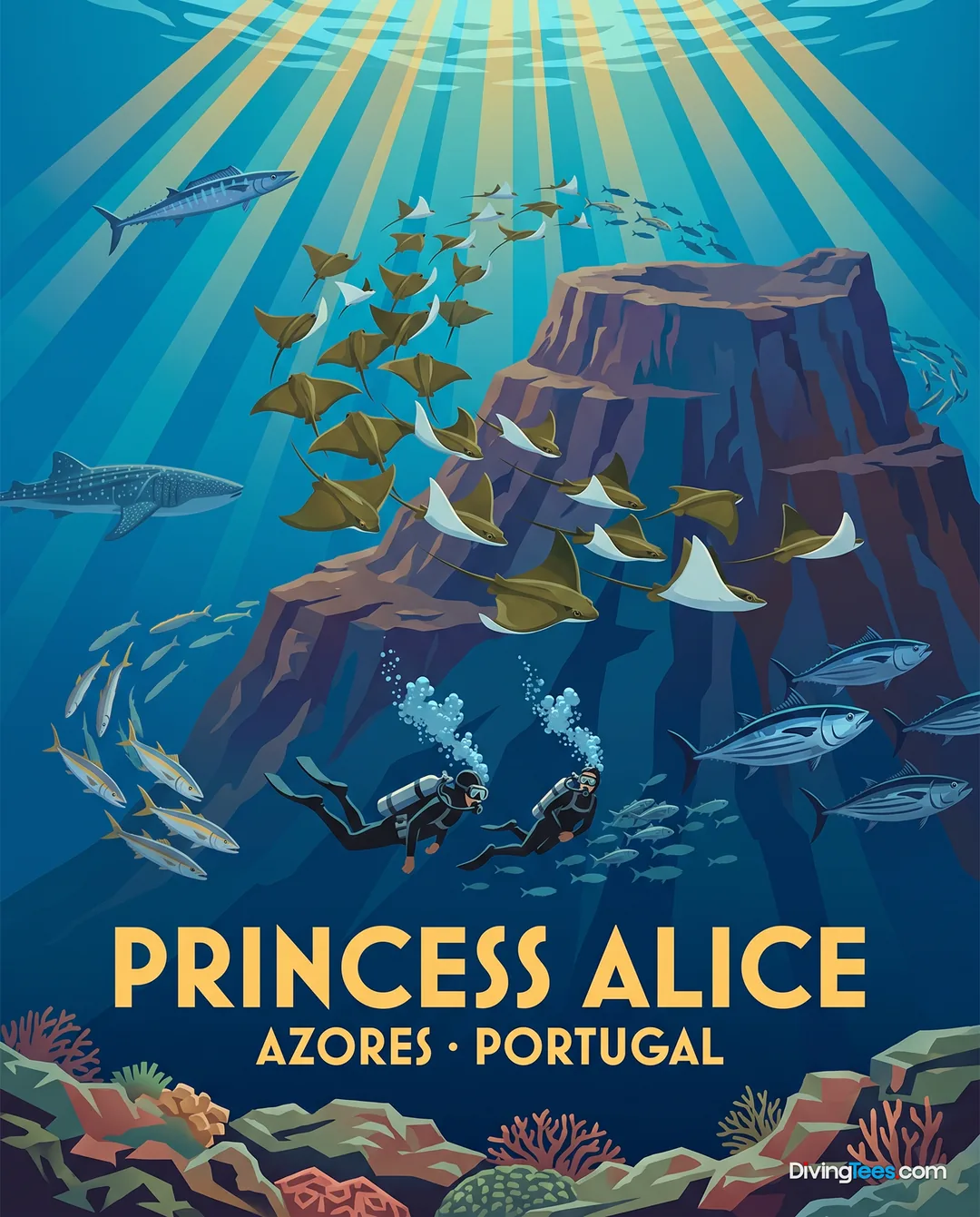
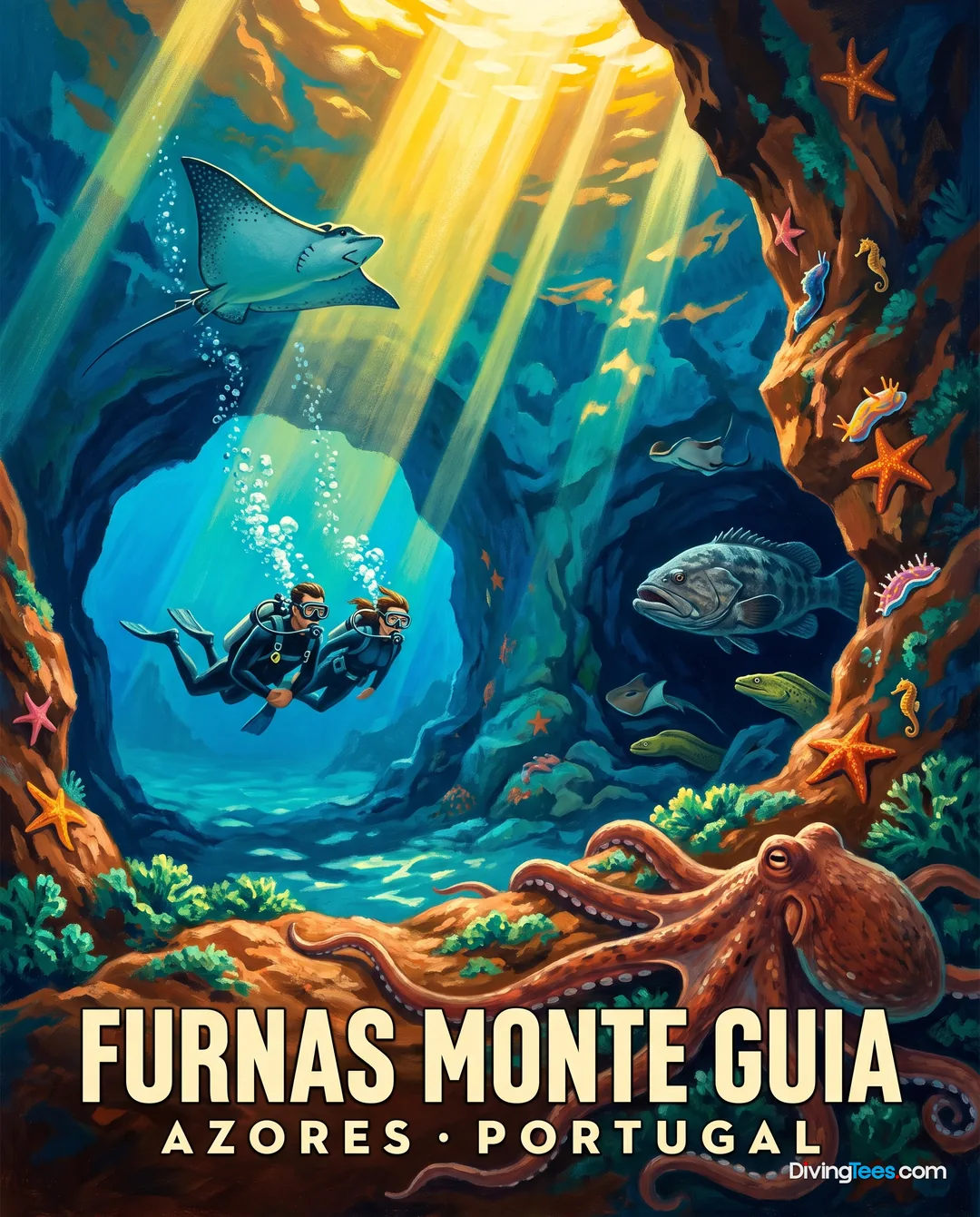
Faial is a Horta-based diving destination built around two very different experiences. Close to shore, volcanic rock forms walls, drop-offs and exposed Atlantic sites around Faial and neighbouring Pico. Offshore, long boat days reach seamounts such as Princess Alice Bank, where the seabed falls away and the interest is in the blue: mobula rays, blue sharks and passing tuna. It suits divers who are comfortable with open water, changing visibility and a plan that may have to move with the weather.
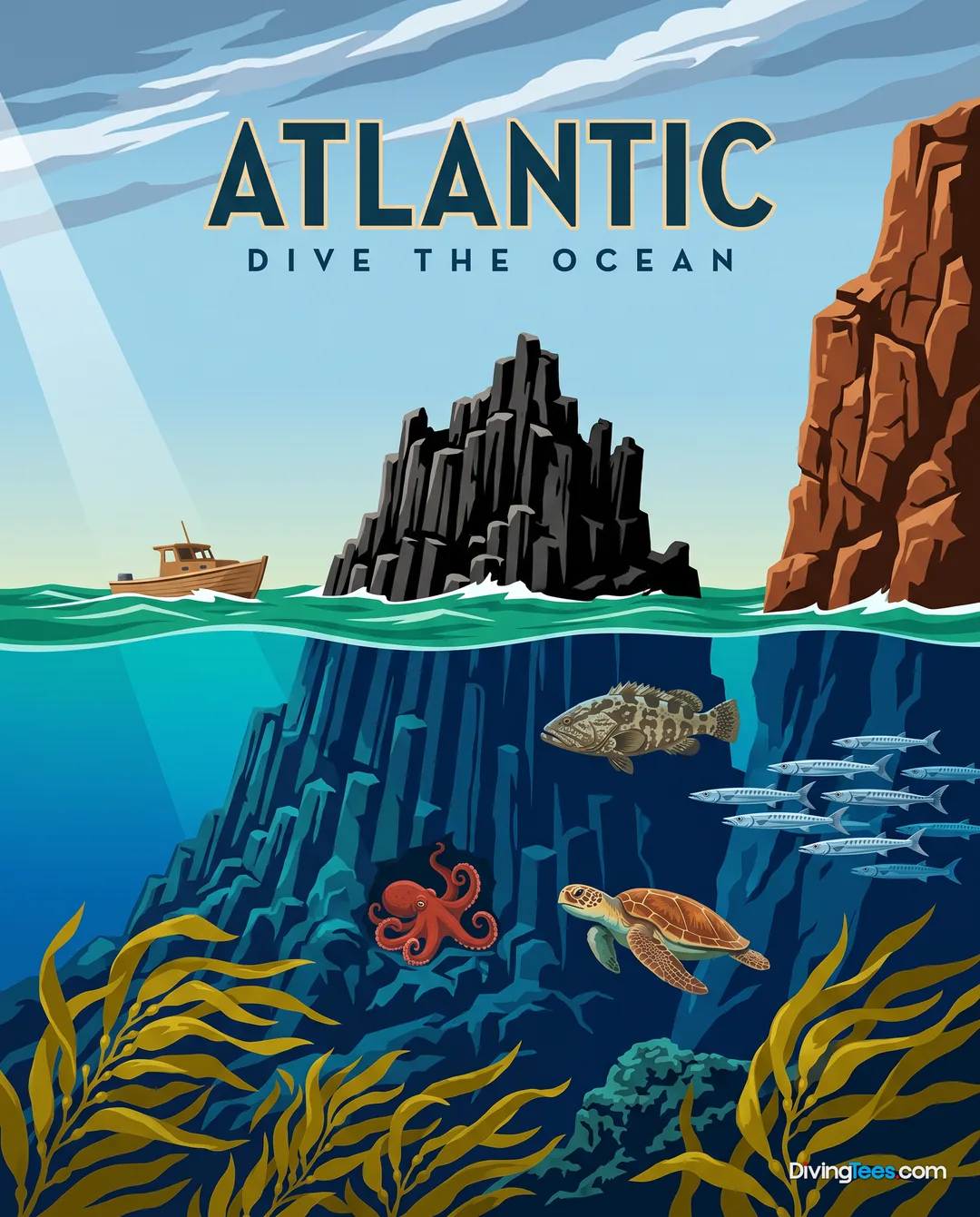
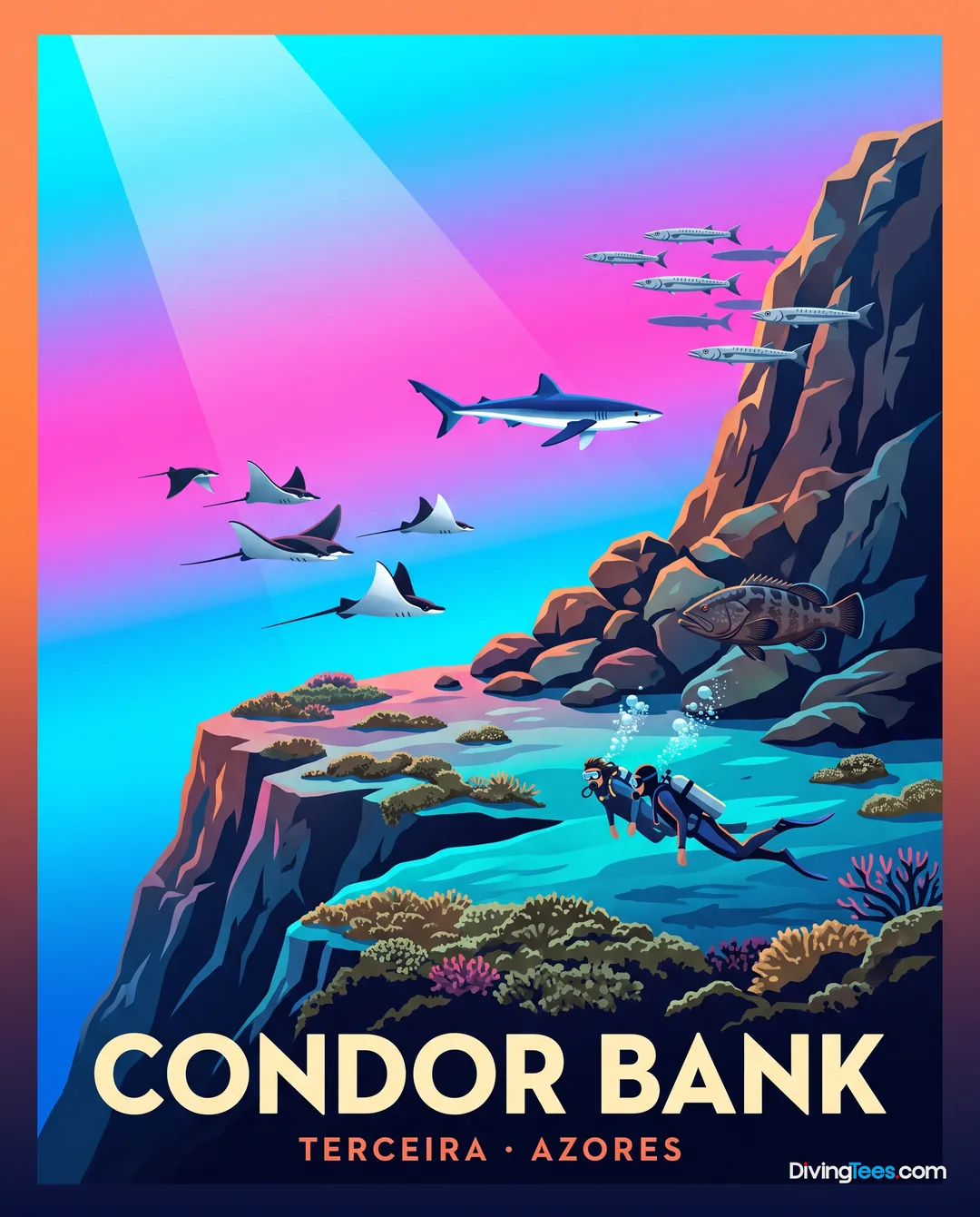
The local landscape is basalt rather than coral: dark volcanic walls, rocky ledges and underwater pinnacles exposed to Atlantic swell. Coastal dives around Faial and Pico can be manageable for intermediate divers, but conditions are not automatically gentle. Current is variable, and visibility may range from 10–20 metres near the islands to 30–40 metres on the offshore banks. Princess Alice Bank is a deep, blue-water dive reaching 37 metres, with moderate to strong current possible and no continuous sheltered bottom to retreat to. The Shark Dive keeps the action in the upper ten metres while the boat drifts, but still demands open-water control. Condor Bank is another pelagic outing, where the diver watches the water rather than a reef. Most serious offshore trips are full-day boat excursions, so surface comfort and tolerance for a long return journey matter almost as much as depth certification.
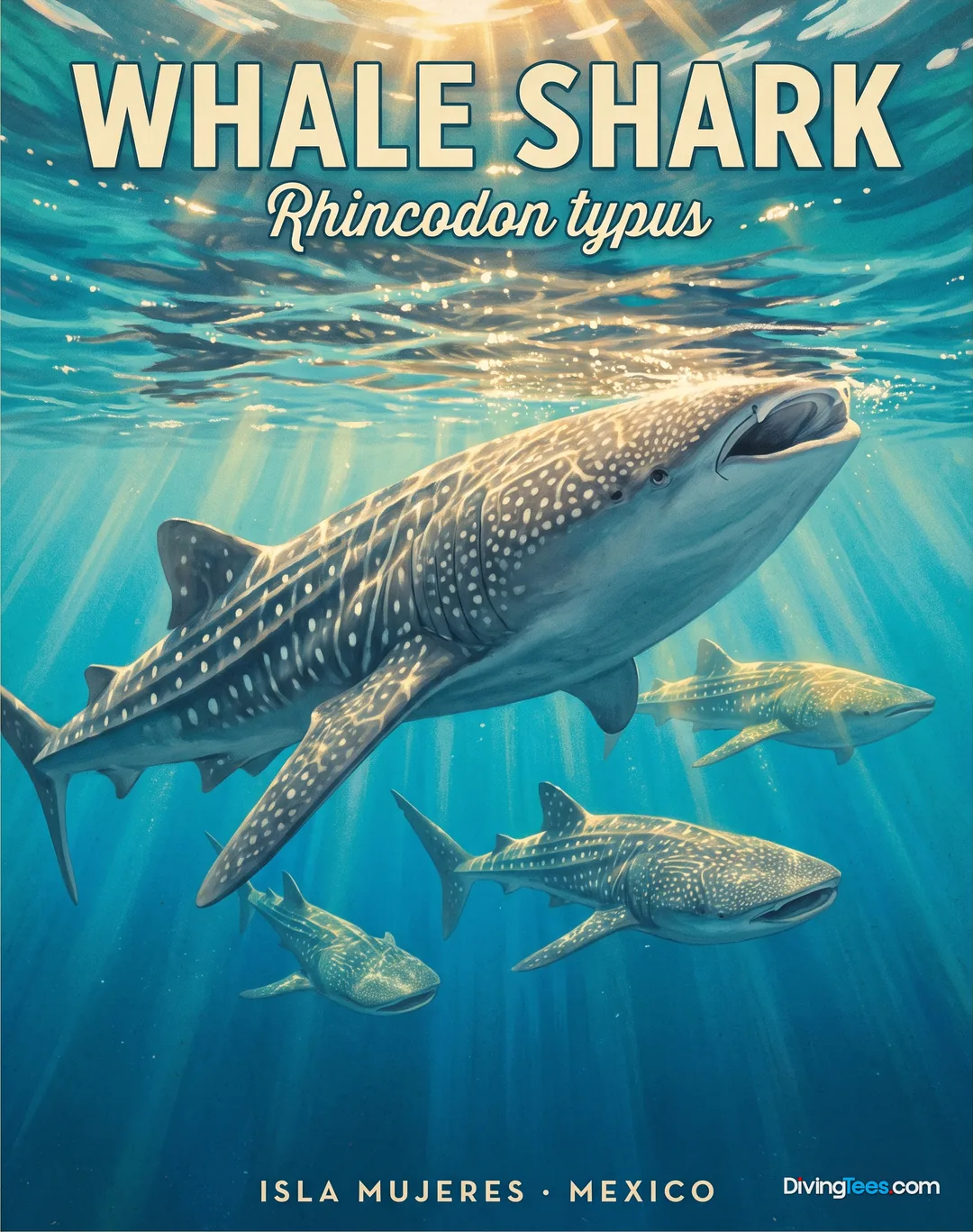
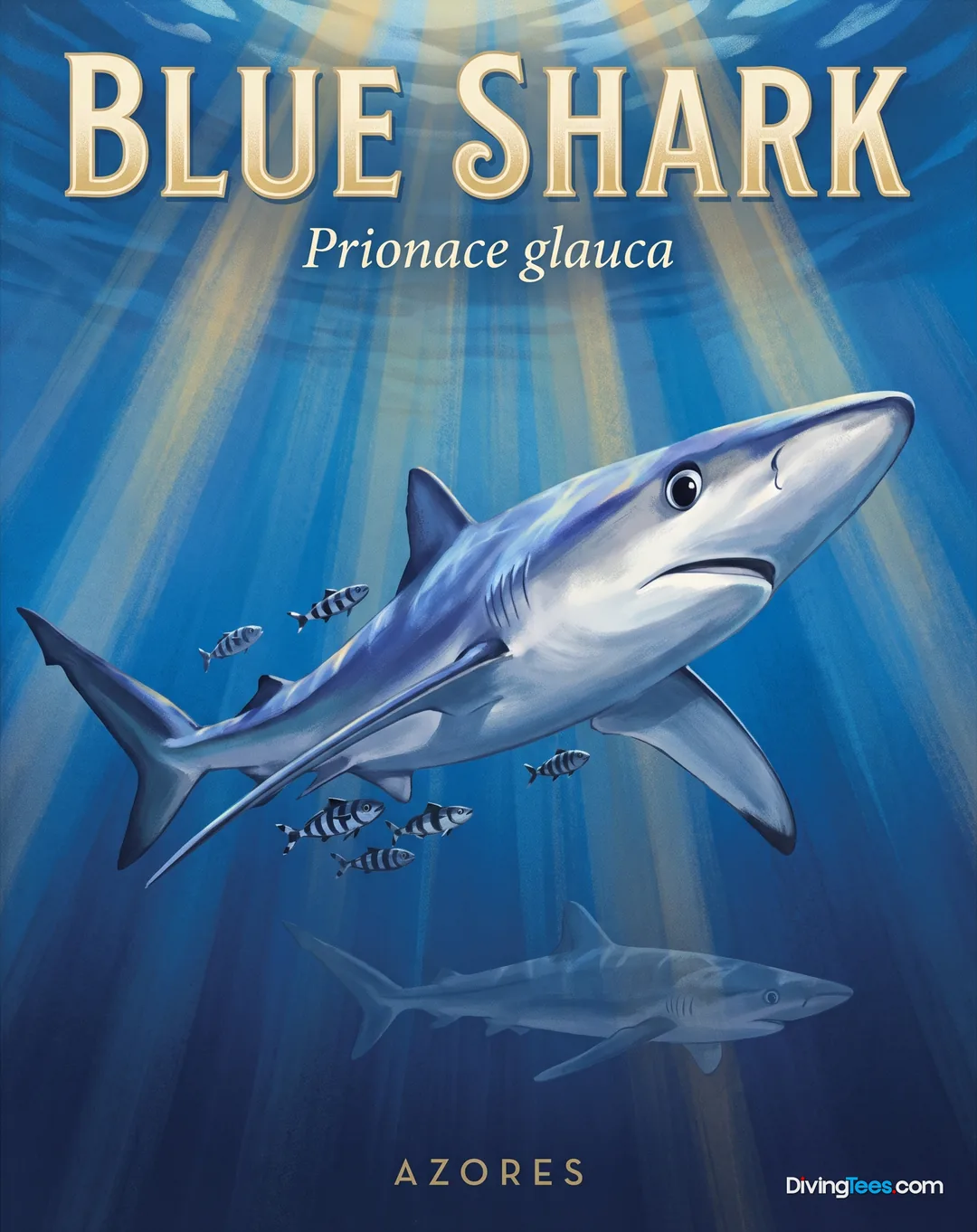
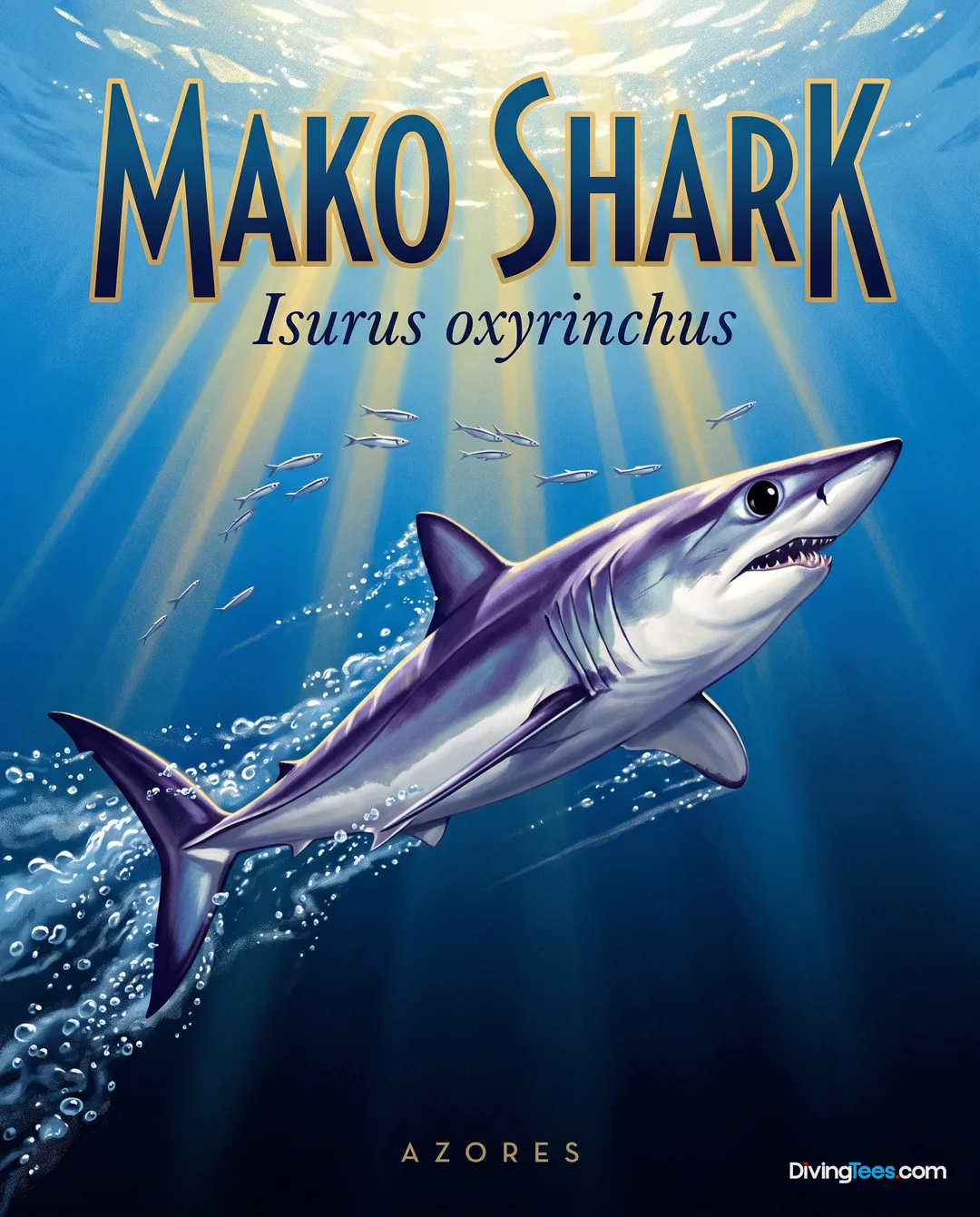
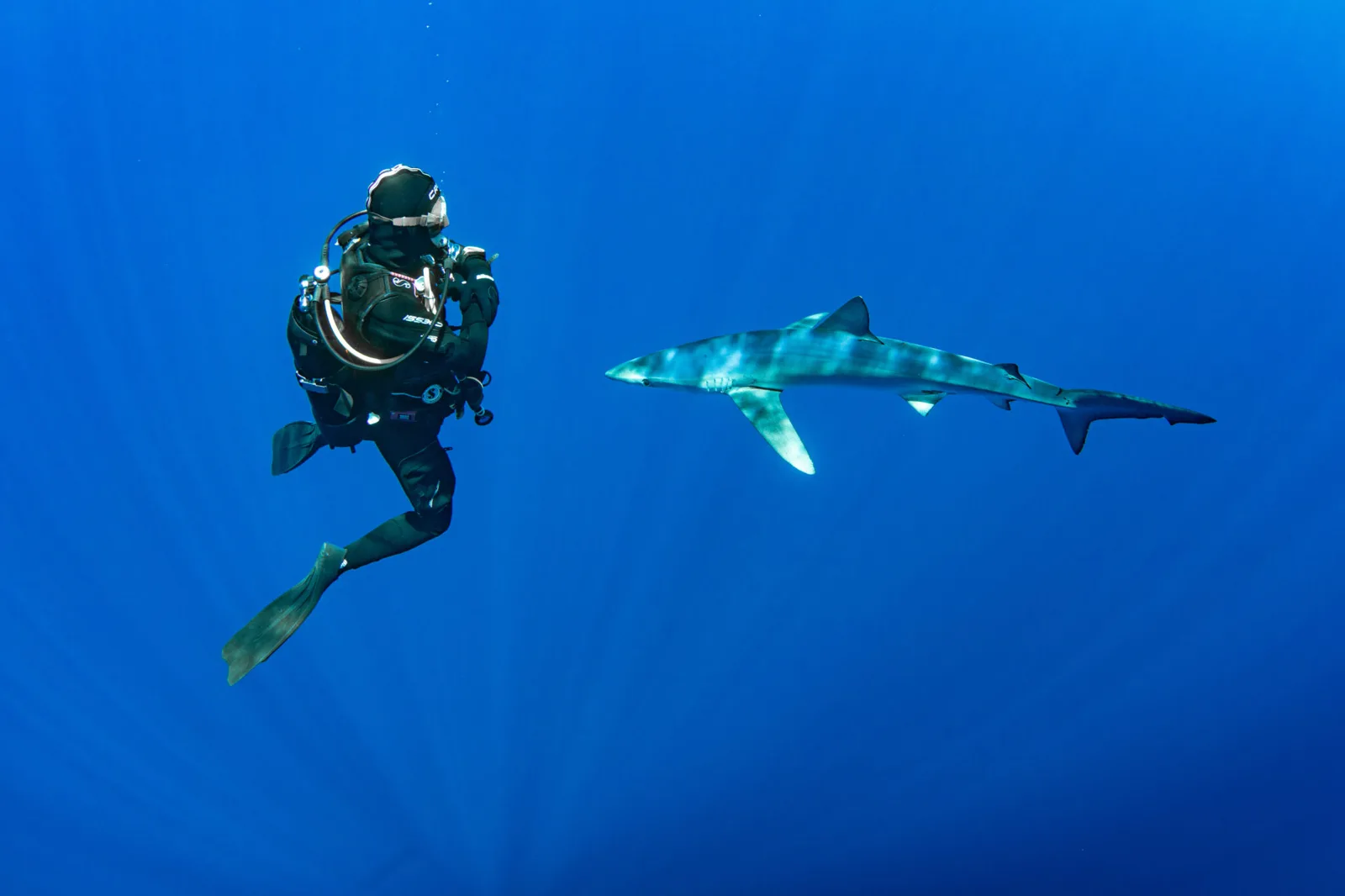
Mobula rays are the main seasonal draw, with the most dependable gatherings on Princess Alice Bank and other seamounts between June and October, particularly from July to September. Blue sharks are also regular visitors in summer and early autumn, including on the Shark Dive, while shortfin mako encounters are more occasional. Large schools of Atlantic bonito, tunas and amberjack can move across the banks during the same June-to-October period. Wahoo, great barracuda and amberjack add interest to the wider Faial diving picture, and a whale shark is a rare possibility rather than a planning assumption. Sperm whales and dolphins occur throughout the year in the Faial–Pico channel, with whale-watching activity more concentrated from March to October. Pelagic diving remains wildlife-led: even in good conditions, a particular animal may simply not appear.
The practical diving season runs from June to October, when summer weather usually brings calmer seas, clearer water and better access to the offshore banks. Measured conditions show the calmest sea from May to September, while the clearest period is generally August into September and October. Spring plankton blooms can turn the water green and reduce visibility. December through March is a poor choice for a seamount-focused trip because wind, swell and rough seas can keep boats in port. July and August bring the busiest schedules; June and late September into October usually offer a quieter rhythm without losing the main pelagic season.
Faial is better suited to experienced divers than to newcomers. Coastal volcanic dives may work for recently certified divers under close supervision, but Princess Alice Bank requires Advanced Open Water or an equivalent BSAC level, logged experience and confidence in blue-water descents, depth and current. A minimum of 25 logged dives is specified for that site. Deep Diver training is useful for the 30–40 metre seamount profile, while Drift Diver skills help when the boat and divers must follow the current. Nitrox is practical on repetitive diving days, but it does not replace conservative depth and gas planning.
Travellers from London Heathrow, London Gatwick or Manchester normally reach Faial through Lisbon or another Azores island; direct Lisbon–Horta services vary by season. TAP Air Portugal, Ryanair, easyJet and Azores Airlines are among the carriers used for the wider journey, but the final routing needs checking as schedules change. An alternative is to fly to Pico and take the ferry from Madalena to Horta, a crossing of about 30 minutes. Flights between Azorean islands and the triangle ferries provide further combinations, although winter sailings are more weather-dependent. Horta is the practical base: the marina and nearby accommodation are generally walkable, with short local transfers by car when required.
Keep several weather days free for Princess Alice Bank and the other offshore banks. A single final-day booking is a poor gamble: a change in Atlantic conditions can remove the main reason for the trip. Put the exposed dives early in the available weather window, and leave coastal Faial or Pico sites for days when swell prevents the longer run offshore. Discuss actual current and depth experience before booking Princess Alice, rather than treating an Advanced card as the whole qualification. The descent, ascent and possible drift need to be comfortable in blue water; a check dive is required for the Shark Dive. Reserve summer offshore places ahead, especially from mid-July to late August. If the mobulas are the priority, allow for a blank encounter despite favourable reports. On multi-island days, leave proper surface intervals before taking a ferry, and avoid building a tightly timed itinerary around boat connections.
A week to ten days gives Horta enough flexibility for weather-dependent offshore trips, coastal diving around Faial and a day across the channel on Pico. The compact marina area makes a shore-based stay straightforward, while ferries allow the Azores Triangle to be explored without changing base. Non-divers can join whale and dolphin trips, walk the caldera rim, visit Capelinhos or spend time along Horta’s painted marina. Keeping the deepest dives early in each day leaves gentler coastal plans for the afternoon.
Hello, I'm Marina, DivingDeal.com's AI assistant. I guide you through destinations, areas and countries.
Thinking about the whole trip and the flights? Talk it over with Edith →
Marina is an AI. Some links are affiliate links: DivingDeal may earn a commission, at no extra cost to you. Bookings are made with the partner.
Your last day stays dry: no diving in the 18-24 hours before a flight, the perfect window to see the destination from another angle.
 Culture
⏱ 7 h · ★ 5.0 (48 reviews)
from £105$140€125
see on Viator ↗
 Culture
⏱ 8 h · ★ 5.0 (20 reviews)
from £172$231€206
see on Viator ↗
 Adventure
⏱ 9 h · ★ 5.0 (8 reviews)
from £193$257€230
see on Viator ↗
 Adventure
⏱ 6 h · ★ 5.0 (8 reviews)
from £260$347€310
see on Viator ↗
Ratings and reviews collected by Viator and Tripadvisor.
For the main pelagic season, choose June through October, when summer weather usually brings calmer seas, clearer water and better access to offshore banks. The clearest conditions are generally from August into September and October, while December through March can keep boats in port.
Faial better suits experienced divers than newcomers. Coastal volcanic dives may work for recently certified divers under close supervision, but Princess Alice Bank requires Advanced Open Water or equivalent BSAC level, logged experience and confidence in blue-water descents, depth and current. The site specifies at least 25 logged dives.
You may encounter mobula rays gathering at Princess Alice Bank from June through October, blue sharks in open water from July to September, and schools of Atlantic bonito, tunas and amberjack around offshore banks. Volcanic walls, drop-offs and pinnacles shape coastal sites, while sperm whales and dolphins occur in the Faial-Pico channel.
Base yourself in Horta, where marina and accommodation are generally walkable. Keep several weather days free for Princess Alice Bank and other offshore trips, putting exposed dives early in the weather window. A week to ten days allows offshore and coastal diving, plus a Pico day by ferry from Madalena to Horta.