BrizAçores
Google 4.2/5 (29 reviews)
Azores · Atlantic
Black volcanic walls, natural arches, mobula rays and blue sharks define Pico’s boat diving, with open-water encounters shaped by the Atlantic season.
For subtitles in English: start the video firstthen click the gearat the top right of the video, select “Subtitles/CC”, then “Auto-translate” and choose “English”.
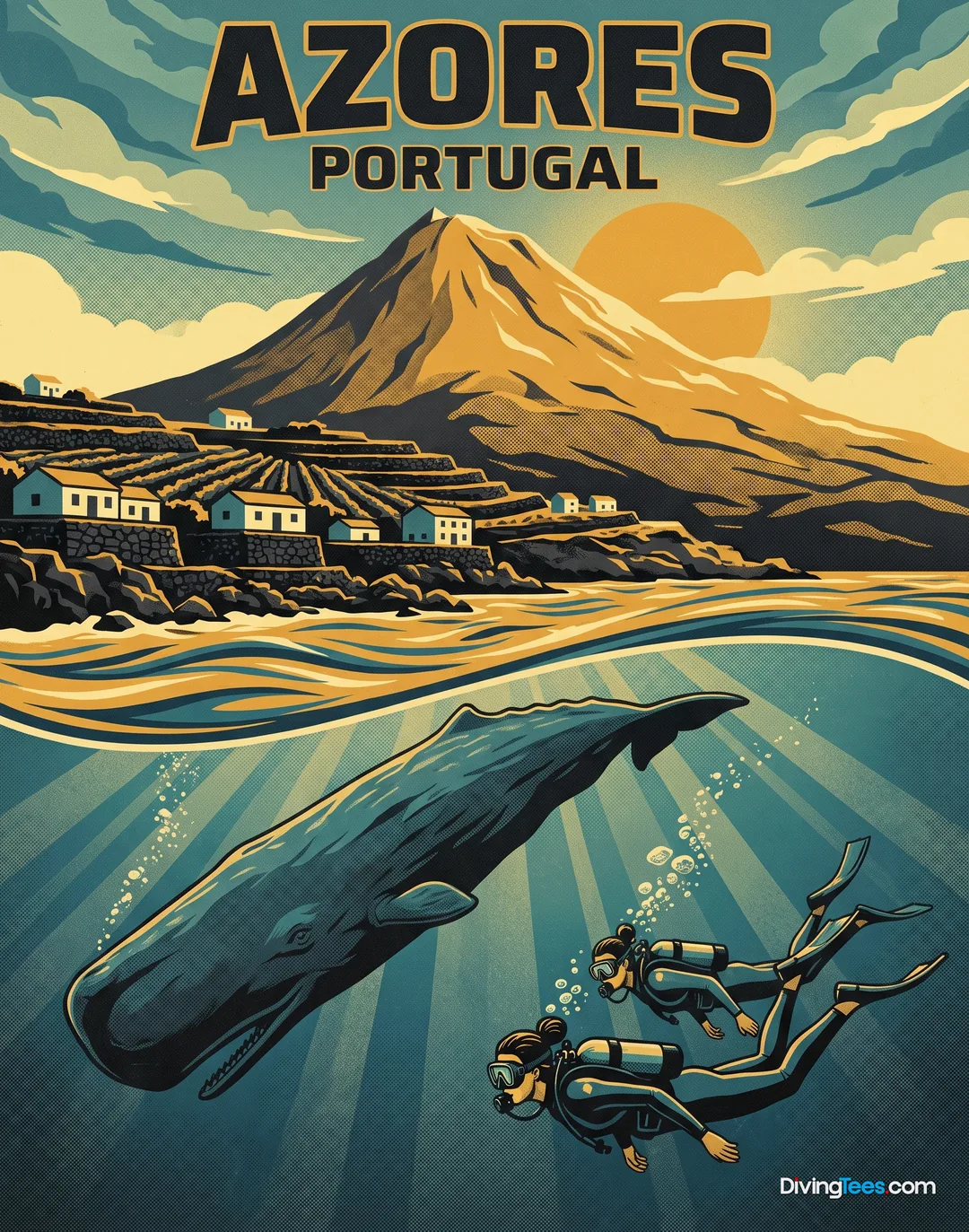
S. João gives a clear idea of Pico’s appeal: a volcanic wall, natural arches and profiles from 20 to 40 metres, all reached by boat. This is not a tropical reef holiday or a shore-diving base. Pico is an Atlantic island for divers who enjoy open water, dark rock, changing sea conditions and the possibility of pelagic life. The land-based format also leaves room for volcanic scenery, coastal villages and whale-watching between dives.
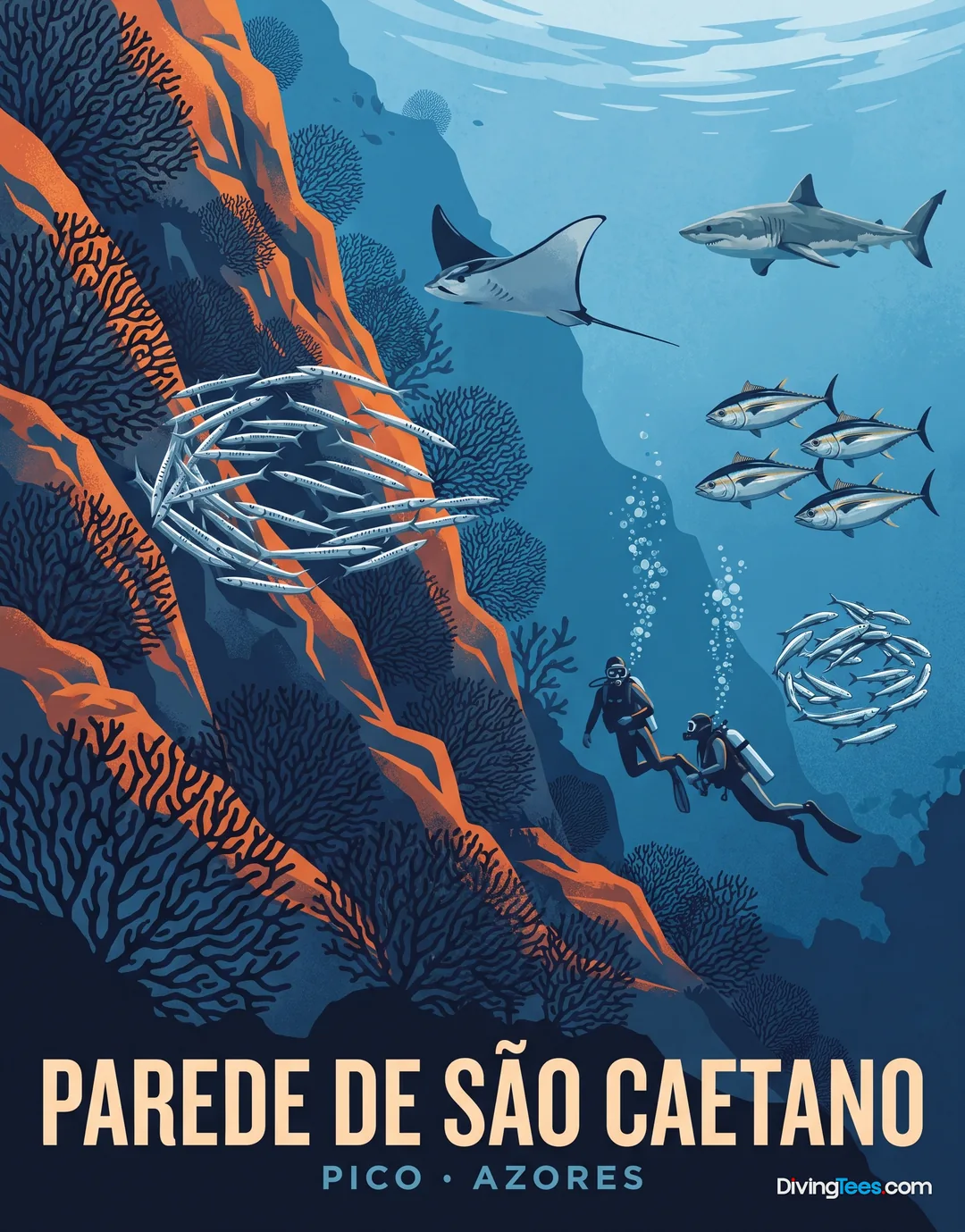
Pico’s diving is built around boat trips to isolated volcanic structures rather than a single sheltered reef. At S. João, the dive follows a wall and passes beneath or beside natural arches, with shallower recreational profiles and deeper options for suitably trained divers. Parede de São Caetano drops into the 30–40 metre range and brings black-coral formations into the picture. Offshore sites such as Condor Bank, Pedra de Sousa and Banco Açores are different again: blue-water diving, typically between 5 and 15 metres, with little visual reference and the sea itself forming the environment. Currents are variable, and visibility is affected by swell, rough water and occasional plankton. A steady ascent, accurate buoyancy and comfort away from the coast matter more here than simply holding a qualification.
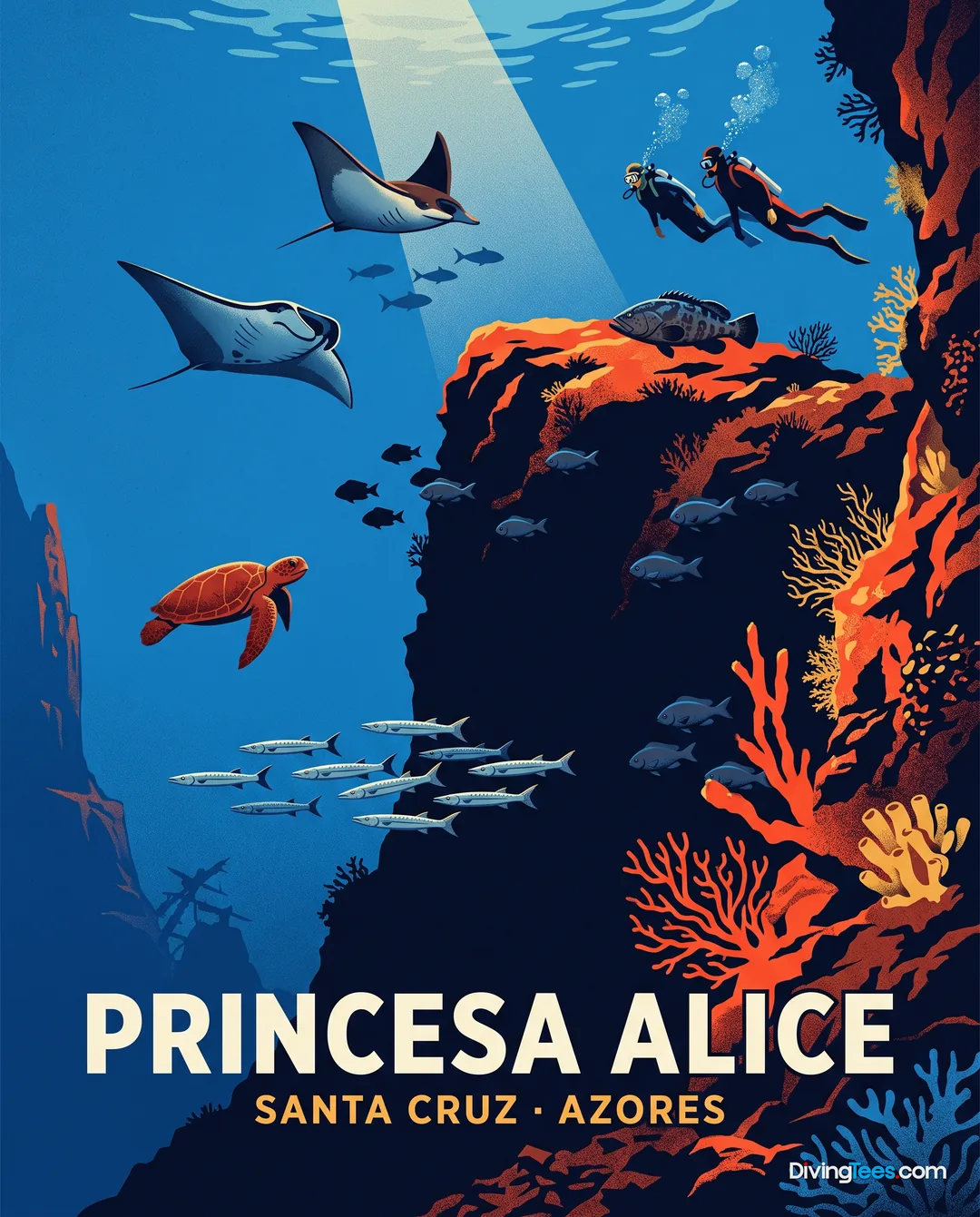
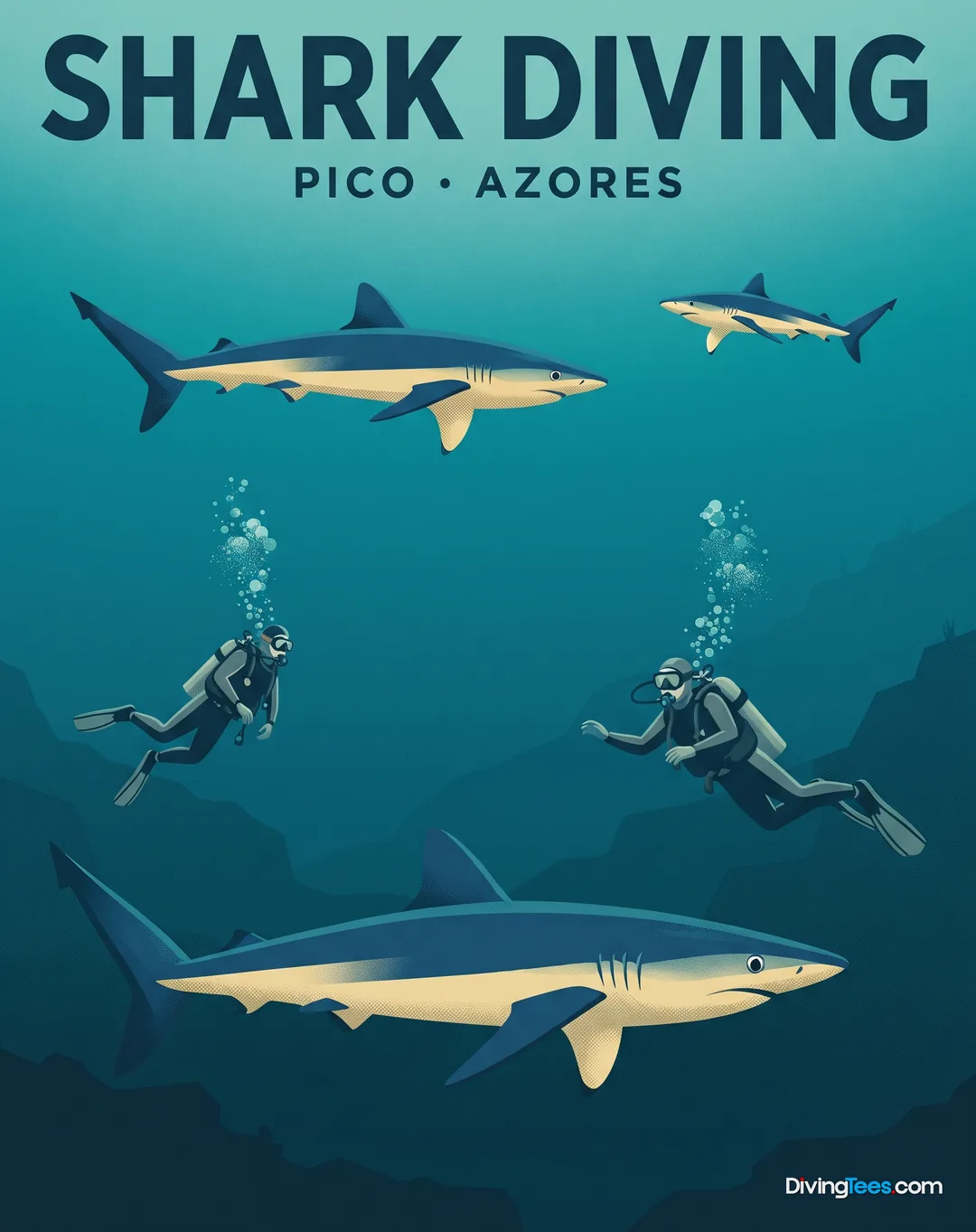
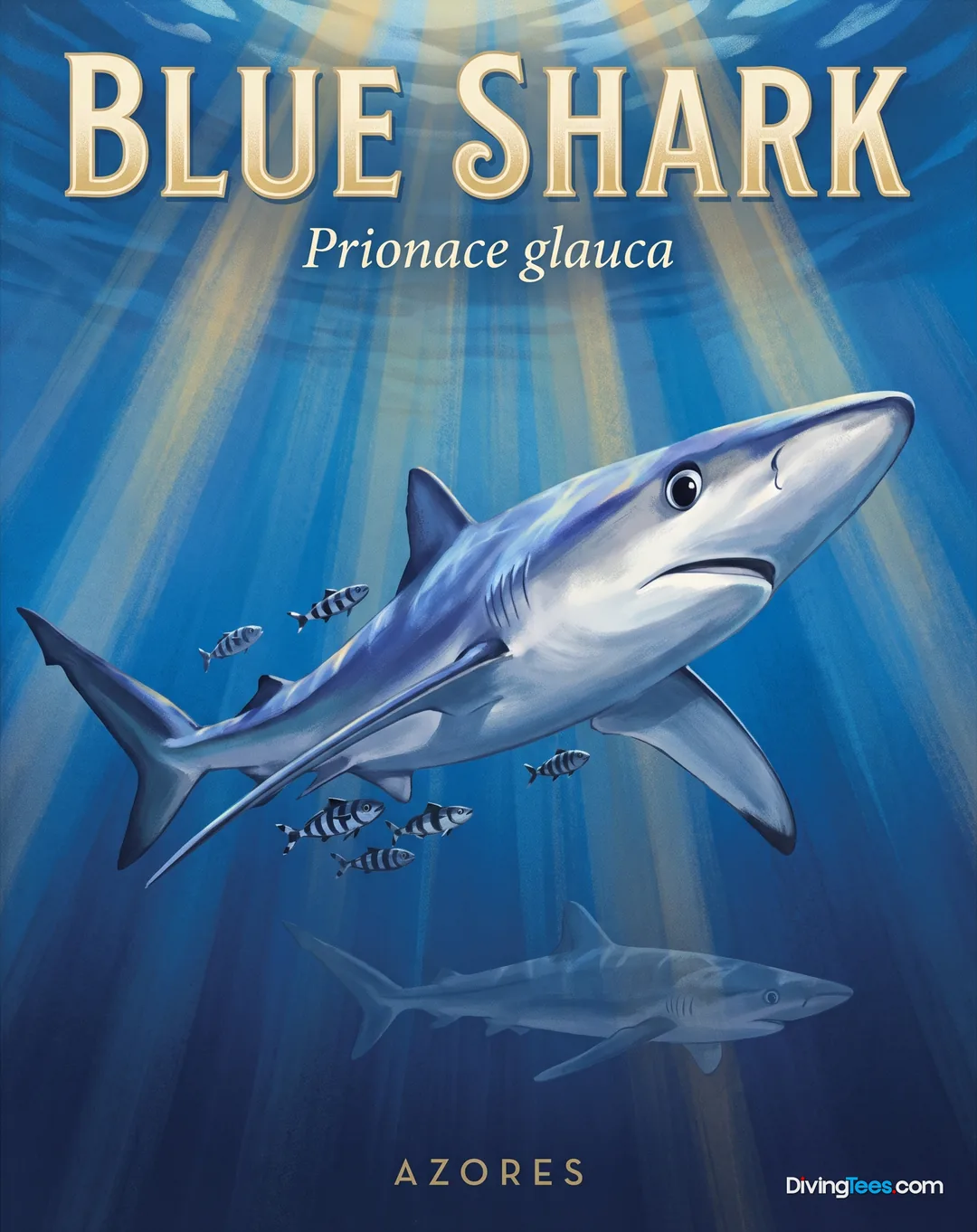
Pico’s wildlife is a matter of timing as much as location. Summer and early autumn bring occasional chances of seeing mobula rays or devil rays, while basking sharks are a rarer summer possibility. Whales and other large passing pelagics may appear from spring into summer, but they should be treated as fortunate encounters rather than a fixed part of every itinerary. The more specific blue-water attraction is blue-shark diving around Condor Bank, Pedra de Sousa and Banco Açores. These dives take place above roughly 10 metres, often in open water, so the encounter depends on sea conditions as well as animal behaviour. The black-coral growth at Parede de São Caetano adds interest to the deeper volcanic scenery, even when the larger animals stay away.
The measured calmest period is from May to September, which fits the broader local diving season of May to November. June, July, August and September are the most dependable choices for a first visit because summer and early autumn usually bring more settled ocean weather and better prospects for boat operations. The same period is also when mobula rays are most likely, with occasional summer sightings of basking sharks. July and August are busier, while spring and late autumn are quieter but more exposed to weather-related changes. Pico can be dived outside the main season, but a short trip then leaves less room to absorb a cancelled boat day.
Some trips suit all levels, particularly when the profile stays within ordinary recreational limits, but Pico rewards divers with calm, independent buoyancy and reasonable boat confidence. Advanced training is useful for S. João’s deeper sections and essential in practice for the open-water blue-shark dives, where operators commonly expect at least 50 logged dives. Nitrox is useful on repeated boat-diving days, while BSAC, PADI and SSI divers should match the planned depth and conditions to their training rather than relying on the destination’s broad ‘all levels’ label.
From London Heathrow, London Gatwick or Manchester, the journey to Pico normally involves at least one connection into the Azores. TAP Air Portugal and SATA Azores Airlines are the relevant airline names to check, with the exact routing depending on the travel date. Another option is to fly to a different Azorean island and continue by inter-island ferry, but that adds a lasting dependency on sailing schedules and sea conditions. Once on Pico, travel around the island is by road, either with a local transfer or a hired vehicle, and dive centres are spread around the island rather than gathered at one single departure point. Accommodation should therefore be considered alongside the planned boat departures, not separately from them.
Build the week around flexibility rather than filling every day with boats. A five- to seven-day stay gives the weather some room to move, whereas a two- or three-day visit can lose a large part of its diving if the Atlantic turns rough. Booking the first diving slot early in the stay leaves later days available for rescheduling. Keep a spare day before an inter-island ferry: the crossing can also be affected by the sea, and a tightly linked itinerary is easily disrupted. Bring the signalling or navigation equipment normally used for open-water diving if it is part of the diver’s routine; blue-water work around Condor Bank, Pedra de Sousa or Banco Açores offers few visual references. Most importantly, arrive expecting volcanic rock, walls and pelagic encounters, not coral, permanently clear water or mainly shore dives. That expectation changes both equipment planning and the choice of accommodation around the island.
Pico works best as a land-based diving holiday, with boat outings arranged around the weather and several days kept available for repeat attempts. A typical five- to seven-day stay can combine deeper volcanic profiles at S. João or Parede de São Caetano with open-water opportunities for blue sharks, while leaving time for a missed boat day. Non-diving days fit naturally around volcanic walks, coastal villages and whale-watching. A light final day is sensible before travel.
Hello, I'm Marina, DivingDeal.com's AI assistant. I guide you through destinations, areas and countries.
Thinking about the whole trip and the flights? Talk it over with Edith →
Marina is an AI. Some links are affiliate links: DivingDeal may earn a commission, at no extra cost to you. Bookings are made with the partner.
Your last day stays dry: no diving in the 18-24 hours before a flight, the perfect window to see the destination from another angle.
 Nature
⏱ 7 h · ★ 5.0 (81 reviews)
from £46$62€55
see on Viator ↗
 Culture
⏱ 5 h · ★ 5.0 (34 reviews)
from £142$190€170
see on Viator ↗
 City
City⏱ 9 h · ★ 5.0 (29 reviews)
from £100$134€120
see on Viator ↗
 Culture
⏱ 7 h · ★ 5.0 (27 reviews)
from £151$201€180
see on Viator ↗
Ratings and reviews collected by Viator and Tripadvisor.
Pico’s practical diving season runs from May to November, with May to September the calmest period. June through September are dependable choices, bringing generally more settled ocean weather, stronger boat-operation prospects and summer or early-autumn chances for mobula rays. July and August are busier, while spring and late autumn are quieter.
Pico offers some recreational profiles for different experience levels, but you need calm, independent buoyancy and reasonable confidence on boats. Advanced training helps with the deeper sections of S. João, while open-water blue-shark dives generally require at least 50 logged dives. Match depth and conditions to your training, and consider Nitrox for repeated boat days.
Pico combines black volcanic walls, natural arches and black-coral formations with Atlantic pelagic encounters. At S. João, you may pass volcanic arches; Parede de São Caetano adds deeper black coral. Offshore, blue-shark dives take place around Condor Bank, Pedra de Sousa and Banco Açores, while mobula rays are occasional in summer and early autumn.
Plan Pico as a flexible, land-based boat-diving holiday rather than a shore-diving base. A five- to seven-day stay leaves room for weather changes and a missed boat day, and booking your first dive early allows later rescheduling. Choose accommodation near planned departures, keep a spare day before any inter-island ferry, and leave the final day light.