Joe & Vera's Vintage
Google 4.8/5 (121 reviews)
Azores · Atlantic
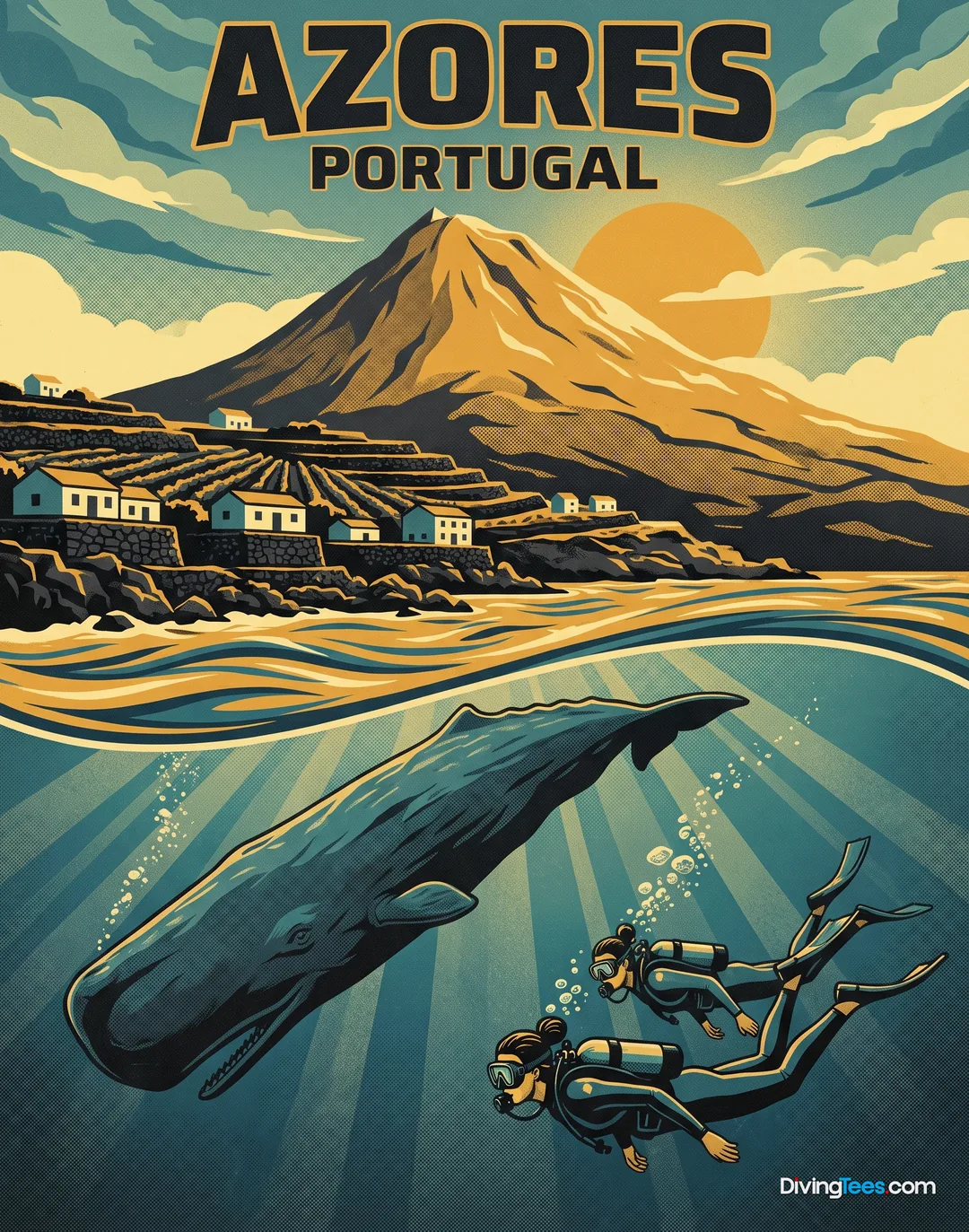
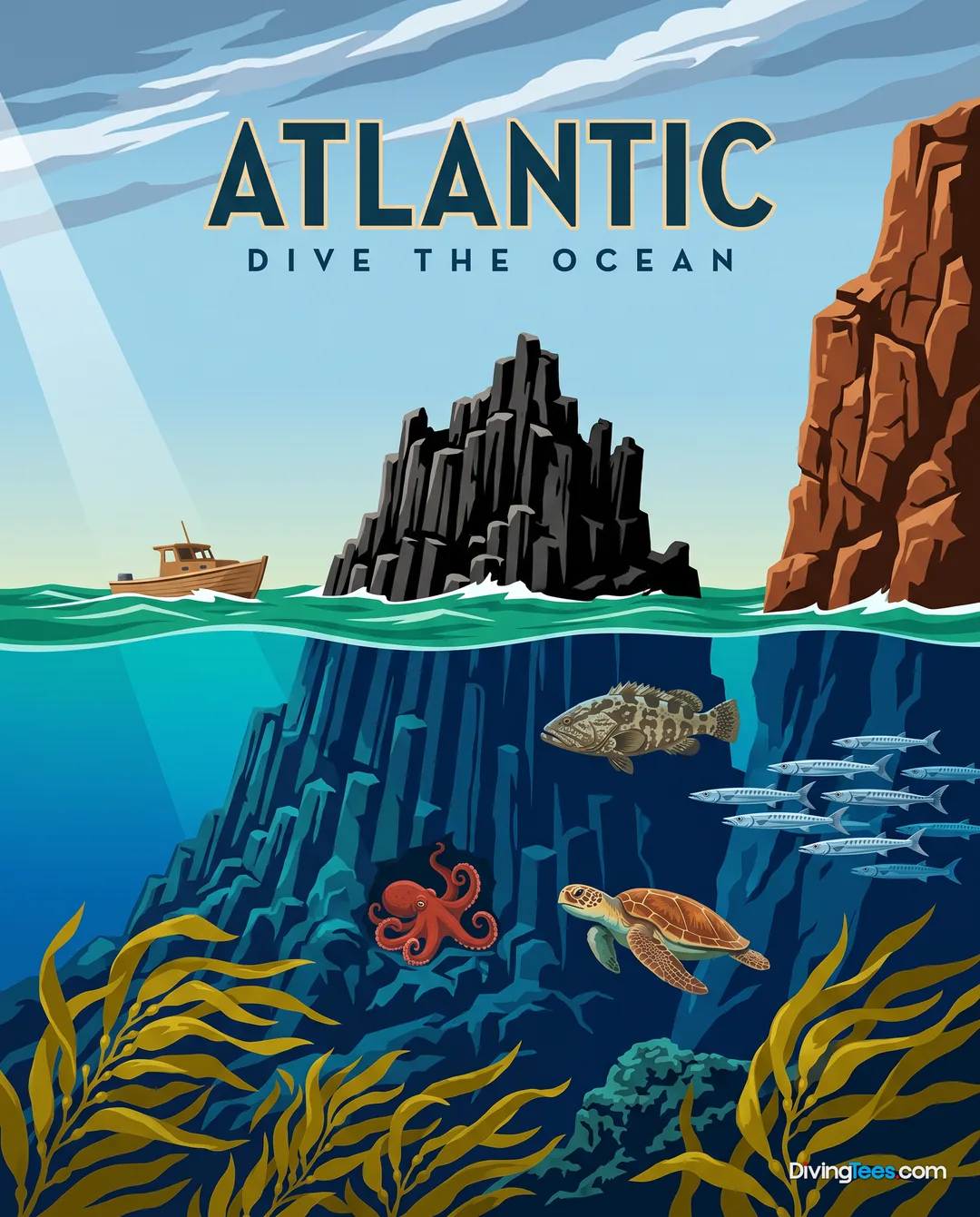
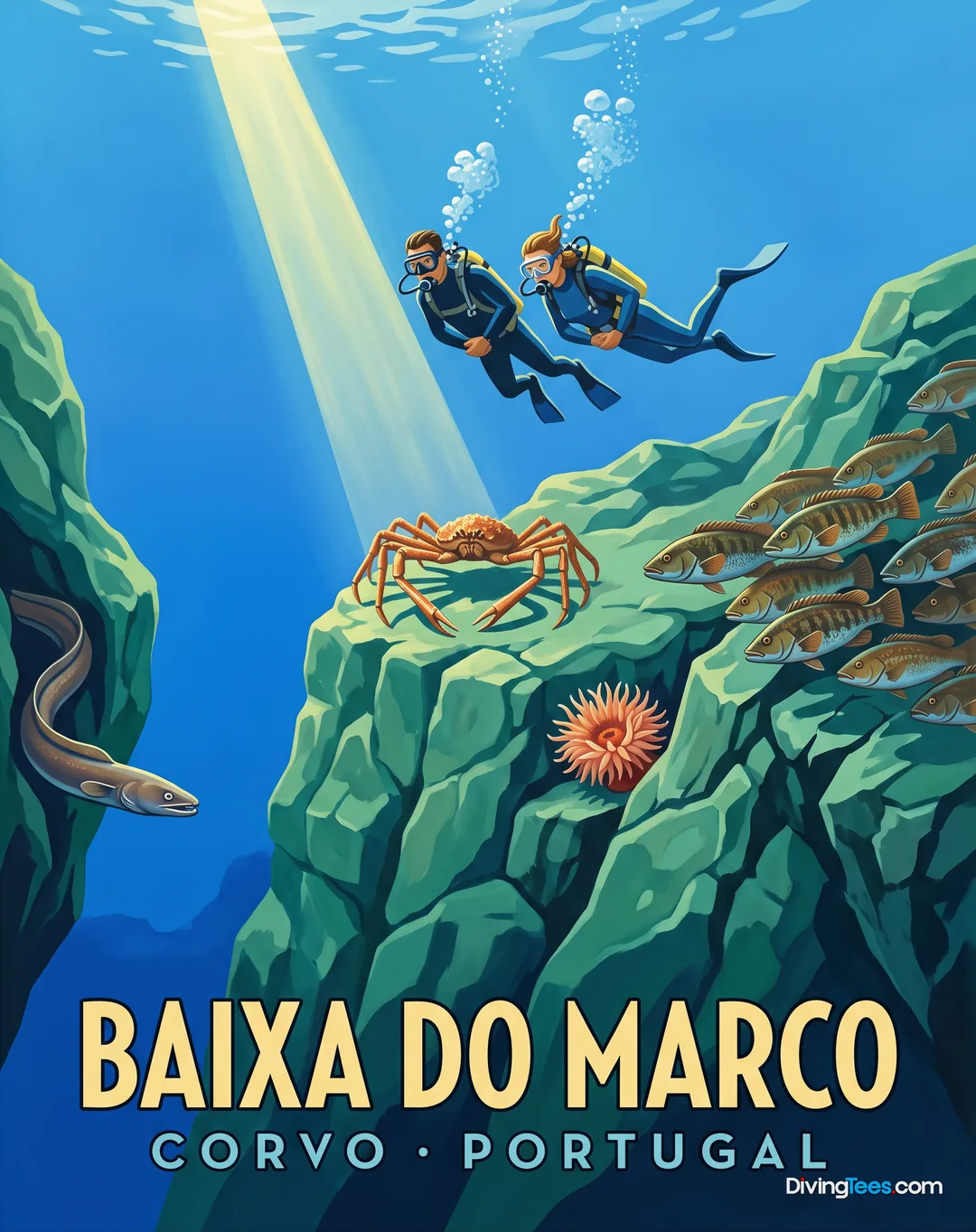
Volcanic walls, dusky groupers in close quarters, shallow platforms and offshore seamounts define Corvo's boat-based Atlantic diving.
For subtitles in English: start the video firstthen click the gearat the top right of the video, select “Subtitles/CC”, then “Auto-translate” and choose “English”.
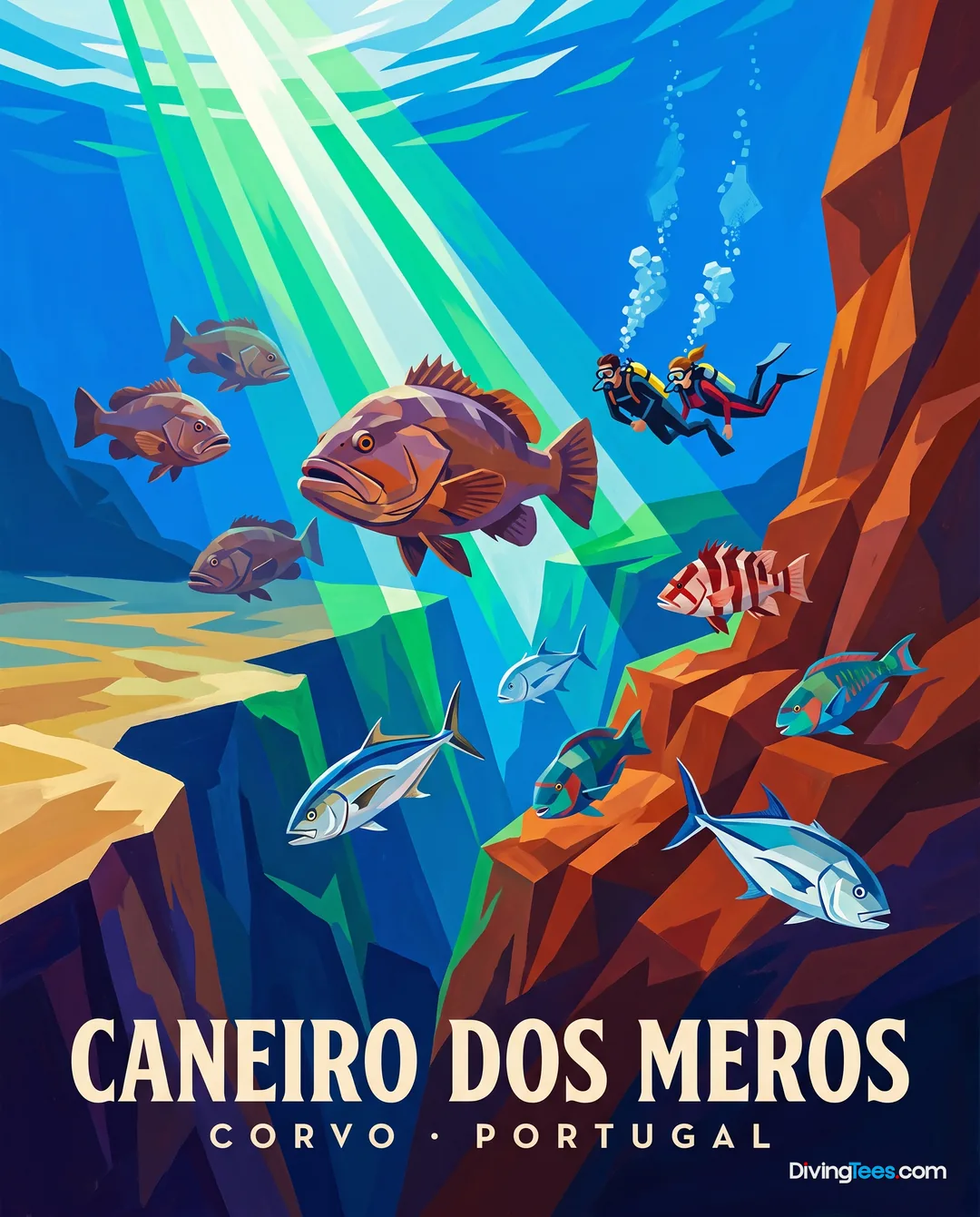
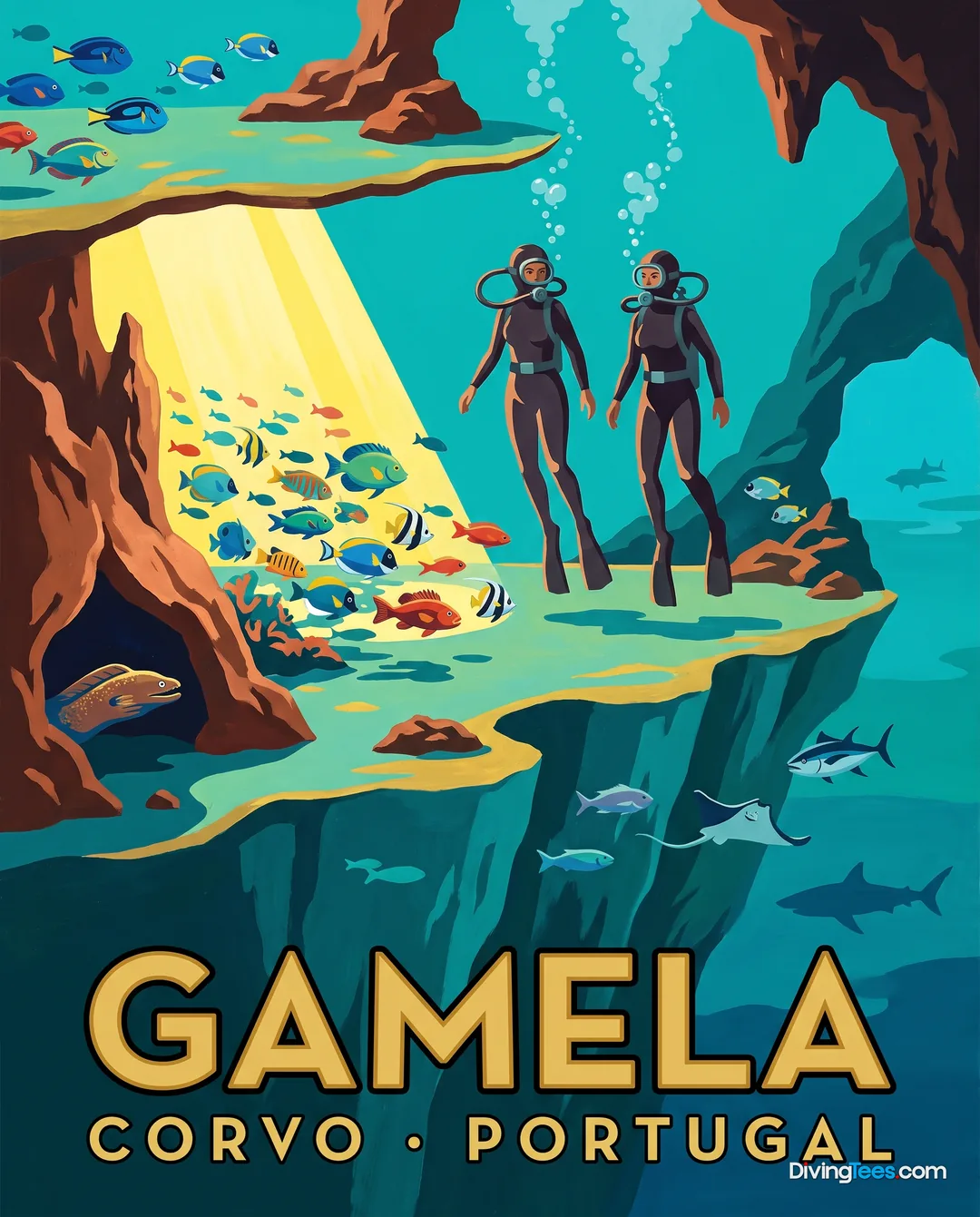
Caneiro dos Meros gives Corvo its clearest underwater signature: volcanic channels and walls, with dusky groupers often approaching closely. Gamela offers a gentler start, from a shallow platform and small caves to a 20-metre reef edge. Beyond those profiles, Corvo is about getting out by boat into exposed Atlantic water, where a seamount or offshore reef can make the day's diving feel properly remote. It is a destination for divers who would rather follow the weather than chase resort convenience.
The underwater scenery is volcanic rather than coral-built: channels, walls, platforms, caves, reef edges and exposed offshore features. At Caneiro dos Meros, the main profile reaches about 25 metres, with the site extending to 45 metres for suitably qualified divers. Visibility there is generally excellent, commonly around 30 to 40 metres or more, although that should not be treated as a guarantee for every outing. Currents are variable. They may be light at Caneiro dos Meros and manageable around Gamela's quay, but exposed sites such as Haut-fond de Buraco are more likely to feel the changing Atlantic sea state. Diving is boat-based, and conditions can alter quickly with wind and swell. Corvo therefore rewards calm, adaptable diving rather than a rigid programme of deep, exposed trips.
Caneiro dos Meros is the most specific wildlife encounter in the available site descriptions. Its volcanic ravines are known for abundant dusky groupers, which may come close to divers because the area has local no-fishing protection. Gamela adds the possibility of pelagic encounters at the reef edge, while Haut-fond de Buraco is described as a nutrient-rich seamount where big-fish action is expected. These are not aquarium-style guarantees: open water, current and sea state influence what appears. The most favourable period for reaching exposed features is generally June through September or October, so that window also gives the best practical chance of making the dives where pelagic and larger-fish encounters are part of the appeal.
Plan Corvo around the calmer Atlantic window, generally from June through September and sometimes into October. That is when exposed features such as Haut-fond de Buraco are most realistically incorporated into a stay, rather than left to a narrow weather gap. There is no useful reason to build the trip around a fixed species calendar here; the dependable planning factor is whether boats can reach the offshore terrain. Outside the calmer period, variable wind, swell and transport connections can turn a short diving holiday into a waiting exercise, with fewer sheltered alternatives than on a larger island.
Gamela is suitable for Open Water divers with sound buoyancy control, offering moderate depths and a more sheltered start near the quay. Corvo also has profiles for Advanced divers: Caneiro dos Meros reaches 45 metres, with its principal route around 25 metres, so depth planning and comfort in exposed boat diving matter. PADI, SSI and BSAC qualifications can all provide the relevant experience framework, but the important question is not the agency logo. Divers should be comfortable with variable current, changing sea conditions and a boat schedule that may need to adapt.
From London Heathrow, London Gatwick or Manchester, Corvo is reached by travelling via another Azorean island, followed by an inter-island flight or by ferry or boat from Flores. There is no road link connecting Corvo with the rest of the archipelago, so that island transfer is part of the journey rather than a minor final leg. Timetables need careful checking, and the dive plan should not depend on making a same-day connection with no margin. Once on Corvo, the island is very small and local transport options are limited. Arrange movements around the boat departure and return times; this is not a fly-and-drive base where missed connections can be easily absorbed.
Treat the sea and the timetable as the two fixed points of the trip. Leave buffer time on both sides of any Flores connection, and do not put a dive on the same day as an inter-island crossing. A missed boat or delayed transfer is far more disruptive here than at a mainland resort. Keep at least one day flexible for weather rather than assuming every planned offshore outing will run. Pack the exposure protection used for colder Atlantic diving; a tropical setup is an easy mistake on an exposed island. Do not approach Corvo as a spontaneous day-trip stop, and do not expect a dense choice of convenient shore entries when boats are unable to go out. The attraction is the volcanic scenery and open-water possibility, but the trade-off is a smaller safety margin in the schedule and fewer sheltered alternatives when wind or swell changes.
Allow three to five days on the island, not because the diving needs a long itinerary, but because transport slack and weather windows are part of the experience. This is a land-based stay, with diving organised locally from Corvo rather than from a liveaboard moving between distant areas. Combining the island with Flores makes sense, provided the crossings are buffered on both ends. Non-divers are best suited to quiet days of volcanic viewpoints, walks and the small-settlement atmosphere rather than a broad programme of entertainment.
Hello, I'm Marina, DivingDeal.com's AI assistant. I guide you through destinations, areas and countries.
Thinking about the whole trip and the flights? Talk it over with Edith →
Marina is an AI. Some links are affiliate links: DivingDeal may earn a commission, at no extra cost to you. Bookings are made with the partner.
Plan your Corvo diving stay from June through September, with conditions sometimes remaining suitable into October. This calmer Atlantic window gives boats a more practical chance of reaching exposed features such as Haut-fond de Buraco. Outside it, wind, swell and transport connections may create waiting periods, with fewer sheltered alternatives available.
Corvo suits Open Water divers with sound buoyancy control at Gamela, where you find moderate depths and a more sheltered start near the quay. Advanced divers can consider Caneiro dos Meros, whose principal route is around 25 metres and which extends to 45 metres. Comfort with boats, currents and changing sea conditions matters.
Corvo offers volcanic channels, walls, shallow platforms, caves, reef edges and offshore seamounts rather than coral scenery. Caneiro dos Meros is known for dusky groupers approaching closely in a local no-fishing reserve, while Gamela may bring pelagic encounters and Haut-fond de Buraco offers nutrient-rich water with potential big-fish action.
Allow three to five days on Corvo and keep at least one day flexible for weather. Travel via another Azorean island, then continue from Flores by inter-island flight, ferry or boat, leaving buffer around connections. Diving is organised locally by boat, so arrange transport around departure times and avoid same-day crossings.