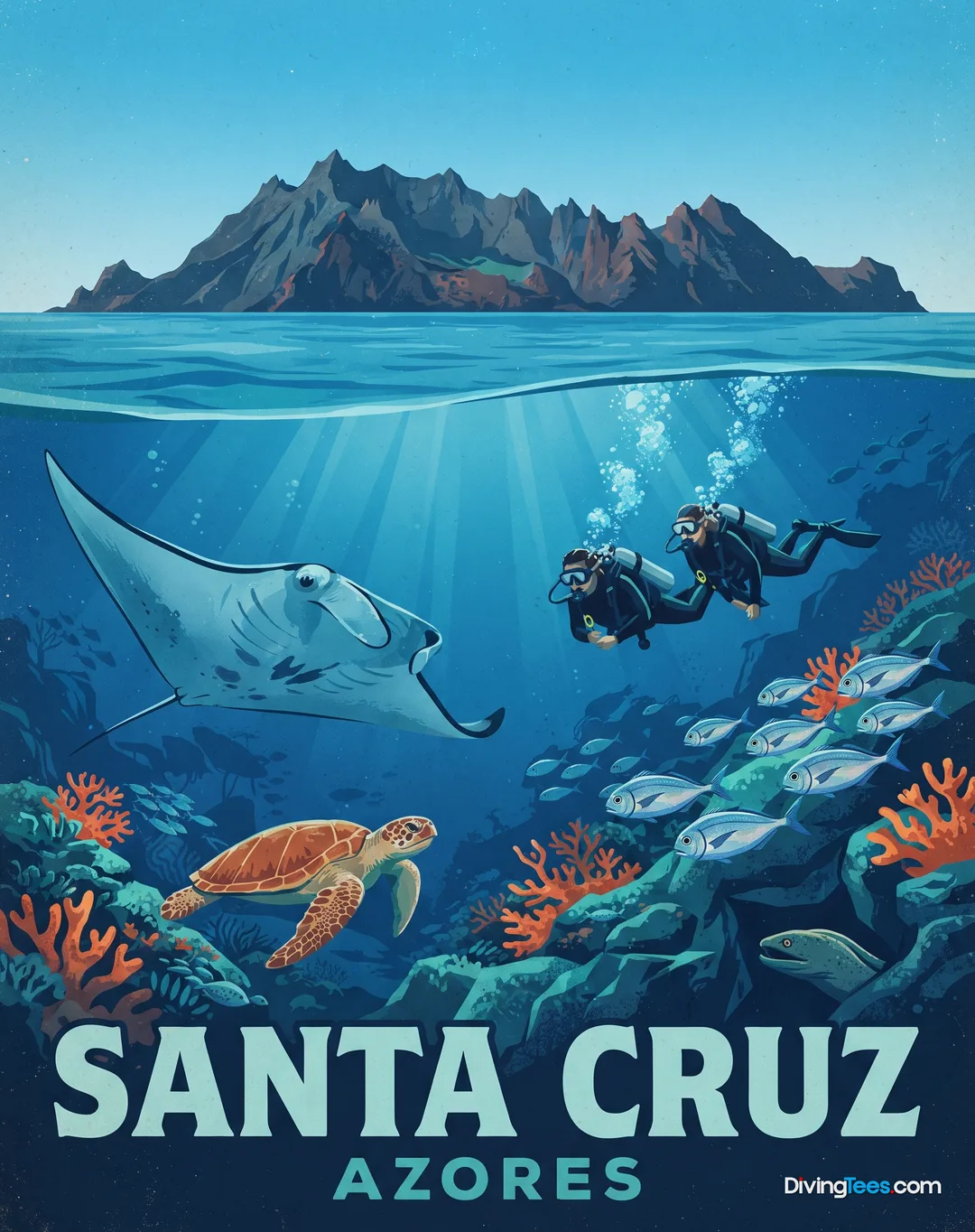
Santa Cruz · Azores · Atlantic
Max. depth · 45 mCaneiro dos Meros, Santa Cruz: Azores' Grouper Sanctuary
Descend into Caneiro dos Meros, where dusky groupers, some over 30 kilos, approach divers within arm's reach, just minutes from Santa Cruz harbour.
What makes this site special
- Voluntary marine reserve, first in the Azores
- Close encounters with large dusky groupers (Epinephelus marginatus)
- Groupers often exceed 30 kilos and 1 metre in length
- Located just minutes from Santa Cruz harbour
- Volcanic coastal reef with canyons and walls
- Excellent visibility, typically 20 to 50 metres
- Presence of barred hogfish and Mediterranean parrotfish
For subtitles in English: start the video firstthen click the gearat the top right of the video, select “Subtitles/CC”, then “Auto-translate” and choose “English”.
Caneiro dos Meros about the site
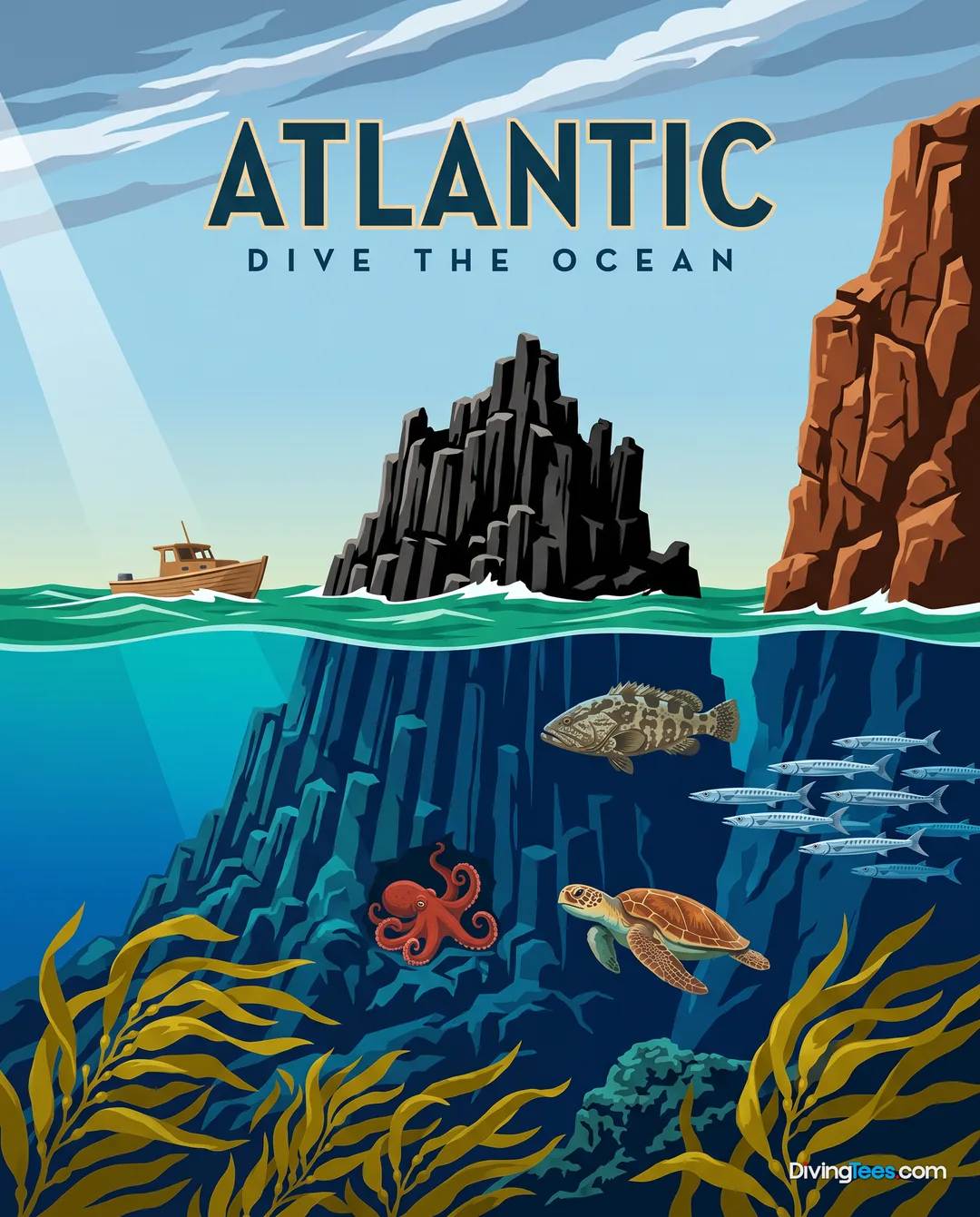
Caneiro dos Meros, also known as Dusky Grouper Passageway, is a volcanic coastal reef located just 100 to 150 metres off the coast of Santa Cruz, Corvo. This proximity to the harbour makes it highly accessible, a short three-minute boat ride from the quay. The site's topography is defined by ancient lava flows, creating a complex network of canyons and ravines with vertical rock walls and large boulders. These formations provide ample shelter and habitat for a diverse range of marine life.
As you descend, you'll find sandy patches along the bottom of these canyons, typically between 18 and 25 metres. These sandy areas gradually lead seaward, transitioning into a more pronounced wall that drops further to a sandy seabed at depths of about 40 to 45 metres. The light penetration varies with depth and the intricate reef structure, creating a dynamic underwater landscape that constantly shifts between open areas and more sheltered crevices. This varied profile supports different ecosystems within the same dive.
The defining feature of Caneiro dos Meros is its population of dusky groupers (Epinephelus marginatus). This site is the only voluntary no-fishing reserve in the Azores, a testament to an agreement between local fishermen and divers. This protection has fostered an environment where these large groupers, many exceeding 30 kilos and over a metre in length, exhibit an unusual lack of shyness, often approaching divers closely. You can expect to encounter more than a dozen of these fish during a single dive.
These groupers are not merely observed from a distance; they frequently interact with divers, sometimes following them throughout the dive. This behaviour is a direct result of the site's status as a protected area, where the marine life has grown accustomed to the respectful presence of humans. It offers an intimate perspective on their natural behaviours, allowing for close-up observation and photography opportunities that are rare elsewhere in the archipelago.
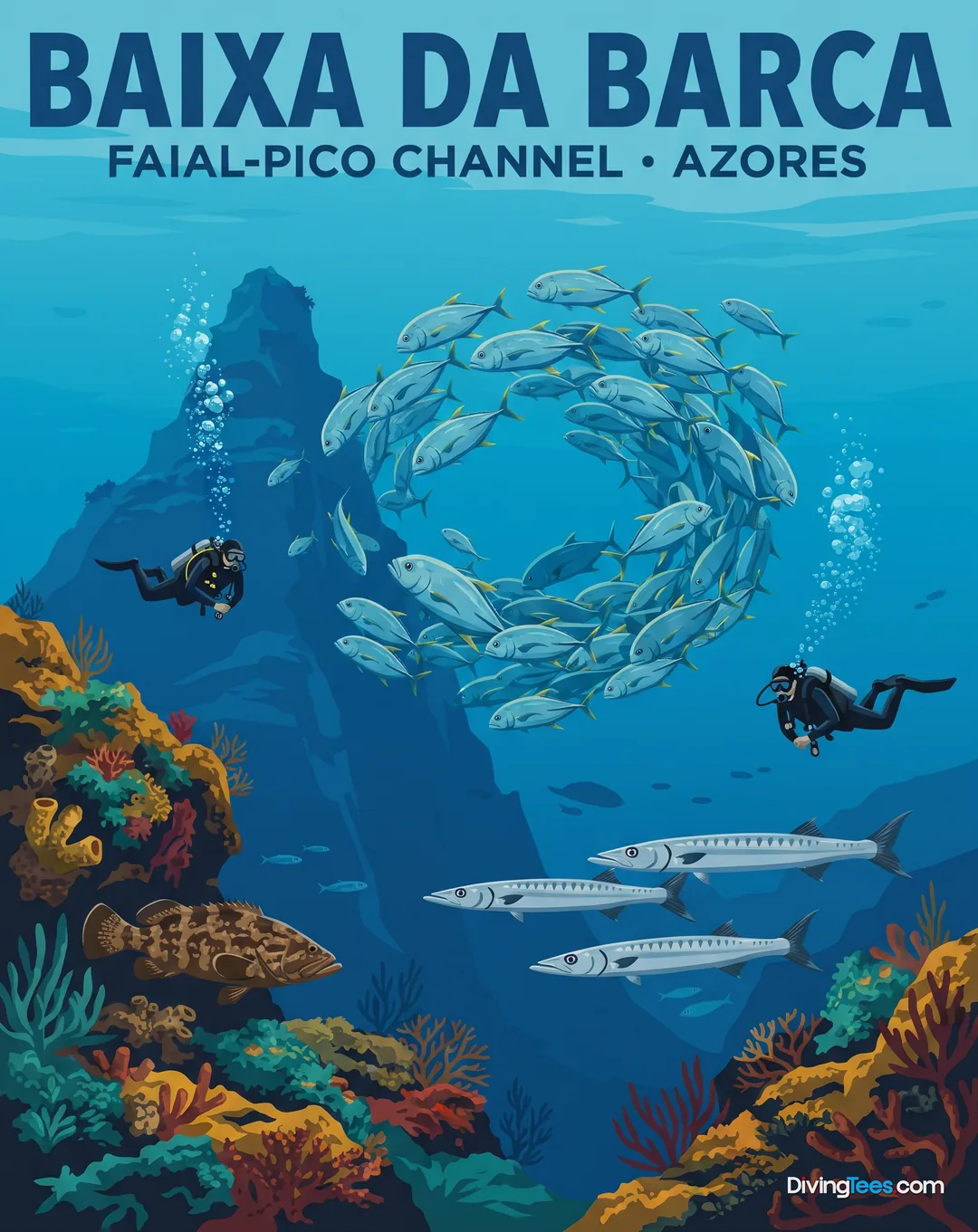
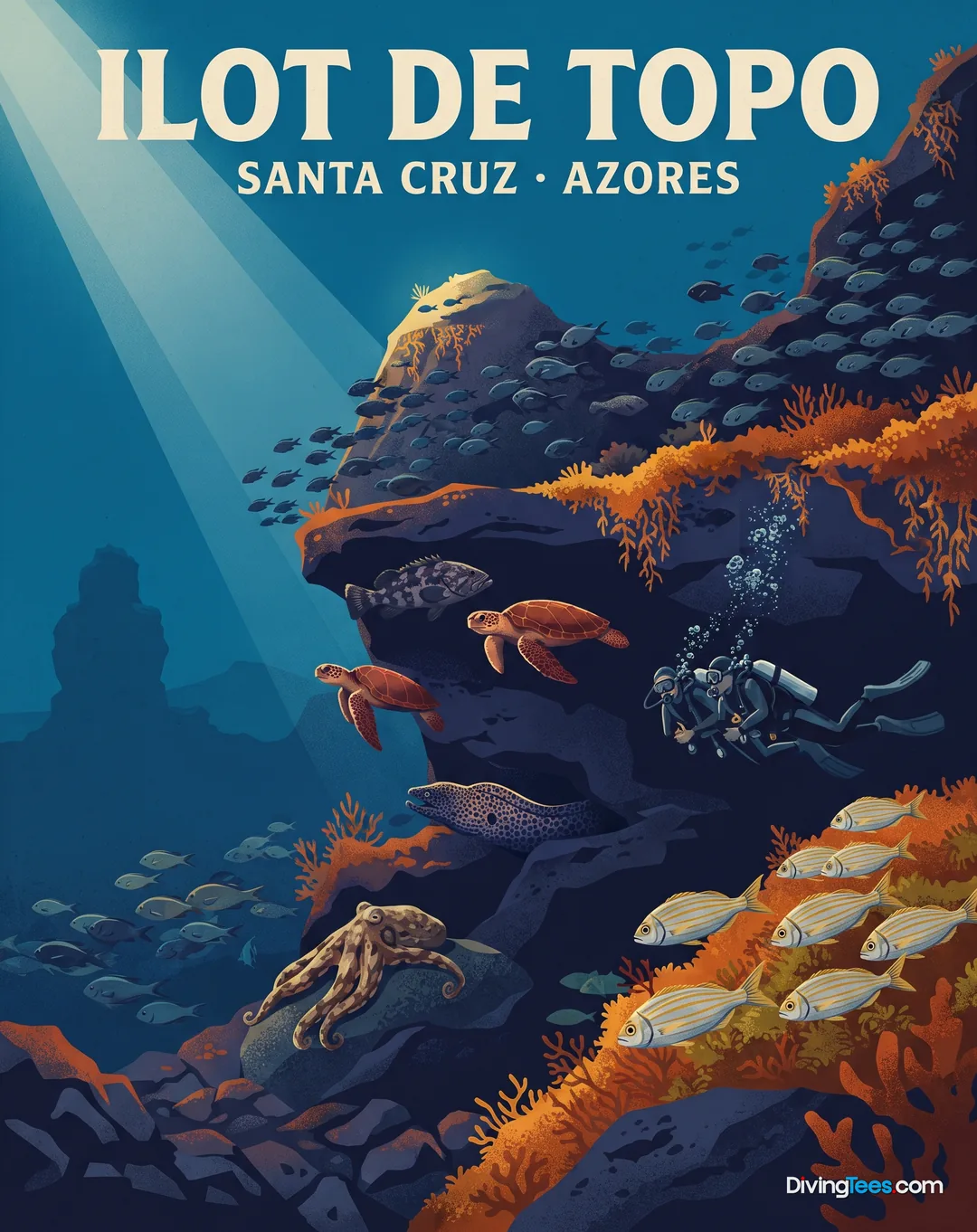
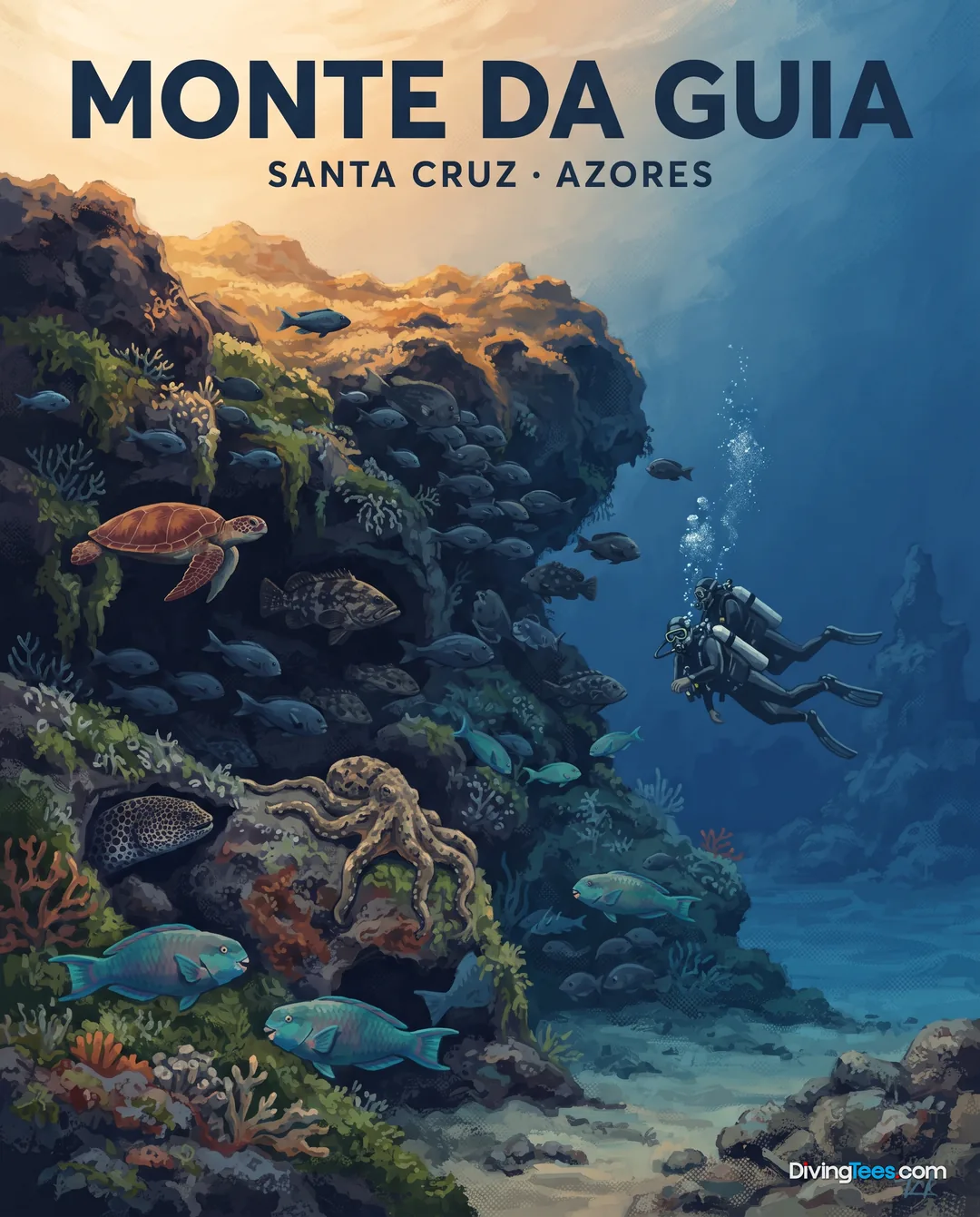
Beyond the groupers, the reef supports a variety of other species. You'll encounter barred hogfish, Mediterranean parrotfish, and various other demersal reef fish navigating the volcanic structures. Schools of pelagic fish, such as Almaco jack and white trevally, often patrol the deeper sections and the edges of the reef, adding another layer of activity to the dive. Yellowmouth barracuda can also be seen, typically in small groups, observing divers from a distance.
The current at Caneiro dos Meros is generally light. Its close proximity to the coast provides a degree of shelter, meaning it is not typically exposed to strong oceanic currents. While conditions are usually calm, the maximum depth of 45 metres still requires good buoyancy control and awareness, especially when exploring the deeper wall sections. Visibility here is often excellent, ranging from 20 to 50 metres, providing clear views of the expansive reef and its inhabitants.
Diving Caneiro dos Meros: the marine life you’ll meet
Diving conditions
Caneiro dos Meros is accessible for experienced divers, typically requiring an Advanced Open Water certification or equivalent, such as PADI AOW or BSAC Sports Diver. Depths range from a minimum of 18 metres to a maximum of 45 metres. The current is generally light due to the site's sheltered coastal location. Visibility is consistently good, usually between 20 and 50 metres. The best conditions for diving are typically found from July to October, though the site is diveable from March to November.