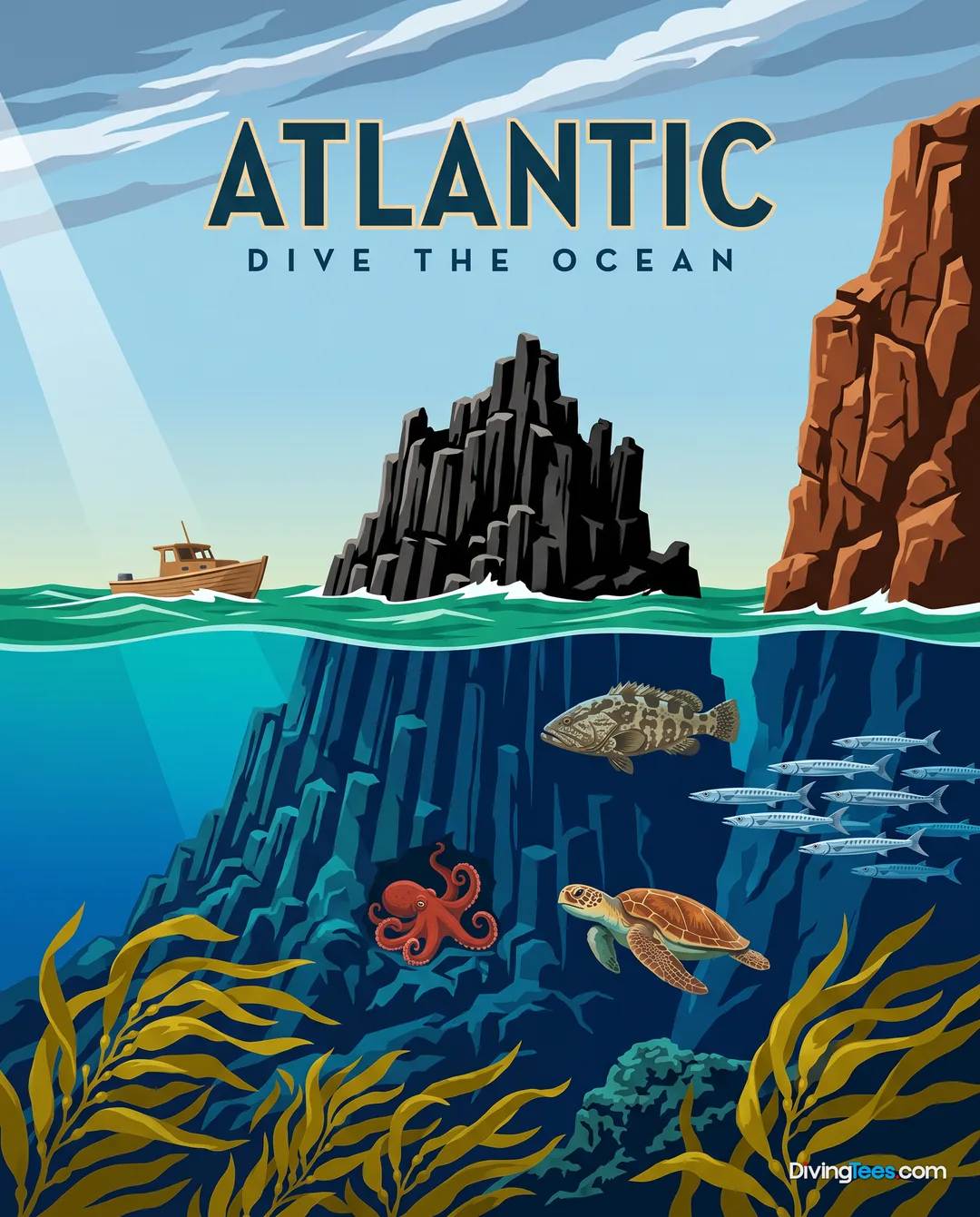
Santa Cruz · Azores · Atlantic
Max. depth · 96 mPesqueiro Longo, Santa Cruz: Azores Pelagic Reef Diving
Pesqueiro Longo is a dynamic high-bottom reef near Santa Cruz, Graciosa, where dense pelagic schools and robust black coral formations define the dive.
What makes this site special
- Dense schools of pelagic fish, including amberjack and barracuda
- Robust populations of dusky grouper
- Extensive black coral formations
- Dynamic high-bottom reef topography with a 20-metre plateau
- Accessible by boat from Santa Cruz, Graciosa
Pesqueiro Longo about the site
Dropping onto Pesqueiro Longo, you immediately feel the energy of a living high-bottom. This submerged reef, or 'baixa', rises from depths of 96 metres to a shallowest point at 6 metres, acting as a natural beacon for marine life in the fertile waters near Santa Cruz. The topography isn't a sheer wall but a stepped, plateau-like structure, with a notable platform around 20 metres that provides a stable base for observation. This structure creates a diverse habitat, supporting both resident species and attracting transient pelagic schools drawn to the nutrient-rich currents of the Azores.
The most striking feature of Pesqueiro Longo is the sheer quantity of pelagic fish that congregate here. As you descend, you will often find yourself enveloped in swirling schools of amberjack (Seriola dumerili), barracuda (Sphyraena barracuda), and tuna (Thunnus thynnus), their movements a coordinated dance dictated by the currents and the presence of predators. These aggregations are a constant reminder of the ocean's raw power and the site's role as a vital feeding ground, making the experience less about static observation and more about being part of a fluid, living spectacle.
Amongst the dynamic pelagic action, Pesqueiro Longo is also home to robust populations of dusky grouper (Epinephelus marginatus). You'll often find them lurking among the rocky outcrops and sheltering in the natural crevices of the high-bottom. Their territorial presence adds another layer to the ecosystem, providing a sense of permanence against the backdrop of the moving schools. Keep an eye out for their distinctive profiles as they patrol these valuable grounds, often allowing for steady, respectful observation.
Adding colour and texture to the volcanic rock substrate are the striking branches of black coral. These ancient and slow-growing organisms provide crucial habitat for smaller invertebrates and fish, creating pockets of intricate life within the larger landscape. Their presence indicates stable deep-water conditions and contributes significantly to the biodiversity of the site, making close inspection of these delicate structures a rewarding part of the dive. The light filtering down onto the reef illuminates this teeming activity, especially on the shallower plateaus.
The site's location off the northeast coast of Graciosa means it is exposed to the open Atlantic, which contributes to its dynamic nature. The currents here are variable, often bringing in the pelagic species that make this site so renowned. While the current can pick up, the site's stepped topography offers some shelter and vantage points, particularly around the 20-metre plateau, allowing divers to hold position and observe the passing marine life. This interplay of current and structure is what defines the experience at Pesqueiro Longo.
Pesqueiro Longo is accessible by boat from Santa Cruz, Graciosa, and is a regular feature on local dive centre itineraries. The clear Atlantic water typically offers good visibility, allowing you to appreciate the scale of the pelagic schools and the intricate details of the black coral formations. The site's reputation for attracting large schools of fish and its healthy populations of grouper make it a standout reef dive in the Azores, offering a distinct experience compared to other sites in the region.
Diving Pesqueiro Longo: the marine life you’ll meet

Diving conditions
Pesqueiro Longo is suitable for both novice and experienced divers, though the variable currents mean that a comfort level with drift diving or holding position in moving water is beneficial. The site reaches a maximum depth of 96 metres, with a minimum depth of 6 metres, making it accessible for various certification levels. The notable platform at 20 metres is a common depth for extended exploration. Currents are variable and can be strong, particularly due to the site's exposure and its role in attracting pelagic species. Visibility in the Azores typically ranges from 10 to 30 metres. The best time to dive this region is generally from June through October, when water temperatures are more comfortable.