
Greenwood Beach Resort
Google 4.8/5 (84 reviews)
Bahamas · Caribbean
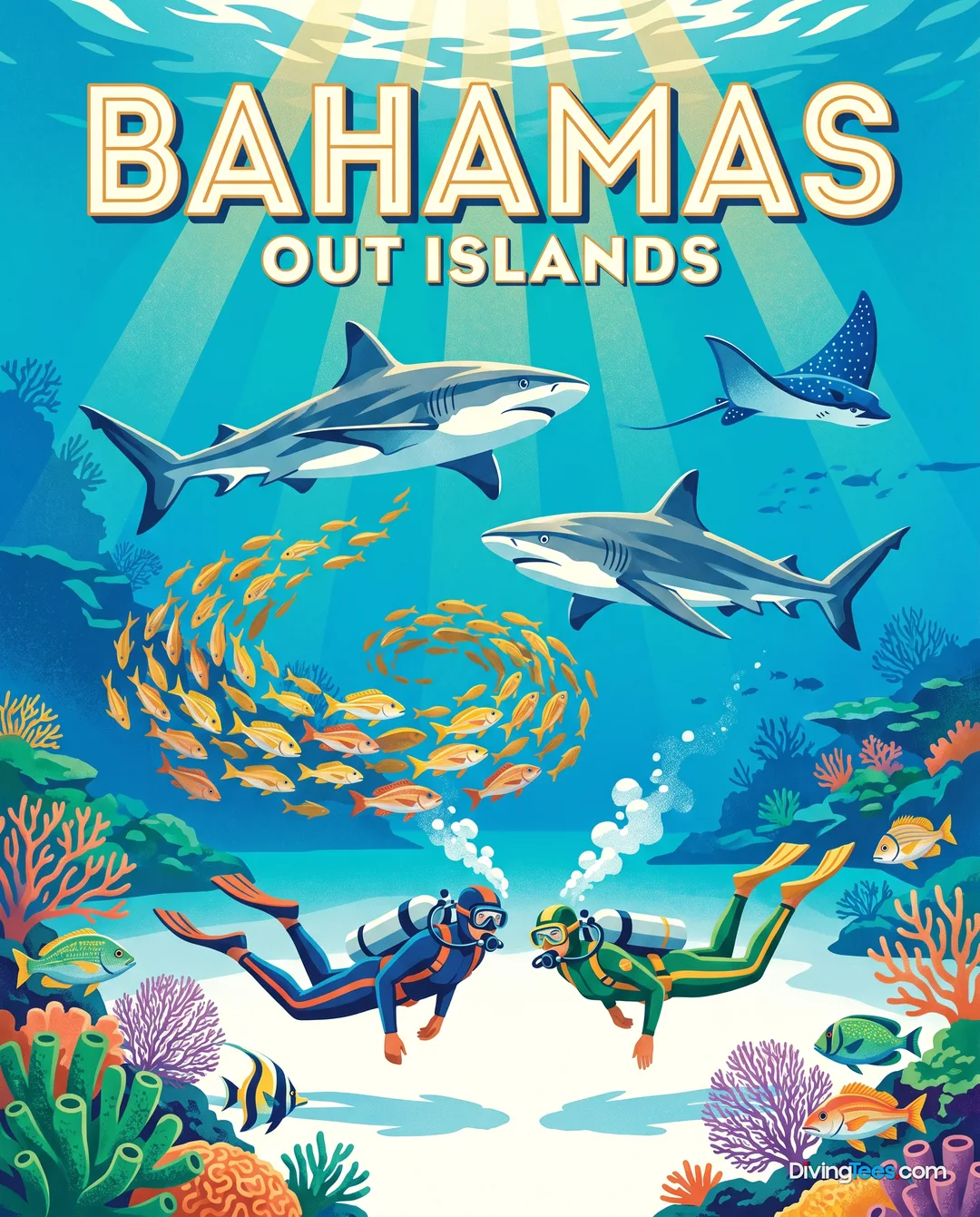
Shallow Bahamian reefs, walls dropping into blue water, and oceanic whitetip sharks in spring define Cat Island’s unhurried, boat-based diving.
For subtitles in English: start the video firstthen click the gearat the top right of the video, select “Subtitles/CC”, then “Auto-translate” and choose “English”.
Cat Island suits divers who want to move between shallow Bahamian reef, walls that fall away sharply, and open-water shark diving without turning the holiday into a busy resort routine. Most diving is from a boat, with the island’s southern walls and offshore sites doing the heavy lifting. Add the chance of oceanic whitetip sharks in spring, and this becomes a destination for a planned, specialist-leaning week rather than a casual add-on to a Bahamas itinerary.
The diving is predominantly boat-based, moving between shallow reefs, wall sites and exposed pelagic water. Around the south of the island, walls begin at low or medium depth before dropping strongly, so a dive can shift from reef inspection to open blue water within minutes. Currents are variable rather than reliably strong, but wind and sea conditions decide which sites are practical on a given day. Visibility is generally generous, commonly around 24 to 30 metres, although swell, particles and unsettled water can reduce it. The wreck Santa Maria Teresa, lost in 1898, adds a historical angle to the reef and wall programme. Offshore shark dives are a different proposition from ordinary reef dives: expect more exposure, deeper profiles and a properly planned safety stop, not simply another stop on a standard reef circuit.
The animal that gives Cat Island its seasonal identity is the oceanic whitetip shark. It is generally sought from March to June, with April and May the period most often associated with encounters. These are pelagic outings, so the experience is open-water observation rather than searching along a coral slope. Hammerhead sharks and silky sharks are occasional possibilities, while sea turtles are a regular part of the wider island diving. Dolphins may also appear, though they are not a dependable feature of a dive plan. On the reefs, the attraction is the change of setting: shallow Bahamian terrain close to shore, then walls and blue-water exposure offshore. A shark-focused trip should therefore be treated as an opportunity within the season, not a guaranteed appointment.
April and May are the clearest choice when oceanic whitetip sharks are the reason for travelling, as they sit at the centre of the broader March-to-June window. Cat Island remains diveable beyond that period for reefs and walls, so a general diving holiday does not depend on arriving in spring. Sea conditions still matter: wind and swell can affect offshore departures and may remove the pelagic option on a particular day. Visibility is usually high, but it is not fixed, and unsettled water can change the character of a site. The practical answer is to build flexibility into a spring trip rather than treating one shark outing as the entire plan.
This coast is exposed to sargassum strandings, whose intensity varies greatly from year to year. To find out more, see the “Sargassum” panel on this page.
Some shallow reefs can suit a newly qualified diver, but Cat Island is more rewarding, and more manageable, with experience in boat diving and changing conditions. The walls and deeper profiles call for sound buoyancy, depth awareness and comfort in open water. An Advanced Open Water qualification is useful for the deeper wall dives, while the offshore shark outings are best left to experienced divers. PADI, SSI and BSAC divers should judge the planned programme by recent experience, not simply by the certification card.
From London Heathrow, London Gatwick or Manchester, the usual journey involves a connection through Nassau, followed by a domestic flight to Cat Island. New Bight serves the central part of the island, while Arthur’s Town serves the north, so the arrival airport needs to match the accommodation and diving arrangements. There is no dependable maritime alternative to build a normal itinerary around. Allow time for the connection and arrange the onward transfer with the people meeting the flight, because choosing the wrong airport can make the island’s road distances awkward. The return journey deserves the same care, with the final dive kept well clear of the international flight.
Plan the flights and diving together from the start. Cat Island’s two relevant airports serve different parts of the island, and a cheaper ticket is false economy if it leaves you on the wrong side of the island. Keep spare days for wind, swell and a missed connection, especially if the trip’s main purpose is the oceanic whitetip shark season. Do not build the holiday around one shark departure: an offshore cancellation can remove the headline dive. Ask in advance which wall and pelagic outings are realistic for the forecast, because they are not interchangeable. Pack a back-up for essential personal equipment, since immediate replacement is not something to assume here. After the final deep or offshore dive, leave a buffer before the international flight. A seven-to-ten-day stay makes these margins possible and gives the reefs and walls room alongside the seasonal pelagic plan.
A land-based stay is the natural format, with boat diving arranged around the reefs, southern walls and any offshore shark outing. Seven to ten days allows for travel connections, weather margins and a proper mix of shallow and deeper diving. Non-divers can spend time on beaches, visit Mount Alvernia and its hermitage, explore villages and historical sites, or try kayaking, paddleboarding, snorkelling and accessible blue holes. Cat Island suits a quiet companion better than someone seeking nightlife or a dense tourist scene.
Hello, I'm Marina, DivingDeal.com's AI assistant. I guide you through destinations, areas and countries.
Thinking about the whole trip and the flights? Talk it over with Edith →
Marina is an AI. Some links are affiliate links: DivingDeal may earn a commission, at no extra cost to you. Bookings are made with the partner.
Choose Cat Island from March to June if oceanic whitetip sharks are your priority, with April and May most associated with encounters. Reefs and walls remain available beyond spring. Wind and swell can affect offshore departures, so keep your schedule flexible rather than relying on one planned pelagic outing.
Some shallow reefs around Cat Island can suit newly qualified divers, but experience with boat diving and changing conditions makes the trip more manageable. Wall dives require sound buoyancy and depth awareness. Advanced Open Water training is useful for deeper profiles, while offshore shark outings are better suited to experienced divers.
Cat Island combines shallow Bahamian reefs, walls that drop into blue water and offshore pelagic sites. You may see sea turtles, the Santa Maria Teresa wreck, lost in 1898, and oceanic whitetip sharks in spring. Hammerhead and silky sharks are occasional possibilities, while dolphins may appear without being a dependable feature.
Plan a land-based stay with boat diving arranged around the reefs, southern walls and possible offshore shark outings. Match your flight to the correct arrival airport and arrange transfers in advance. Allow flexibility for connections, wind and swell, keep the final dive clear of your international flight, and bring backup personal equipment.