
Grand Bahama Scuba
Google 4.7/5 (82 reviews)
11 km away as the crow flies
Grand Bahama · Bahamas · Caribbean
Max. depth · 31 mDescend onto Theo's Wreck, a 70-meter freighter intentionally sunk to create a vibrant artificial reef off Grand Bahama.
For subtitles in English: start the video firstthen click the gearat the top right of the video, select “Subtitles/CC”, then “Auto-translate” and choose “English”.
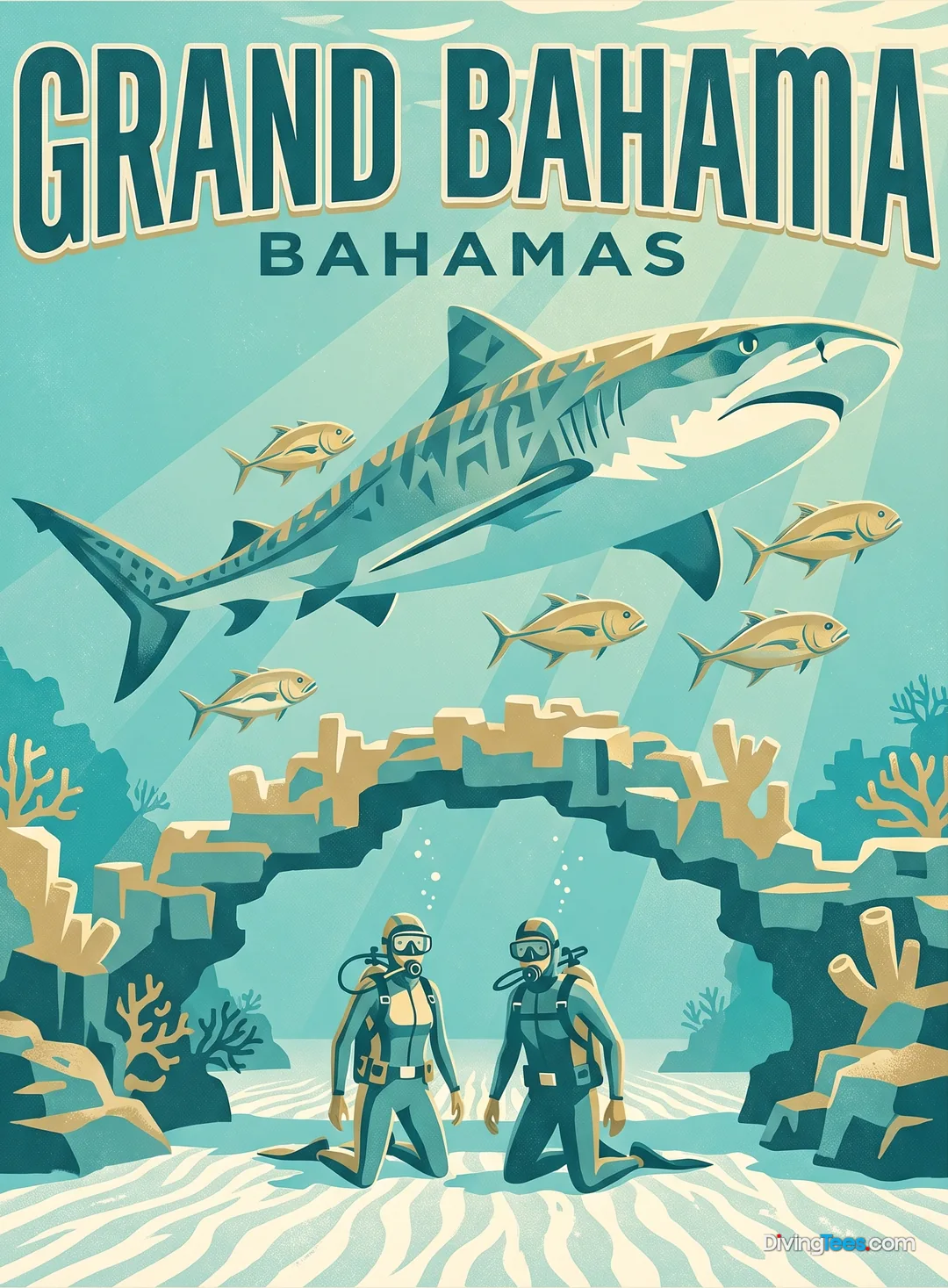
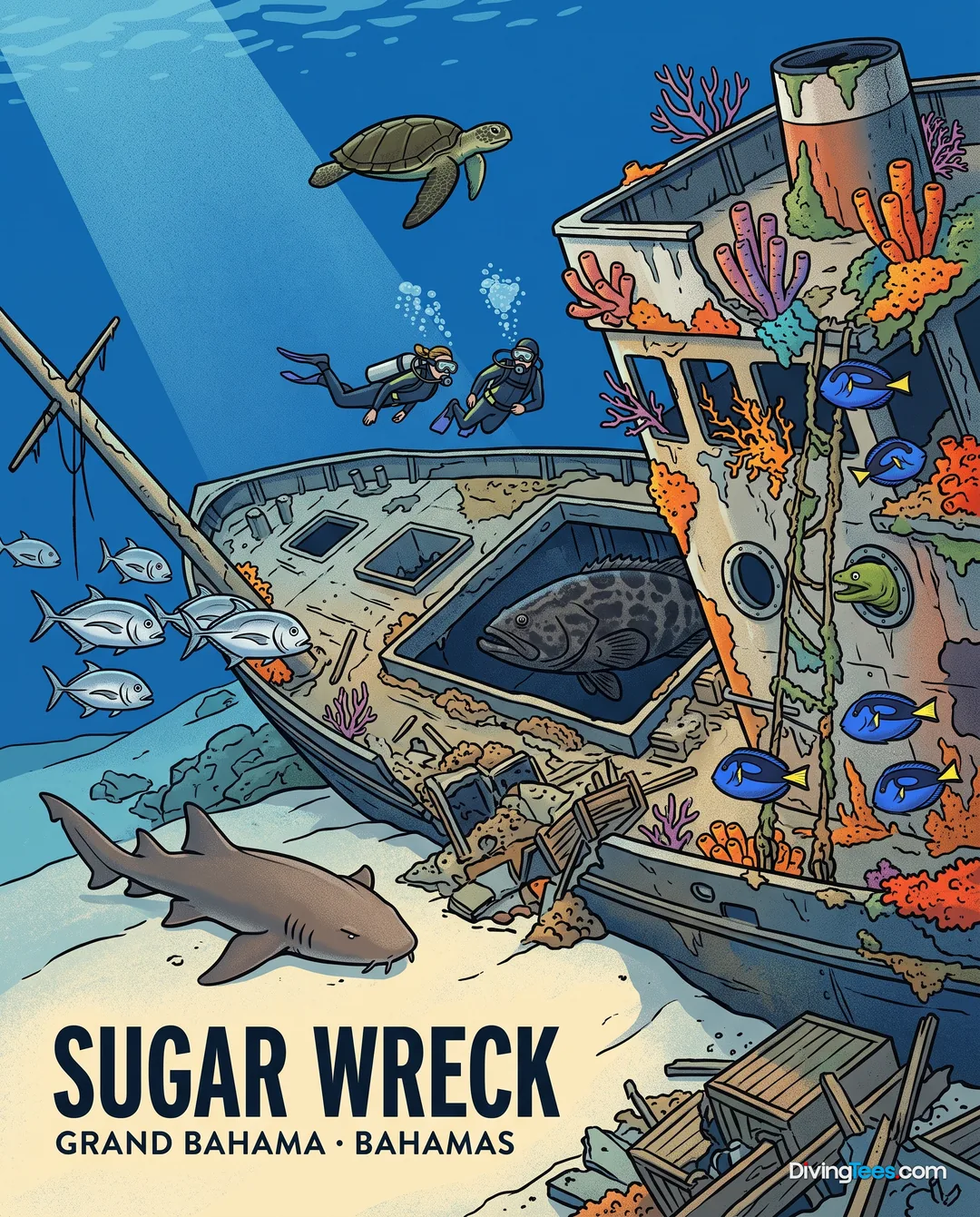
Theo's Wreck lies approximately 1.5 miles off Grand Bahama Island, a 70-meter (230 ft) steel-hulled freighter resting on its port side. The bow points towards the land, while the stern faces seaward, positioned on a flat sandy bottom between a deep reef and the drop-off of the Northwest Providence Channel. This intentional sinking in October 1982 by UNEXSO and collaborators transformed the former Norwegian freighter, once known as MV Island Cement and MS Logna, into one of the region's signature wreck dives.
As you descend, the sheer scale of the vessel becomes clear, its structure now heavily encrusted after decades underwater. The hull, anchor chain, and superstructure are adorned with gorgonian sea fans, sponges, black corals, and fire corals, creating a rich tapestry of marine growth. This transformation offers both wide-angle photographic opportunities of the wreck's overall form and macro subjects within the intricate details of its encrusted surfaces.
The wreck's position near the continental shelf drop-off means currents can be variable, often influenced by tidal changes. You'll typically use the permanent mooring buoys at both the bow and stern for controlled descents and ascents, which is a practical approach given the potential for stronger flow. Navigating around the wreck involves tracing its outline, exploring the various sections where the metalwork has been softened and integrated into the living reef.
Within the wreck's interior, you can explore cavernous cargo holds and the engine room, though these penetrations require appropriate experience. These enclosed spaces, along with companionways, provide shelter for a variety of resident species. Keep your eyes open for green moray eels and spotted moray eels, often found tucked into crevices, and large groupers, sometimes referred to as jewfish, patrolling the deeper sections.
The artificial reef draws in an array of tropical fish, making the interior and exterior of the wreck their permanent home. You'll encounter schools of French angelfish, parrotfish, and blue tang moving through the structure. Look closely for crocodile fish camouflaged against the encrusted surfaces, and lobsters tucked into the numerous nooks and crannies that the wreck provides.
The transformation of this vessel into a vibrant ecosystem is evident in the constant activity around it. The wreck acts as a magnet for marine life, from the smallest invertebrates to larger resident species that frequent its perimeters. This dynamic environment offers continuous observation, showcasing how a man-made structure can become a cornerstone of marine biodiversity.
Theo's Wreck is accessible for intermediate to advanced divers, particularly if you plan for deeper profiles or consider optional penetrations into the engine room and cargo holds. The dive depth ranges from 25 meters to a maximum of 31 meters. Currents at the site are variable and can be strong, especially with tidal changes, due to the wreck's proximity to the reef edge and the continental shelf drop-off. Controlled descents and ascents using the mooring buoys are standard practice here.
Theo's Wreck is accessible to intermediate and advanced divers. You need appropriate experience if you plan deeper profiles or optional penetrations into the engine room and cargo holds. These enclosed areas include cavernous spaces and companionways, so navigating them requires suitable wreck-diving experience and careful control around the structure.
Theo's Wreck rests at depths from 25 meters to a maximum of 31 meters. This places the dive within deeper profiles, particularly when you follow the wreck's outline or explore its lower sections. Permanent mooring buoys at the bow and stern support controlled descents and ascents to the freighter.
Currents at Theo's Wreck are variable and can be strong, especially when tidal changes affect the site. The wreck lies near the reef edge and the continental shelf drop-off, where flow can increase. You typically use the permanent mooring buoys at the bow and stern for controlled descents and ascents.
At Theo's Wreck, you can explore a steel-hulled freighter covered in gorgonian sea fans, sponges, black corals, and fire corals. Green and spotted moray eels occupy crevices, while groupers, French angelfish, parrotfish, blue tang, crocodile fish, and lobsters live around the wreck's structure and interior.