
Cabrits Dive Centre
Google 4.8/5 (101 reviews)
Portsmouth · Dominica · Caribbean
Max. depth · 27 mDouglas Bay Point offers a distinct dive profile where massive, coral-covered boulders transition into a vibrant wall, creating a three-dimensional landscape with numerous swim-throughs.
For subtitles in English: start the video firstthen click the gearat the top right of the video, select “Subtitles/CC”, then “Auto-translate” and choose “English”.
Douglas Bay Point presents a unique underwater topography, distinct from a typical wall dive. Your descent begins amidst an expansive field of massive, coral-covered boulders. These formations are not merely scattered; many are large enough to create intricate swim-throughs and tunnels, allowing you to navigate between and around them. This initial section offers a complex, three-dimensional route, inviting close inspection of the varied surfaces and the life they host, setting the stage for the deeper wall section.
As you move further along the site, these substantial rock formations gradually merge into a steep wall. This transition zone is particularly rich, where the structural complexity of the boulders meets the vertical expanse of the wall. Hard and soft corals compete for space across this sculpted landscape, creating a dense and colourful display. The varied exposure to light and water movement across this topography influences the specific coral species thriving in different areas, offering a continuous visual change as you explore.
The dive profile at Douglas Bay Point allows for comfortable exploration, with depths ranging from 6 metres down to a maximum of 30 metres. While navigating the boulder field and along the wall, observe how the natural light filters through the water. This creates shifting patterns of light and shadow, enhancing the visual depth of the coral formations and drawing attention to the intricate details of the reef ecosystem. This interplay is a constant feature, changing with your depth and orientation.
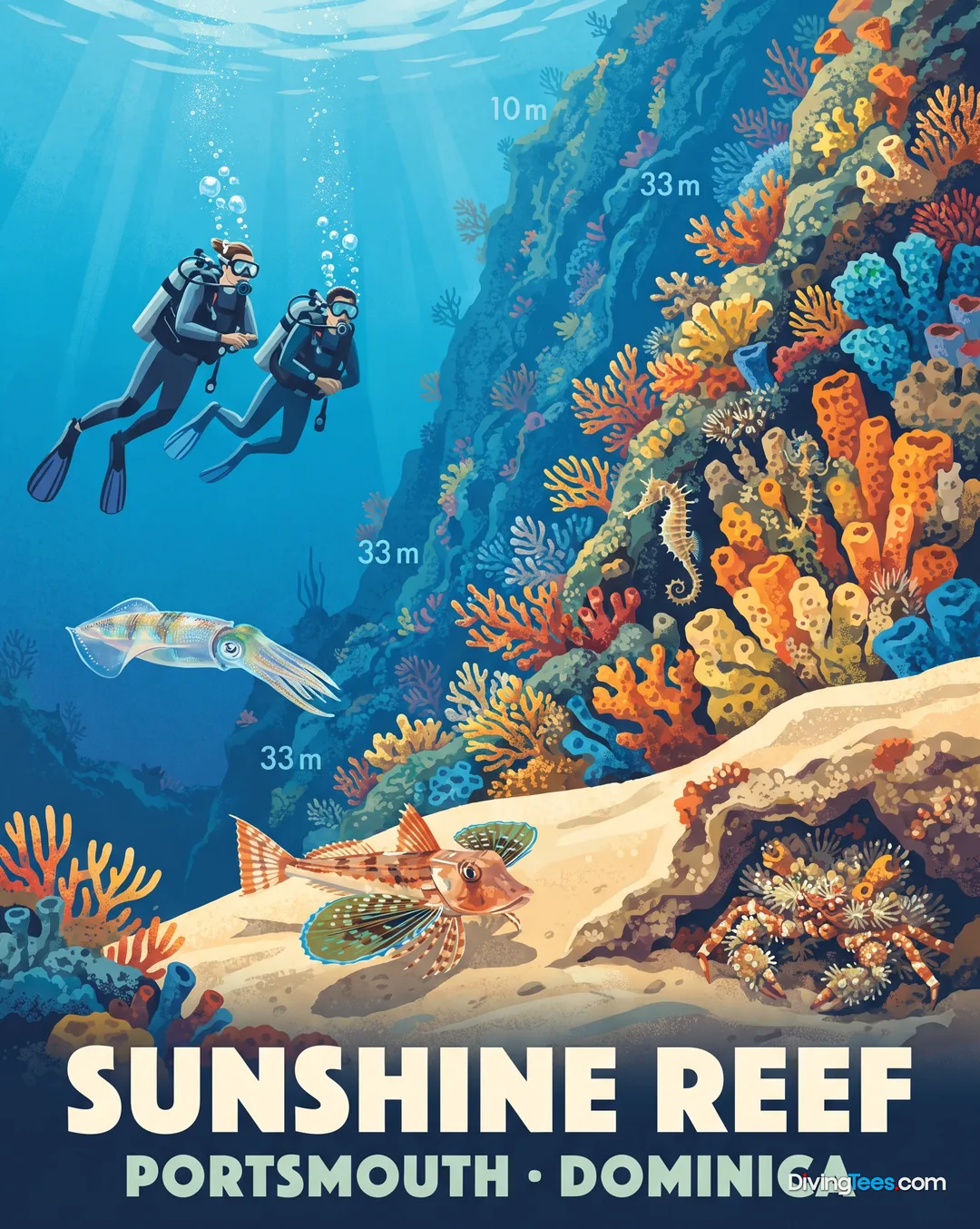
The unique structure of Douglas Bay Point, with its combination of massive boulders and a steep wall, creates a series of micro-habitats. Sheltered pockets exist alongside more exposed areas, influencing the types of coral growth and the resident marine life you encounter. This varied environment supports a range of species, from smaller reef fish seeking refuge in crevices to larger pelagics patrolling the deeper sections of the wall. Keep an eye out for decorator crabs camouflaged among the corals and lobsters tucked into overhangs.
Among the resident fauna, you may encounter various rays, including spotted eagle rays, stingrays, and electric rays, often found gliding near the sandy patches or resting on ledges. The site also hosts a variety of reef fish, barracuda, cero mackerel, and snapper, which are commonly seen patrolling the reef edges or schooling in the blue. Anglerfish are also present, often blending seamlessly with the coral, requiring a keen eye to spot them.
The site's proximity to the shore, just a short boat ride from Portsmouth, makes it easily accessible. Despite its dramatic topography, the current at Douglas Bay Point is typically light, making it a manageable dive for recreational divers. While local currents can vary with weather and tides, the site is generally known for its calm conditions, allowing for unhurried exploration of its unique features and abundant marine life.
Douglas Bay Point stands out for its distinctive blend of a dramatic wall and massive coral-covered boulders, offering a three-dimensional diving experience. Unlike sites that are purely wall or purely reef, this location provides a continuous transition between these environments, allowing for varied routes and perspectives. The opportunity to swim through natural canyons and tunnels formed by these boulders adds a unique element to the dive, making it a memorable exploration of Dominica's underwater landscape.
Douglas Bay Point is accessible from a minimum depth of 6 metres, extending down to a maximum depth of 30 metres. This site is suitable for Open Water divers with basic experience. Current is typically light, though local conditions can vary with weather and tides. Visibility generally ranges between 15 and 30 metres, offering clear views of the intricate topography and marine life.
Douglas Bay Point is suitable for Open Water divers with basic experience. You can explore a field of massive coral-covered boulders, navigate natural swim-throughs and tunnels, and continue toward a steep wall. Its manageable recreational profile and typically light current support unhurried exploration, although local conditions may vary.
At Douglas Bay Point, your descent begins at 6 metres and the dive profile extends down to a maximum of 30 metres. The shallower boulder field leads toward deeper sections where the formations merge into a steep wall, creating changing perspectives as you move through the site.
The current at Douglas Bay Point is typically light, making the site manageable for recreational divers and allowing you to explore its boulders, tunnels, and wall without rushing. Local current conditions can vary with weather and tides, so you should still expect conditions to change during your dive.
At Douglas Bay Point, you can see massive coral-covered boulders, swim-throughs, tunnels, and a steep wall covered with hard and soft corals. Marine life includes spotted eagle rays, stingrays, electric rays, reef fish, barracuda, cero mackerel, snapper, anglerfish, decorator crabs, and lobsters.