
Action Adventure Divers
★ 5/5 (144 reviews)
7.6 km away as the crow flies
St. Lucia · Caribbean
Volcanic walls beneath Petit Piton, the Lesleen M wreck, pillar corals and turtles make Saint Lucia a place for varied, tactile diving.
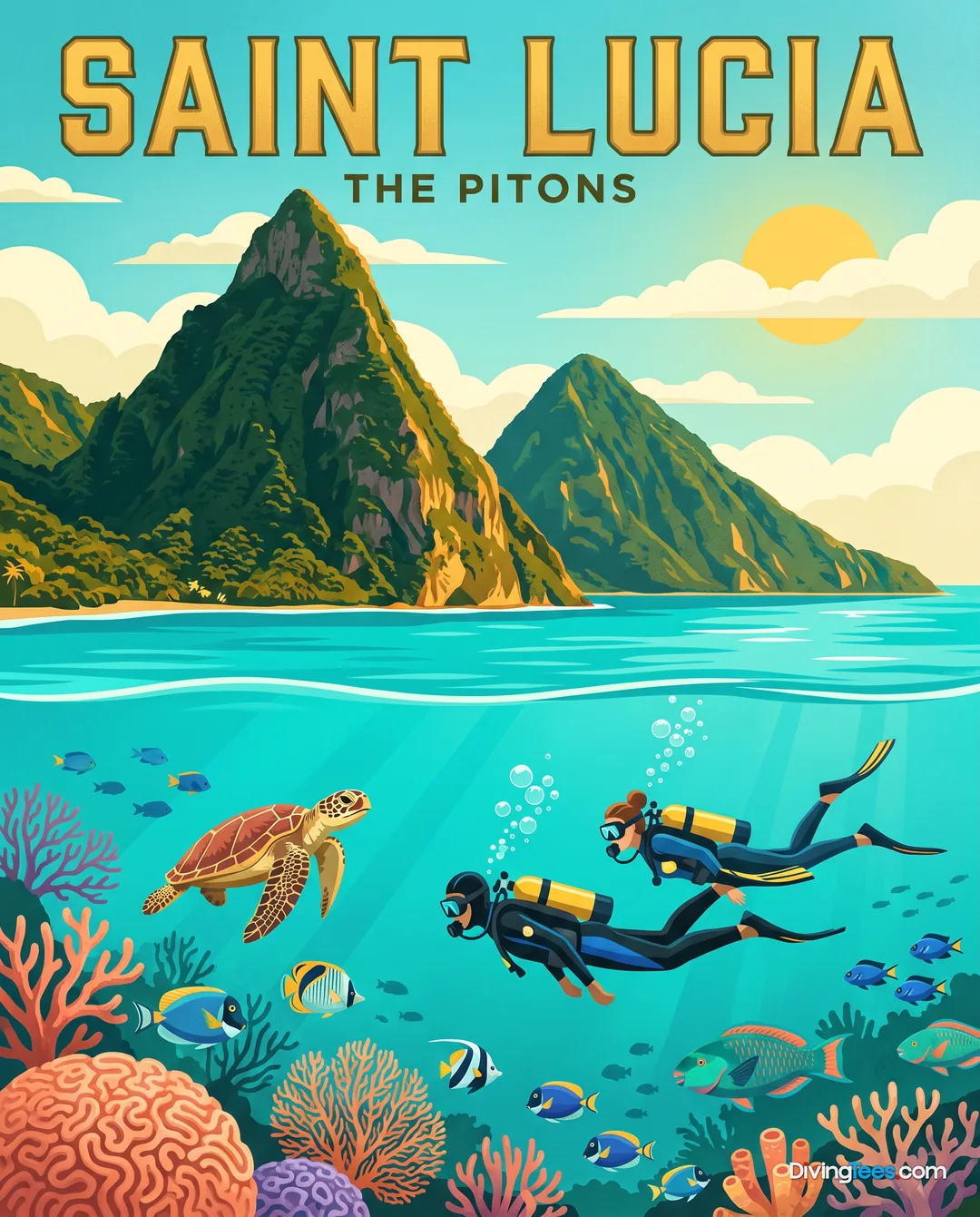
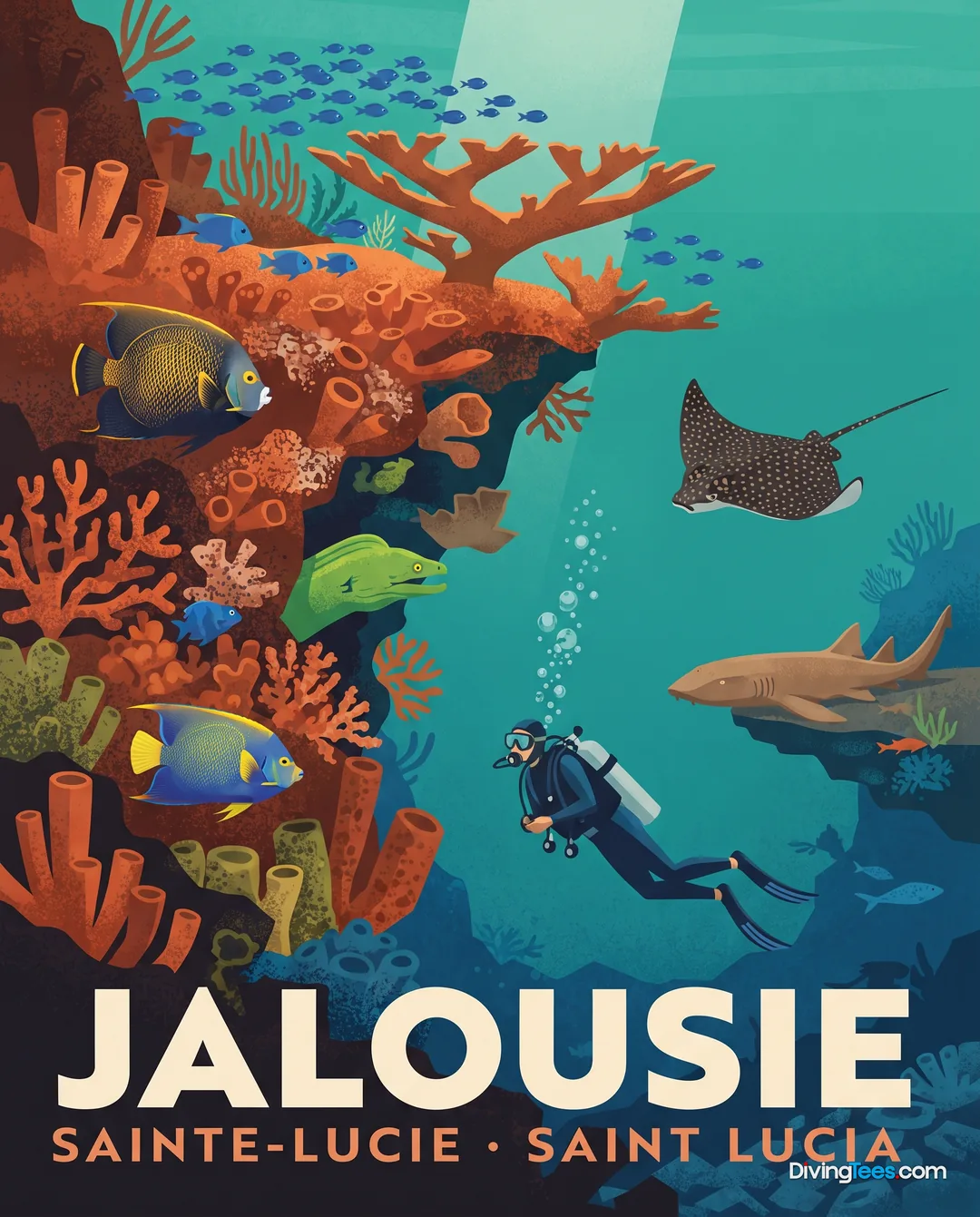
Saint Lucia puts volcanic scenery directly into the dive plan. Beneath Petit Piton, Superman's Flight and Piton Wall follow steep slopes and walls, while Jalousie works around the foot of Gros Piton. There is also the deliberately sunk Lesleen M wreck, with its deck beginning at nine metres, and easy shallow reef at Anse Couchon. The result suits divers who like changing their pace: coral gardens and small creatures on one dive, a wall or drift profile on the next.
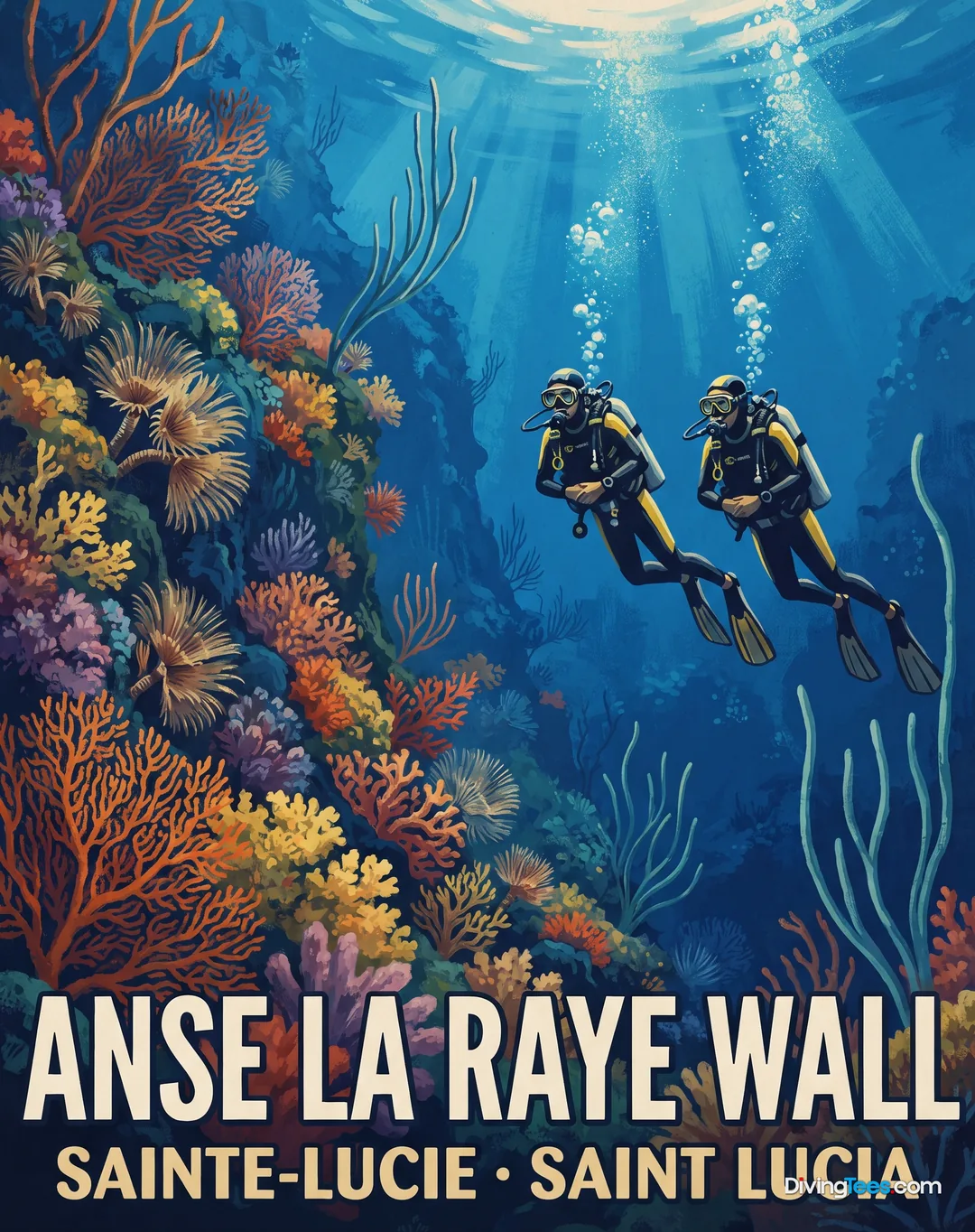
Walls, steep reef slopes and underwater pinnacles define the diving. Anse Chastanet Reef moves from a two-metre plateau down to forty-two metres, while Turtle Reef starts at twelve metres before falling beyond forty-five. Piton Wall offers a five-to-forty-metre profile, and Anse La Raye Wall begins around eighteen metres and reaches thirty-four. Currents are not uniform: Anse Couchon is generally sheltered with light flow, Fairyland has a gentle drift, while Pinnacles can be strong and unpredictable. Superman's Flight is normally a moderate south-running drift, occasionally stronger. Visibility varies by site, with Anse Couchon commonly offering fifteen to thirty metres and Piton Wall sixteen to forty. Boat dives are central to the deeper walls and drifts; Anse Chastanet also provides shore diving.
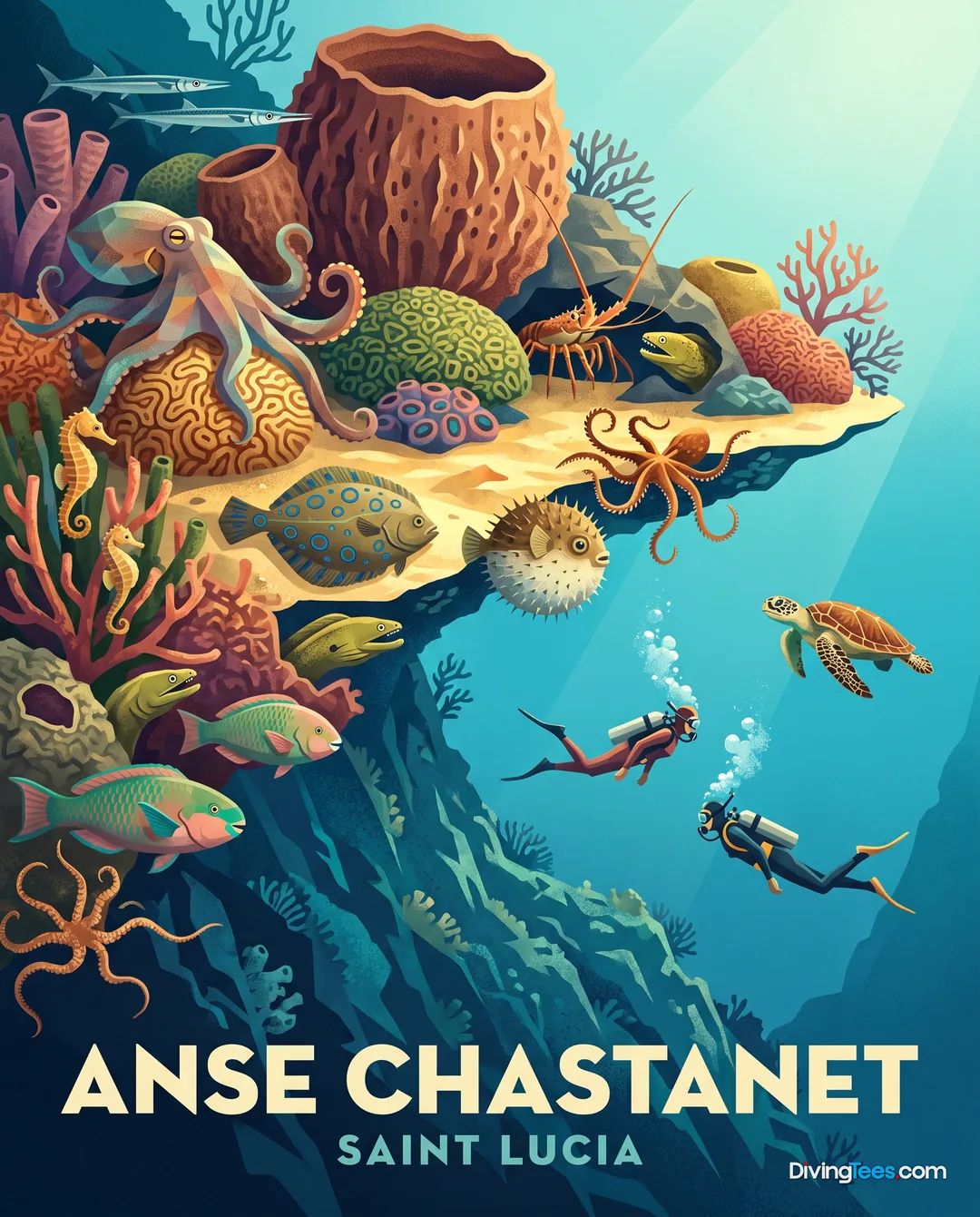
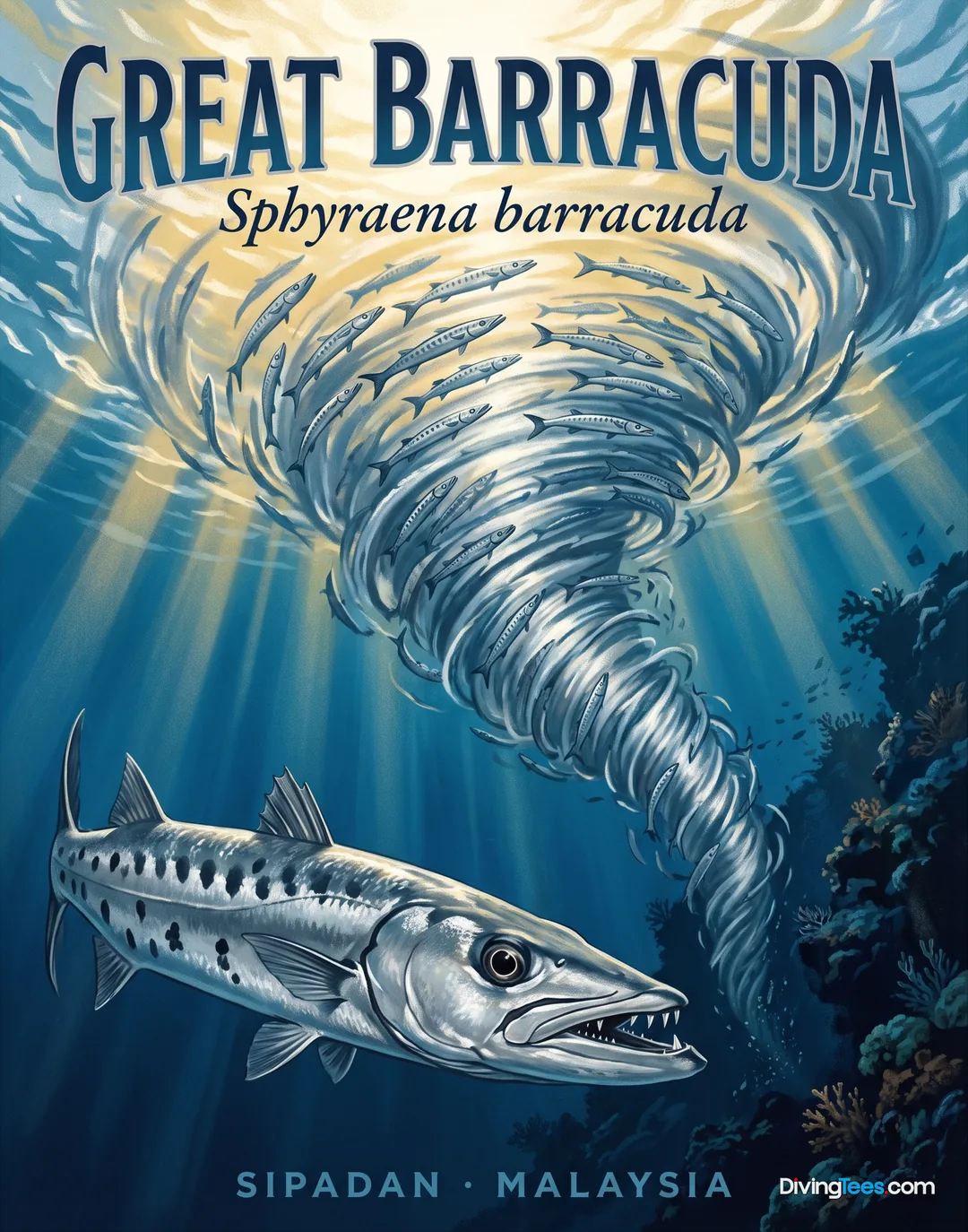
The reefs reward a slow, observant approach rather than a search for one headline animal. Anse Couchon's shallow rocks and reef slope hold seahorses, scorpion fish and cleaner shrimps. Sponges, soft coral, sea whips, gorgonians and feather duster worms cover the walls and give small crustaceans plenty of shelter. Larger sightings include sea turtles at Turtle Reef and Fairyland, great barracuda and jack around the reef, and schooling fish at Trou Diable and Jalousie. Moray eel, octopus, squid, lobster, spotted drum and reef fish add interest at closer range. Barrel sponges are particularly prominent at Turtle Reef, while Anse Chastanet Reef is suited to macro-looking and night diving.
The measured calmest period is August to October, making it the most dependable window for divers who want easier boat work and more settled drift profiles. That period should be the first choice for a relaxed itinerary, particularly when planning sites affected by current. Conditions are not identical everywhere: Anse La Raye Wall is described as clearer and more settled from December to May, with visibility typically around eighteen metres. Saint Lucia therefore rewards a choice based on priorities: August to October for the calmest sea overall, or December to May when the wall dives and their visibility matter more.
This coast is exposed to sargassum strandings, whose intensity varies greatly from year to year. To find out more, see the “Sargassum alert” panel on this page.
Saint Lucia can accommodate beginners, but the destination is not uniformly gentle. Anse Couchon and the Lesleen M wreck are suitable for beginners, while Anse Chastanet Reef offers depth options from a shallow plateau to a much deeper slope. Anse La Raye Wall calls for Advanced Open Water or equivalent experience, especially with drift diving. Pinnacles and Superman's Flight suit intermediate or experienced divers because of current and depth. Advanced Open Water, PADI or SSI equivalents, and BSAC training for deeper, wreck or current work are useful; certification must match the planned profile.
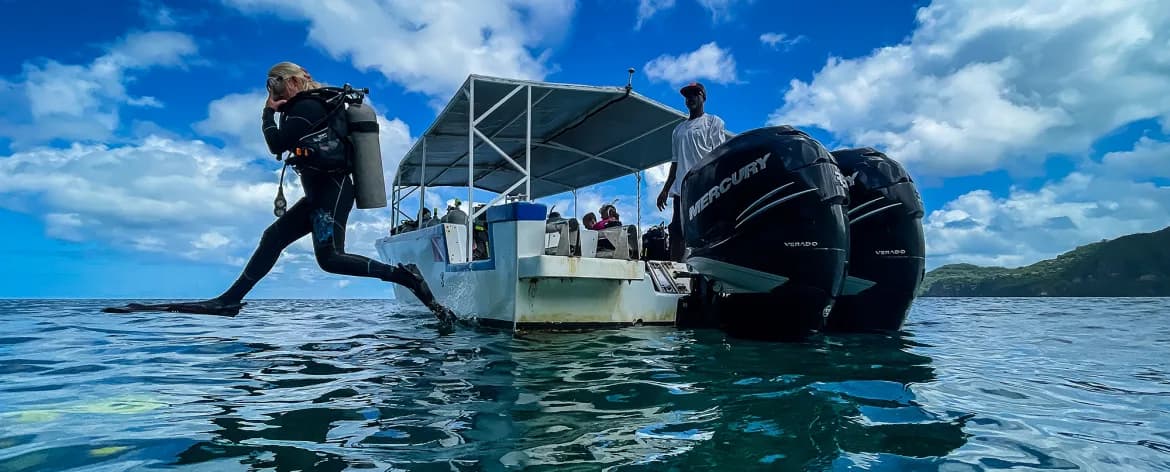
For travellers leaving London Heathrow, Gatwick or Manchester, the practical point is to plan the onward journey around the diving base rather than assume every site is reached from the shore. Once on Saint Lucia, access is mixed: Anse Chastanet Reef is a shore-diving option, while Pinnacles is exclusively a boat dive and the deeper walls and drift sites are approached by boat. Anse Couchon and the Lesleen M wreck are also used as straightforward recreational dives, but their exact transfer arrangements depend on the local base. Allow enough margin for connections and for the boat schedule, particularly when the itinerary includes current-sensitive sites. Local access is therefore best understood as a combination of shore entry and organised boat departures.
Keep Anse Chastanet Reef in the plan early: its shallow plateau allows a gentler start, while the slope can take the dive deeper as confidence and conditions allow. Save the Lesleen M for a straightforward wreck profile; the deck starts at nine metres and the seabed is at twenty, so it works well when a more ambitious wall is not attractive. Do not treat every drift as interchangeable. Pinnacles can carry strong, unpredictable current, and Superman's Flight may become strong even though it normally runs moderately south. At Anse La Raye Wall, previous drift experience matters more than simply holding a certification card. For smaller life, slow down on Anse Couchon's shallow rocks and around Anse Chastanet Reef, where seahorses, cleaner shrimps and macro subjects reward close observation. Keep depth discipline at Turtle Reef and Piton Wall: both offer tempting deeper walls, but their profiles quickly move beyond a casual shallow reef dive.
A sensible stay alternates boat days with easier shore or sheltered dives. Begin with Anse Chastanet Reef or Anse Couchon, use the Lesleen M wreck for a manageable change of scenery, then reserve the stronger-current sites for days when the sea and the diver are both ready. Experienced divers can build in Superman's Flight, Pinnacles, Turtle Reef and the Piton walls, while companions have time between boat departures for Saint Lucia's volcanic landscape and coastal scenery.
Hello, I'm Marina, DivingDeal.com's AI assistant. I guide you through destinations, areas and countries.

Thinking about the whole trip and the flights? Talk it over with Edith →
Marina is an AI. Some links are affiliate links: DivingDeal may earn a commission, at no extra cost to you. Bookings are made with the partner.
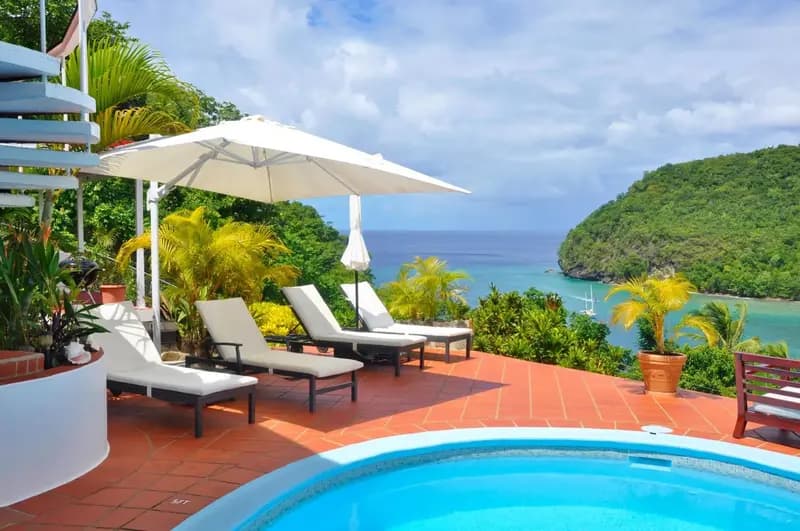
★★★
★ 9.7/10 (155 reviews)
5.4 km away as the crow flies
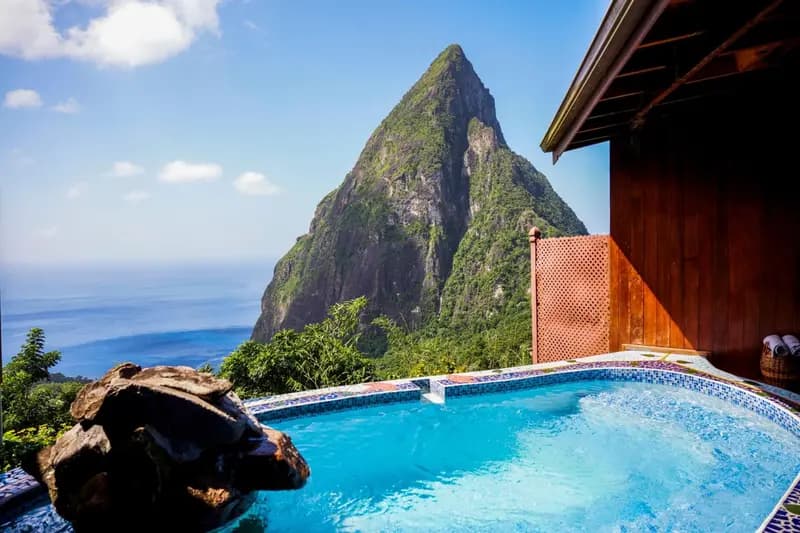
★★★★★
★ 9.2/10 (44 reviews)
10 km away as the crow flies
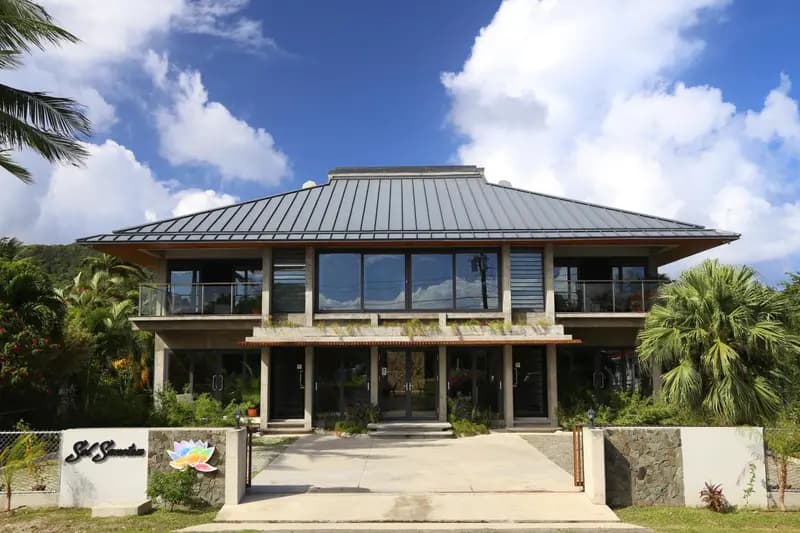
★ 8.4/10 (132 reviews)
20 km away as the crow flies
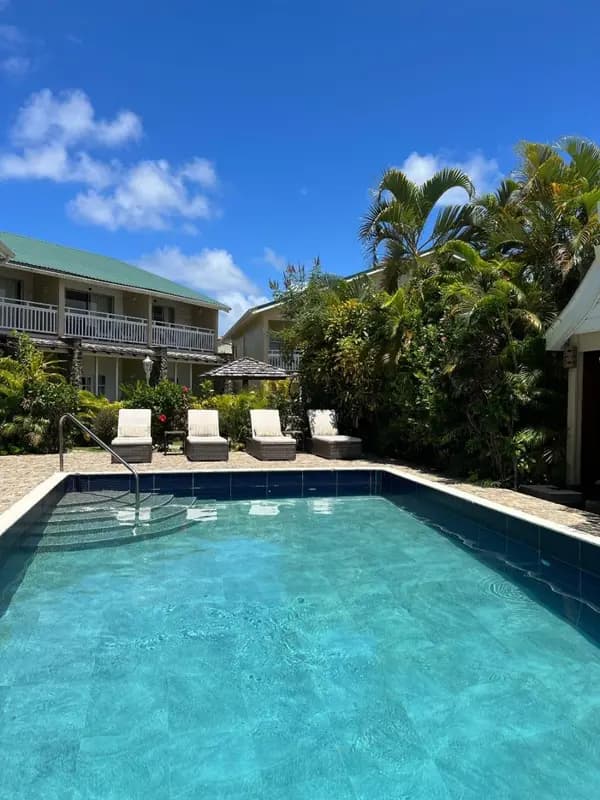
★★★
★ 8.1/10 (327 reviews)
20 km away as the crow flies