
Le Lagon Maoré
Google 4.9/5 (129 reviews)
N'Gouja · Mayotte · Indian Ocean
Max. depth · 40 mBegin your dive on a shallow sandbank surrounded by vibrant coral gardens before exploring a coral slope that plunges to 40 meters, punctuated by current-swept bommies teeming with fusiliers.
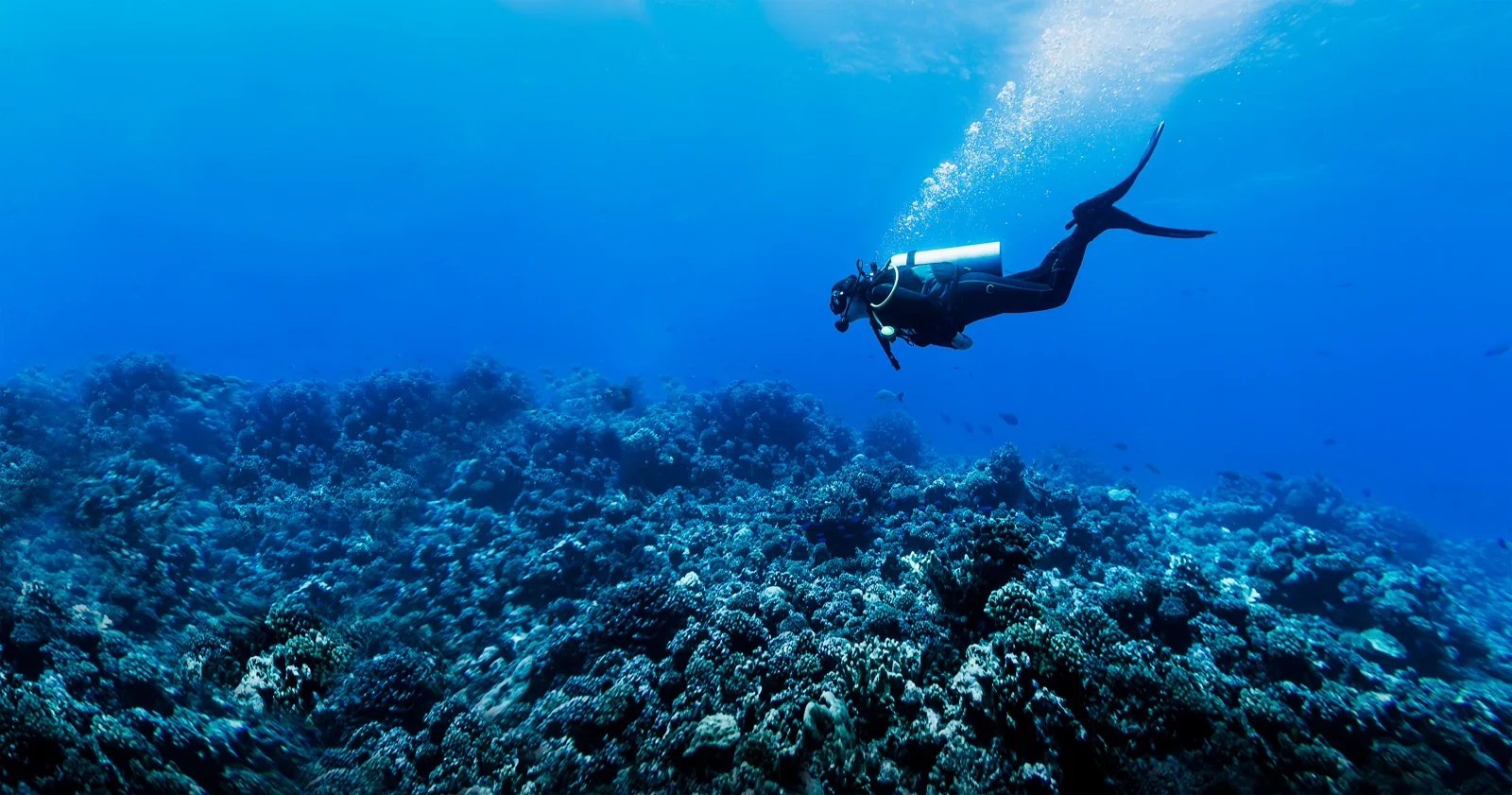
Your dive at Chira Lepoe begins on a broad sandbank at around 6 meters, a perfect introduction to the vibrant ecosystem. Here, the sand gives way to extensive coral gardens dominated by delicate branch corals and broad leaf corals, creating intricate habitats for countless reef inhabitants. This shallow, sunlit arena allows for a gentle acclimatization, offering ample opportunity to observe the intricate details of the reef before venturing deeper into the site's more exposed sections.
From this inviting sandbank, the topography shifts dramatically as you transition to the outer slope of the point. This coral-covered incline steadily descends, reaching a depth of 25 meters where it meets another sandy bottom. This deeper sand chute then continues its gradual descent, eventually plunging to the site's maximum depth of 40 meters, revealing the full extent of the reef's structure and the transition from shallower light to the deeper, cooler waters.
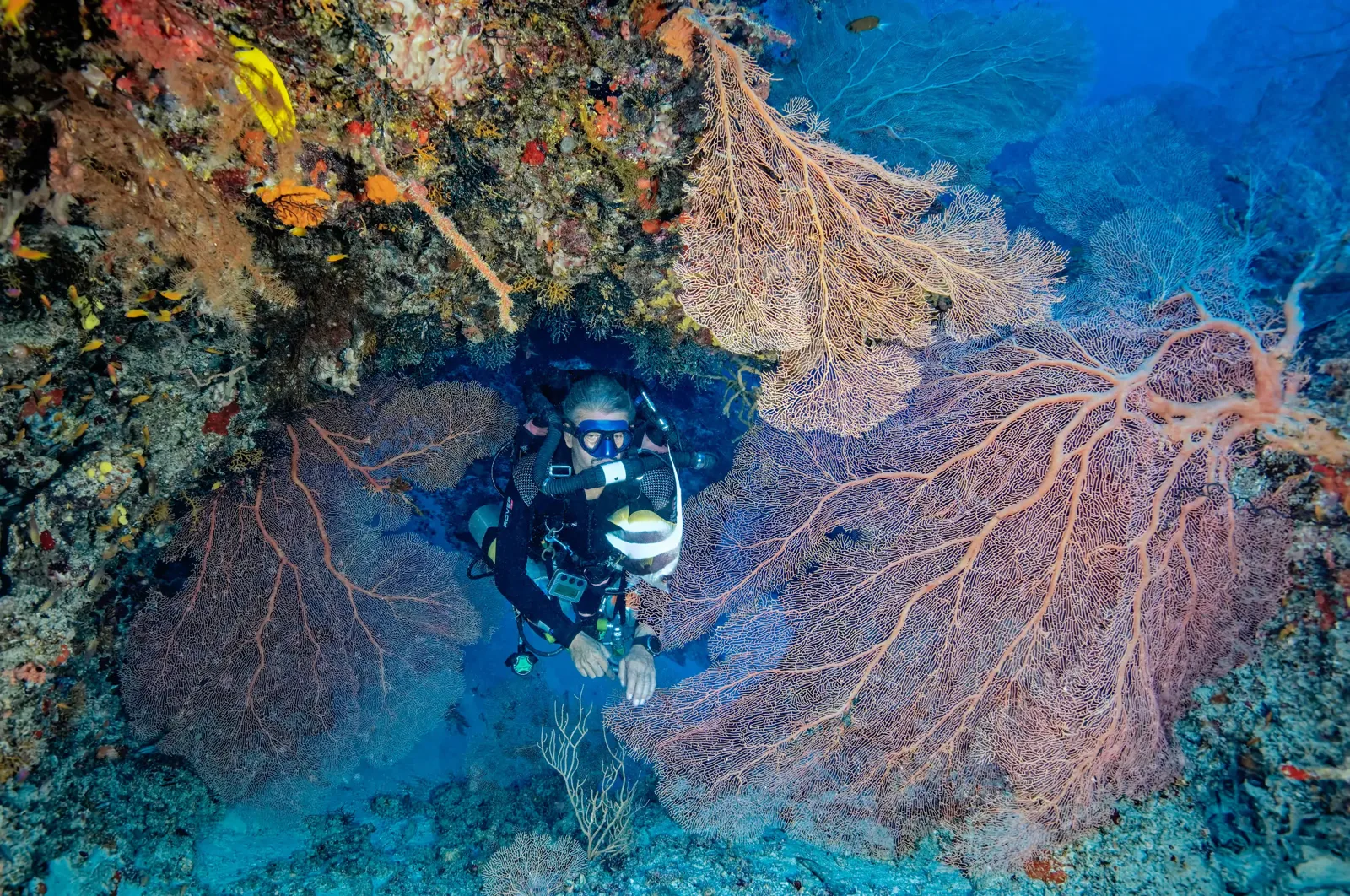
Along this deeper drop-off, a series of prominent bommies emerge from the sandy expanse. These coral formations are strategically positioned, often more exposed to the prevailing currents. This increased exposure makes them magnetic gathering points, hosting massive schools of fusiliers (Pterocaesio spp.) that shimmer and swirl in formation. Interspersed among these active fish congregations, you'll discover impressive gorgonian corals (Gorgonacea), their fan-like structures filtering nutrients from the passing water.
As you round the point, the dive profile changes once more, leading you into a calmer, more sheltered environment known as the 'pool.' This natural arena is formed by the protective curve of the point and the main reef, with depths ranging from 6 to 20 meters. Here, the waters are often more placid, creating an ideal setting for careful exploration of the scattered coral bommies that dot the seafloor. These smaller, intricate coral structures are renowned for harboring secretive residents, particularly numerous lobster (Palinuridae) congregations hiding within their crevices.
The journey through Chira Lepoe is a study in contrasts, moving from the open, current-swept outer reaches of the point, bustling with pelagic activity, to the intimate, sheltered nooks of the inner pool. The constant evolution of the topography, from shallow coral gardens to a deep coral slope and ultimately a protected basin, means every section offers a unique set of encounters. This varied structure ensures that you'll experience a wide spectrum of reef life and marine habitats within a single dive.
The rich diversity of coral growth at Chira Lepoe, particularly the prevalence of both visually striking branch corals and expansive leaf corals, forms the foundation of its ecosystem. These specific coral types create a micro-habitat crucial for the smaller reef fish and invertebrates, providing shelter and feeding grounds. The health of these coral formations directly contributes to the density of marine life you'll encounter here, from the schooling fusiliers to the more elusive lobster populations.
Understanding the site's dynamic layout, especially the interplay between the exposed outer slope and the sheltered inner 'pool,' is key to appreciating Chira Lepoe. The specific orientation of the point creates these distinct zones, each with its own current patterns and resident species. This allows for a comprehensive diving experience, revealing how marine life adapts to varying conditions, from facing stronger currents to seeking refuge in calm, protected areas.
Chira Lepoe is accessible to divers of all levels, offering a versatile experience from a minimum depth of 6 meters down to a maximum of 40 meters. The best period for diving here, as with much of the region, typically spans from April to September, avoiding the heavier rains and reduced visibility of the October to March season.
You can plan a dive at Chira Lepoe from April to September, when conditions typically avoid the heavier rains and reduced visibility associated with the October to March season. This seasonal window suits divers seeking the site's coral gardens, deeper slope, exposed bommies, and sheltered pool in clearer regional conditions.
Chira Lepoe is accessible to divers of all levels, with a profile ranging from 6 to 40 meters. You begin over a broad sandbank and shallow coral gardens, while the outer coral slope descends past 25 meters toward the maximum depth. The sheltered pool offers depths from 6 to 20 meters.
At Chira Lepoe, the outer slope and its coral bommies are more exposed to prevailing currents. These current-prone formations attract schools of fusiliers and support gorgonian corals. As you round the point, you enter a more sheltered pool, where the waters are often more placid and the coral bommies offer calmer exploration.
At Chira Lepoe, you can see branch and leaf corals across shallow gardens, then gorgonian corals along deeper sections. Current-prone bommies host massive schools of fusiliers, while the sheltered pool contains coral bommies with numerous lobsters hiding in their crevices. The site also shifts between sandy bottoms and coral-covered slopes.