
Le Lagon Maoré
Google 4.9/5 (129 reviews)
2.9 km away as the crow flies
N'Gouja · Mayotte · Indian Ocean
Max. depth · 25 mDescend into Ranikiki, a vibrant reef in N'Gouja where a plateau at 4 metres transitions to a wall, leading to a colourful labyrinth of black corals and a rich density of nudibranchs.
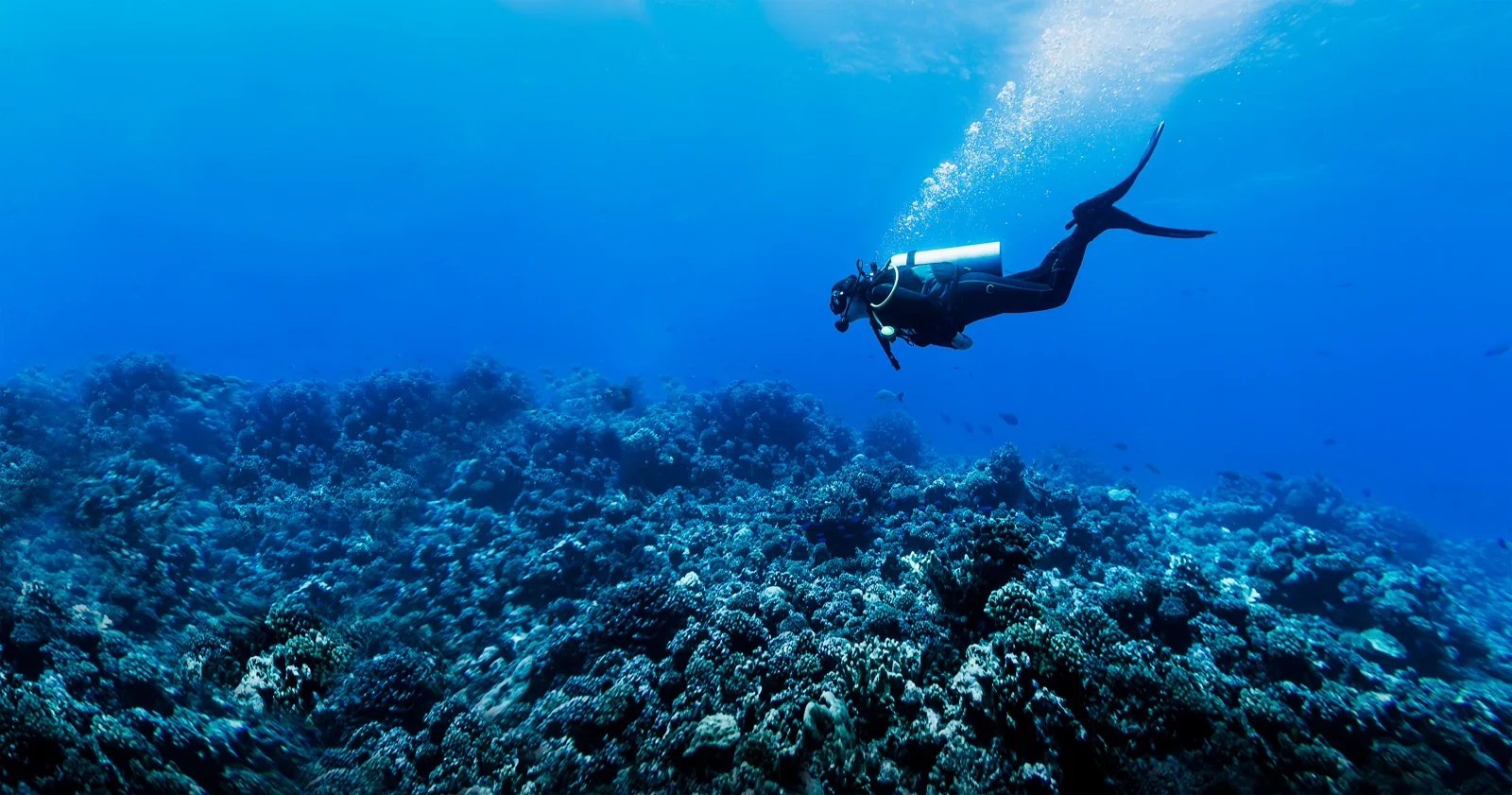
Ranikiki presents a compact yet intricate dive experience, allowing you to circumnavigate its entire structure within a single dive. The journey begins on a vibrant plateau just 4 metres below the surface, a perfect starting point for acclimatisation and observing some initial reef life before transitioning to the deeper sections of the site. This shallow top acts as a natural beacon, guiding your descent into the more complex topography below.
From this plateau, the reef plunges into a distinct wall that extends down to a maximum depth of 25 metres. This vertical drop offers a traditional wall-diving feel, with the rock face showcasing the beginnings of the site's rich fixed fauna. As you trace the contours of this descent, the light shifts, creating a changing perspective on the corals and giving a sense of anticipation for what lies at its base.
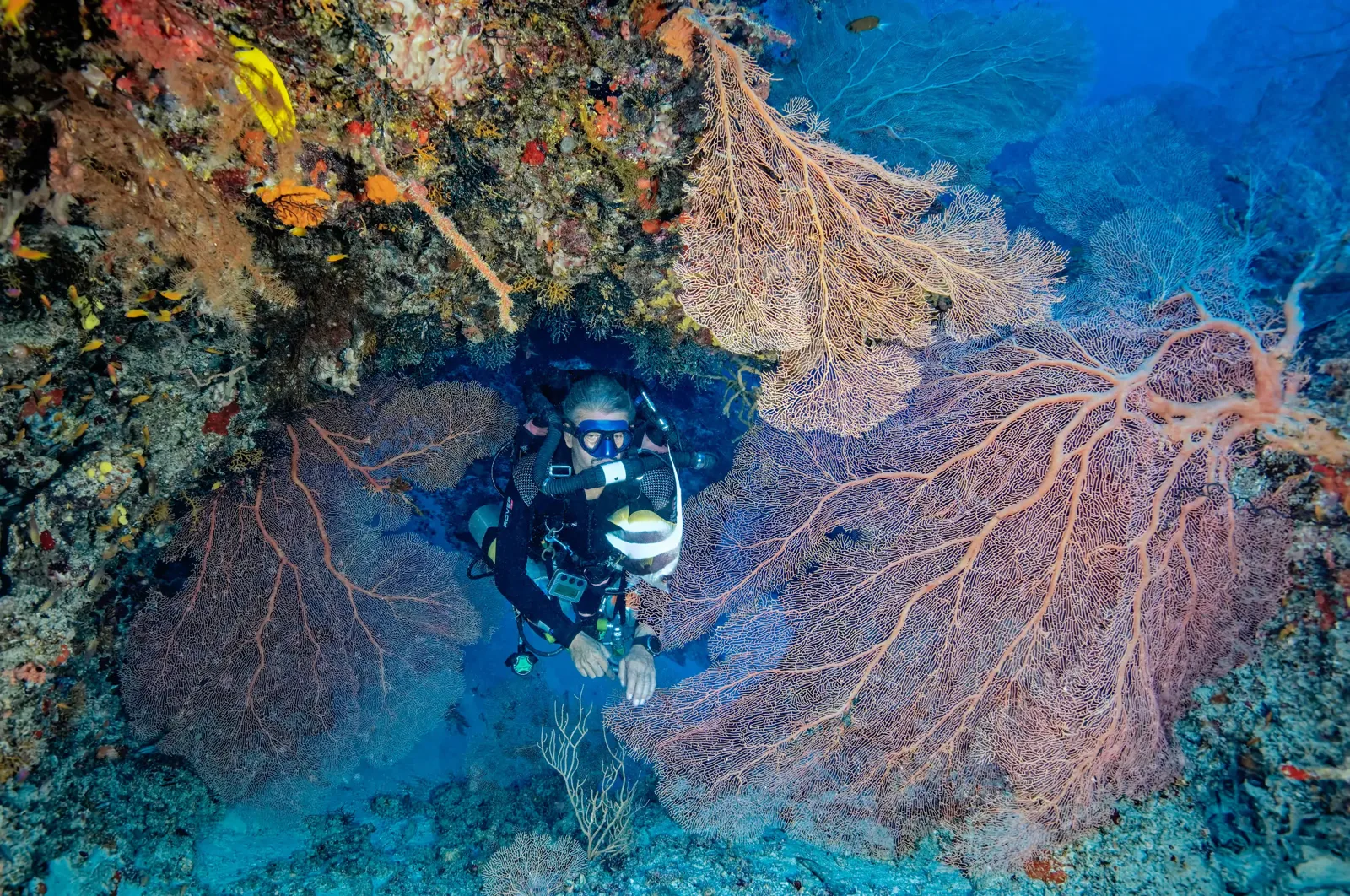
At the foot of the wall, the topography transforms dramatically into a series of large, striking blocks. These formations are cloaked in black corals (Antipatharians) and a kaleidoscopic array of polyps, creating a visual spectacle that immerses you in what feels like a multicoloured nebula. The interplay of colours and textures as you fin past these structures is particularly captivating, making this section an underwater art gallery.
These substantial blocks are not merely decorative; they are strategically arranged to form an inviting labyrinth. Navigating through these natural corridors provides an engaging experience, offering endless nooks and crannies to explore. It's in these sheltered pathways that you truly begin to appreciate the density of life, with every turn revealing new details.
The labyrinthine structure is a haven for fixed fauna, most notably an impressive concentration of nudibranchs. These vibrant sea slugs, in a startling array of shapes and colours, are found in abundance, crawling over the black corals and polyps. Taking your time to observe these intricate creatures as they showcase their diverse forms is one of the distinct highlights of Ranikiki, making it a macro photographer's delight.
Ranikiki is accessible to divers of all levels, offering a profile that ranges from a shallow 4-metre plateau down to a maximum depth of 25 metres. The best period to dive here is between April and September, avoiding the heavier rains from October to March which can impact visibility. Ensure your dive planning accounts for these seasonal considerations to make the most of your underwater experience.
You can dive Ranikiki most favorably between April and September. From October to March, heavier rains may affect visibility, so your planning should take these seasonal conditions into account. Choosing the drier period can help you make the most of the plateau, wall, coral blocks, and labyrinth.
Ranikiki is accessible to divers of all levels. You begin on a shallow plateau at 4 metres, then can follow the reef as it descends along a wall to 25 metres. The site combines a straightforward shallow starting area with more intricate coral-covered blocks and passages to explore.
Ranikiki ranges from a shallow plateau at 4 metres to a maximum depth of 25 metres. Your dive can begin in the shallow area before continuing down a distinct wall. At the foot of that wall, the underwater landscape changes into large coral-covered blocks arranged as a labyrinth.
At Ranikiki, you can see a vibrant shallow plateau, a wall, and large blocks covered with black corals and colourful polyps. The blocks form a natural labyrinth with sheltered corridors and many details to inspect. The site also has a high concentration of nudibranchs, making close observation especially rewarding.