
Le Lagon Maoré
Google 4.9/5 (129 reviews)
11 km away as the crow flies
N'Gouja · Mayotte · Indian Ocean
Max. depth · 70 mDescend along the outer reef slope of Passe Bateau Nord, where sand plains meet coral islets before plunging into the depths of a vertical wall frequented by pelagics and sharks.
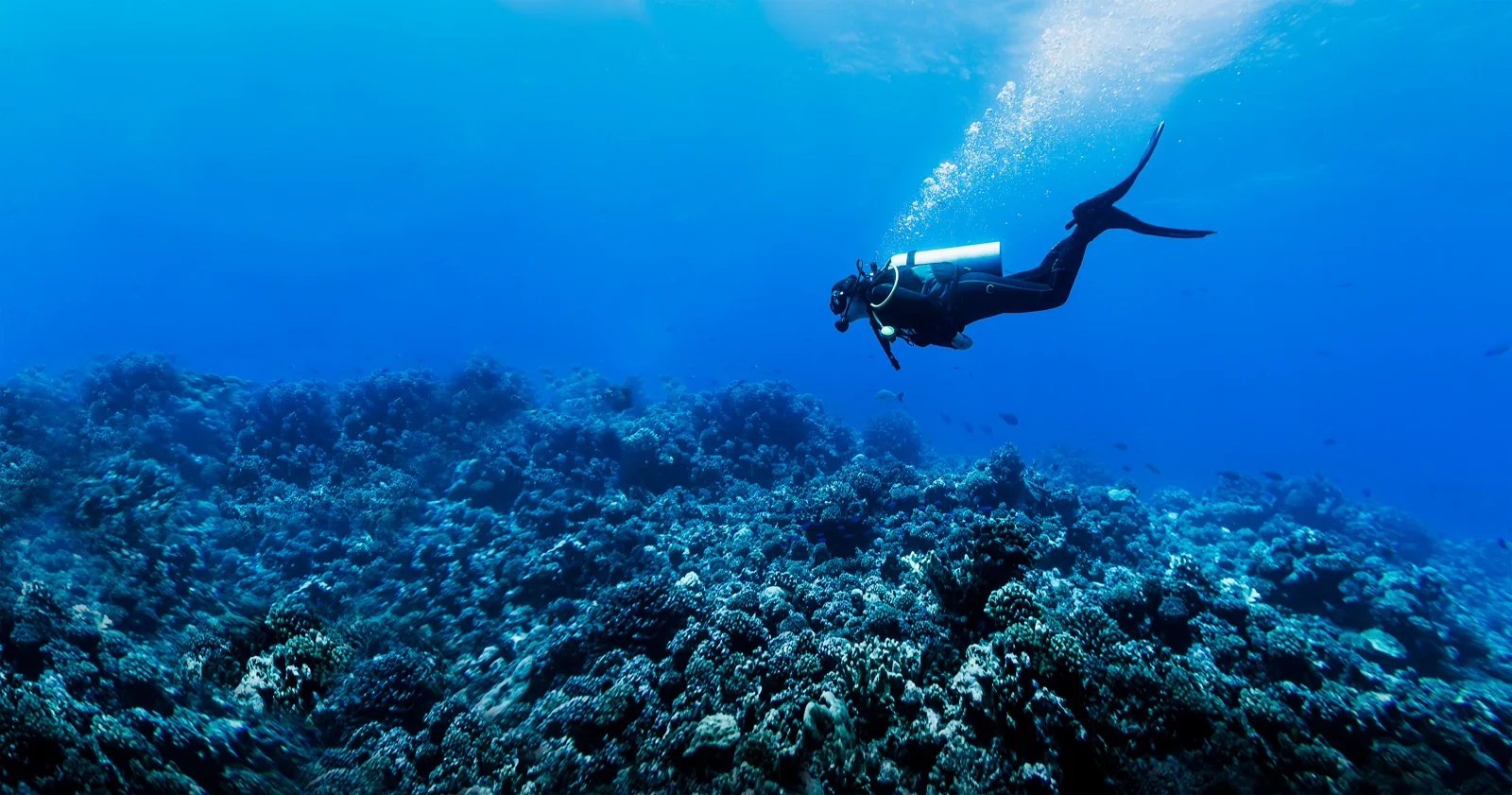
Diving Passe Bateau Nord begins on the outer slope, a vibrant tapestry of reef stretching out from the calmer waters of the lagoon. The descent immediately immerses you in the dynamic environment of one of Mayotte's critical marine arteries, an area that demands respect for its power as much as appreciation for its beauty. The site's close proximity to N'Gouja, just a 25-minute boat ride, means you're quickly into the action.
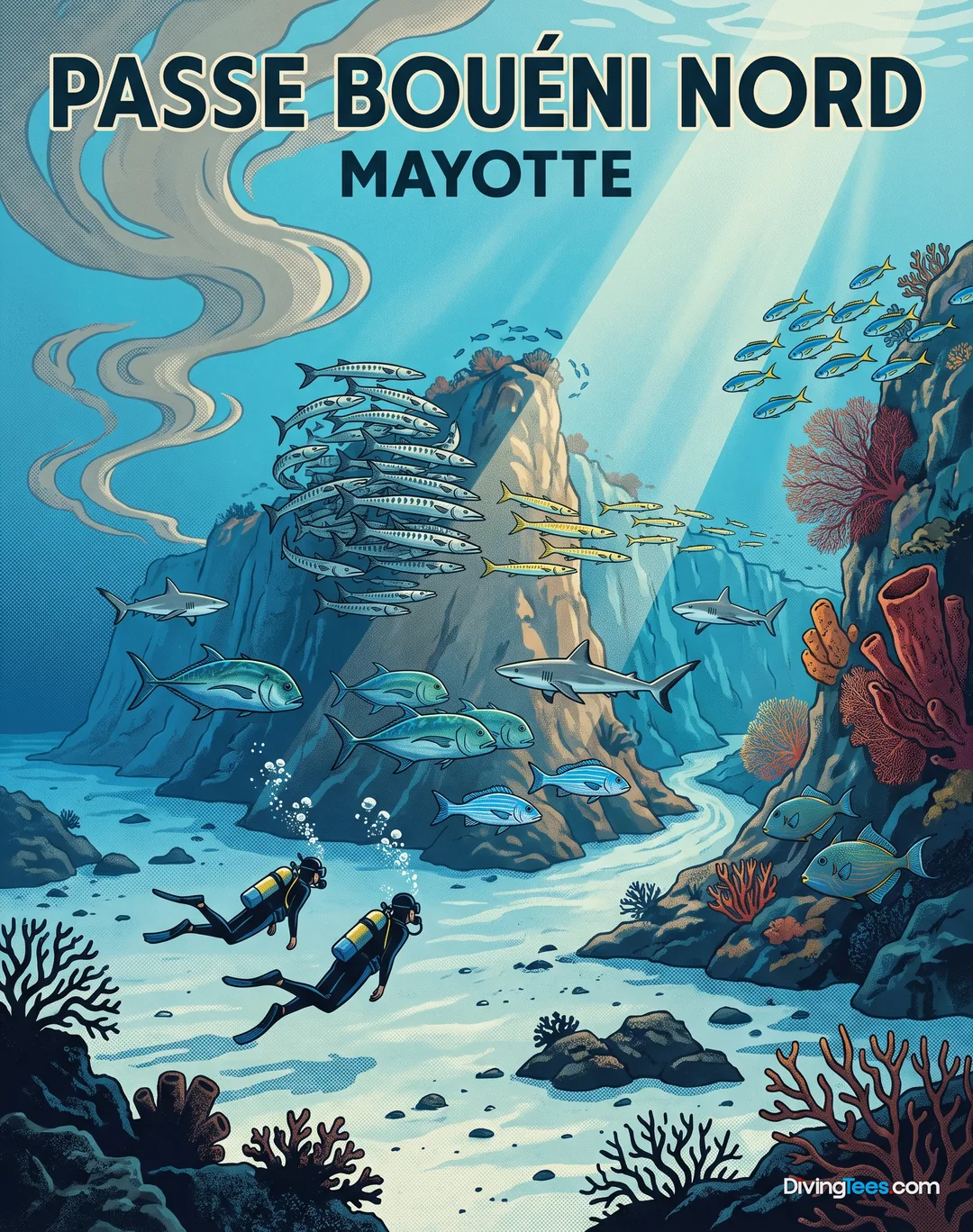
As you follow the slope downwards, familiar reef inhabitants begin to appear, but the true spectacle unfolds around 35 metres. Here, the reef transitions into a sandy plain punctuated by striking coral islets, providing a unique habitat for a variety of species. This topographical shift creates fascinating micro-environments where you can observe distinct groups of fish congregating, from schooling lutjans (Lutjanidae) and oriental sweetlips (Diagramma pictum) to swift-moving carangues (Carangidae).
Beyond the 35-metre mark, a dramatic vertical wall beckons, dropping into depths reserved for Trimix-certified divers. Even for those staying within recreational limits, the sheer scale of this drop-off hints at the immense oceanic processes at play. While you navigate the upper reaches, the possibility of encountering larger pelagic species, including various rays and substantial pelagic fish, adds an exciting unpredictability to the dive.
The area is renowned for its shark activity, particularly during certain seasons. Keep a keen eye out for the stealthy movements of whitetip reef sharks (Triaenodon obesus) and grey reef sharks (Carcharhinus amblyrhynchos), patrolling the deeper sections of the reef. During their migratory season, the impressive sight of hammerhead sharks (Sphyrna lewini) can elevate the dive into an unforgettable encounter, a testament to the healthy ecosystem of the Mayotte lagoon.
As you conclude the deeper part of the dive and begin your ascent back towards the shallower reef, the landscape transforms. The rugged, current-swept outer slope gives way to an undulating seascape dominated by lush soft corals. This vibrant garden is a perfect environment for hunting for smaller, more cryptic creatures like various small crustaceans, adding a different dimension to the dive experience post-pelagic thrills. The ever-present heterocongres (Heteroconger) sway gently from their sand burrows, creating a mesmerizing spectacle.
Passe Bateau Nord is an advanced dive, with depths reaching up to 70 metres for specific sections, though significant exploration is available shallower. The site is known for strong currents, which are systematically checked by instructors before each dive. The best time to experience this site is between April and September; conditions can be less favourable from October to March due to abundant rainfall and reduced visibility after heavy downpours. Water temperatures typically range from 23°C to 26°C.
You can experience Passe Bateau - Côté Nord between April and September, when conditions are more favourable. From October to March, abundant rainfall can reduce visibility after heavy downpours. Water temperatures typically range from 23°C to 26°C, so you can expect warm conditions during the recommended diving period.
Passe Bateau - Côté Nord is an advanced dive because strong currents and significant depth require careful preparation. Instructors systematically check the current before every dive. The vertical wall beyond 35 metres drops to 70 metres, with its deeper sections reserved for Trimix-certified divers.
Passe Bateau - Côté Nord offers substantial exploration at shallower levels, including an outer reef slope descending to 35 metres. A sandy plain with coral islets lies around that depth, while a vertical wall continues to 70 metres. The deepest sections are reserved for Trimix-certified divers.
You should expect strong currents at Passe Bateau - Côté Nord, with instructors checking them systematically before each dive. Along the reef, you may see schooling lutjans, carangues, rays, whitetip and grey reef sharks, seasonal hammerhead sharks, pelagic fish, soft corals, small crustaceans and heterocongres.