
Le Lagon Maoré
Google 4.9/5 (129 reviews)
N'Gouja · Mayotte · Indian Ocean
Max. depth · 80 mDescend into the heart of a vibrant coral passage at Passe Bouéni Nord, where deep walls plunge to 80 metres and pelagic hunters patrol the sandy plateaus.
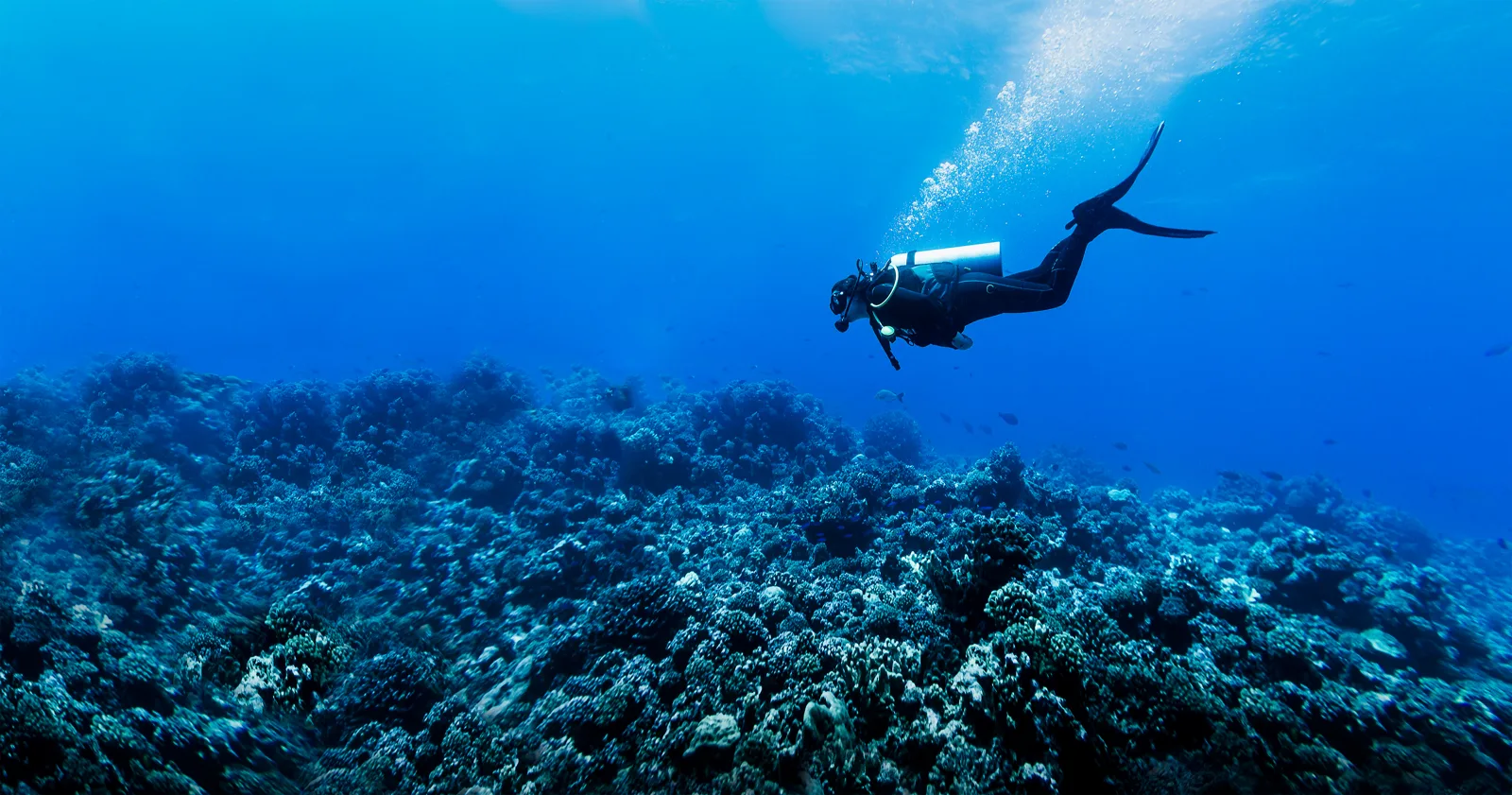
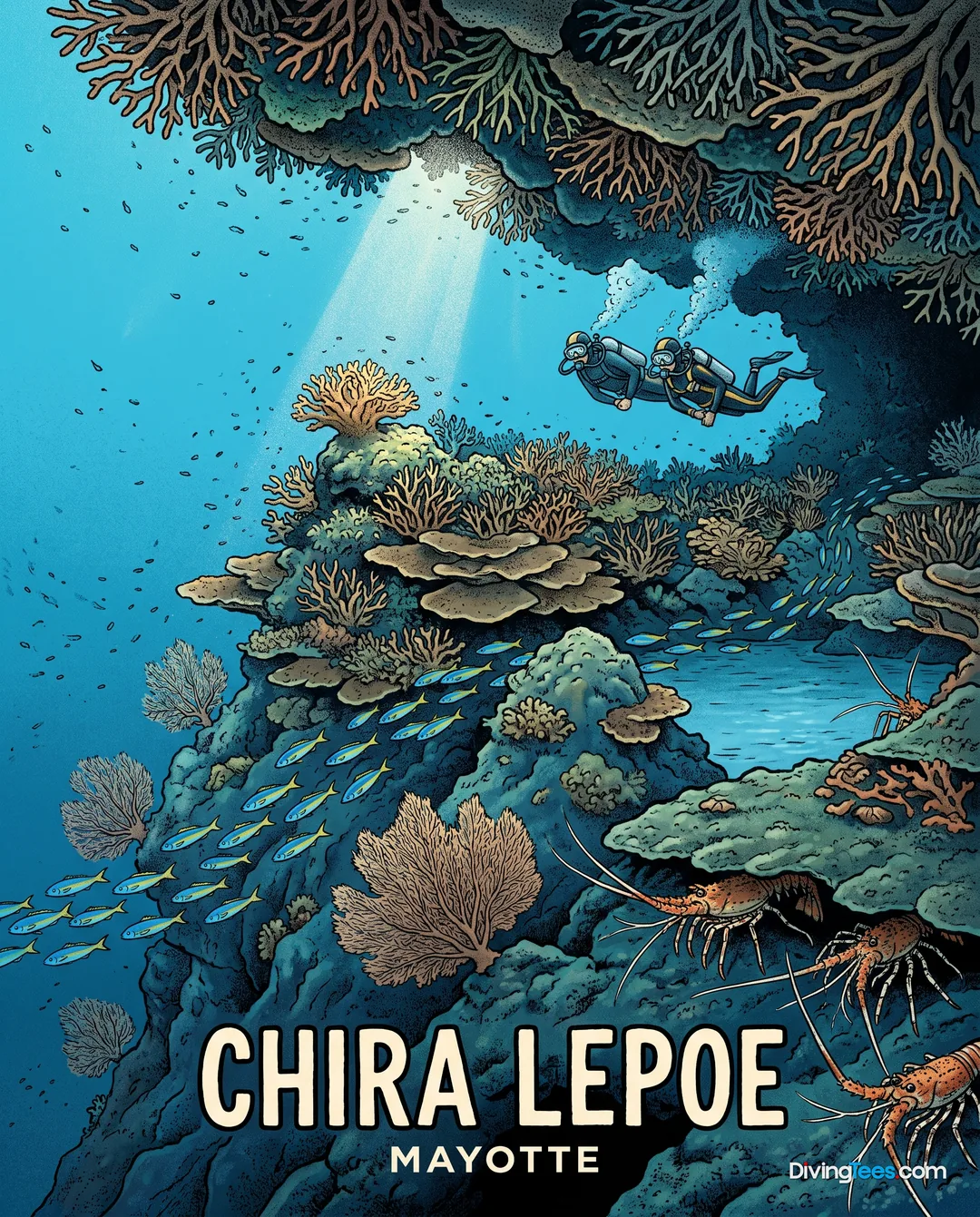
Passe Bouéni - Côté Nord presents itself as a true deep water expedition, situated approximately 13 kilometres from N'Gouja. As you descend, the initial phase of the dive unfolds along a magnificent 150-metre stretch of thriving coral development, rising proudly to an average depth of twelve metres. This vibrant upper reef provides an immediate immersion into the rich biodiversity of Mayotte's pass systems, setting the stage for the dramatic underwater topography that lies beneath.
Beyond this initial shallower reef structure, the external slope transitions into an extensive sandy plateau, starting at depths exceeding 35 metres. Here, the landscape is punctuated by isolated coral formations, often referred to as 'patates,' which act as magnets for schooling fish. You'll navigate through dense shoals of carangues (jacks) and lutjans (snappers), their movements orchestrated by the subtle oceanic currents. Keep a keen eye on the blue, as this is prime territory for sightings of larger pelagic species.
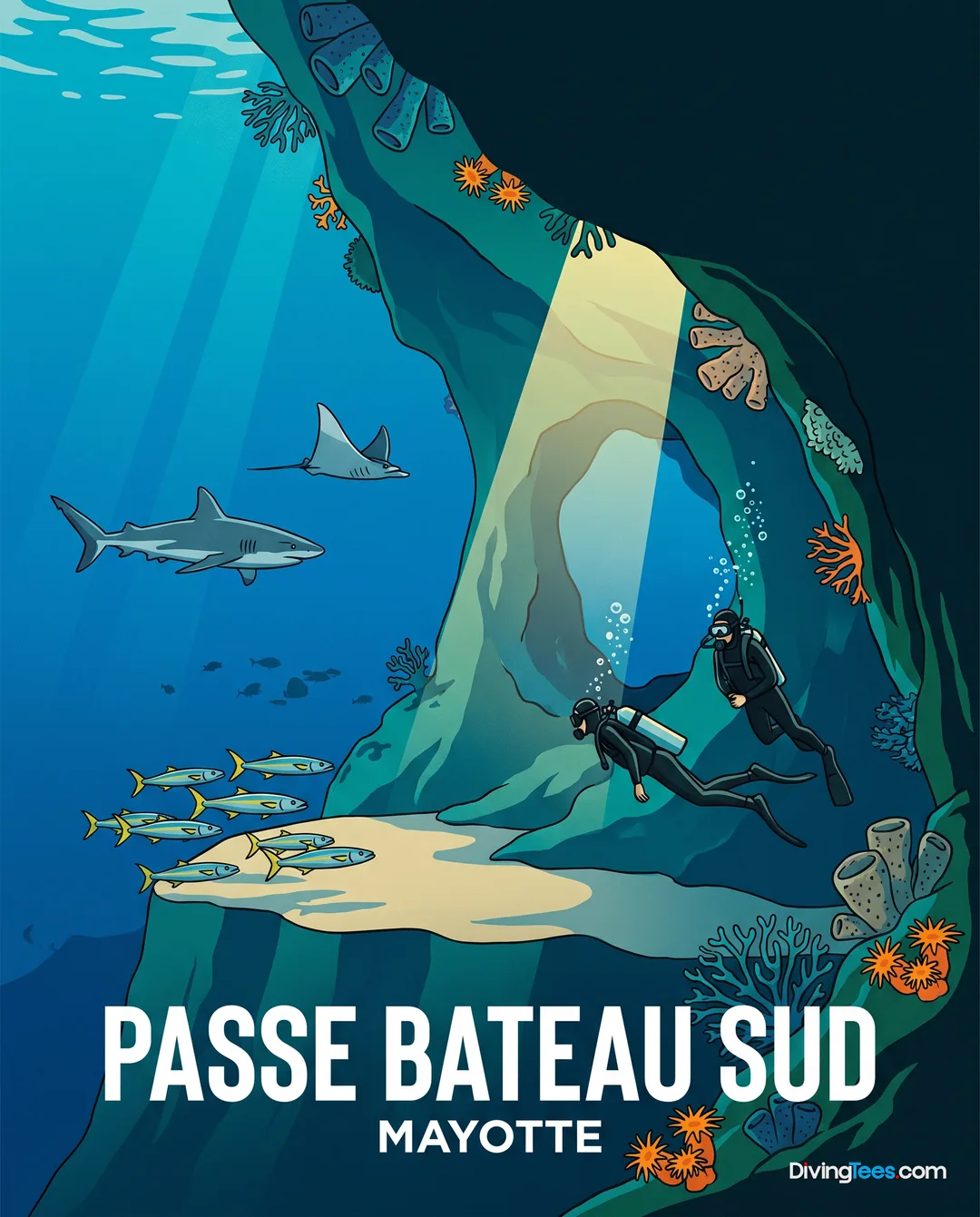
The open water surrounding the plateau is a hunting ground for formidable pelagic predators. Tuna, swift and powerful, are frequently observed slicing through the water column, alongside impressive barracudas à queue jaune (yellowfin barracuda) and various sharks. The sense of being in a truly wild and unbounded marine environment is palpable here, as these transient hunters patrol the deeper fringes of the reef, interacting with the resident schooling fish.
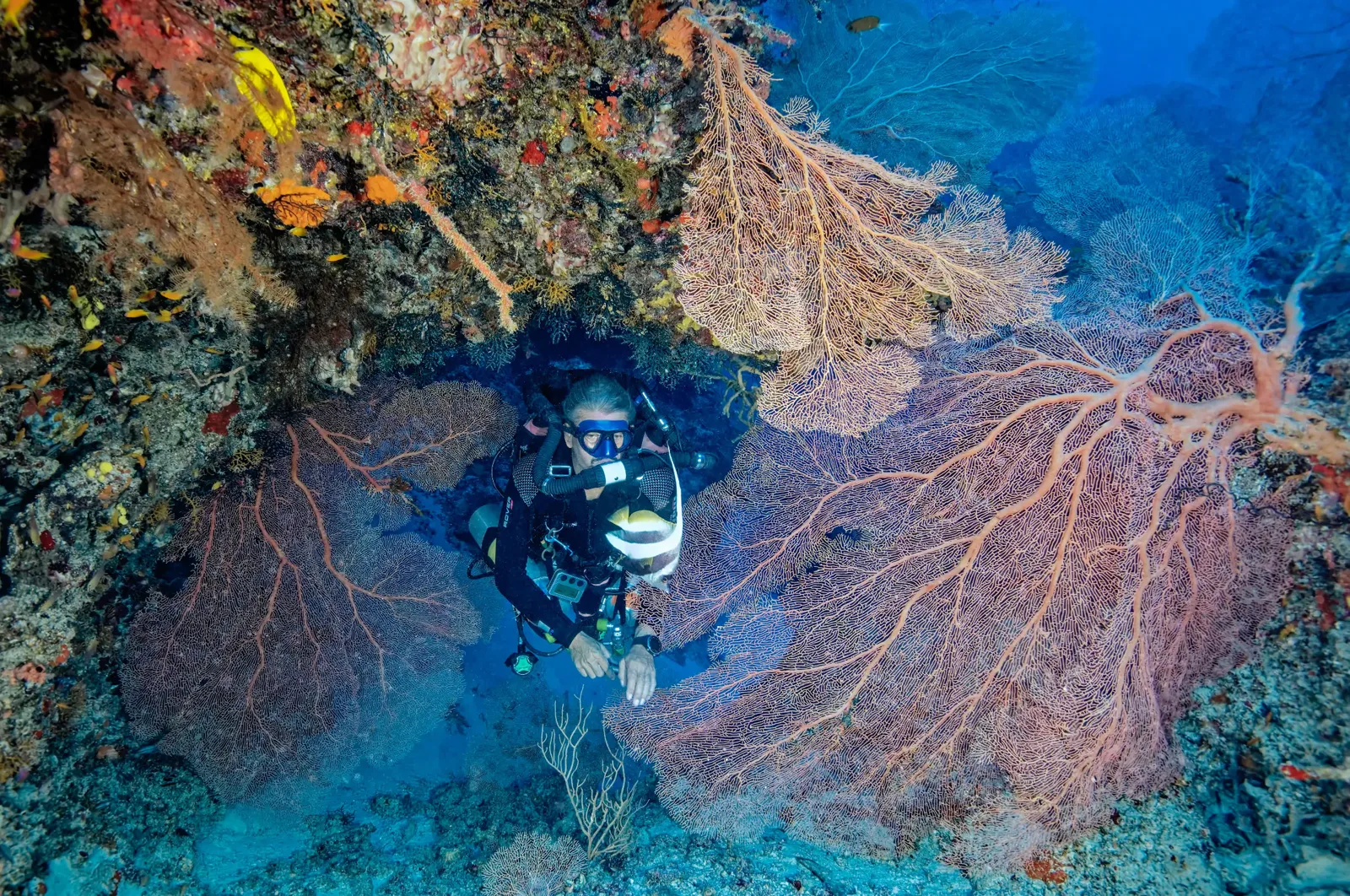
Further along the dive, the topography plunges dramatically into a second, more profound wall. This second drop-off is adorned with a rich tapestry of gorgones (gorgonian corals), extending downwards from 45 metres to an impressive 80 metres. The sheer scale and depth of this wall provide a sense of vastness, a true deep-water experience for those equipped to explore its lower reaches, revealing different communities of life adapted to these deeper, less-lit conditions.
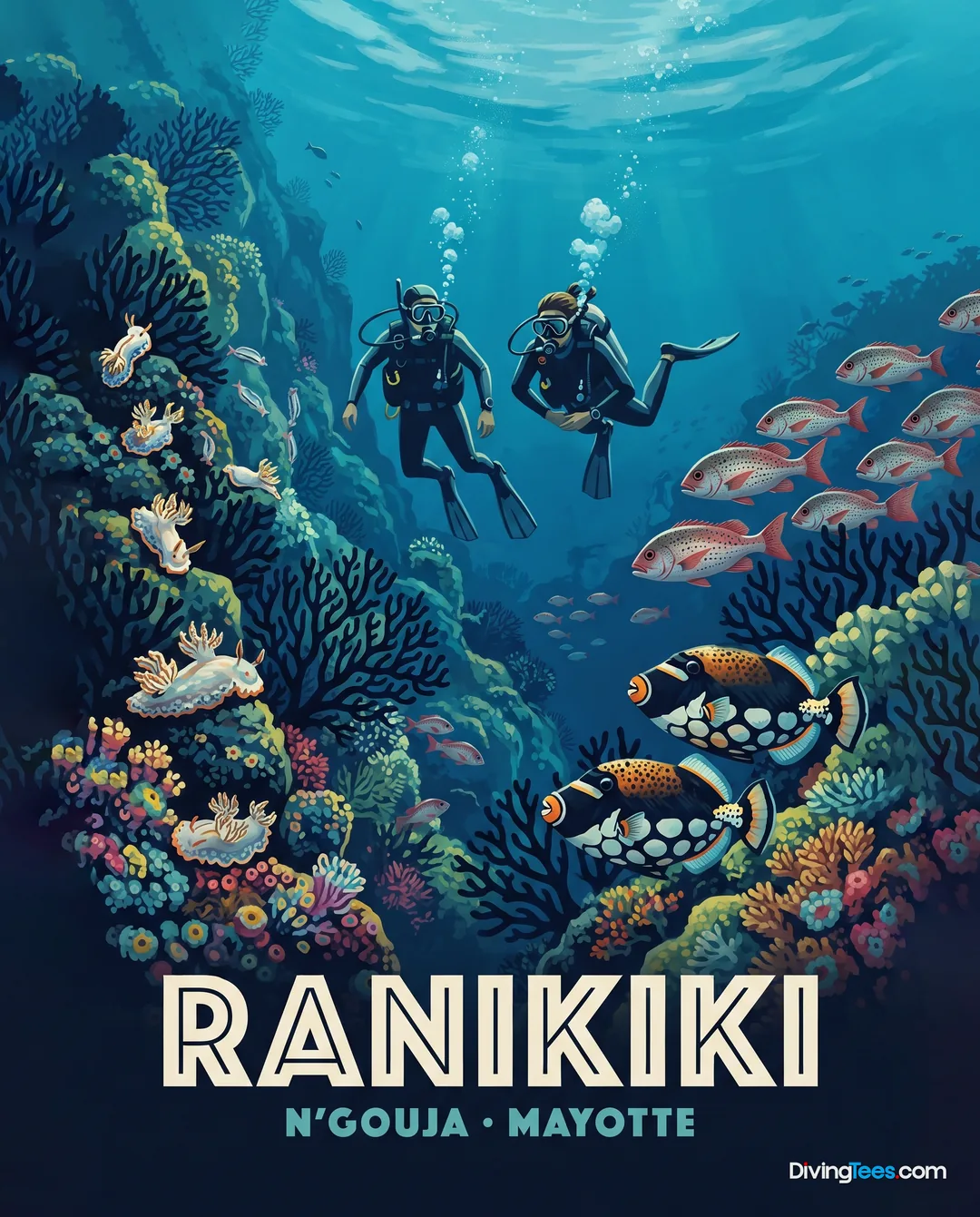
Venturing further north along the pass, the wall continues its precipitous descent, dropping directly to 60 metres. This section is particularly teeming with fish life, characterized by colossal schools of fusiliers and balistes bleus (blue triggerfish), their vibrant colours painting the deep blue. The sheer abundance of fish in this area creates a dynamic and immersive experience, where the reef truly comes alive with constant movement and activity, a testament to the health of this ecosystem.
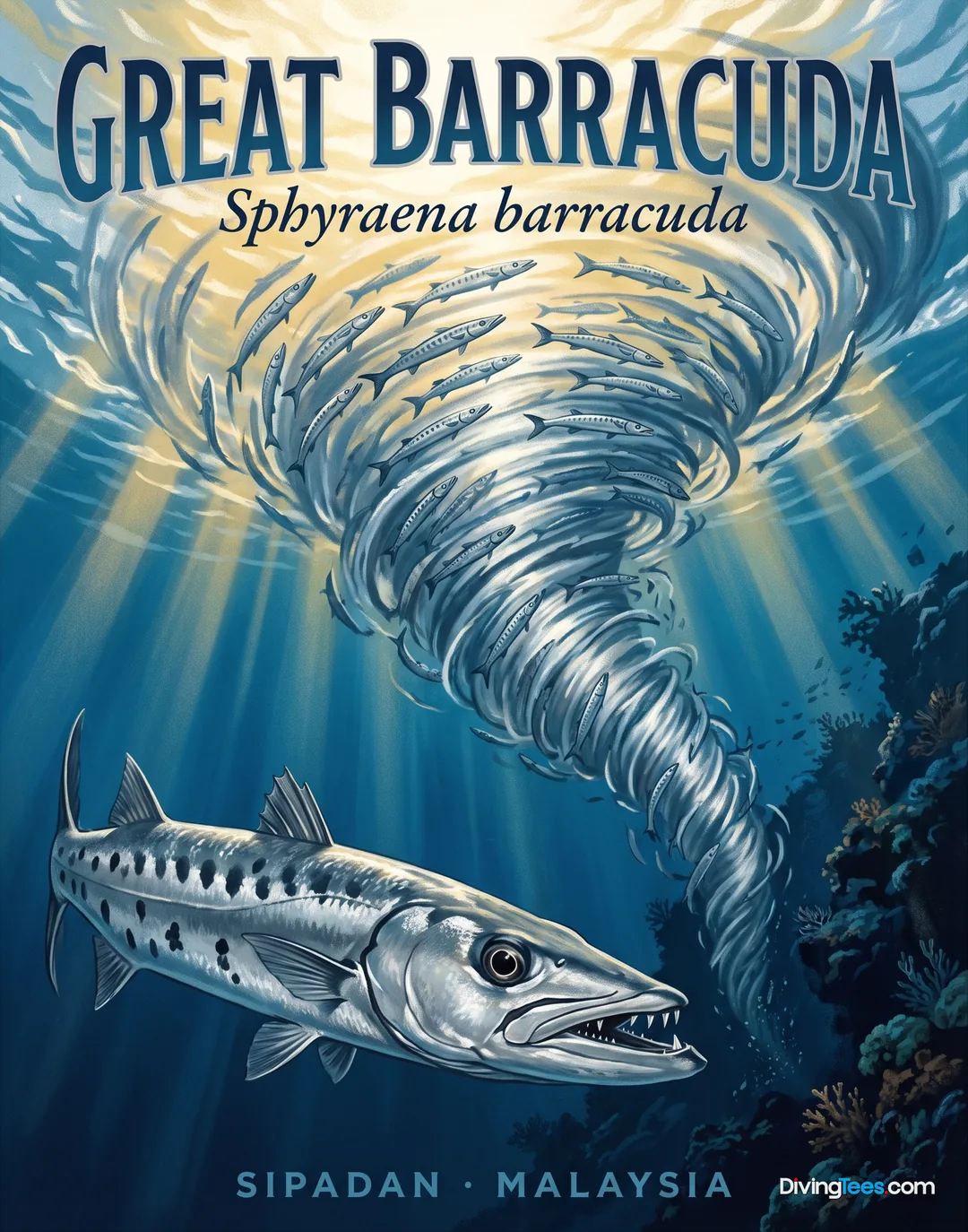
A particularly striking feature in this northern section is the 'patate à barracudas' – a massive, densely packed school of barracudas à queue noire (blackfin barracuda). This immense aggregation forms a living, shimmering column, a truly memorable spectacle as you approach it. The sheer density and synchronized movements of this barracuda school underscore the richness of the site and the powerful currents that help sustain such predator populations.
The dive profile often concludes with an ascent into a sandy canyon, which gently winds its way back towards the interior reef. This canyon offers a tranquil transition from the deep, current-swept walls and open ocean feel of the pass. It allows for a more relaxed final exploration, observing the smaller, more cryptic reef inhabitants seeking shelter within its sandy confines, before shallowing out into the protected waters of the inner lagoon.
This site is designated for advanced divers due to its significant depths, ranging from a minimum of 12 metres down to a maximum of 80 metres. The best period for diving Passe Bouéni - Côté Nord is typically between April and September. Access to the deeper sections and encountering the significant pelagic life will require a level of experience commensurate with advanced training.
You will generally find the best diving conditions at Passe Bouéni - Côté Nord between April and September. During this period, the site offers access to its deep-water environment, including the coral development, sandy plateau, walls and open-water areas where pelagic species may be encountered.
Passe Bouéni - Côté Nord is designated for advanced divers because of its significant depths and demanding deep-water profile. Reaching the deeper sections and encountering substantial pelagic life requires experience appropriate to advanced training. You should be comfortable exploring deep walls, exposed slopes and the pass environment.
Passe Bouéni - Côté Nord ranges from twelve metres to eighty metres, with a sandy plateau beyond thirty-five metres and walls descending to sixty and eighty metres. Oceanic currents influence the schooling fish and help sustain predator populations, so you should expect a current-swept pass and open-water conditions.
At Passe Bouéni - Côté Nord, you can see a long coral development, isolated coral formations on a sandy plateau, schools of carangues, lutjans, fusiliers and blue triggerfish, plus gorgonian corals on the deeper wall. Pelagic sightings include tuna, yellowfin barracudas and sharks, with a massive blackfin barracuda school farther north.