
Stay Wet Diving Center
Google 4.9/5 (644 reviews)
Greece · Mediterranean
Rocky canyons, arches and passages meet shallow training ground, deeper walls towards 40 metres, and boat trips to Dia from sheltered Agia Pelagia Bay.
For subtitles in English: start the video firstthen click the gearat the top right of the video, select “Subtitles/CC”, then “Auto-translate” and choose “English”.
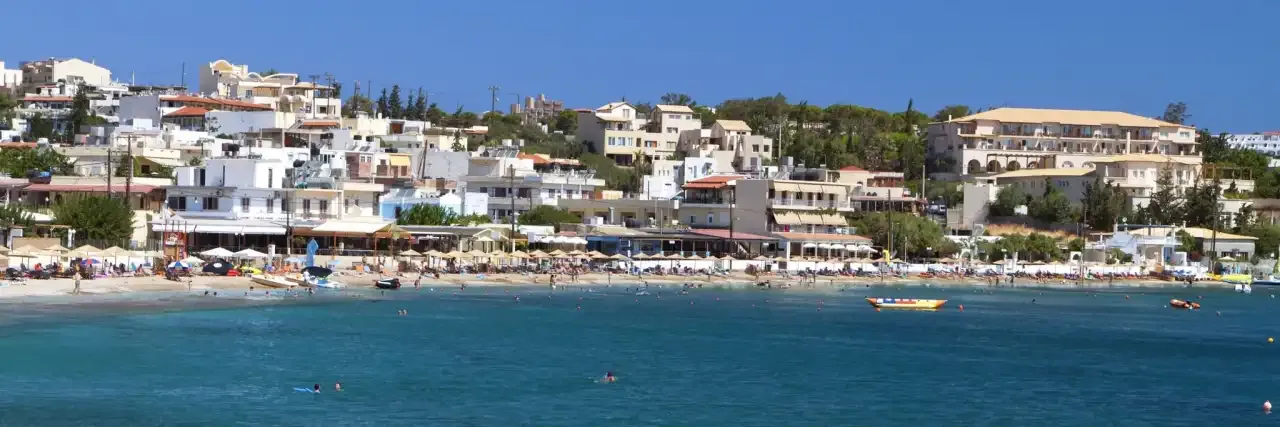
Agia Pelagia is a shore-based diving holiday built around sheltered bays, with rocky entries close to the beach and boat trips when you want to range farther along the coast. Start in Agia Pelagia Bay or at Mononaftis, then move on to canyons, arches, passages and deeper walls. The shallow ground suits a refresher or a first course, while sites approaching 40 metres give experienced divers room to progress. Night diving is a natural fit here, and non-divers have beaches, boat excursions and Crete’s archaeological sights close at hand.
The underwater landscape is rock rather than sand: canyons, arches, walls and passages shape dives around Agia Pelagia, Mononaftis and Lygaria. Some routes stay in shallow water for training and relaxed night dives, while others descend towards 40 metres and demand more careful planning. Currents are generally light, although they vary with the site, wind and sea state. Visibility is usually good from May to October, but wind and swell can change that quickly, particularly once a boat leaves the shelter of the bay. Most diving is from the shore, with entries from beaches and nearby coves, while boats open up Dia and other coastal sites. Ask precisely which format is being offered, because a shore dive and a boat dive here are different outings, not interchangeable ways of reaching the same terrain.
The wildlife is Mediterranean and closely tied to the rocky habitat. Expect the interest to come from moving across rock faces, around arches and through sheltered passages, where fish and invertebrate life occupies the relief rather than a flat, featureless bottom. The bays give beginners time to look closely without having to manage a strong drift or a demanding descent, while deeper walls provide a different scale for qualified divers. Night diving changes the familiar rock into a slower, more deliberate search, with torches picking out detail that is easy to pass during daylight. May to October is the most dependable period for combining this underwater life with good visibility. There is no particular seasonal animal encounter around which to build the trip, so plan around the terrain, conditions and type of dive instead.
May, June, September and October are the sensible months for Agia Pelagia. The diving season is most regular from spring through autumn, and visibility is generally best between May and October. July and August bring the warmest, busiest holiday conditions, with more swimmers, water activities and training traffic around the beaches. Spring and autumn usually offer a calmer rhythm, while retaining access to shore diving and boat trips. December through March are the least dependable months for a diving holiday. Even in the more sheltered bay, leave room to change a boat plan when wind or swell affects the exposed sites.
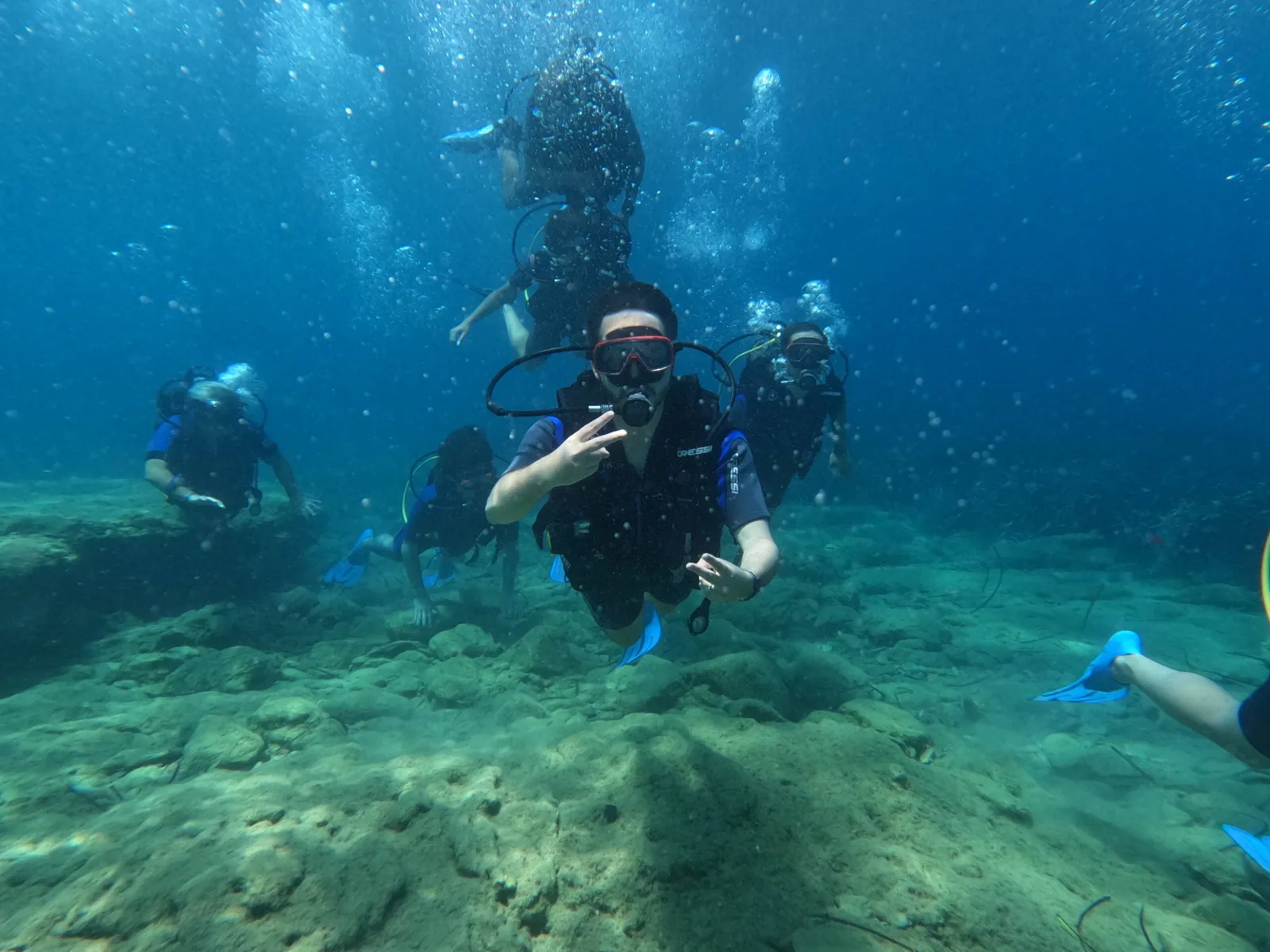
The shallow bays suit beginners, refresher dives and courses, including divers working through PADI, SSI or BSAC pathways. Light currents make the local shore diving approachable, but comfort in open water and sensible buoyancy matter around arches and passages. An Advanced Open Water qualification, or an equivalent level of experience, is useful for deeper walls and sites approaching 40 metres. Do not treat a swim-through as a cave dive: passages and cavities should be approached only within the limits of your training and the guide’s briefing.
From London or Manchester, fly to Heraklion and continue by road to Agia Pelagia. There is no ferry leg to the resort, so the structural part of the journey is the flight followed by a road transfer. Air links from British departure points vary by season and may involve a connection, so allow time for the onward transfer rather than assuming a seamless arrival. From Heraklion, buses, taxis and hire cars serve Agia Pelagia. Once there, the centre and main bay can be manageable on foot if you stay nearby. Lygaria, Mades and Mononaftis may require a local taxi, shuttle or car, depending on where you are staying and where the day’s dive begins.
Make the first dive a shore entry in Agia Pelagia Bay or at Mononaftis. It gives you a feel for the rock, checks the visibility and makes a better introduction than committing immediately to a deep site or Dia. Before getting in, ask for the maximum depth and whether arches, cavities or passages are involved. Also ask whether the booking is a shore dive or a boat dive, since the names of nearby areas can hide a very different day out. Take the first beach rotations where possible, before swimmers and water sports make entries busier. Keep a boat day flexible, because wind and swell can change the planned site. If you are flying home, leave a proper gap after repetitive or boat diving rather than filling the final day. Finally, arrange your own drying and kit-storage solution, and check the place name carefully: this is Agia Pelagia in Crete, not the similarly named resort on Kythera.
Plan five to seven days on land. Use the nearby bays for shore dives and night diving, then keep a separate day for a boat trip towards Dia or another site outside the bay. Staying close to the centre or a diving beach reduces the need for daily transfers, while a hire car broadens access to Lygaria, Mades and the rest of northern Crete. Keep one day free of diving for Heraklion, Knossos, a coastal walk or a beach day with non-divers.
Hello, I'm Marina, DivingDeal.com's AI assistant. I guide you through destinations, areas and countries.
Thinking about the whole trip and the flights? Talk it over with Edith →
Marina is an AI. Some links are affiliate links: DivingDeal may earn a commission, at no extra cost to you. Bookings are made with the partner.
May through October generally offers the clearest diving conditions. May, June, September and October bring a calmer rhythm, while July and August are warmer and busier around the beaches, with more swimmers, water activities and training traffic. December through March are less dependable, and wind or swell can alter boat plans.
Agia Pelagia suits beginners, refresher divers and students taking courses, with shallow bays and generally light currents. Comfort in open water and sensible buoyancy remain important around rocky arches and passages. Deeper walls and sites approaching forty metres are better suited to Advanced Open Water divers or those with equivalent experience.
You can explore rocky canyons, arches, walls and passages around Agia Pelagia, Mononaftis and Lygaria, with Mediterranean fish and invertebrates living among the rock. Shallow sites allow closer observation, while deeper walls offer a different scale. Night dives reveal details in the formations that are easy to miss during daylight.
Plan five to seven days on land, combining nearby shore dives and a night dive with a separate boat trip towards Dia or another coastal site. Stay near the centre or a diving beach to reduce transfers, and keep a day free for Heraklion, Knossos, a coastal walk or time with non-divers.