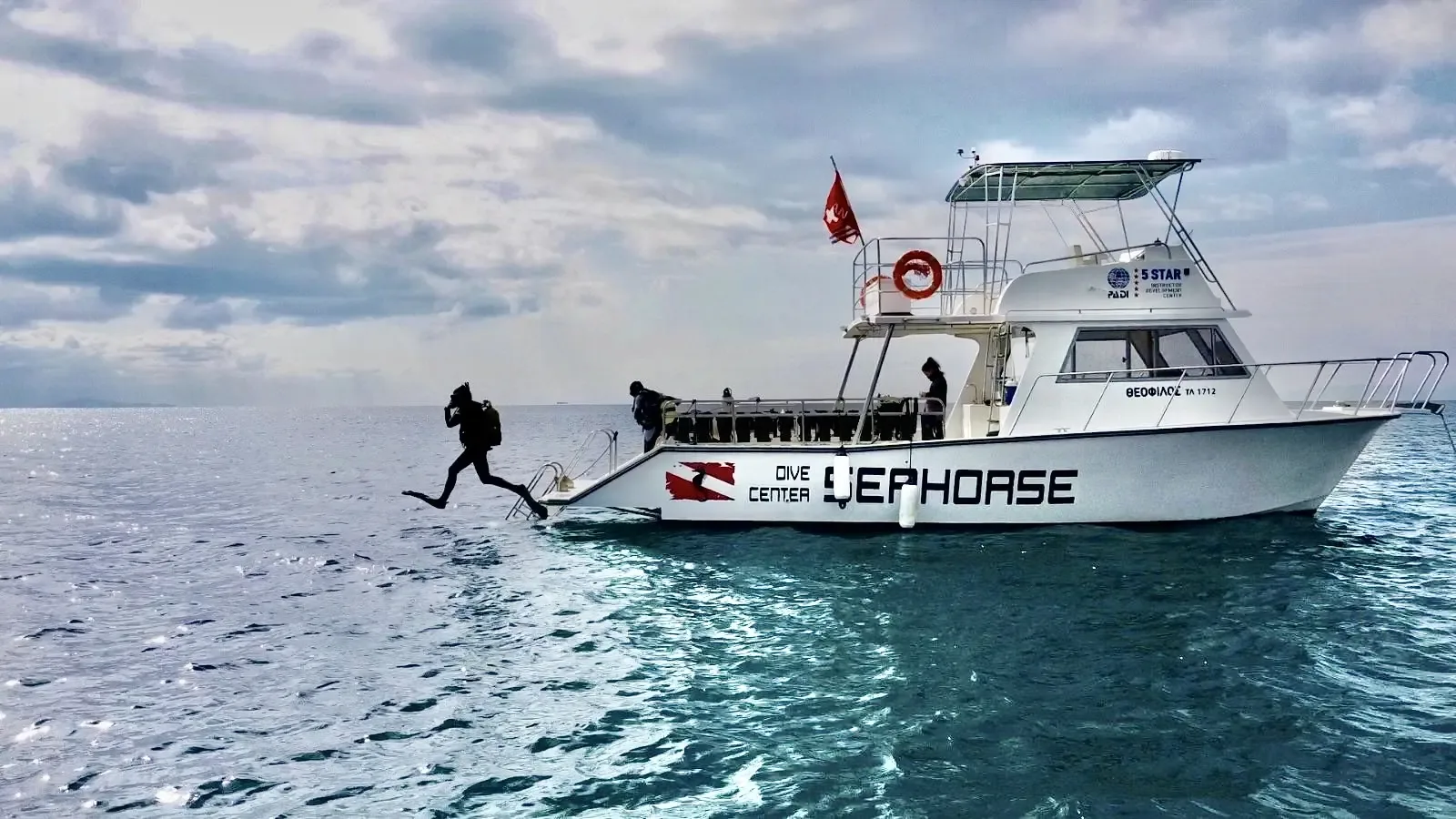

Seahorse Dive Center
Google 5/5 (818 reviews)
Greece · Mediterranean
Rocky reefs, Vouliagmeni’s shallow cavities, Posidonia meadows and Patroklos wrecks sit within a road-based diving holiday from Athens, with Glyfada and Saronida along the way.
For subtitles in English: start the video firstthen click the gearat the top right of the video, select “Subtitles/CC”, then “Auto-translate” and choose “English”.
Around Vouliagmeni, the underwater scenery shifts from rocky coastal ground and shallow cavities to offshore reefs, islets and wrecks. Further south, Legrena, Saronida, Anavyssos and Palaia Fokaia open up a longer run of Attican coast, with Patroklos and Fleves reserved for boat trips. Athens works particularly well for divers who want real diving without surrendering a city break. It also suits mixed groups, since beaches, museums, ancient sites and the Riviera are close at hand.
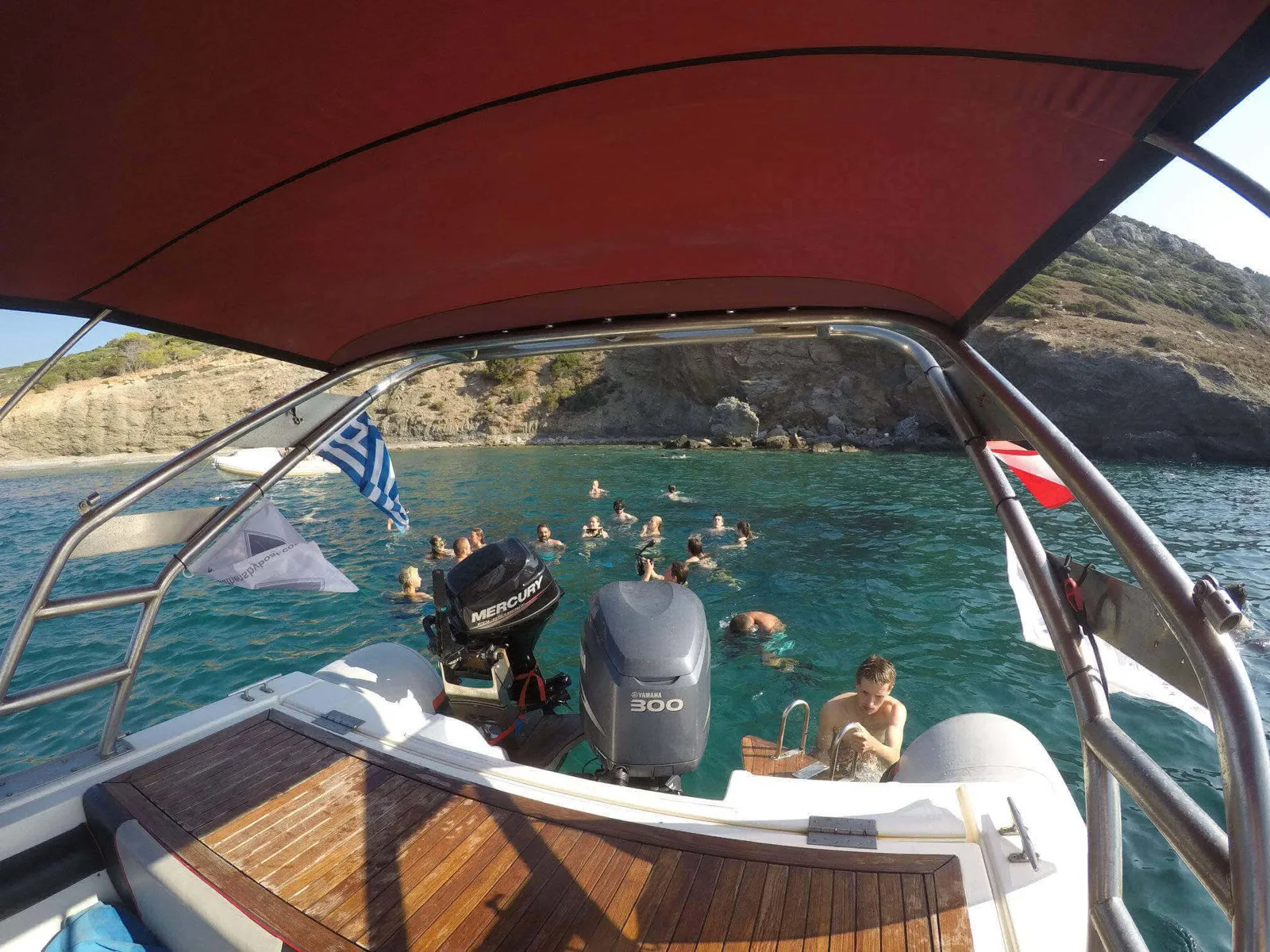
The diving is Mediterranean and varied rather than built around one signature habitat. Shore dives around Vouliagmeni and the Riviera keep things straightforward, with rocky reefs, shallow formations and Posidonia meadows. Boat outings head towards reefs and islets in the Saronic Gulf, while Patroklos and Fleves bring wreck diving into the picture. Currents are variable, so a calm coastal dive and a more exposed offshore outing can feel quite different on the same trip. Summer and early autumn can offer 20 to 30 metres of visibility, although shallow sites lose clarity after storms, wind or coastal run-off. Ask whether a proposed dive is from shore or offshore, and check the depth and conditions rather than assuming that every site near Athens is a gentle introductory dive.
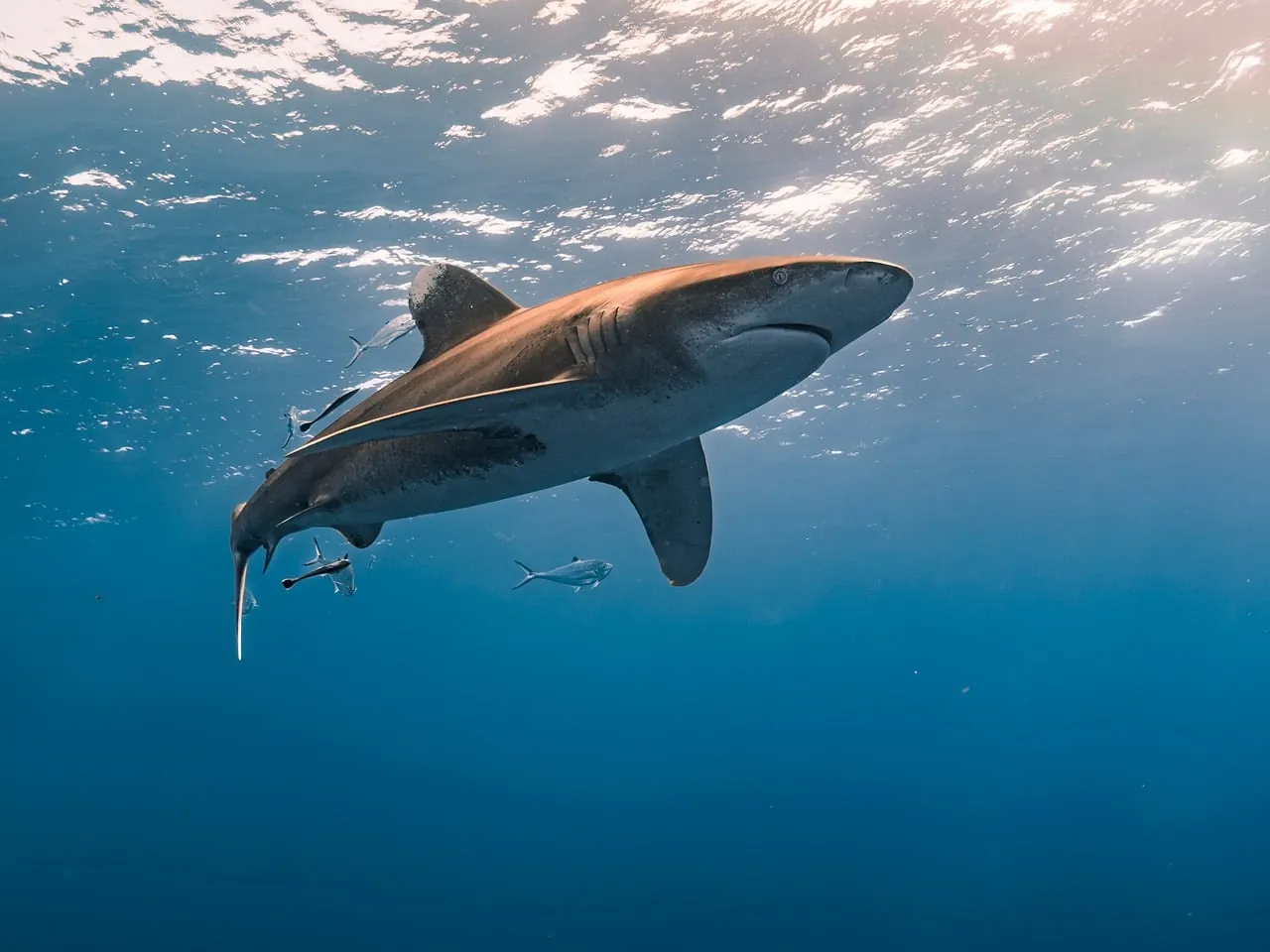
Conger, octopus, rays, groupers and barracudas are among the encounters associated with these Attican sites. Look for them around rocky ground, wreck structure and the edges of Posidonia meadows, where the scenery is less bare than the urban coastline above might suggest. Clear summer and early-autumn water gives the best chance of seeing the shape of the reef and spotting movement at a distance. The wildlife is Mediterranean rather than a guaranteed parade of large animals, and conditions vary between sheltered shore sites and exposed wreck or islet dives. Patience matters more here than covering ground quickly, particularly where rock, seagrass and wreckage break up the view.
May, June, September and October are the most useful months for a diving visit. From May into early summer, the centres are operating and the sea is generally becoming more manageable. September and October retain the better summer and early-autumn visibility while the Riviera is usually less crowded than at the height of summer. July and August can still provide good diving, but busy beaches, roads and boats become part of the calculation. Keep a spare day for Patroklos, Fleves and the offshore islets, because wind and sea state affect those departures more directly than they affect coastal dives.
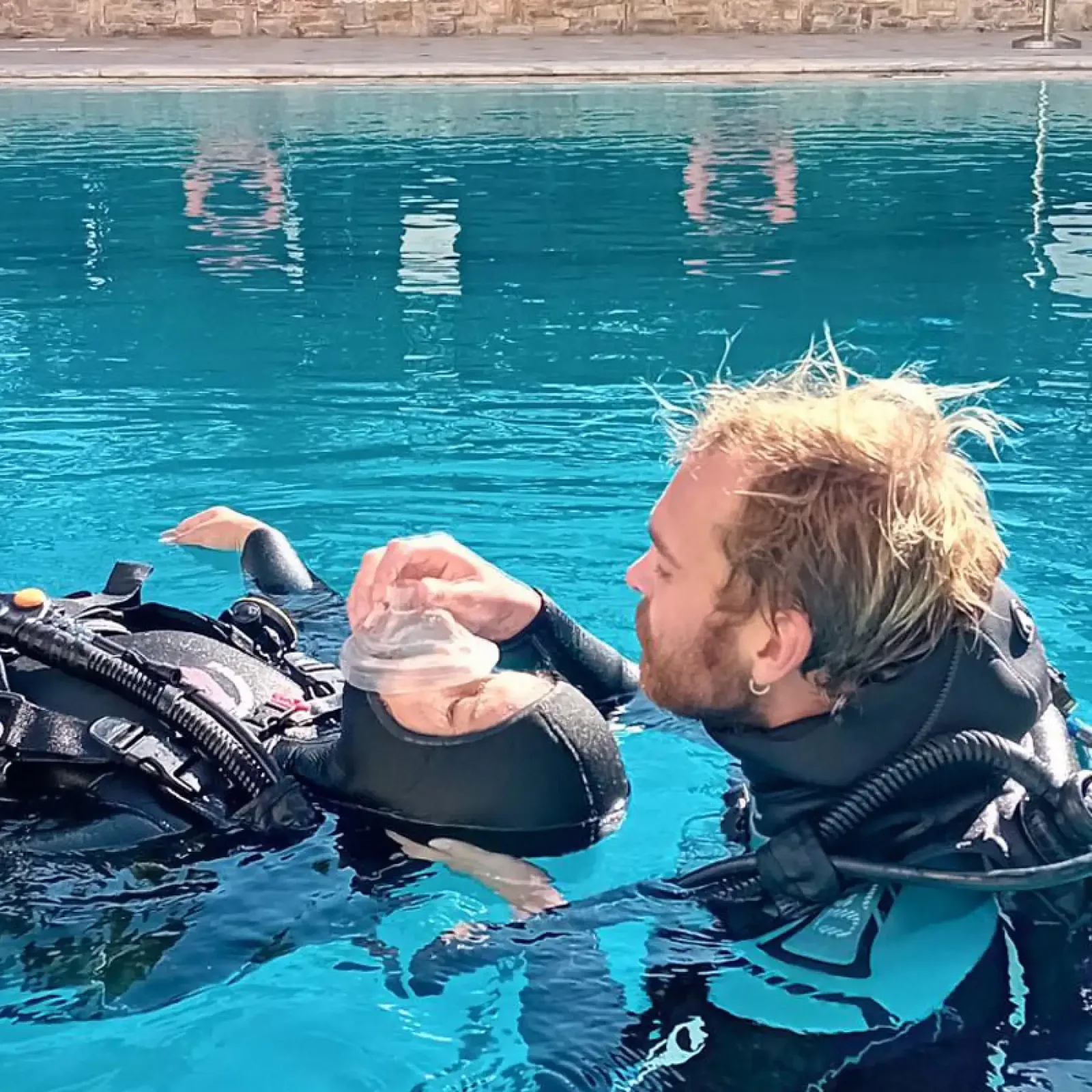
Athens suits every level, provided the site matches the diver. Beginners can use local shore sites and training options around the Riviera, while experienced divers can add deeper offshore sites and wrecks. A Wreck qualification is useful for Patroklos or Fleves, and Advanced certification may be required for deeper outings. Cavities around Vouliagmeni should be treated as shallow formations, not invitations to enter a cave. Follow the local briefing and do not penetrate overhead spaces without the appropriate training.
From London Heathrow, London Gatwick or Manchester, fly to Athens and continue south by road towards the Riviera and Attica. A ferry or domestic flight is not normally needed for this diving area. The important choice comes after arrival: Glyfada, Vouliagmeni, Varkiza and the northern Riviera serve a different spread of sites from Anavyssos, Saronida, Lagonisi, Agia Marina and the coast near Sounion. Use a hire car, taxi or transport arranged by the diving operation for the farther departures. Some accommodation close to a base is walkable, but there is no single centre covering the whole coastline, so match your base to the planned sector before booking.
Do not book an Athens base by name alone. Vouliagmeni, Glyfada, Legrena, Saronida and Patroklos are separate practical choices, and a central stay can make early departures to southern Attica unnecessarily awkward. Ask specifically whether each trip is shore-based or offshore, and what depth, wreck experience and certification it assumes. Treat the Vouliagmeni cavities as shallow local formations, not technical caves. Keep a spare day for Patroklos, Fleves or an islet trip, then use a coastal dive as the fallback when wind stops the boat. In summer, start shore dives early, before beach traffic and heat complicate access. After a strong storm, check visibility rather than relying on the previous day’s report. Finally, ask about the rules before diving near archaeological remains or Posidonia, and do not anchor, touch or collect in those areas.
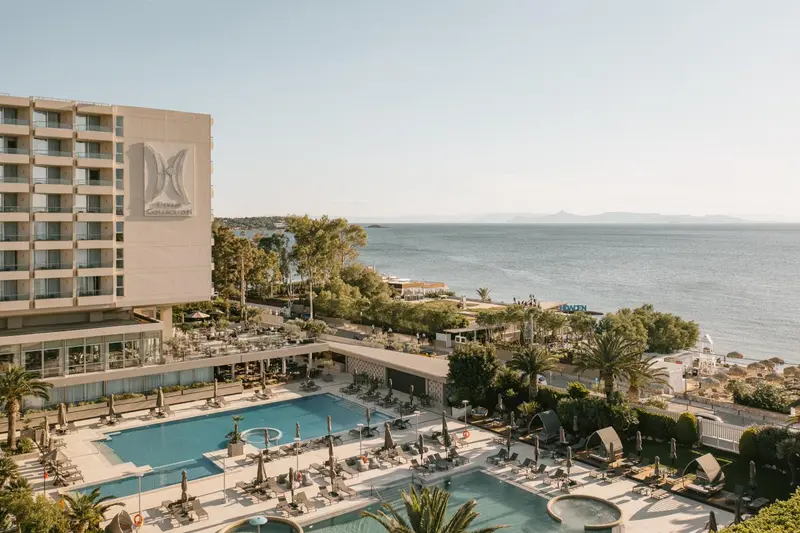
A three- to five-day stay can combine a Riviera base with local shore diving and one or two boat days, though longer is better if Patroklos, Fleves and the southern coast all matter. Keep the accommodation close to the sector you expect to dive, or allow for taxis, a hire car and organised transfers. Non-divers have plenty to do between outings, from Riviera beaches and coastal walks to the Acropolis, museums and Cape Sounion. Leave cultural sightseeing or a food-focused day for the end of the trip, before flying home.
Hello, I'm Marina, DivingDeal.com's AI assistant. I guide you through destinations, areas and countries.
Thinking about the whole trip and the flights? Talk it over with Edith →
Marina is an AI. Some links are affiliate links: DivingDeal may earn a commission, at no extra cost to you. Bookings are made with the partner.
May, June, September and October are useful months for a diving visit. September and October retain summer and early-autumn visibility while the Riviera is generally less crowded. July and August can also provide good diving, but busy beaches, roads and boats affect planning. Keep a spare day for offshore trips.
Athens suits beginners through experienced divers when the site matches your abilities. Local shore sites and training options around the Riviera suit newer divers, while deeper offshore sites and wrecks suit experienced divers. A Wreck qualification helps for Patroklos or Fleves, and Advanced certification may be needed for deeper outings.
You can explore rocky reefs, shallow cavities, unusual formations, Posidonia meadows, offshore islets and wrecks around Athens. Conger, octopus, rays, groupers and barracudas occur around rock, seagrass and wreck structure. Summer and early-autumn clarity can reveal the reef shape, although wildlife and visibility vary between sheltered and exposed sites.
Choose accommodation near the sector you expect to dive, since no single centre covers the whole coastline. Vouliagmeni and the northern Riviera differ from southern Attica sites. Ask whether trips are shore-based or offshore, match your base to departures, and keep a spare day for boat outings affected by wind.