
Horizon Diving
Google 5/5 (273 reviews)
Greece · Mediterranean
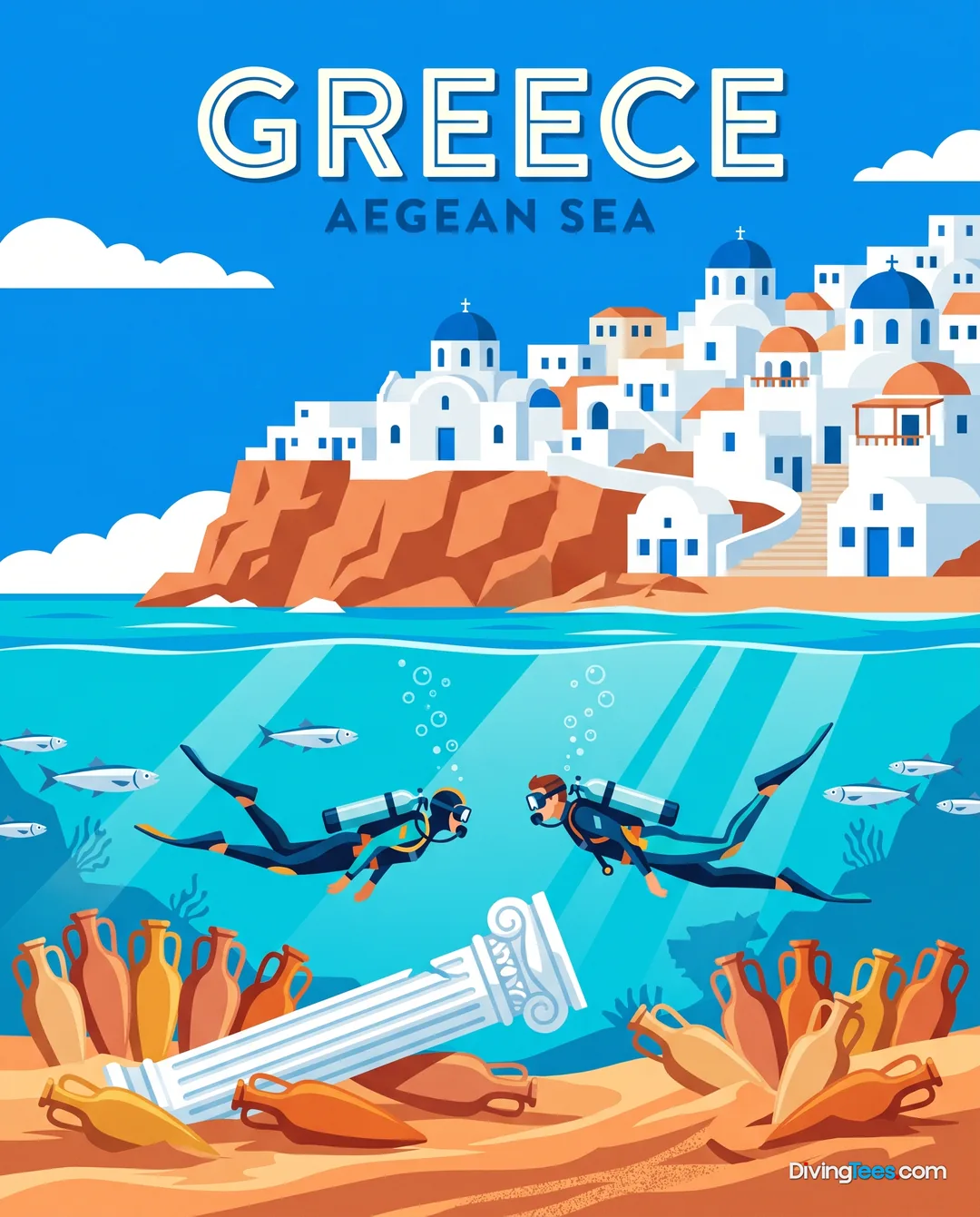
Sheltered bays, rock caverns, 25 to 35-metre walls, grouper and occasional barracuda shape diving along Heraklion’s north coast and around Dia.
For subtitles in English: start the video firstthen click the gearat the top right of the video, select “Subtitles/CC”, then “Auto-translate” and choose “English”.
Heraklion works as a shore-based diving holiday rather than a liveaboard destination. From bases along the north coast, you can enter sheltered water at Agia Pelagia, Mononaftis, Lygaria or Amoudara, then move on to reefs, caverns, walls and wrecks by boat. Dia adds a proper offshore excursion to the mix. It suits a mixed group well: beginners can stay in shallow bays, while experienced divers have deeper rock formations and sites reaching roughly 25 to 35 metres.
The diving alternates between shore entries in protected bays and boat trips to reefs, rock formations, walls and wreck structures, including Big Anchor. Underwater, expect Mediterranean rock rather than a single continuous reef: ledges, cavities and steep faces give the dives their shape. Currents are generally light, so this is not a destination built around downcurrent or drift dive techniques. Wind matters more than current. The meltemi can make exposed sites uncomfortable, while sheltered bays often remain workable. Visibility is commonly around 20 to 30 metres from May to October, although wind, swell and coastal run-off can reduce it. Cavities should be entered only as far as the guide has assessed and planned. Shore diving keeps the day flexible, while Dia and other offshore sites depend on a boat and a suitable weather window.
Grouper is the most dependable seasonal meeting, with sightings regular from June to October. Look for them around the rocky structure, ledges and cavities rather than expecting shoals over open sand. Barracuda are an occasional sight from late summer into autumn, adding a more mobile presence to the usual rock-dwelling life. Loggerhead turtles are also occasional in summer and autumn, both underwater and around the coast. These are encounters rather than guarantees, so the appeal is the combination of wildlife and terrain: a grouper beside a wall, a barracuda passing over a reef, or a turtle appearing during a calm coastal dive.
The main diving season runs from April to November, with May, June, September and October the most comfortable compromise between conditions and crowding. Visibility is generally at its most useful from May to October, while the spring and autumn months bring quieter beaches and boat trips. July and August are busier, and the meltemi can strengthen during the day, pushing centres towards sheltered bays. A 3 to 5 mm wetsuit suits the season, with spring and autumn feeling cooler. January to March are the least practical months for a planned diving holiday, when regular activity is more limited.
Heraklion suits all levels, provided the site matches the diver. Shallow, lightly current-swept bays work for try-dives, refreshers and training. Walls, cavities and sites around 25 to 35 metres require more control and a suitable depth qualification. An Advanced-level qualification, whether PADI, SSI or equivalent BSAC training, is useful if the programme includes deeper walls or offshore sites. Nitrox can make sense for repetitive diving, but it does not replace the experience required for depth or overhead environments.
From London Heathrow, London Gatwick or Manchester, look for a seasonal direct flight to Heraklion airport. When the timetable does not suit, a connection, including a domestic flight via Athens, makes the journey longer. A ferry route is possible from Piraeus or other Greek islands, but it requires reaching the port first and is a substantially slower option. Heraklion is the arrival point, not the location of every dive. The popular bases lie west along the north coast, around Agia Pelagia, Mononaftis, Lygaria and Amoudara. Once there, use a hire car, taxi or the dive centre’s arranged transport. A car is especially useful for autonomous divers moving between dispersed bays and accommodation.
Do not treat Heraklion city as if it were beside every dive site. Staying near the bay where you will dive cuts repeated road transfers, particularly if your plan includes Agia Pelagia, Mononaftis or Lygaria. In July and August, put exposed sites and Dia on the morning programme, because the meltemi may build later and increase the swell. Ask for a mix of sheltered and exposed sites, then keep a spare day in a five to seven-day stay. That buffer protects the boat itinerary when wind changes the plan. Check the maximum depth before booking each dive, especially if a wall or a site in the 25 to 35-metre range is involved. For cavities, remain within the section your guide has specifically assessed as penetrable. Do not arrive expecting every day to be an offshore day, or a short road transfer from central Heraklion.
Allow five to seven days to combine shore diving around the north-western bays with one or more boat outings towards Dia, while retaining room for a wind-related change of plan. Accommodation in a diving bay simplifies early starts and equipment movement; staying in Heraklion gives easier access to the museum, harbour and Knossos but usually means daily road transport. Non-divers have beaches, coastal villages, archaeological sites and inland excursions to fill the surface days.
Hello, I'm Marina, DivingDeal.com's AI assistant. I guide you through destinations, areas and countries.
Thinking about the whole trip and the flights? Talk it over with Edith →
Marina is an AI. Some links are affiliate links: DivingDeal may earn a commission, at no extra cost to you. Bookings are made with the partner.
Plan your Heraklion diving holiday between April and November. May, June, September and October offer a comfortable balance between conditions and crowding, while visibility is generally useful from May to October. July and August are busier, and the meltemi may strengthen later in the day. January to March are less practical.
Heraklion suits you whether you are learning or already experienced, provided you choose suitable sites. Sheltered, shallow bays work for try-dives, refreshers and training. Walls, cavities and sites reaching roughly 25 to 35 metres require greater control and appropriate depth qualification. An Advanced-level qualification is useful for deeper walls and offshore dives.
You can explore Mediterranean rock formations, ledges, cavities, walls, reefs and wreck structures such as Big Anchor. Grouper sightings are regular from June through October around rocky structure. Barracuda may appear from late summer into autumn, while loggerhead turtles are occasional in summer and autumn. Visibility commonly reaches 20 to 30 metres from May to October.
Base yourself near the bay where you plan to dive, such as Agia Pelagia, Mononaftis or Lygaria, to reduce road transfers. Allow five to seven days for shore dives and boat outings towards Dia, keeping a spare day for wind changes. In July and August, schedule exposed sites and Dia in the morning.