
New Dive
Google 4.4/5 (156 reviews)
Greece · Mediterranean
From Mylopotas, divers can drop in from the beach, follow rocky walls and inspect 18-metre wreck remains on local boat trips.
For subtitles in English: start the video firstthen click the gearat the top right of the video, select “Subtitles/CC”, then “Auto-translate” and choose “English”.
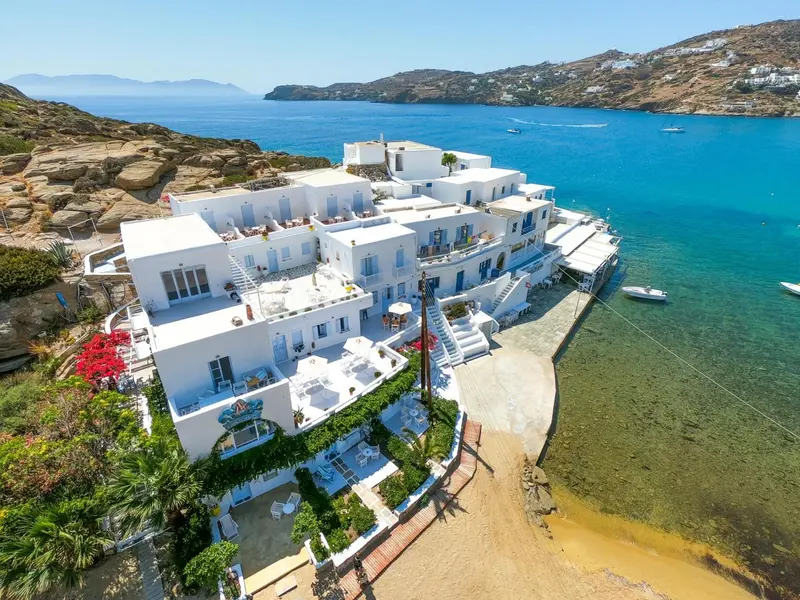
Ios is a shore-based diving holiday built around Mylopotas and the harbour area. You can walk into the water from Mylopotas Bay, then use local boats to reach rocky reefs, walls, drop-offs and wreck remains. That makes the island useful for a mixed group: a diver can fit in uncomplicated coastal dives while a non-diving partner has beaches, Chora, walking routes and watersports close at hand. Allow five to seven days, rather than treating Ios as a quick stop between ferries.
The diving moves between a sandy beach entry at Mylopotas, shallow rocky ground and boat dives over walls, drop-offs and wreck remains. The described wreck reaches 18 metres, so it is within Open Water range when conditions suit, while the deeper reliefs demand more judgement about depth and current. Current is variable rather than a fixed feature of every outing, and the clearest water is generally found during the operating season, although swell can reduce visibility. A typical day is a local boat trip from Mylopotas or the harbour sector, not a liveaboard itinerary. At the wreck, small cavities add interest, but they are overhead environments, not invitations to swim inside without the right training, equipment and gas planning.
Ios rewards divers who enjoy seeing the shape of the seabed: rock faces, broken relief, the outline of wreck remains and small cavities beside the wreck. The 18-metre site gives the clearest focal point for a dive, while boat trips open out onto walls and drop-offs rather than keeping every descent in the shallows. Mylopotas offers a simpler look at the coast directly from the beach. Encounters here are therefore centred on terrain and maritime remains, not on booking around a named seasonal animal. May to October is the practical window for these underwater features, with clear water commonly reported but visibility affected by swell and local conditions.
May, June, September and October are the most comfortable months for a diving stay. The sea is generally clearest from May to October, when the seasonal operators are working and boat trips connect Mylopotas with the walls, drop-offs and wreck remains. July and August can also work underwater, but they bring the island's busiest beaches, more surface activity and greater demand for boat places. The shoulder months give you a better balance between usable diving and room around Mylopotas. Outside the spring to early autumn operating period, check that the centre you intend to use is actually open before building a trip around it.
Beginners can use Mylopotas Bay and choose shallow sites or suitable training dives. Open Water divers can visit the described wreck at 18 metres, provided the day's conditions and their experience match the plan. Advanced certification is useful for deeper sites, walls and drop-offs. Wreck training is relevant if you intend to do more than look at the remains from outside. The cavities near the wreck should be treated as overhead environments, so penetration belongs to divers with appropriate training, configuration and reserve management, not simply to anyone comfortable at depth.
From London Heathrow, London Gatwick or Manchester, reach Athens and continue by ferry from Piraeus, allowing roughly four to seven hours at sea. An alternative is to travel via Santorini, where the ferry to Ios takes about 35 minutes to 1 hour 20 minutes, or via Naxos, with a crossing of roughly 30 minutes to 1 hour 10 minutes. In practice, allow a full travel day from Britain and leave breathing space between flights and ferries. Ios has no airport, so the ferry is the fixed final link. Once on the island, staying at Mylopotas keeps the beach entry and departing dive boats close; accommodation elsewhere requires a local transfer, and walking is realistic only nearby.
Mylopotas is the sensible base if you want the least daily friction: the shore dive starts on the beach and local boats leave from the same general area. In July and August, book boat outings ahead and ask how exposed the chosen site will be, rather than assuming every trip resembles the sheltered bay. Start early where possible, since Mylopotas becomes busier with surface activities later in the day. Keep a buffer around every ferry connection, especially if another ferry or a flight follows. Bring any specialist wreck or overhead-environment equipment you genuinely plan to use. At the wreck, observe the cavities from their entrances unless you hold suitable overhead training. Finally, confirm seasonal opening before travelling, and do not come expecting a dedicated diving cruise: Ios works as a land-based island stay.
Plan five to seven days on Ios, with several local boat outings balanced by a shore dive at Mylopotas. Keep at least one flexible day for ferry disruption or unsuitable sea conditions, then use it for Chora, the island's walking routes, beaches or surface watersports. Mylopotas suits divers who want to step from accommodation into a beach-based routine, while staying elsewhere means allowing extra time for the journey to the diving area. A non-diving companion has plenty to do without following every boat trip.
Hello, I'm Marina, DivingDeal.com's AI assistant. I guide you through destinations, areas and countries.
Thinking about the whole trip and the flights? Talk it over with Edith →
Marina is an AI. Some links are affiliate links: DivingDeal may earn a commission, at no extra cost to you. Bookings are made with the partner.
Visit Ios between May and October, when the sea is generally clearest and seasonal dive operators are working. May, June, September and October offer a comfortable balance between usable diving and quieter beaches. July and August can also suit diving, but surface activity increases and boat places are in greater demand.
Ios suits beginners at Mylopotas Bay, where you can try shallow sites or suitable training dives. Open Water divers can visit the 18-metre wreck remains when conditions and experience match the plan. Deeper walls and drop-offs require more judgement, while entering cavities beside the wreck requires appropriate overhead training, equipment and gas planning.
Around Ios, you can explore the sandy entry at Mylopotas, shallow rocky ground, rocky walls, drop-offs and 18-metre shipwreck remains. Small cavities beside the wreck add detail for careful observation, but they are overhead environments. The diving focuses on seabed shape, broken relief and maritime remains rather than named seasonal animal encounters.
Plan five to seven days in Ios, using Mylopotas as a practical base for the beach entry and local boats. Balance several boat outings with a shore dive, and keep a flexible day for ferry disruption or unsuitable sea conditions. Confirm seasonal operator opening, allow transfer time if staying elsewhere, and leave breathing space around ferry connections.