
Mani Diving Center
Google 4.7/5 (217 reviews)
Greece · Mediterranean
Limestone shelves, coastal cavities and a Roman wreck shape Limeni’s diving, with shallow shore entries and boat trips towards hidden coves.
For subtitles in English: start the video firstthen click the gearat the top right of the video, select “Subtitles/CC”, then “Auto-translate” and choose “English”.
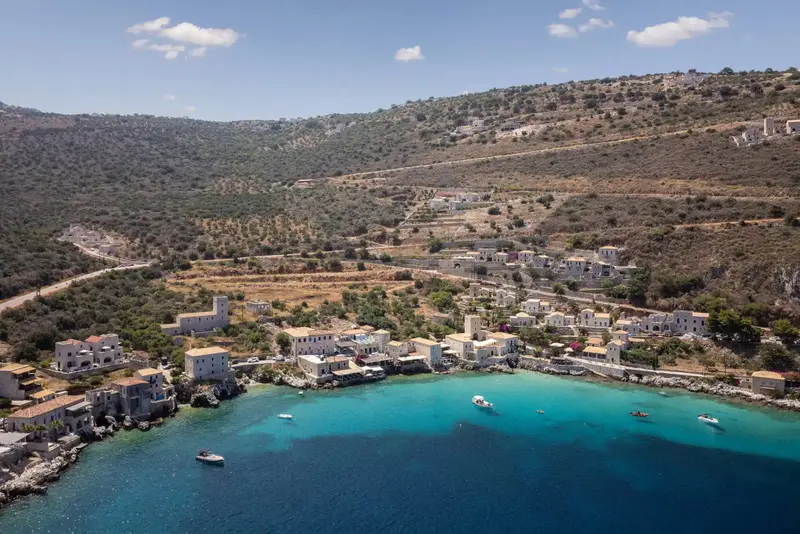
Limeni is a small diving base built around a sheltered bay, where shore entries and boat outings lead to limestone rock, cavities and coastal caves. Its underwater calling card is the Roman wreck off the village, shallow at the top before the site follows a sloping seabed into deeper water. This is a place for divers who want archaeology and geology woven into a land-based Greek trip, rather than a cruise programme devoted solely to diving.
The diving alternates between shore-based exploration and boat trips along the broken limestone coast. Around the bay, expect rocky relief and cavities rather than a neatly marked reef system, with the boat opening access to coves and sea caves beyond the road. Clear water is part of the attraction, although visibility should be treated as a condition of the day rather than a fixed promise. Currents are variable locally and deserve particular attention at the Limeni Wreck. Its upper section lies in very shallow water, but the wreck continues down a sloping seabed, giving the dive a more serious character than that first impression suggests. A guided coastal dive makes a sensible introduction, while a boat outing adds the most distinctive scenery and reaches places that cannot be approached conveniently from land.
Limeni’s underwater interest is led by its rock formations and archaeological remains, so the memorable encounters are structural rather than a guaranteed list of named animals. Marine life is encountered around the limestone cavities, rocky ground and Roman wreck, but the character of the dive comes from looking into the relief, following the slope and examining the historic site. There is no useful seasonal wildlife pattern to build an itinerary around. Divers should therefore come for the combination of submerged archaeology, clear water and coastal geology, with whatever life is using the rock and wreck treated as part of the setting rather than the sole reason for travelling. Above water, the same limestone coast continues into coves and caves reached by boat.
May, June and September are the most attractive months for a Limeni diving stay. Local diving operates through the tourist season, and some sites are described as available throughout the year, but the edges of summer offer a better balance between practical availability and a less crowded village and waterfront. High summer brings the greatest pressure on the road, harbour area and boat activity. The quieter months also make it easier to combine a guided first dive with a separate coastal excursion, rather than trying to fit every activity into the busiest part of the season.
Most divers can find suitable coastal outings here, provided the day’s plan is matched to conditions and experience. The Limeni Wreck needs more care: it is catalogued as an advanced wreck dive, and currents may occur despite the shallow upper section. A wreck qualification through PADI, SSI or BSAC is useful for that exploration, but the decisive question is recent experience in current and on sloping wreck terrain. Start with a guided coastal dive before committing to the wreck if Limeni is unfamiliar.
From London Heathrow, Gatwick or Manchester, Limeni is a road-arrival destination rather than somewhere reached by a direct local transport link. The final approach runs along the coastal and mountainous roads of the Mani peninsula, with Areopoli the immediate road landmark and practical base for reaching the village. Allow time for the overland connection after arriving in Greece, as the destination is not served by its own airport and no ferry is needed to reach Limeni. A hire car is the most useful arrangement for combining the village with nearby dive sectors, coves and historical sites. Once in Limeni itself, the waterfront, landing stage and many activities are close enough to reach on foot, while outlying accommodation is better handled by car or taxi.
For a first day, book a guided coastal dive before the wreck. The Limeni Wreck can look deceptively easy because its upper section is shallow, yet the site is classed as advanced and may have current. Ask specifically what experience is expected before reserving it, and keep the safety stop and return plan conservative if conditions change. Take a boat when the aim is sea caves or coves: these are not interchangeable with the inland Diros caves, which are a separate land-based excursion. Do not rely on public transport to join scattered beaches, villages and dive sectors across the Mani, so arrange a car or taxi plan in advance. Rental equipment may be limited, particularly for smaller personal items, making it sensible to bring those if luggage allows. Keep a weather margin around boat days, and do not force a cave or cove outing when the sea has turned unsuitable.
A three- to five-day stay gives enough room for local diving, a boat outing and time ashore in Areopoli and the surrounding Mani villages. Staying near the waterfront keeps the landing stage and water activities walkable. A car becomes much more valuable when accommodation lies outside the village or when the itinerary expands towards the Diros caves, Stoupa or Kardamyli. Non-divers have plenty to do, including swimming, kayaking, paddleboarding and coastal excursions.
Hello, I'm Marina, DivingDeal.com's AI assistant. I guide you through destinations, areas and countries.
Thinking about the whole trip and the flights? Talk it over with Edith →
Marina is an AI. Some links are affiliate links: DivingDeal may earn a commission, at no extra cost to you. Bookings are made with the partner.
You will find May, June and September attractive for a Limeni diving stay, balancing practical availability with a quieter village and waterfront. Diving operates through the tourist season, and some sites are available throughout the year, but high summer brings more pressure on roads, the harbour area and boat activity.
You can find suitable coastal outings in Limeni if your plan matches the conditions and your experience. Begin with a guided coastal dive if the area is unfamiliar. The Limeni Wreck is catalogued as an advanced wreck dive, and possible currents and sloping terrain call for recent current and wreck experience.
In Limeni, you will explore limestone rock, rocky cavities, coastal caves and the Roman wreck. The wreck has a shallow upper section before continuing down a sloping seabed. Boat trips reach sea caves and coves beyond the road, while marine life around the rock and wreck forms part of the setting.
Plan a guided coastal dive before booking the wreck, then reserve a boat outing for sea caves or coves. Arrange a hire car or taxi plan for scattered dive sectors and nearby sights, and keep a weather margin around boat days. Staying near the waterfront keeps the landing stage and activities walkable.